
The December 4 Vote: If the IMO's Net-Zero Framework Passes, Which Bill Does Taiwan's Shipping Industry and Kaohsiung Port Pay First?
The IMO did not adopt the Net-Zero Framework in 2025, and December 4, 2026 is only the scheduled date for resuming the extraordinary session — contingent on confirmation by MEPC 85. Taiwan has no vote at the IMO, yet it will still feel the outcome through flag-state and port-state enforcement, fuel procurement, freight rates, and shipper contracts. What Taiwan should pay first is not an as-yet-undetermined carbon price, but three preparation costs: data, a fuel evidence chain, and contract transparency.
Article contents01 / 12
- December 4 is a resumption date that still requires confirmation by MEPC 85 — it is not a guaranteed session, let alone a vote certain to pass.
- The current draft sets a well-to-wake fuel-intensity standard and a two-tier remedial mechanism for ships of 5,000 gross tonnage and above, but both the thresholds and the $100/$380 prices are not yet law.
- Taiwan has no vote at the IMO, but it still needs to build a ship-level carbon ledger, a port fuel evidence chain, and a shipper-contract ledger first, because costs will flow back along international shipping routes.
On December 4, 2026, a meeting in London could take place that is capable of rewriting the cost structure of global shipping.
Flag states, port states, shipowners, and fuel suppliers around the world will be watching IMO headquarters to see whether the suspended second Extraordinary Session of the Marine Environment Protection Committee resumes, whether it votes, and which version of the text it votes on. Headlines will likely compress all of this into one line: "the final vote on a global shipping carbon levy."
But Taiwan needs to grasp three constraints first.
First, December 4 is not an unconditionally fixed voting date. The conclusions of the IMO's MEPC 84 state that the second Extraordinary Session will resume on December 4 only after confirmation by MEPC 85. Second, the Net-Zero Framework approved and circulated to members in 2025 has still not been "adopted," and members can still propose amendments and adjustments in 2026. Third, Taiwan is not an IMO member, still less a Contracting Party with the right to vote on amendments to MARPOL Annex VI; that vote in London is not in Taipei's hands. [1][3][9]
But that does not mean Taiwan can sit this one out on the sidelines.
Taiwan's international carriers still call at the ports of Contracting Parties, export cargo still travels on regulated ships, ports still have to supply internationally certifiable fuel, and classification, insurance, chartering, and freight-rate contracts will all redistribute costs. Having no vote does not mean having no bill.
As of August 24, 2026, what can be confirmed is the meeting pathway and the current draft; what cannot be confirmed is that a vote will definitely happen in December, that the draft will definitely remain unchanged, or that Taiwanese carriers will definitely pay some precise amount.
I. First, Separate the Three Verbs — "Approve," "Adopt," and "Enter Into Force"
At MEPC 83 in April 2025, the IMO completed and approved the draft Net-Zero Framework, intending to place it in a new Chapter 5 of MARPOL Annex VI. The draft has two linked components: first, a global fuel standard that progressively lowers the well-to-wake greenhouse gas intensity of marine energy; second, an emissions-pricing and fund mechanism for ships that fall short of the thresholds. [3][4]
This step is called approving the draft — it is not the completion of law. Under MARPOL's amendment procedure, formal adoption still has to be decided by qualified Contracting Parties. The IMO's FAQ explains that amendments to Annex VI require a two-thirds majority of Contracting Parties present and voting; only votes for and against are counted, and abstentions are excluded from the denominator. As of now, Annex VI has 108 Contracting Parties, together representing more than 97% of world merchant shipping tonnage. [3]
The Extraordinary Session originally scheduled for October 14–17, 2025 ultimately did not adopt the Framework; instead, it decided to suspend for a year and continue seeking broader consensus. [2] Taiwan's Maritime and Port Bureau's meeting summary also records that delegations held substantial disagreements over the adoption procedure, overlap with regional regulations, costs, administrative burden, and the fiscal pressure on some countries, and that a proposal to postpone was adopted by a vote of the majority. [8]
In May 2026, MEPC 84 laid out a new route: intersessional working group meetings from September 1–4 and November 23–27; MEPC 85 from November 30 to December 3; and then confirmation by MEPC 85 of whether the Extraordinary Session resumes on December 4. [1]
So "the December 4 vote" is a conditional political milestone, not law already delivered. Even if the amendment is adopted, the IMO explains it still has to go through the tacit-acceptance procedure; only if it does not trigger sufficient objections will it be deemed accepted, and then enter into force according to the procedure. The official FAQ describes the expected interval as roughly 16 months after adoption. [3]
This time gap matters. Carriers and ports cannot wait until the night before entry into force to change their systems; governments cannot describe the draft as a current obligation before it is adopted, either.
II. Not a Simple Carbon Tax Bill, But a Ship Fuel-Intensity Ledger
The current draft's main applicability threshold is ships of 5,000 gross tonnage and above. The IMO states that these large ocean-going ships account for more than 85% of international shipping's CO2 emissions; the draft also lists exceptions for ships operating only in waters under flag-state jurisdiction, ships without mechanical propulsion, and certain platforms. [3][4]
The real calculation core is not how many tonnes of fuel oil a ship burns, but the well-to-wake greenhouse gas intensity per unit of energy — that is, the GHG Fuel Intensity (GFI). It looks at the entire well-to-wake pathway: from feedstock acquisition, energy production, transport, and bunkering, through to use on board, and it covers relevant greenhouse gases beyond CO2. [4][5]
The draft uses the 2008 international-shipping average of 93.3 grams of CO2-equivalent per megajoule as its reference value and sets two tiers of thresholds. The 2028 base target is 4% below the reference value, and the direct-compliance target is 17% below; for 2030 the figures are 8% and 21% respectively; by 2035 they reach 30% and 43%. [4]
A ship that meets the stricter direct-compliance target can earn surplus units; one that falls short is split, according to the size of the gap, into Tier 1 and Tier 2 deficits. The current draft sets, for 2028–2030: a Tier 1 remedial-unit price of $100 per tonne of CO2-equivalent, and a Tier 2 price of $380 per tonne. The deeper Tier 2 gap can also be closed with surplus units transferred from other ships or banked from previous years; surplus units are, in principle, valid for two calendar years. [4]
These figures make for good headlines, and they are also the easiest to misreport. They are currently the values in Regulations 35 and 36 of the MEPC/ES.2/2 draft — not a rate already being levied on shipowners. The September and November negotiations can still change the thresholds, prices, how they are used, or the implementation guidelines; December could also be postponed again.
And the actual cost is not "a ship's total emissions multiplied by $380." A given ship's bill depends on its energy consumption, the GFI of its fuel pathway, where it falls relative to the two thresholds, whether it holds surplus units, how units are transferred, and which of the shipowner, charterer, or operator controls the fuel, route, and speed. Without ship-by-ship data and a final text, any precise total for "how much Taiwan will pay per year" is only an unverified guess.
III. The Real First Bill Is Making Every Ship's Data Re-Calculable
If you only ask a carrier "what fuel did you use," the answer is not enough.
Fuel called "biofuel" can come from waste oils and fats, or it can involve land-use change; fuel called "LNG" will have its well-to-wake result changed by methane slip across extraction, liquefaction, transport, and engine combustion; green methanol, ammonia, or hydrogen also depend on the process electricity and upstream feedstock used. A fuel's name is just a category — the GFI is the number that may actually be recognized.
ISWG-GHG 21 in April 2026 was still developing guidelines on GFI calculation, fuel-data verification, wind-propulsion monitoring, and registry systems, and all of this work is noted as being "without prejudice to" whether the Framework is adopted in future. [6] MEPC 84 also scheduled a chain-of-custody expert workshop to address how fuel is tracked continuously as it moves from source to ship. [1]
So the most worthwhile investment for Taiwanese carriers right now is not betting on which bracketed option wins, but building a convertible ship-level carbon ledger. Every affected ship should, at minimum, be able to trace back: per-voyage and per-year energy consumption, fuel batches and suppliers, life-cycle emission factors, certificate versions, blending ratios, engine and operational data, verification records, and the division of responsibility between shipowner and charterer for fuel choice.
This data also needs to handle the case of "the same ship changing company, changing flag, changing fuel." If the data lives only in three isolated islands — supplier PDFs, engine-room logs, and a company spreadsheet — the problem in the future will not be one extra form to fill in, but an inability to reconstruct a full year's compliance status.
Reasonable inference (high confidence): making data re-calculable first is not wasted effort under any of the three scenarios — adoption, amendment, or postponement — because CII, DCS, EU regional schemes, shipper decarbonization claims, and financial due diligence all likewise need better ship-energy evidence.
IV. The Second Bill Is at the Port: Being Able to Bunker Is Not the Same as Being Recognized
For Kaohsiung Port, the most conspicuous investments are storage tanks, pipelines, bunkering vessels, and terminals; the investment most easily overlooked is documentation, identification, and safety.
Materials on decarbonization actions published by Taiwan's Ministry of Environment in 2026 lay out alternative marine fuels in phases: biofuels at Keelung and Kaohsiung, LNG at Kaohsiung and Taichung, moving on toward ammonia and hydrogen; the documents mostly use language such as "expected" and "planned" for the supply timeline. [10] This shows Taiwan has already begun positioning itself, but a planning table cannot be written up directly as completed supply, nor can "able to bunker" be written up as "compliant with the final IMO rules."
When a batch of fuel enters port, there are at least five sets of questions it needs to be able to answer. First, where do the feedstock and process come from. Second, has the batch been blended, and how is its identity preserved. Third, who verifies the upstream emission factors and certificates. Fourth, is the fuel's quality and hazard profile compatible with the ship's equipment. Fifth, how is the data handed over to the ship, the classification society, and the registry system after bunkering.
This is also why Kaohsiung Port cannot bet its entire future on a single fuel. A 2026 IMO document clearly states that some delegations are still debating the global availability of alternative fuels and the role of "transitional fuels." [7] If LNG offers near-term supply and safety experience but ends up with a worse GFI once the final life-cycle methane accounting is applied, overly specialized assets could face lock-in; if the port only waits for an ideal, mature ammonia or hydrogen supply, it could miss near-term fleet demand instead.
The more robust approach is to design terminal safety, digital credentials, batch tracking, emergency response, and personnel training as a common layer that can support multiple fuels, and then invest in specific storage and transfer equipment in stages. A port's competitiveness is not only its per-tonne selling price, but whether it can let a ship, once it leaves port, carry that batch of energy's identity and emissions evidence with it the whole way.
V. The Third Bill Is in the Contract: Who Chooses the Fuel, Who Pays for the Deficit, Who Gets the Surplus?
The cost of decarbonizing shipping will not stop at the shipowner's income statement. In time charters, the charterer may decide the route, speed, and fuel; in liner shipping, the carrier may recover costs from shippers through surcharges; and terminals, freight forwarders, insurers, and financiers will each demand their own data in turn.
The draft even explicitly touches on "operational responsibility": decisions on fuel, cargo, route, and speed affect how costs are recovered. [4] This means future disputes will not only be about whether the regulatory charge has been paid, but about how it is allocated in commercial contracts.
For large shippers, obtaining voyage- and ship-level data may be negotiable; for Taiwanese small and medium-sized exporters, what they will most likely receive is one new line item for a green-fuel or compliance surcharge. If the rate comes with only a name — no applicable route, period, fuel, calculation basis, or after-the-fact adjustment — a small business has no way to tell whether it is a regulatory cost, a fuel premium, a risk reserve, or ordinary commercial pricing.
This does not mean the government should price the market on its behalf — rather, contract transparency needs a minimal shared vocabulary. Shippers can ask suppliers to explain: whether the surcharge is calculated by TEU, weight, distance, or fuel consumption; whether it is limited to specific voyages; how it will be handled if the draft is postponed; whether an emissions-reduction claim corresponds to physical fuel, a book-and-claim arrangement, or another chain-of-custody model; and whether the same environmental benefit is being claimed more than once.
Reasonable inference (medium-to-high confidence): a carrier that can produce verifiable data is not necessarily the cheapest, but it will lower the risk of shippers being double-billed, making unprovable Scope 3 reduction claims, or being unable to produce evidence when a customer audits them.
VI. Eastern Lens: Could a Common Global Standard Turn Fuel-Rich Nations Into the New Winners First?
Seen from a development and distribution perspective, the Net-Zero Framework could create a new geographic divide.
Countries with renewable energy, port capital, manufacturers, and large fleets can secure low-GFI fuel and surplus units earlier; routes with scarce fuel supply can only buy remedial units, or bear the cost of ships diverting to bunker elsewhere. If the IMO Net-Zero Fund's revenue return, eligibility, and technical cooperation move too slowly, the system could end up collecting from small islands, least-developed countries, and food-import-dependent regions first, and only address fairness later, through future promises.
This is not a fabricated objection. The IMO's formal summary of the 2026 negotiations notes that delegations are concerned about the economic burden on industry and states, the global availability of alternative fuels, the role of transitional fuels, and the question of introducing economic elements through MARPOL Annex VI. [7]
The reminder for Taiwan is: don't picture Kaohsiung Port only as a fuel-selling winner. Taiwan also has small and medium-sized shippers, regional routes, and thinner-margin service providers. If every cost is passed downstream through opaque surcharges, decarbonization will turn into a game where the bigger you are, the better you can negotiate.
VII. Western Lens: Waiting Another Year Is Also an Expensive Choice
The other position would say that global shipping cannot wait for every implementation detail to be negotiated to perfection before starting.
The IMO's 2023 Strategy already set out a direction of cutting total emissions by at least 20%, striving for 30%, by 2030, with zero or near-zero-emission energy at least 5%, striving for 10%; and cutting total emissions by at least 70%, striving for 80%, by 2040, moving toward net-zero by or around 2050. [5] Ships have long service lives — a ship ordered today could keep operating into the 2040s. The later the rules are finalized, the easier it is for shipowners to postpone investment, and the harder it is for fuel suppliers to secure demand commitments.
Delay could also let regional schemes keep advancing on their own separate tracks. Carriers facing multiple sets of carbon requirements from the EU, different ports, and shippers may not actually face lower data and transaction costs than they would under a single global framework. Supporters of the current draft therefore argue for adopting it first, and using implementation guidelines and fund governance to address remaining concerns afterward. [7]
The reminder for Taiwan is: don't translate "the draft has not yet passed" into "the transition can be paused." Even if December brings another postponement, buyers, financiers, and regional rules will not all stop their clocks together.
VIII. Neutral Synthesis: Taiwan Should Not Guess the Vote — It Should Manage Three Branching Paths
Both sides point to real risks. Finalizing too quickly could lock in uneven fuel access and capability; endless postponement would widen investment uncertainty and regional fragmentation. Taiwan cannot eliminate risk by picking one narrative — it should instead break the post-December world down into three scenarios.
| Scenario | What is known to change | Taiwan's trigger actions |
|---|---|---|
| A version close to the original draft is adopted | Tacit acceptance and roughly a 16-month preparation window begin | Lock in per-ship gaps, domestic adoption, fund and registry interfaces; upgrade trial calculations into an implementation project |
| Adopted with amendments | Thresholds, prices, fuels, or the fund may change | Recalculate using a difference table rather than reusing old rate briefings; re-examine fuel and contract investments |
| Postponed again or not adopted | Global-rule uncertainty extends further, regional schemes continue | Keep multi-path capacity; do not cancel work on data, efficiency, fuel pilots, or contract transparency |
What all three scenarios need in common is ship data, a fuel evidence chain, and contract governance. This is a "no-regrets investment": it lowers future switching costs without needing to correctly guess the votes of all 108 Contracting Parties in advance.
IX. The National Perspective: Build a Shadow Regulatory Framework, Not Just a Meeting Summary
Taiwan's transportation, environment, economic, port, and classification-society authorities should jointly maintain a clause-by-clause shadow text. After every working-group meeting, instead of writing merely "discussions continue," they should mark exactly what changed for applicable ships, the GFI factor, the two-tier thresholds, remedial prices, surplus units, the fund, fuel certification, chain of custody, verification, and entry-into-force provisions.
Second, establish three trigger points: when MEPC 85 confirms the resumed session, launch a cross-agency drill; when the amendment is adopted, launch domestic adoption and a ship-by-ship gap inventory; when the tacit-acceptance period passes without sufficient objections, launch a final audit and industry guidance. Every step should correspond to an official document, not advance on the basis of news speculation.
Third, acknowledge the participation gap without giving up on it. The Maritime and Port Bureau has publicly explained that Taiwan is not an IMO member, while pursuing alignment through maritime audits and international cooperation. [9] Taiwan can obtain information and raise operational questions through friendly partners, international industry organizations, classification societies, and technical meetings, but it cannot write up indirect participation as formal voting rights.
X. Industry Intermediaries and Kaohsiung Port: Build Multi-Fuel Capability as a Common Foundation
The port corporation, fuel suppliers, classification centers, industry associations, and training institutions should share a minimal common data model: fuel batches, feedstock sources, life-cycle factors, certificates, blending, storage and transport, bunkering, ship receipt, and correction records. Safety rules and emergency response should be layered according to differences between fuels.
Investment evaluation cannot stop at "are there ships coming to bunker." It also needs four stress tests: whether the final GFI is favorable for this fuel pathway; whether blending or switching is possible if supply falls short; who bears the loss if a certificate is not recognized; and whether dedicated equipment can serve other purposes if demand is delayed.
Industry associations can build standard contract clauses, calculation templates, and evidence packages for small and medium-sized shipping and logistics companies, so that not every company has to interpret IMO documents on its own. Classification societies and financiers should factor data quality and transition plans into their assessments, but should not use a not-yet-adopted draft to directly rule a party non-compliant.
XI. The SME Perspective: Ask Four Questions About Surcharges First
For exporters, there is no need to buy a global fleet-management system before December — but transport exposure can be sorted out now.
List out your main routes, carriers, annual TEU or weight, contract renewal dates, and existing bunker surcharges; ask your freight forwarder how future IMO-related charges will be calculated; and prepare at least three budgets — "adopted on schedule," "adopted with amendments," and "postponed again." If a buyer asks for low-carbon transport, confirm whether it is using physical low-GFI fuel, a certificate-based arrangement, or an estimate, and don't blend the three into a single reduction claim.
When you receive a new green surcharge, ask four things first: which ship or route does it apply to? Which period and data set is it calculated from? Will it be adjusted if the rule is postponed or the fuel is not supplied? Who is claiming the environmental benefit, and can they provide evidence?
SMEs cannot decide the IMO's vote count, but they can decide whether to accept a bill they cannot get explained.
Final Judgment: What Taiwan Pays First Is a Preparation Cost, Not an Imagined Global Carbon Tax
December 4 could be important, or it could just be another negotiating milestone. MEPC 84 has already laid out the route, but reserved confirmation to MEPC 85; members can still amend the draft; and even after adoption there is still the tacit-acceptance and entry-into-force procedure. [1][3][7]
So the responsible conclusion is neither "a global shipping carbon tax takes effect in December" nor "Taiwan has no vote anyway, so none of this matters."
What is confirmed is that international shipping is shifting from looking only at smokestack emissions to a combined system of full fuel life-cycle accounting, annual ship-level GFI, transferable surplus units, and a fund. The reasonable inference is that Taiwan's carriers, ports, and shippers will ultimately feel the effects through international port-state enforcement and commercial contracts. What remains unknown is the final text, the vote count, the entry-into-force date, how Taiwan will adopt it, and the actual cost to each individual company.
The three bills Taiwan should pay first are, in fact, the least dramatic ones: organize ship energy data so it is re-calculable; make port fuel traceable to its source, safe to bunker, and able to deliver certificates; and write surcharges and reduction responsibilities into verifiable contracts.
The vote in London is not in Taiwan's hands. What Taiwan can control is whether, once the rules land, its own ledger is not blank.
Sources
- IMO — MEPC 84 meeting conclusions and the follow-up timeline for 2026
- IMO — Announcement of the 2025 Extraordinary Session's suspension and the Net-Zero Framework not being adopted
- IMO — FAQ on the Net-Zero Framework's scope, procedure, and voting
- IMO — MEPC/ES.2/2, "Draft Revised MARPOL Annex VI 2025"
- IMO — MEPC.377(80), "2023 IMO Strategy on Reduction of GHG Emissions from Ships"
- IMO — ISWG-GHG 21 progress on implementation guidelines
- IMO — Submission to UNFCCC SBSTA 64 on 2026 negotiation progress and disagreements
- Maritime and Port Bureau, MOTC — MEPC/ES.2 meeting highlights and the postponement dispute
- Maritime and Port Bureau, MOTC — International Maritime Conventions Research Center outcome report (Taiwan's participation constraints and alignment)
- Ministry of Environment — 2026 flagship decarbonization actions and marine alternative-fuel planning
Not Just a Power Shortage: Taiwan's AI Data Centers Still Have to Clear Siting, Grid Interconnection and Equipment
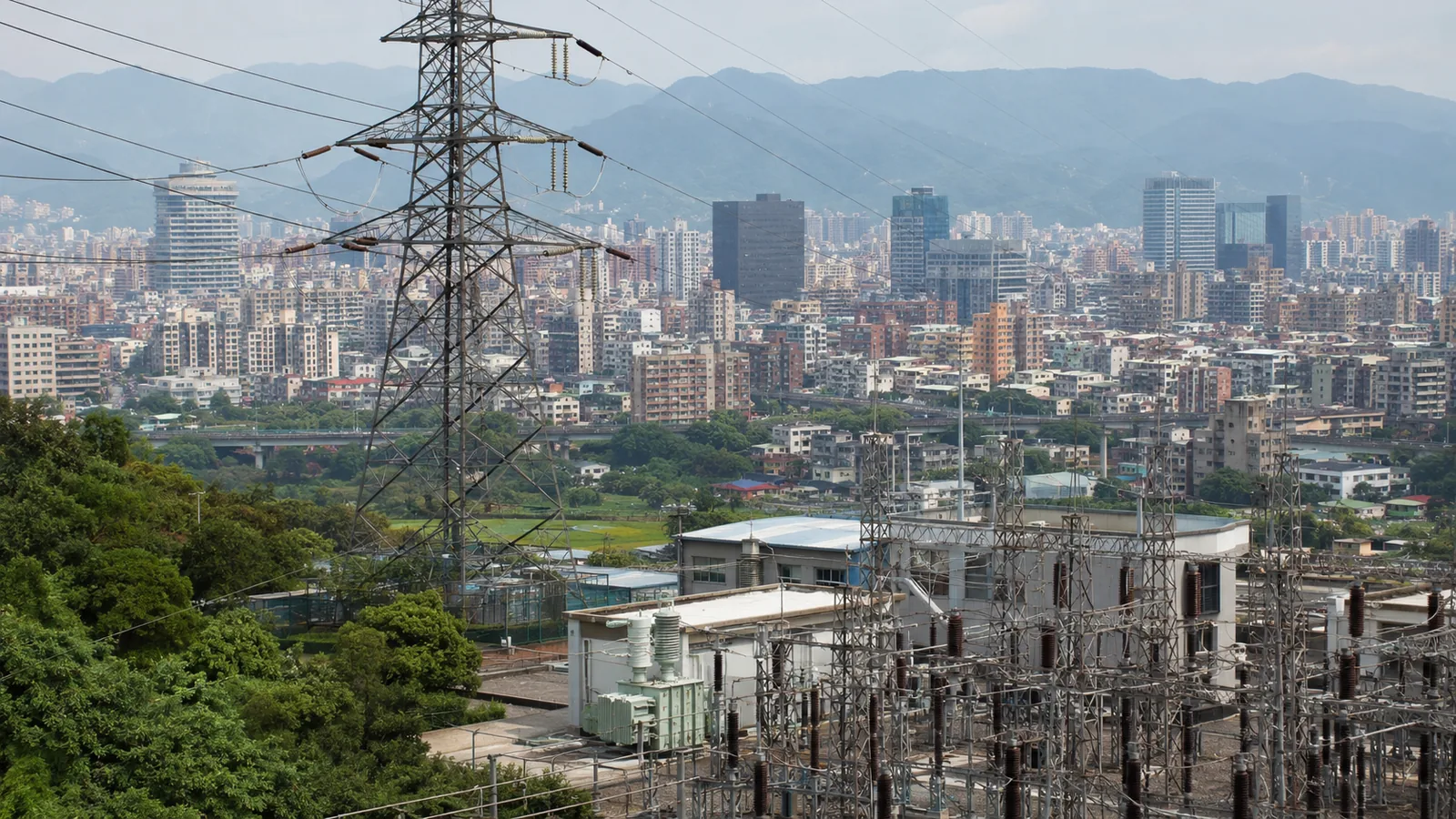
Taiwan's data-center constraint is not a binary choice between 'not enough electricity' and 'not enough parts.' Official data confirm that new applications above 5MW north of Taoyuan were once suspended from acceptance, that new or expanded facilities above 5MW must pass an energy-use review, and that the National Science and Technology Council is planning a 120MW Shalun computing center to come online in 2029; equipment lead times still have to be confirmed project by project with named suppliers.
AI Wants to Eat Taiwan's Electricity: How to Get Through Four Years of a Low Night-Time Reserve Margin
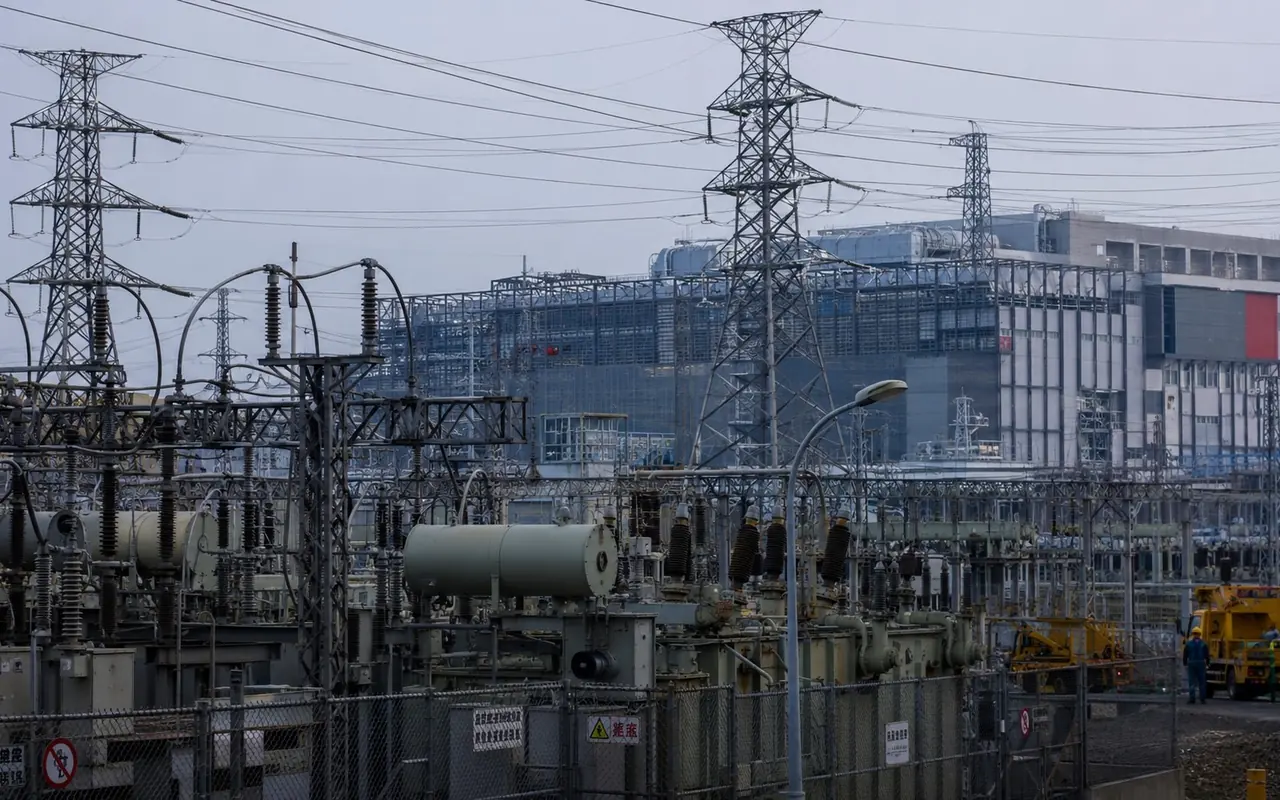
Taiwan is winning orders from around the world on the strength of AI, but AI and semiconductor expansion also eat electricity — Taipower estimates more than 5GW of new demand by 2030. The government's latest supply-and-demand report shows the night-time reserve margin running at 12.8%, 12.5%, 8.0% and 7.1% from 2026 through 2029. This is a long-term planning indicator, not a daily operating reserve figure; the real problem is that industrial expansion is running straight into a four-year window of thin night-time supply margin.