
Not Just a Power Shortage: Taiwan's AI Data Centers Still Have to Clear Siting, Grid Interconnection and Equipment
Taiwan's data-center constraint is not a binary choice between 'not enough electricity' and 'not enough parts.' Official data confirm that new applications above 5MW north of Taoyuan were once suspended from acceptance, that new or expanded facilities above 5MW must pass an energy-use review, and that the National Science and Technology Council is planning a 120MW Shalun computing center to come online in 2029; equipment lead times still have to be confirmed project by project with named suppliers.
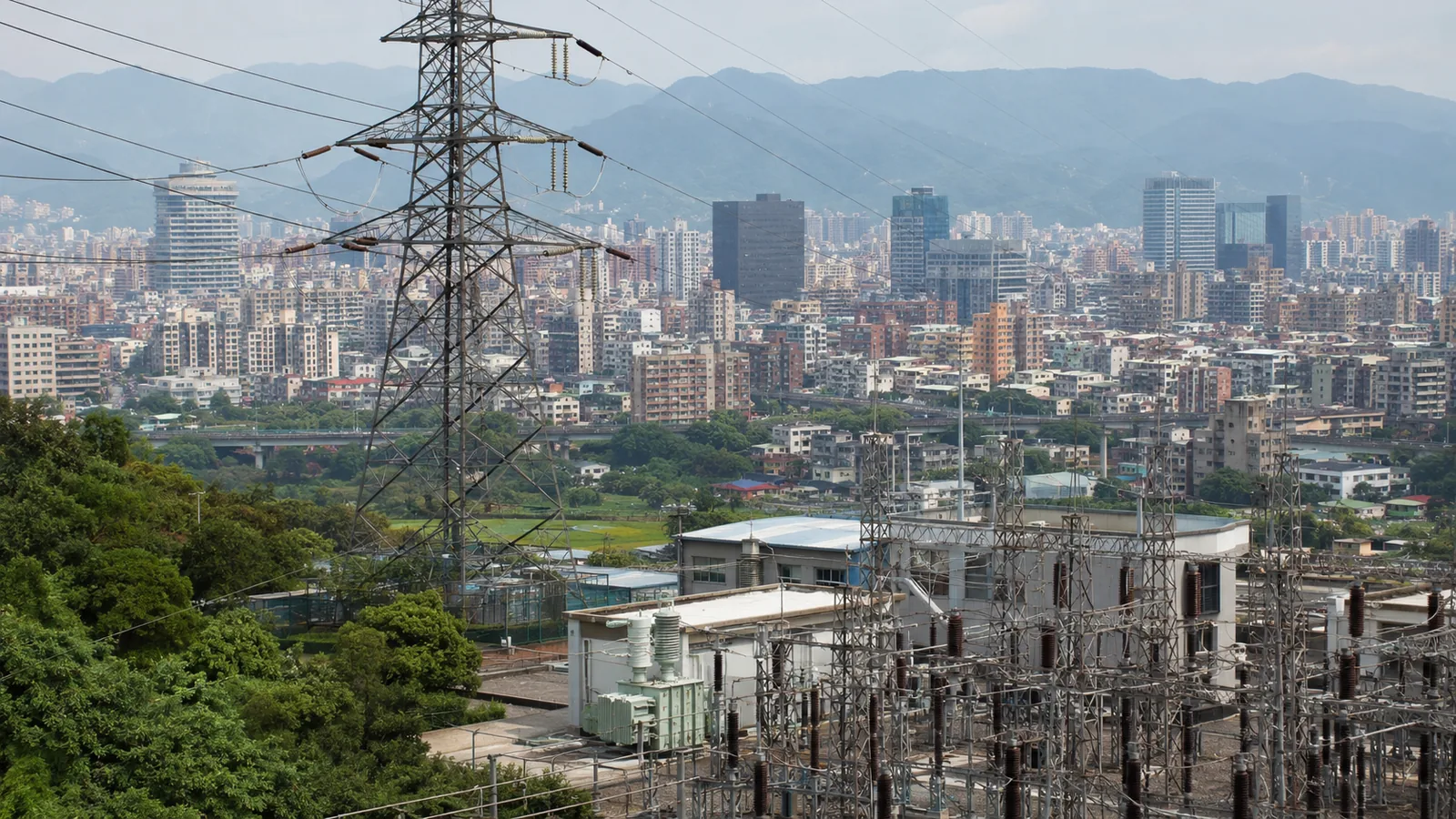
Article contents01 / 07
- Official National Science and Technology Council data list the existing national high-speed network and computing center's cloud computing power at about 15MW, with a planned Shalun computing center reaching 120MW by 2029; this is not the total demand of all data centers in Taiwan
- Taipower once suspended accepting applications for data centers above 5MW north of Taoyuan, citing regional power supply and grid capacity — proof that siting and grid interconnection are real constraints, but this cannot be generalized into 'the entire northern grid is full'
- The Ministry of Economic Affairs requires ultra-large and colocation data centers with a contracted capacity of 5MW or more to submit an energy-use statement, capping PUE at 1.3 and 1.4 respectively; the rule itself makes no promise that more efficient operators get priority grid interconnection
“Not Just a Power Shortage: Taiwan's AI Data Centers Still Have to Clear Siting, Grid Interconnection and Equipment” reports that Planned power demand of the Shalun computing center(120MW)。 NSTC: expected completion in 2029; existing cloud computing center draws about 15MW [1]。
“Not Just a Power Shortage: Taiwan's AI Data Centers Still Have to Clear Siting, Grid Interconnection and Equipment” reports that Energy-use review threshold for large data centers(5MW and above)。 New or expanded facilities must adopt best available technology and undergo review [5]。
“Not Just a Power Shortage: Taiwan's AI Data Centers Still Have to Clear Siting, Grid Interconnection and Equipment” reports that Regional restriction on power applications(North of Taoyuan)。 Taipower once suspended accepting applications from data centers above 5MW [7]。
Start With a Question That Keeps Getting Asked Wrong
When Taiwan talks about AI power demand, the discussion keeps circling the same question: is there enough electricity? Whether to restart nuclear plants, whether renewable buildout is behind schedule, how much operating reserve margin is left — these are all real questions. But whether a project can be energized on schedule also depends on a separate check of the regional grid and equipment.
Whether a data center can actually run depends on whether the system has enough generation and reserve capacity, and it also depends on whether regional transmission and distribution, substations, dedicated feeder lines, transformers and switchgear can be completed on schedule. The original draft of this report listed gas turbines and transformers together as "grid hardware" that every data center needs — that is not precise. Transformers and switchgear are grid-interconnection equipment; a gas turbine is a new-generation or on-site self-generation option, not a required component for every facility.
Building a data center's civil works and mechanical/electrical systems can be completed in roughly a year and a half, but connecting the campus to the grid and stepping high voltage down, layer by layer, to something the racks can use each requires its own transformer, its own switchgear. If even one of those gets stuck, the whole facility can turn its lights on but cannot turn its GPUs on.
One line to remember: a data center's viability cannot be judged from system-wide generation capacity alone; regional available capacity, administrative review and specified equipment can each independently rewrite the energization date.
The Demand Curve: What Can Officially Be Confirmed Is a Specific Public Computing Facility
Official National Science and Technology Council data list the existing cloud computing center's power draw at about 15MW, with a planned Shalun computing center expected to be completed by 2029 drawing about 120MW [1]. That is the scale of a specific national computing facility, not the total power demand of all public and private data centers in Taiwan. This report's earlier figures of 60MW by 2026 and 450MW by 2029, drawn from media compilations, could not be reproduced in this round from the NSTC's original documents and have been removed from the body text, the chart and the conclusion.
“Not Just a Power Shortage: Taiwan's AI Data Centers Still Have to Clear Siting, Grid Interconnection and Equipment” reports that Planned power demand of the Shalun computing center(120MW)。 NSTC: expected completion in 2029; existing cloud computing center draws about 15MW [1]。
Semiconductor manufacturing and data centers will indeed add to power demand, but the earlier draft converted a media-reported "additional 5GW" into "nearly four million households" without accounting for average residential load, coincidence factor or time period, which risks conflating power (kW) with energy (kWh). That conversion has been removed. The system-level judgment that can be retained is narrower: when large loads concentrate at a small number of nodes, the regional grid may hit a constraint before the system-wide total does.
General industrial users are spread out and their load is comparatively flat; an AI data center, by contrast, is concentrated at a single point, extremely dense, and runs around the clock without interruption. Taipower itself has said that the electricity-use pattern of an AIDC (AI data center) is very different from that of an ordinary factory — small in footprint yet consuming as much power as an entire industrial park, and preferring to locate in the dense urban areas where population and network nodes concentrate, which puts the load directly on the weakest points of the existing grid [2].
Equipment Lead Time Is a Project Risk, but a Single Media Figure Should Not Become the General Rule
Large transformers, GIS switchgear and backup equipment are highly customized, and lead times vary with voltage class, capacity, supplier and acceptance conditions. The earlier draft used secondhand reporting to state as fixed values for every Taiwanese project that "transformers take at least 24 months" and "gas turbines take 7 to 8 years at double the price" — the evidence does not support that. This report reclassifies it as a procurement risk: developers should obtain quotes and lead times from named suppliers before making an investment decision, and cross-check those against Taipower's grid-interconnection construction schedule.
Why is this happening? Three forces are tightening at once:
- Demand-side surge: data centers, EVs, grid replacement and renewable-energy interconnection worldwide are all competing for the same batch of heavy electrical equipment. Aging transformers that have quietly run for decades are due for replacement in any case, and AI is pouring fuel on that fire at exactly this moment.
- Slow supply-side response: transformer demand was weak for a long stretch, and quite a few upstream component makers simply halted production or switched lines. Now that demand has surged, the supply of raw materials such as grain-oriented electrical steel (a key material for transformer cores) has tightened, and capacity cannot catch up in time, producing a stack of compounding delays [3]. If even one link upstream — electrical steel, insulation paper, bushings — gets clogged, the entire downstream lead time is pushed back.
- Supplier and specification differences: international industry reporting shows heavy electrical equipment is in tight supply generally [10], but a data-center transformer, a transmission-grade main transformer and a power-generation gas turbine are not the same product. A project must obtain named specifications, quotes and lead times, and should not apply the longest reported case to every piece of equipment.
Generation, transmission/distribution and on-site equipment are linked constraints. New generation capacity, if not in the right region and without transmission and substation work, may indeed be unable to serve a particular facility; conversely, having equipment on hand cannot substitute for stable power. Decisions should place all four factors on the same critical-path table, rather than declaring any single one the "real bottleneck" once and for all.
“Not Just a Power Shortage: Taiwan's AI Data Centers Still Have to Clear Siting, Grid Interconnection and Equipment” reports that Energy-use review threshold for large data centers(5MW and above)。 New or expanded facilities must adopt best available technology and undergo review [5]。
The earlier draft's U.S. example contained a clear arithmetic error: if 12GW was announced and 5GW broke ground, the gap should be 7GW, not 11GW; and the reasons projects have not broken ground can include grid, land, permitting, financing and demand all at once — it cannot all be attributed to hardware. That entire set of figures has been removed. Bring-your-own-power may be a transitional option in some markets, but in Taiwan it still has to clear fuel, air-pollution, land, utility and grid-interconnection regulations, and cannot be treated as a default answer.
Taiwan's Second Wall: A Regional Constraint Has Appeared on the Northern Grid
Hardware shortages are a global problem. Taiwan has an additional local structural problem on top of that — a grid that is heavy in the north and light in the south.
The Ministry of Economic Affairs, relaying Taipower's explanation, states that load on the northern grid is growing rapidly and that some power infrastructure has been delayed by local objections; Taipower has therefore suspended accepting applications for power from large data centers above 5MW north of Taoyuan, and is steering AIDCs and other energy-intensive industries toward evaluating regions in central and southern Taiwan with more available power first [7]. This is an acceptance measure limited by region and scale — it cannot be extrapolated into "the entire northern grid is full," nor does it mean every new northern project is permanently barred.
An ordinary medium-voltage distribution line typically has a supply capacity of only 5MW or 10MW, nowhere near enough for a modern large data center that can easily demand hundreds of MW [3]. Connecting a beast of that size means the project effectively has to build its own dedicated feeder line and its own substation — and the most expensive, slowest component inside that substation, the main transformer, happens to be exactly the item in global short supply. The two walls — equipment lead time and northern grid interconnection — stack on top of each other here.
Large data centers prefer to be near network nodes, talent and customers, but actual available capacity must be confirmed with Taipower case by case. If a site falls in a restricted region, an operator may have to change scale, wait for grid construction, or evaluate other locations; network latency, talent, land and power are shared conditions, and without project-specific data it is not possible to assert that any one of them will necessarily outweigh the others.
Policy Tools Step In: A PUE Ceiling and Tiered Electricity Pricing
Facing a hardware ceiling, the government's logic is clear: if the supply side cannot catch up, squeeze more computing out of every unit of electricity from the demand side, and flatten peak load.
Starting in 2026, the Ministry of Economic Affairs' Energy Administration is bringing ultra-large and colocation data centers with a contracted capacity of 5MW or more into regulation, drawing on the experience of Japan, Singapore and the EU to introduce an efficiency standard centered on Power Usage Effectiveness (PUE — the closer to 1 the better; 1.5 means an extra 0.5 unit of electricity is spent on cooling and losses for every 1 unit that goes to computing): the PUE ceiling is set at 1.3 for ultra-large data centers and 1.4 for colocation facilities, and new or expanded facilities must adopt best available technology from the outset and submit seven efficiency indicators for review [5]. Against the fact that many existing facilities still run a PUE above 1.5, this is a genuine hurdle — it effectively forces operators to get cooling and power-distribution efficiency right in one pass, or the energy-use statement will not even clear review.
Time-of-use pricing and demand contracts can influence load behavior, and data centers above 5MW must also pass the energy-use review; but the currently published rules make no promise that operators with on-site power or a lower PUE get priority grid interconnection [5][7]. Interconnection still depends on regional grid capacity, construction work and contract terms — an energy-efficiency review cannot be rewritten into a queue-priority claim.
Fact-check note: PUE is an energy-efficiency indicator, not an officially published grid-interconnection priority formula. Actual rates, contracted capacity and acceptance conditions should all be checked against Taipower's and the Ministry of Economic Affairs' latest announcements.
For the supply chain, this is an obvious signal. AI data centers and semiconductor capacity expansion have kept heavy-electrical suppliers such as China Electric, Shihlin Electric, Chung-Hsin Electric and Yali Electric busy with orders, with visibility commonly extending to 2027–2028 [9]. A parts shortage, from the other side, means three years of good business for whoever sells the parts — this wave in heavy-electrical stocks is, at its core, a mirror image of the global grid-hardware shortage reflected in the Taiwan stock market.
And hidden inside this is a dual identity of Taiwan's that is rarely pointed out: Taiwan is simultaneously a victim of the grid-hardware shortage and a seller into the global supply chain. While a domestic data center sits idle because it cannot get a transformer in the queue, the island's heavy-electrical makers are busy shipping to data-center customers in the United States and Southeast Asia — domestic demand and export sales are competing for the same production line. That raises a sharp policy question: with the whole world short of transformers, should Taiwan's heavy-electrical capacity prioritize domestic AI deployment, or should it take the higher-priced overseas orders? Without a clear industrial policy ranking "strategic stockpiling" against "export earnings," Taiwan could easily end up in the absurd scene of "supplying power to the whole world while standing in its own queue." This is, in effect, the trade-off that inevitably follows once the 24-month lead time and the 2027–2028 order visibility [3][9] — both already-established facts — are put side by side.
PUE can be improved through a combination of cooling, power distribution, software scheduling and equipment management. High-heat-density AI racks may consider liquid cooling, but the Energy Administration's rule does not define a PUE of 1.3 as requiring liquid cooling [5]; meeting the efficiency target also does not directly translate into priority interconnection. This report therefore does not present liquid cooling as the only path to compliance.
Taiwan's Exposure Scenarios: Three Possibilities
Before moving into the scenarios, a developer should first build a trackable critical-path table, rather than only asking "does Taiwan still have electricity." At minimum it needs four columns: first, the regional available capacity, supply voltage and expected interconnection date confirmed in writing by Taipower; second, the review timeline for the energy-use statement, the design PUE value and the risk of supplementary filings; third, the specified specification, supplier and acceptance date for the main transformer, switchgear, backup power and cooling systems; and fourth, whether there is an alternative — reduced load, phased commissioning, relocating compute, or changing sites — if any one item is delayed. The dates in all four columns must come from Taipower, the competent authority, a contract or a supplier quote, not be filled in with an industry average. Only by putting responsible parties, evidence and re-verification dates on the same table can a company know whether the bottleneck is system-wide power, the local grid, administrative review, or equipment delivery — and avoid sinking irrecoverable civil-works costs into land in a rush to be first. (Decision recommendation; high confidence)
That table should also mark the legal status of every commitment: a preliminary indication from Taipower is not the same as a formal power-supply contract, and a supplier's quote is not the same as a guaranteed lead time. Before board approval of an investment, revocable estimates and commitments carrying breach liability should be kept in separate columns, with stop-loss dates set for supplementary filings, re-quoting and changing sites — so that an optimistic timeline is not mistaken for capacity already secured. (Decision recommendation; high confidence)
Projecting the facts above forward, Taiwan will likely head toward one of the following scenarios over the next three years:
- Optimistic scenario (conditional): regional grid construction, the energy-use review and equipment delivery are all completed on schedule, and already-approved computing capacity is energized on time.
- Base scenario (observed): some projects are delayed by siting, interconnection construction or equipment lead times; which factor becomes the binding constraint first has to be judged case by case along the critical path.
- Stress scenario (cannot be ignored): northern grid interconnection jams up, equipment delays coincide with electricity-price increases, and data centers compete head-on with semiconductor manufacturing and residential demand for power, forcing rationing or zoned dispatch as a political risk. This is a high-risk topic that requires continued monitoring of Taipower's operating reserve and substation progress.
Whichever scenario plays out, there is only one shared conclusion: the winners are those who lock down equipment and an interconnection slot now; the losers are those who wait until construction starts to discover the transformer queue runs to 2030.
Taiwan's Three Perspectives: What to Do
Consolidate the facts above into action. This is not a question of whether to build; it is a question of who secures equipment and an interconnection slot first.
The state's perspective — treat "hardware and interconnection" as a strategic-resource management problem. The government should: (1) publish regional available capacity and construction timelines; (2) conduct a supply-risk inventory of critical transmission and distribution equipment before deciding whether stockpiling or industrial policy is needed; and (3) raise efficiency under the existing energy-use review. If efficiency is to be built into interconnection priority, a separate transparent rule is needed — a PUE review should not be reinterpreted on its own as a priority claim.
Industry perspective (data centers and cloud/AI operators) — move lead time to the top of the decision process. Companies should first ask: how much available capacity does this node have, when will interconnection construction be completed, and when will specified-specification equipment be delivered. Bring-your-own-power and energy storage can be scenario options, but the fuel, air-pollution, land, reliability and regulatory costs need to be separately calculated; liquid cooling and high-voltage direct current should also be decided by rack power density and life-cycle cost, not treated as a guarantee of priority interconnection.
SME perspective — ride the upside and hedge the risk at the same time. (1) Ride the upside: SME suppliers of heavy electrical equipment, transformers, switchgear, cooling (liquid cooling, CDUs), energy storage and power components are in the middle of an order cycle with visibility to 2027–2028 [9] — this is the moment to expand capacity, lock in long-term contracts and pursue international certifications. This is not a short-term spike; it is a structural, long-running upcycle from global grid replacement layered with AI. (2) Hedge the risk: SMEs in northern industrial parks sharing a feeder line with a data center should watch for the dual risk of a longer interconnection queue and higher electricity costs from tiered pricing, and should lock in contracted capacity early, take stock of their own energy-saving and backup options, and avoid being cut off from power by a large neighboring facility at the most critical moment of their own expansion.
An AI data center cannot be judged on land or electricity price alone; system-wide power, regional interconnection, energy-use review and specified equipment can each independently rewrite the completion date.
Sources
- National Science and Technology Council — Existing 15MW cloud computing center and the 2029 120MW Shalun computing center
- TechNews — A survey of Taiwan's power demand: from data centers to the electronics industry
- UDN Money — Severe shortage and price surge in power equipment: Taipower chairman Tseng Wen-sheng says transformer delivery takes 24 months
- DigiTimes — Taipower chairman calls for AI data centers near power sources as demand surges (gas-turbine lead time stretching from 2–3 years to 7–8 years, prices doubling)
- Ministry of Economic Affairs Energy Administration — Energy-use review and PUE standard for data centers above 5MW
- DigiTimes — Taipower forecasts over 5GW new power demand by 2030 amid semiconductor and AI data center expansion
- Ministry of Economic Affairs — Explanation of power applications for large data centers above 5MW north of Taoyuan
- Tech Fund (techinvestments.io) — Power Bottlenecks & The AI Data Center (12GW announced in the U.S., only about 5GW broken ground, BYOP bring-your-own-power)
- SinoPac Securities RichClub — AI data centers and electronics-industry expansion keep China Electric, Shihlin Electric, Chung-Hsin Electric and Yali Electric busy, visibility to 2027–2028
- OilPrice — U.S. Power Boom Triggers Global Gas Turbine Shortage (GE Vernova's order book booked through 2029–2030, transformer lead times reaching five years)
The December 4 Vote: If the IMO's Net-Zero Framework Passes, Which Bill Does Taiwan's Shipping Industry and Kaohsiung Port Pay First?
The IMO did not adopt the Net-Zero Framework in 2025, and December 4, 2026 is only the scheduled date for resuming the extraordinary session — contingent on confirmation by MEPC 85. Taiwan has no vote at the IMO, yet it will still feel the outcome through flag-state and port-state enforcement, fuel procurement, freight rates, and shipper contracts. What Taiwan should pay first is not an as-yet-undetermined carbon price, but three preparation costs: data, a fuel evidence chain, and contract transparency.
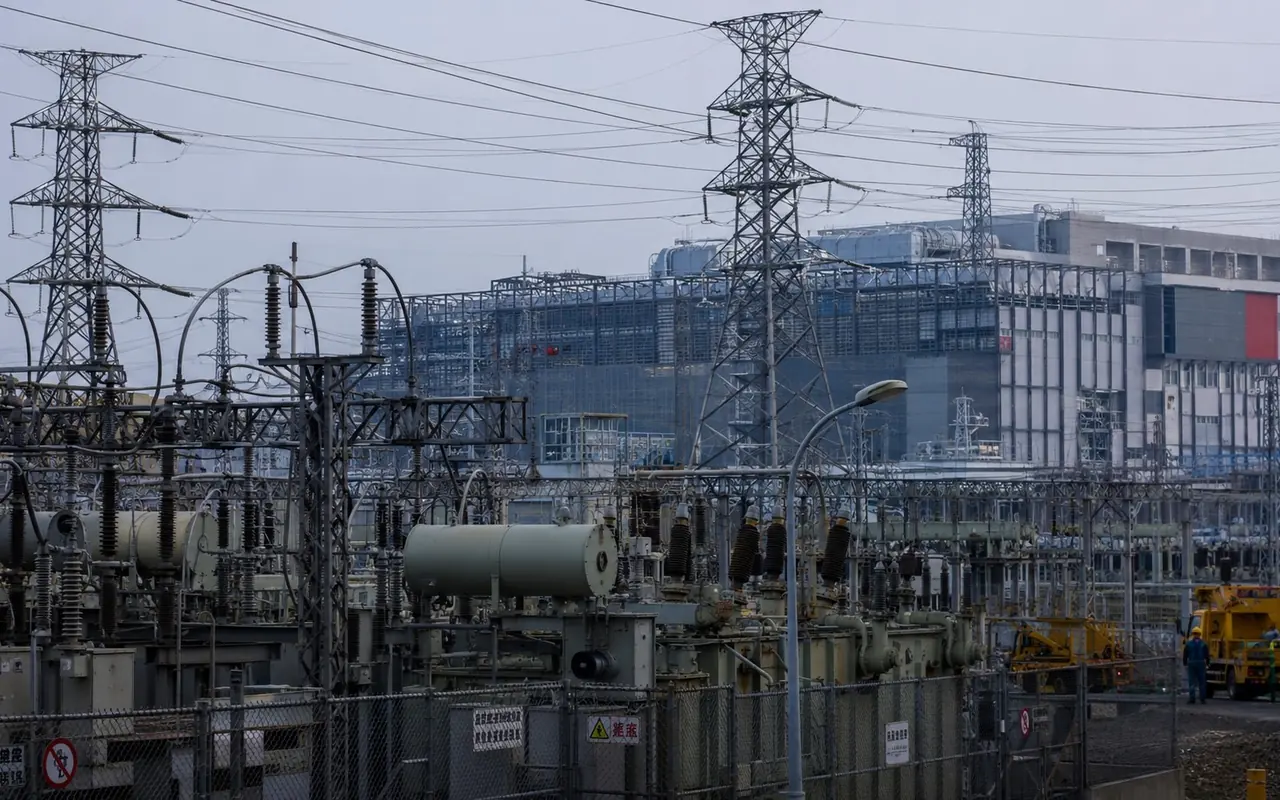
AI Wants to Eat Taiwan's Electricity: How to Get Through Four Years of a Low Night-Time Reserve Margin
Taiwan is winning orders from around the world on the strength of AI, but AI and semiconductor expansion also eat electricity — Taipower estimates more than 5GW of new demand by 2030. The government's latest supply-and-demand report shows the night-time reserve margin running at 12.8%, 12.5%, 8.0% and 7.1% from 2026 through 2029. This is a long-term planning indicator, not a daily operating reserve figure; the real problem is that industrial expansion is running straight into a four-year window of thin night-time supply margin.