
AI Wants to Eat Taiwan's Electricity: How to Get Through Four Years of a Low Night-Time Reserve Margin
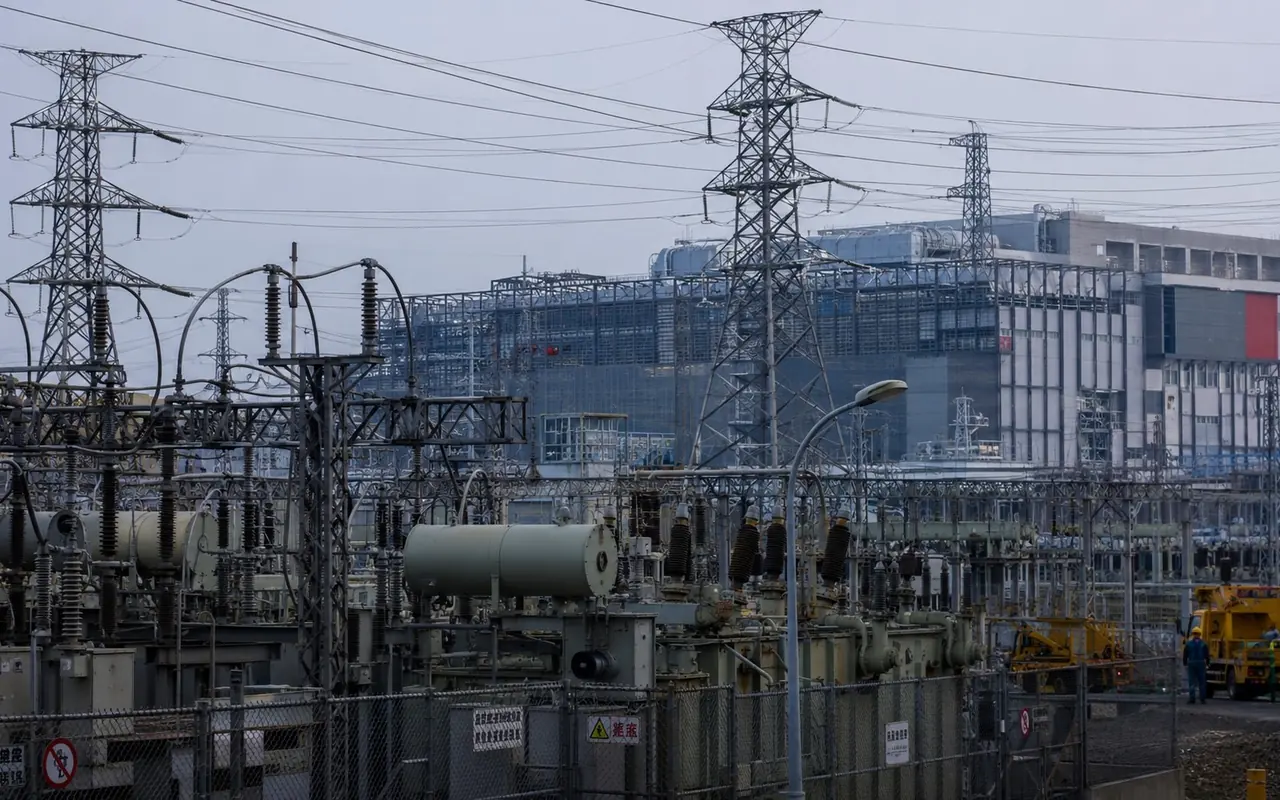
Taiwan is winning orders from around the world on the strength of AI, but AI and semiconductor expansion also eat electricity — Taipower estimates more than 5GW of new demand by 2030. The government's latest supply-and-demand report shows the night-time reserve margin running at 12.8%, 12.5%, 8.0% and 7.1% from 2026 through 2029. This is a long-term planning indicator, not a daily operating reserve figure; the real problem is that industrial expansion is running straight into a four-year window of thin night-time supply margin.
Article contents01 / 07
- Taipower estimates that, to keep pace with expansion across the semiconductor- and AI-related supply chain, new electricity demand will exceed 5GW by 2030; this is not AI data centers' demand alone. AI data centers by themselves are projected to reach roughly 450MW by 2029 (estimate; medium confidence).
- The risk window is right in front of us: the government's latest estimate puts the night-time reserve margin at 12.8%, 12.5%, 8.0% and 7.1% from 2026 through 2029, recovering to 15.2% in 2030. This is an annual long-term planning indicator, not a daily operating reserve figure; 15% is the government-approved target for a reasonable reserve margin.
- Restarting the Ma-anshan (Nuclear Three) plant still has to clear safety and statutory procedures and cannot be treated as an immediately available power source. This is an extension of "Eleven Days": new industrial demand is running into a fragile structure in which natural gas supplied 47.7% of generation in 2025 and LNG safety stock sits at roughly 11 days.
“AI Wants to Eat Taiwan's Electricity: How to Get Through Four Years of a Low Night-Time Reserve Margin” reports that The 2026–2029 Night-Time Reserve Margin Is Thin(7.1–12.8%)。 12.8%, 12.5%, 8.0%, 7.1% in sequence; recovering to 15.2% in 2030 [12]。
“AI Wants to Eat Taiwan's Electricity: How to Get Through Four Years of a Low Night-Time Reserve Margin” reports that Taipower Estimates Over 5GW of New Demand by 2030(5GW+)。 Covers the semiconductor- and AI-related supply chain, not AI alone [11]。
“AI Wants to Eat Taiwan's Electricity: How to Get Through Four Years of a Low Night-Time Reserve Margin” reports that TSMC Alone Consumes About a Tenth of National Electricity(10%)。 Industry accounts for about 55% of national demand; TSMC's usage could triple by 2030 [3][7]。
“AI Wants to Eat Taiwan's Electricity: How to Get Through Four Years of a Low Night-Time Reserve Margin” reports that Restarting Nuclear Three Requires Its Own Safety Inspection and Nuclear Safety Commission Review(In process)。 Cannot be counted as a confirmed available power source for 2026–2029 [11]。
“AI Wants to Eat Taiwan's Electricity: How to Get Through Four Years of a Low Night-Time Reserve Margin” reports that Data Centers Above 5MW North of Taoyuan Suspended Since 2023; Transformer Shortage Adds Another 6–12 Months(North capped)。 The northern grid is feeling the squeeze first [2][9]。
“AI Wants to Eat Taiwan's Electricity: How to Get Through Four Years of a Low Night-Time Reserve Margin” reports that Gas Supplied 47.7% of Generation in 2025, LNG Safety Stock About 11 Days(47.7% / 11 days)。 New industrial demand is running into a fragile energy structure [12] (follows "Eleven Days")。
The story Taiwan has been proudest of in recent years is AI: semiconductors pulling in orders from all over the world, data centers going up one after another. But this story has a subtitle nobody likes to talk about: AI is very good at making money, and it is also very good at eating electricity.
Taiwan Power Company (Taipower) estimates that, to keep pace with expansion across the semiconductor- and AI-related supply chain, new electricity demand will exceed 5GW by 2030 [11]. That figure covers the whole chain — foundries, memory, packaging, servers — and cannot be shorthanded as "AI alone needs 5GW." AI data centers by themselves are projected to reach roughly 450MW by 2029 (estimate; medium confidence) [9].
And that is only the "new" part. Look at the existing stock, and an even more striking fact appears: TSMC alone consumes roughly 10% of all the electricity in Taiwan; add up the entire industrial sector and it consumes about 55% of national electricity [3]. Taiwan's grid is, in essence, already a network built to feed advanced manufacturing.
Put another way: Taiwan's energy security is now tied to its technological competitiveness as a single fate line. Too little power hurts the economy and national security; power that is too expensive hurts industrial competitiveness. How this line runs will decide whether Taiwan's "AI heart" can keep beating at full strength — this is precisely the energy paradox built into Taiwan's "sovereign AI ambition" [4].
The question is: the AI that props up the economy is running straight into a grid that can barely hold up.
For many people in Taiwan, "power shortage" is not an unfamiliar phrase. The two unannounced island-wide blackouts of 2021 left millions of households groping in the dark on sweltering nights — the most direct physical sensation of an insufficient power margin. Now that AI is pushing demand to another order of magnitude, that same unease about "will the power trip again" has returned to every household and factory.
“AI Wants to Eat Taiwan's Electricity: How to Get Through Four Years of a Low Night-Time Reserve Margin” reports that Taipower Estimates Over 5GW of New Demand by 2030(5GW+)。 Covers the semiconductor- and AI-related supply chain, not AI alone [11]。
The Next Four Years Are a Window of Thin Night-Time Supply Margin
The number that most deserves to be circled is not 2030 — it is the four years from 2026 to 2029.
The Ministry of Economic Affairs' latest supply-and-demand report, published in 2026, uses the "night-time reserve margin": a long-term planning indicator measured on an annual basis, calculated from night-time net peak capacity against night-time peak load. From 2026 through 2029 it runs, in sequence, at 12.8%, 12.5%, 8.0% and 7.1%, recovering to 15.2% in 2030 and 20.8% in 2031 [12].
This must not be conflated with the "operating reserve margin." The operating reserve margin is a short-term, daily indicator of instantaneous peak dispatchability; in 2025 it stayed above the 10% green-light threshold on 342 days [12]. The government-approved target for a reasonable reserve margin is 15%. That target is not a regulatory threshold for daily short-term dispatch. The correct conclusion is: the latest official long-term planning shows a thin night-time supply margin for 2026–2029, dropping to single digits especially in 2028 and 2029 — but that is not the same as forecasting a power shortage every single day.
“AI Wants to Eat Taiwan's Electricity: How to Get Through Four Years of a Low Night-Time Reserve Margin” reports that The 2026–2029 Night-Time Reserve Margin Is Thin(7.1–12.8%)。 12.8%, 12.5%, 8.0%, 7.1% in sequence; recovering to 15.2% in 2030 [12]。
The forecast still carries uncertainty: load, temperature, energy-efficiency gains, renewables and new-unit timelines can all change the outcome. So the reasonable judgment is: this is a planning curve that needs to be recalculated every year, not a record of shortages that have already happened. But the latest official figures are already enough on their own to support a risk judgment of "the night-time margin is thin" — there is no need to splice together older estimates using a different methodology to build a scarier narrative.
The signal actually appeared some time ago. Since 2023, Taipower has suspended accepting applications from data centers north of Taoyuan with a single capacity above 5MW, steering operators toward the central and southern regions where the grid has more headroom; even the conditional relaxation at the end of 2025 was opened only to operators that can "supply their own generation or storage and feed power back to the grid at peak times," and with the transformer shortage, grid-connection timelines will be pushed back another 6 to 12 months [2][9]. The northern grid feeling the squeeze first is the first alarm of this narrow window.
“AI Wants to Eat Taiwan's Electricity: How to Get Through Four Years of a Low Night-Time Reserve Margin” reports that Data Centers Above 5MW North of Taoyuan Suspended Since 2023; Transformer Shortage Adds Another 6–12 Months(North capped)。 The northern grid is feeling the squeeze first [2][9]。
One Company, a Tenth of the Power
Zoom in on TSMC and you see how sensitive this issue really is.
TSMC is not only eating electricity — its appetite is also growing fast. One estimate suggests TSMC's electricity consumption could roughly triple by 2030 compared with today (estimate; medium confidence) [7]. One company's power-demand curve is, in effect, tugging on the entire nation's power planning. This creates a dual pressure: on one side, Taiwan must guarantee stable supply, or it shakes the very foundation of the "silicon shield"; on the other side, to reflect costs and dampen demand, industrial electricity rates have already risen by a cumulative 25% to 39% since 2024, to the point that TSMC now pays more for electricity in Taiwan than it does at its plants in the United States, Japan or Germany [2].
This is a subtle turning point: Taiwan has long used "cheap electricity" as an advantage for attracting investment and talent, and now electricity is becoming both more expensive and tighter at the same time. As power stops being cheap and abundant, Taiwan's manufacturing cost structure is quietly being rewritten.
More paradoxically still: if Taiwan restricts TSMC's expansion because of power shortages, that amounts to disarming its own silicon shield; but if it satisfies TSMC's appetite for electricity without limit, that risks crowding out households and other industries. The dilemma of "who gets priority access to power" used to hide behind abundant supply — now, as the margin tightens, it is being pushed nakedly onto the table. It tests not just engineering, but political and value trade-offs.
“AI Wants to Eat Taiwan's Electricity: How to Get Through Four Years of a Low Night-Time Reserve Margin” reports that TSMC Alone Consumes About a Tenth of National Electricity(10%)。 Industry accounts for about 55% of national demand; TSMC's usage could triple by 2030 [3][7]。
Nuclear Three Could Put Out the Fire Nearby, but It's Stuck in a Paradoxical Referendum
Faced with the gap, the most direct option is nuclear power. But this path has run into Taiwan's deepest political deadlock.
On August 23, 2025, Taiwan held a national referendum on "whether to restart Unit 2 of the Ma-anshan (Nuclear Three) nuclear power plant." The result was deeply paradoxical: 4.34 million votes for "agree" (21.7% of eligible voters), far more than the 1.51 million votes for "disagree" — the "agree" votes in fact formed a large majority. But because the total vote count did not cross the "one-quarter of eligible voters" threshold (roughly 5 million votes) needed for the referendum to pass, this referendum — where a majority said yes — was ultimately ruled rejected for "failing to meet the threshold" [8].
“AI Wants to Eat Taiwan's Electricity: How to Get Through Four Years of a Low Night-Time Reserve Margin” reports that Restarting Nuclear Three Requires Its Own Safety Inspection and Nuclear Safety Commission Review(In process)。 Cannot be counted as a confirmed available power source for 2026–2029 [11]。
After the referendum, the administration turned to an administrative route instead: Taipower plans to submit the case for restarting Nuclear Three to the Nuclear Safety Commission for review. But even if the review is approved, a shut-down nuclear plant still needs 2 to 3 years to be brought back into safe operation [8]. Even if Nuclear Three is worth saving, it is distant water — it cannot put out the fire nearby across these four years from 2026 to 2029.
What This Runs Into Is Taiwan's Most Fragile Structure
This narrow window is dangerous precisely because it runs into the fragile structure discussed in "Eleven Days."
In 2025, natural gas supplied 47.7% of Taiwan's electricity generation, while natural gas safety stock sits at roughly 11 days; nuclear power's share, meanwhile, has fallen to 1.1% [12]. So new industrial demand, near-half reliance on gas, ultra-short inventory and the retreat of nuclear power are all stacking up at the same point in time. If any single link runs into trouble — a Middle East gas cutoff, a unit failure, delays to renewables or new units — the four years of a thin night-time reserve margin could escalate from "insufficient margin" to a genuine supply risk.
There is another layer to this fragility: Taiwan's natural gas is almost entirely imported and unloaded at receiving terminals, and building new terminals is often stuck in environmental disputes (such as the "algal reef" controversy over the third natural gas receiving terminal). On one side is electricity demand pushed up by AI; on another, gas that burns fast and cannot be stored for long; and on yet another, receiving terminals that cannot be built quickly and renewables that keep missing their targets. Where these threads intertwine is exactly the tightest knot in Taiwan's energy security.
“AI Wants to Eat Taiwan's Electricity: How to Get Through Four Years of a Low Night-Time Reserve Margin” reports that Gas Supplied 47.7% of Generation in 2025, LNG Safety Stock About 11 Days(47.7% / 11 days)。 New industrial demand is running into a fragile energy structure [12] (follows "Eleven Days")。
Is There a Fix? Yes — but Every Option Takes Time
Faced with this narrow window, Taiwan is not without options — it is simply that every option requires time and resolve.
The most practical short-term move is to "use the electricity already on hand more intelligently": expand energy storage systems (banking off-peak power to release at peak times), promote "demand response" (using price incentives to ask large users to cut load at peak times), and encourage data centers to "provide their own generation and storage" to ease the load on the main grid. In the medium term, it depends on whether new units and renewables can come online on schedule — this is exactly where the gap between official and critics' numbers comes from. In the longer term, more forward-looking options such as geothermal and small modular reactors (SMRs) are also under discussion.
But every option shares the same common enemy: time. Storage has to be built, the grid has to be upgraded, units have to be constructed, renewables have to pass environmental review — none of it can be conjured by pressing a button. That is exactly why "the four years 2026–2029" becomes a narrow window: it is not that Taiwan has no solutions, but that most of the solutions will only arrive in stages after these four years.
It is worth noting that Taiwan is not alone. AI's power-demand shockwave is a global one — some U.S. states have seen electricity prices spike from a surge in data centers, and Ireland once froze new data-center grid connections around Dublin. The difference is that Taiwan is an "energy island": there is no cross-border grid it can call on for immediate rescue, and once the gas runs out, it has to wait for the next shipment. Others facing a shortage can buy power from a neighboring country to tide themselves over; when Taiwan faces a shortage, it can only rely on itself.
Between Optimism and Broken Promises
So should we panic? Both readings deserve a hearing.
Red Team East reminds us: don't write this as "power shortage will doom the nation." Taipower has demand response, storage, new units and renewables coming online, and the numbers stabilize after 2030 — excessive doom-mongering is often a political projection from either the pro-nuclear or anti-nuclear camp. Red Team West counters: the official forecast still depends on engineering being completed on schedule. Taiwan's renewables and new units have been delayed before; using the post-2030 stabilized figures while ignoring the thin 2026–2029 night-time reserve margin is also incomplete.
The overlap between the two is clear: the long-term direction is manageable, but the thin night-time margin over these four years is real, and the forecast itself still carries schedule risk. The real point is not to be pessimistic or optimistic, but to frame the problem correctly: the bottleneck of Taiwan's AI and semiconductor ambitions is not just chips and talent — it is also the thin night-time reserve margin from 2026 to 2029.
There is also a common misunderstanding to dispel here: reducing the power-shortage question to a binary choice between "pro-nuclear vs. anti-nuclear." In fact, even if Nuclear Three restarted tomorrow, it could only fill in one piece of the puzzle; the real solution is a "combination punch" made up of storage, renewables, natural gas, energy efficiency and (possibly) nuclear power, plus an upgrade to the grid itself. Pinning the entire energy-security problem on a partisan fight over a single power source only lets the cross-party infrastructure that genuinely needs to happen keep getting stuck in political standoffs.
Three Taiwanese Perspectives
The state: Treat "AI electricity demand" and "grid resilience" as the same governance problem — accelerate grid upgrades, transformer expansion, storage and demand response, and use progressive electricity pricing plus siting guidance (toward the central and south) to balance load. The single most critical sentence is: the timeline for grid construction must be aligned with the timeline for AI investment. At the same time, be honest about the "two sets of numbers" — don't use the 2030 stabilization to paper over the real tightness of the four years right in front of us, because whitewashing the numbers is exactly what breeds "power-shortage anxiety" and energy-policy polarization. More fundamentally, Taiwan needs an energy roadmap that "survives changes in ruling party" — because the construction cycle for power plants and grids is far longer than a single administration's term; if energy policy gets flipped every time power changes hands, the ultimate cost is that this narrow window, where planning can never catch up with demand, keeps repeating itself.
Industry (data centers/semiconductors): Treat "electricity" as the first constraint on any AI deployment — site in the central and south, build your own renewables and storage, and sign long-term corporate power purchase agreements (CPPAs). Now that TSMC's electricity bill in Taiwan is already among the most expensive in the world, "energy efficiency" is no longer just an ESG slogan — it is real, hard-cash competitiveness. The competition for computing power ultimately comes back to the competition for electricity.
SMEs: Large power users need to plan for differentiated tariffs and peak-curtailment risk, building in energy efficiency and backup capacity; ordinary SMEs should treat "electricity-price catch-up increases" as a baseline scenario to prepare for (connecting to the deferred bill described in "Another Bill") — the pressure of higher rates on large users will, in the end, usually pass down along the supply chain. Rather than waiting passively for a price hike, it is better to take early stock of your own power-usage structure and improve energy efficiency — treating "every kilowatt-hour saved" as the cheapest form of competitiveness there is.
Taiwan spent a decade turning itself into the heart of the AI world. But for a heart to keep beating for a long time, it needs blood vessels thick enough. The AI story is written on chips, but whether it can keep being written depends on the night-time reserve-margin curve of the next four years — and on whether Taiwan is willing to honestly face this power puzzle it has set for itself. After all, energy security has never been the homework of any one political party — it is a long-term exam that this entire island must carry together, across administrations and across political lines.
Sources
- Taipower — Power Development Planning: Reserve Margin
- Taipower (press release) — Electricity is a city's competitiveness! Supporting the development of the AI and semiconductor industries should mean supporting power infrastructure (new demand estimated to exceed 5GW before 2030)
- Energy Administration, Ministry of Economic Affairs — 2025 National Electricity Supply and Demand Report (2025 actuals; 2026–2035 night-time reserve margin)
- Global Taiwan Institute (2026-02) — Taiwan's Bumpy Road to Energy Resilience
- Yale E360 — Why Taiwan and Its Tech Industry Are Facing an Energy Crisis
- CAPRI — The Energy Paradox of Taiwan's Sovereign AI Ambition
- Digitimes (2026-03-03) — Taipower forecasts over 5GW new power demand by 2030
- Taipei Times (2025-10-01) — EDITORIAL: Ministry's energy forecast too rosy
- TrendForce — TSMC's Electricity Demand Could Triple by 2030
- NucNet (2025-08) — Majority Vote For Restart Of Taiwan Reactor, But Referendum Fails To Meet Threshold
- The Reporter — A survey of Taiwan's data-center power-demand pressure
- Taiwan News (2026-04-27) — Taiwan projects higher power demand from AI data centers
The December 4 Vote: If the IMO's Net-Zero Framework Passes, Which Bill Does Taiwan's Shipping Industry and Kaohsiung Port Pay First?
The IMO did not adopt the Net-Zero Framework in 2025, and December 4, 2026 is only the scheduled date for resuming the extraordinary session — contingent on confirmation by MEPC 85. Taiwan has no vote at the IMO, yet it will still feel the outcome through flag-state and port-state enforcement, fuel procurement, freight rates, and shipper contracts. What Taiwan should pay first is not an as-yet-undetermined carbon price, but three preparation costs: data, a fuel evidence chain, and contract transparency.
Not Just a Power Shortage: Taiwan's AI Data Centers Still Have to Clear Siting, Grid Interconnection and Equipment
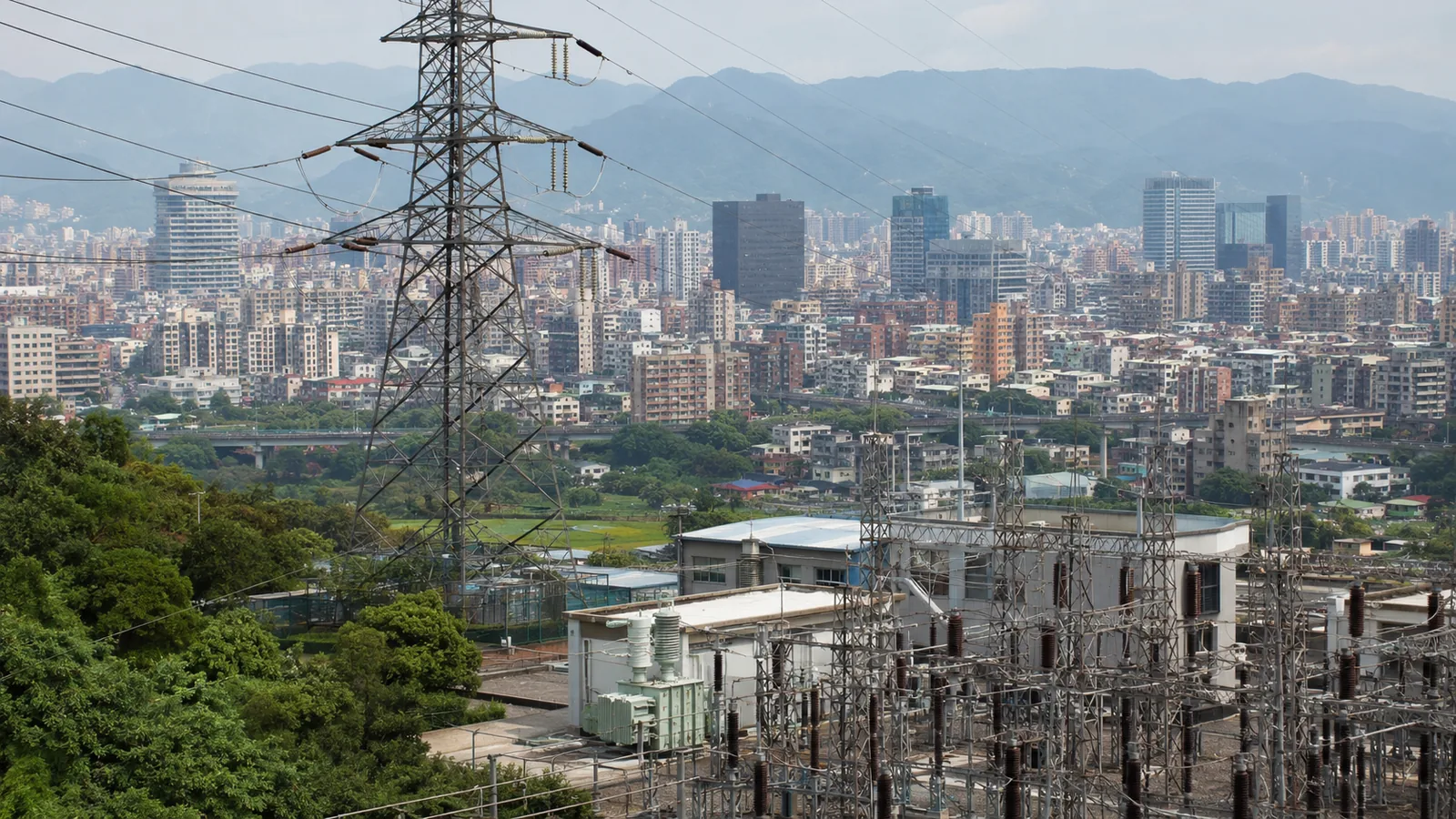
Taiwan's data-center constraint is not a binary choice between 'not enough electricity' and 'not enough parts.' Official data confirm that new applications above 5MW north of Taoyuan were once suspended from acceptance, that new or expanded facilities above 5MW must pass an energy-use review, and that the National Science and Technology Council is planning a 120MW Shalun computing center to come online in 2029; equipment lead times still have to be confirmed project by project with named suppliers.