
The Submarine Cable in the Sky: When the Line Is Cut, Who Keeps Taiwan Connected to the World
A submarine cable can be severed by a single ship dragging its anchor — so what is the backup? Low-earth-orbit satellites are Taiwan's last lifeline when the lines go dead. But should this line in the sky be woven by Taiwan itself, or rented from someone else? When Ukraine's drone boats lost contact and ran aground because of one decision by Elon Musk, Taiwan learned: true sovereignty is not about whether you have a satellite — it is about who holds the switch.
Article contents01 / 07
- The structural premise holds: a submarine cable can be cut, and low-earth-orbit (LEO) satellites are the necessary backup when the lines go down; Taiwan should not, and cannot, entrust its communications lifeline to a single foreign vendor or a single person's will.
- The real question of sovereignty is not 'do you have a satellite' but 'who holds the switch': off the coast of Crimea, Musk refused to extend Starlink coverage and Ukraine's drone boats lost contact and ran aground — which turns Taiwan's wariness of the 49% foreign-ownership cap into a rational calculation, not an emotional one.
- Building it yourself versus buying it is not an either/or choice: running Taiwan's own B5G program (first launch in 2027, validating payloads and the supply chain, a wartime core backup) alongside the OneWeb agency deal (648 satellites, enterprise bandwidth) in parallel is the pragmatic path; Taiwan's real strength lies in ground equipment and high-frequency components (Universal Microwave Technology has broken into all four major constellations' supply chains), but Microelectronics Technology's losses are a reminder that 'concept' does not equal 'profit.'
“The Submarine Cable in the Sky: When the Line Is Cut, Who Keeps Taiwan Connected to the World” reports that Constellation Size: Starlink's Overwhelming Lead(10,413 vs 648)。 Starlink has more than ten thousand satellites in orbit, covering more than a hundred countries; OneWeb has only 648 [9][13]。
“The Submarine Cable in the Sky: When the Line Is Cut, Who Keeps Taiwan Connected to the World” reports that Taiwan's First B5G LEO Communications Satellite Set to Launch(2027)。 600 km orbit; 1A's payload is built by a U.S. company, 1B is built domestically; the launch was pushed back from 2026 [1][2]。
“The Submarine Cable in the Sky: When the Line Is Cut, Who Keeps Taiwan Connected to the World” reports that The Foreign-Ownership Cap Is Why Starlink Still Isn't Operating After Five Years(49%)。 SpaceX wants a wholly owned subsidiary and will not accept majority local ownership [5]。
“The Submarine Cable in the Sky: When the Line Is Cut, Who Keeps Taiwan Connected to the World” reports that Same 'LEO Concept' Stocks, Very Different Stories: Universal Microwave Technology vs. Microelectronics Technology(NT$2.45B vs -NT$1.15B)。 Universal Microwave Technology's 2025 revenue hit a record high; Microelectronics Technology posted a net loss and was moved to full-cash-delivery trading [10][11]。
2022, the Black Sea. Several Ukrainian drone boats laden with explosives were quietly closing in on the Russian fleet inside a Crimean port. On the final stretch of the approach, they suddenly lost their connection, lost control, and washed up harmlessly on shore [7].
What cut their connection was not Russian electronic warfare, but a man far away in the United States — Elon Musk. Ukraine had asked for Starlink coverage to be extended offshore from Crimea, and Musk refused; he later said he feared this would trigger a wider war [7]. A single private entrepreneur's decision, made in an instant, changed the outcome of an attack.
Taiwan's national-security officials took note of this scene. Because it asks exactly the question Taiwan most needs to think through: when your communications lifeline is in someone else's hands, who actually decides when that line is switched on and off?
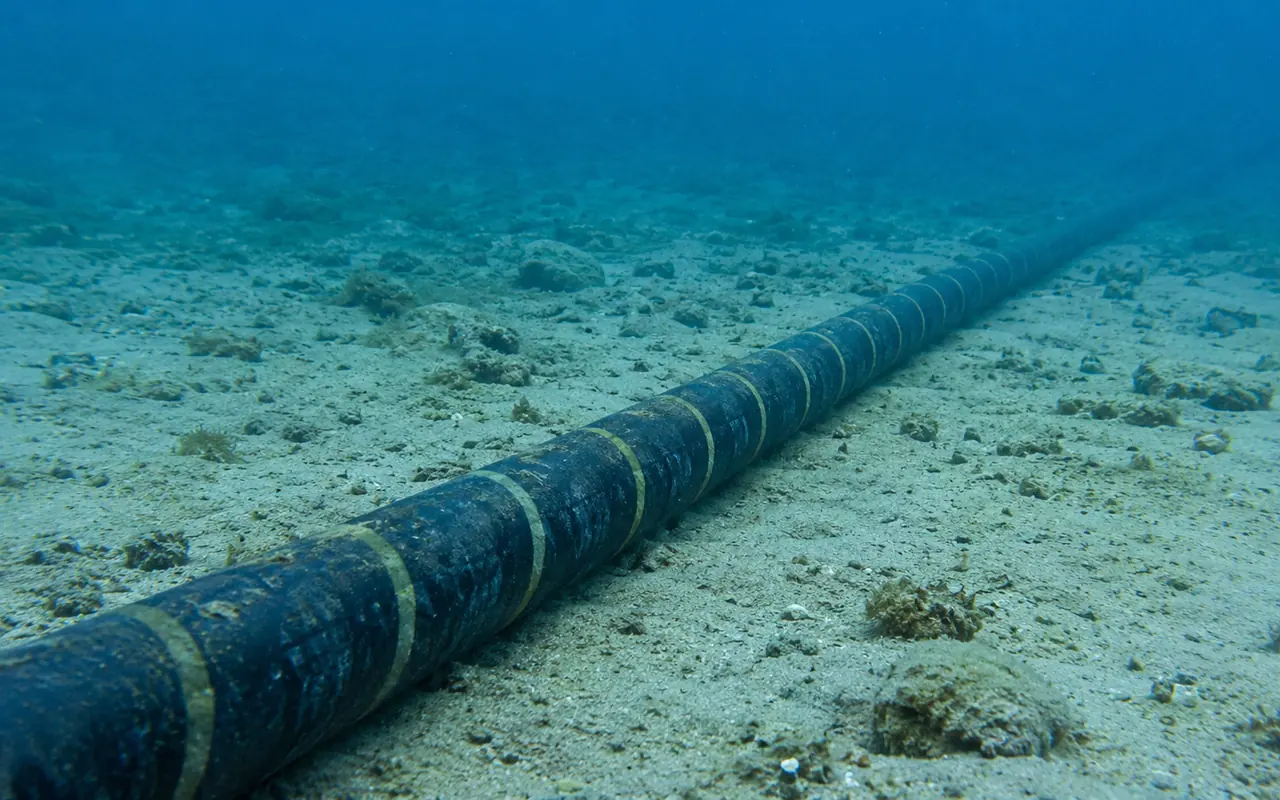
In our earlier report on submarine cables, we discussed how more than 90% of Taiwan's international data traffic moves in and out through a small number of unseen cables on the seabed — and those cables keep getting "bumped and cut." When a submarine cable can be severed by a single ship dragging its anchor, where is the backup? The answer is right overhead — low-earth-orbit (LEO) satellites are the submarine cable in the sky. But should this line in the sky be woven by Taiwan itself, or rented from someone else? And if rented, from whom?
1. Why Low Orbit, Why Now
Low-earth-orbit satellites fly at an altitude of roughly 600 km — close to Earth, with low latency — but the drawback is that each satellite covers only a small area, so it takes "laying down a great many of them" to weave a complete network [1]. This is exactly Starlink's approach: weaving a globe-covering network out of tens of thousands of small satellites.
How outsized is its scale? As of June 2026, Starlink has more than 10,000 satellites in orbit (roughly 10,413 launched, 10,397 operational), covering more than a hundred countries; the U.S. FCC has already approved the first batch of 7,500 satellites for its second-generation constellation (together with another 7,500 approved in January 2026, for a cumulative approved total of 15,000); the second-generation constellation's cumulative filings with the FCC have reached 29,988 [13]. By comparison, Europe's "runner-up," Eutelsat OneWeb, has a constellation of only 648 satellites [9].
“The Submarine Cable in the Sky: When the Line Is Cut, Who Keeps Taiwan Connected to the World” reports that Constellation Size: Starlink's Overwhelming Lead(10,413 vs 648)。 Starlink has more than ten thousand satellites in orbit, covering more than a hundred countries; OneWeb has only 648 [9][13]。
This gap in numbers spells out one harsh fact up front: when it comes to "global-class broadband," Starlink is in a class of its own, leading by a cliff-edge margin. Any plan that sets "building a constellation to replace Starlink" as its goal is unrealistic in the near term, given the cost, timeline, and launch capacity involved (confidence: high). Understanding this premise is what makes it possible to see what Taiwan is actually doing — and why it did not choose the biggest option.
2. Taiwan's "Self-Reliance": Two Satellites, and a 2027 That Keeps Slipping
The centerpiece of Taiwan's own LEO satellite program is the Taiwan Space Agency's (TASA) Beyond 5G (B5G) LEO communications experimental satellite. Frankly, its scale is not in the same league as Starlink's: it is planned to consist of two high-performance experimental satellites (designated 1A and 1B), targeting an orbit of roughly 600 km at an inclination of 44 to 50 degrees (1A is slated to launch in 2027 and has not yet reached orbit), with the goal of "validating Taiwan's self-developed communications payload and ground communications equipment" [1].
Pay attention to the words "experimental" and "validating" — they are the key to understanding this whole story.
On timing, the first B5G satellite was originally planned for a series of launches starting in 2026, but that was pushed back to 2027, and the second satellite (1B) will not arrive until around 2030 [2]. The delay is a fact (confidence: high), and it is not the first time this program has slipped. The division of payload work is also an honest reflection of where Taiwan's capabilities stand: 1A's communications payload went to international cooperation, awarded to the U.S. firm CesiumAstro in April 2025; 1B is being built domestically, to demonstrate Taiwan's own aerospace capability [2][3]. TASA's stated goal is for roughly 80% of the B5G satellite's components to come from Taiwanese suppliers — but that is a program target, not an already-achieved reality (confidence: medium) [3].
“The Submarine Cable in the Sky: When the Line Is Cut, Who Keeps Taiwan Connected to the World” reports that Taiwan's First B5G LEO Communications Satellite Set to Launch(2027)。 600 km orbit; 1A's payload is built by a U.S. company, 1B is built domestically; the launch was pushed back from 2026 [1][2]。
Zooming out, Taiwan's "Third Phase Long-Term Space Technology Program" commits a total of NT$25.1 billion from 2019 to 2028, but its main thrust is actually about ten remote-sensing satellites — high-resolution optical imaging, ultra-high-resolution optics, and synthetic aperture radar (SAR) — while the communications constellation is only just getting started [4].
So when someone describes Taiwan's own LEO program as "Taiwan's version of Starlink," that claim needs a discount applied: at this stage it is "validation and training," not yet a resilience mainstay capable of carrying full bandwidth in wartime. Misplacing its value will only leave both expectations unmet. Its real significance only becomes clear from another angle.
3. Five Years On, Why Hasn't Starlink Arrived?
If Starlink is this strong, why doesn't Taiwan just use it directly?
There are two layers to the sticking point. The first is regulatory: Taiwan's Telecommunications Management Act requires LEO satellite service providers to register as telecommunications enterprises, requires the chairperson to hold Republic of China nationality, and caps direct foreign ownership at 49% [5]. SpaceX's global practice, meanwhile, is to set up 100%-owned subsidiaries; the two sides have been deadlocked on this red line for five years. SpaceX has never directly responded to repeated requests for comment from Taiwanese officials and media on this point; the only thing that can be confirmed is that it has consistently insisted on full ownership and has not accepted being asked to give up a majority stake [6].
“The Submarine Cable in the Sky: When the Line Is Cut, Who Keeps Taiwan Connected to the World” reports that The Foreign-Ownership Cap Is Why Starlink Still Isn't Operating After Five Years(49%)。 SpaceX wants a wholly owned subsidiary and will not accept majority local ownership [5]。
The second layer is the real core issue — trust. Taiwanese officials have pointed out more than once that Musk has enormous commercial interests in China: he has called Taiwan "an inalienable part of China" and suggested handling it like a special administrative region (in an October 2022 Financial Times interview), and at the September 2023 All-In Summit podcast he compared Taiwan to Hawaii. A Ministry of Digital Affairs official put it more bluntly: "If China can influence Musk, in an emergency he could simply turn off Taiwan's satellite receivers." [6]
This is not paranoia. Go back to that night in the Black Sea: the drone boats lost contact and ran aground not because the enemy was too strong, but because the switch for the service sat in the hands of a private individual with enormous interests in Beijing [7]. Once you understand Ukraine's experience, Taiwan's wariness about that 49% line stops looking like nationalist purism and starts looking like rational risk pricing.
This is a point that needs to be honestly separated, to avoid self-deception: whose rocket you launch on, and who holds the switch for the service, are two different questions. Taiwan's own domestically built satellites still have to launch on SpaceX rockets — Hon Hai's second-generation "Pearl" satellites lifted off on a Falcon 9 on May 3, 2026 [12]. Dependence on launch capacity is a real issue, but it is "one-time"; whether communications service can be switched off remotely in wartime is the "ongoing" matter of life and death. It is the latter that Taiwan should prioritize holding onto.
Update (July 21, 2026): Taiwan's Legislative Yuan passed third-reading amendments to Articles 36 and 95 of the Telecommunications Management Act, allowing LEO satellite operators — once approved by the competent authority — to be exempted from the chairperson-nationality requirement and the foreign-ownership cap. The five-year deadlock described in this article saw a legal turning point after this piece was published (June 25, 2026); whether any operator has since successfully applied under the new provision remains to be seen.
4. So Rent From the Runner-Up: Chunghwa Telecom and OneWeb
Having decided not to bet on Starlink, Taiwan chose a different path: in November 2023, Chunghwa Telecom signed an exclusive agency agreement with Eutelsat OneWeb for Taiwan, and after more than six months of review, obtained Taiwan's first OneWeb commercial license in June 2025 [8].
Why OneWeb? The key is not superior technology — its entire constellation has only 648 satellites, with far less coverage density and bandwidth than Starlink [9]. The key lies in its business model: OneWeb operates through a "telecom-operator agency" structure, willing to accept ownership and operation by a local telecom carrier, which lines up neatly with Taiwan's sovereignty preferences and regulatory requirements [8]. Taiwan would rather have a line with narrower bandwidth but a switch held by its own people, than the widest line available that could be switched off remotely by someone else.
The cost is also real: OneWeb's coverage of Taiwan currently relies on relaying signals through three nearby ground stations in Japan, Guam, and Thailand, and building a single ground station costs roughly US$15 million (not including operations and maintenance) [8]; the initial service targets government and enterprise users, positioned as a "data network backup" rather than a mass consumer service [8]. It can weave together a "good-enough safety net," but if treated as the sole solution in wartime, its bandwidth would likely fall short.
So the real answer emerges: it is not a binary choice between "build it yourself" and "buy it," but multiple sources, multiple layers — Taiwan's own B5G program carries wartime core backup and supply-chain training, the OneWeb agency deal supplies everyday resilience for enterprise and government, and the door is kept open, under the right conditions, to add more constellations in the future (even Starlink, if conditions change). This is exactly an extension of the "sea, land, and sky" logic in our submarine cable report: submarine cables, mobile networks, microwave links, and LEO satellites all back each other up in layers. LEO satellites are not meant to carry the entire network alone — they are meant to hold up the single most critical line of communication if the submarine cables are ever cut entirely.
5. Where the Real Money Might Be Made: The Ground Segment
Having talked this much about sovereignty, it is easy to overlook a more down-to-earth question: what can Taiwan actually earn out of this space race?
The answer is not up in the sky, but on the ground. Taiwan's supply chain is toughest at electronics manufacturing and high-frequency communications — and getting a satellite network to actually work requires large quantities of ground equipment, antennas, and RF components. This is exactly the sweet spot where Taiwanese manufacturers have staked their claim.
The most representative case is Universal Microwave Technology: it makes high-frequency microwave and millimeter-wave components (filters, antenna modules, power amplifiers, RF subsystems), and has already broken into the supply chains of all four major LEO constellations — SpaceX, Amazon (Kuiper), Eutelsat OneWeb, and Telesat [10]. In 2025 its full-year revenue hit a record NT$2.452 billion, with LEO satellite products climbing to nearly 70% of the fourth quarter's share; undelivered orders on hand exceed NT$1.8 billion, and analysts even estimate 2026 revenue could grow a further roughly 90% (this is an analyst forecast, not an accomplished fact — flagged as inference) [10].
“The Submarine Cable in the Sky: When the Line Is Cut, Who Keeps Taiwan Connected to the World” reports that Same 'LEO Concept' Stocks, Very Different Stories: Universal Microwave Technology vs. Microelectronics Technology(NT$2.45B vs -NT$1.15B)。 Universal Microwave Technology's 2025 revenue hit a record high; Microelectronics Technology posted a net loss and was moved to full-cash-delivery trading [10][11]。
But on the same track, the scenery is worlds apart. Microelectronics Technology, another stock likewise labeled a "LEO satellite concept play," posted a 2024 after-tax net loss of NT$1.146 billion, a loss of NT$4.55 per share, with net worth below half of paid-in capital, and was moved into full-cash-delivery trading starting March 2025 [11]. One company hitting a record high, the other pushed into full-cash-delivery trading — the contrast is a splash of cold water, reminding everyone: a "concept" is not the same as "profit," and this industry does carry out real culling.
Hon Hai (Foxconn) has taken yet another path: from its first-generation "Pearl" CubeSat launched in 2023 to the second-generation PEARL-1A/1B validating a Ka-band inter-satellite link (ISL) in May 2026, its focus is on satellite "assembly, integration, and test" (AIT) [12]. Taiwan's actual position is therefore clear: strong in ground equipment and high-frequency components, weak in system integration and the payload core. Recognizing this is what tells the industry where to put its effort — and that, in turn, lines up neatly with the sovereignty goal of "building up a self-reliant supply chain."
6. Three Positions
For the state: govern LEO satellites as national-security-grade critical infrastructure, with the core principle that "control of the service switch must remain controllable." Prioritize resources on self-developed payload validation (B5G, the wartime core backup) and on a supply chain that can actually be monetized, rather than chasing an unrealistic goal of building everything in-house. External procurement should follow "multiple sources, multiple layers": the OneWeb agency deal is the current mainstay, but Taiwan should avoid letting a single substitute foreign vendor become a new single point of dependence, and should keep the door open, under the right conditions, to combining multiple constellations (including Starlink, should conditions change in the future). At the same time, treat dependence on launch capacity (the launch side) and control over the service (the operating side) as separate layers, so a one-time risk is not mistaken for an ongoing one.
For industry intermediaries (telecom/satellite/equipment): Taiwan's opportunity lies in ground equipment and high-frequency components, not in competing with Starlink on constellation scale. Put resources behind the strengths already validated by all four major constellations — such as high-frequency RF, antennas, and ground-station integration — and help the government build out a multi-source backup architecture. But conduct honest technical and financial due diligence: "LEO concept" stocks are everywhere, and only the companies that can actually deliver and actually turn a profit are worth betting on; the contrast between Microelectronics Technology and Universal Microwave Technology is a warning bell.
For SMEs: businesses that depend on the cloud, cross-border payment flows, and remote collaboration should treat "communications could be cut" as a basic operating assumption, not a low-probability accident. Prepare a satellite or offline contingency plan in advance, and confirm that your telecom or cloud provider has multi-path routing and satellite backup; amid the panic and information warfare that would accompany an outage, don't let a single technical incident be amplified by rumor into a collapse of confidence in Taiwan's resilience — this, too, is a lesson carried over from our submarine cable report.
Conclusion
The threats Taiwan spends the most effort guarding against are missiles in the sky and warships at sea; but what is most likely to leave the world unable to reach Taiwan first is those few silent lines on the seabed — and that line in the sky which Taiwan does not yet fully hold in its own hands.
On the surface, the story of LEO satellites is a race over satellite counts and bandwidth; underneath, it is a much older question: at the most critical moment, who holds the switch that decides whether you can speak? Ukraine's drone boats gave a brutal answer. Taiwan's response is neither to spitefully refuse the strongest player out of pride, nor to naively believe it can single-handedly weave a network of tens of thousands of satellites; instead, it is this: weave the single most critical stretch of line yourself, rent a sufficient stretch from a trustworthy partner, and never hand every line over to the same person. Sovereignty was never about owning everything — it is about this: even if you are cut, the line still holds; and even if the line is cut, the switch remains in your own hands.
Sources
- Taiwan Space Agency (TASA) — Beyond 5G LEO Satellite (B5G LEO Communications Satellite Program)
- Executive Yuan — Advancing Taiwan's Space Technology Development (Third Phase Space Program, NT$25.1 billion)
- eoPortal — OneWeb Minisatellite Constellation (648-Satellite Constellation)
- Wikipedia — Starlink (In-Orbit Satellite Count and Constellation Size)
- Focus Taiwan — Payload for Taiwan's 1st B5G LEO satellite to be made by U.S. company
- Via Satellite — CesiumAstro to Provide Payloads and Ground Systems for Taiwan's LEO Satellites
- The News Lens — SpaceX's Starlink May Finally Land in Taiwan; Telecom Industry Hopes to Overcome Regulatory Hurdles (49% Foreign-Ownership Cap)
- Fortune — Taiwan needs Starlink or something like it… why it's looking beyond Elon Musk
- The Washington Post — Musk refused to allow Ukraine's military to use Starlink to attack Russian fleet
- CommonWealth — Choosing OneWeb Over Starlink: Can Taiwan Build Communications Resiliency?
- Liberty Times Net (Business) — With NT$1.8 Billion in Orders on Hand, Universal Microwave Technology's LEO Satellite Revenue Is Estimated to Grow 150% a Year
- Money Weekly — Why Do Universal Microwave Technology and Microelectronics Technology, Both LEO Satellite Concept Stocks, Tell Such Different Stories?
- TechNews — Hon Hai's Second-Generation LEO Satellites Launch, Beginning Inter-Satellite Link Validation (Pearl Satellites Ride a Falcon 9)
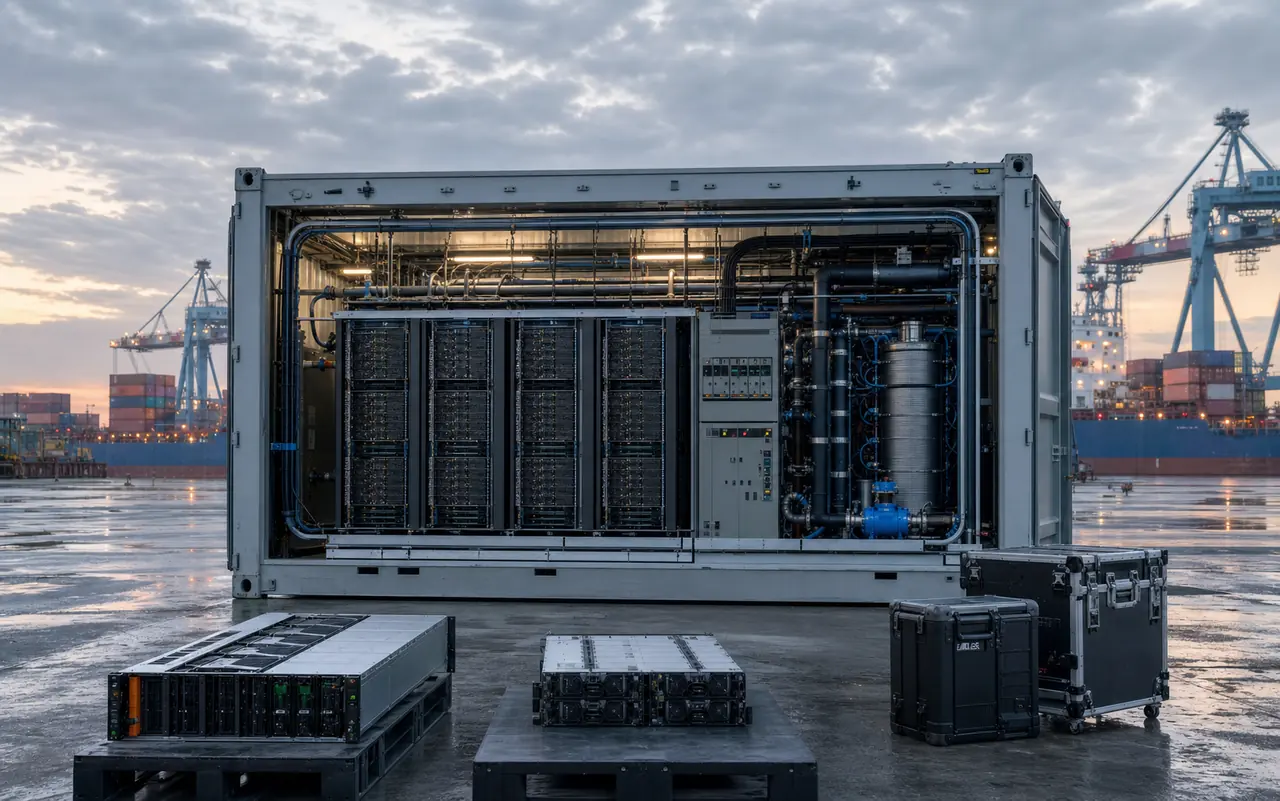
AI Is No Longer Just Chips: Washington Received 78 "Full-Stack Export" Applications — Will Taiwan Be a Core Partner or Just the Contract Manufacturer?
The U.S. Department of Commerce has received 78 full-stack AI export proposals. The unit of competition has shifted from a single chip or a single server to a complete package of hardware, data, models, cybersecurity, financing and industry applications. Taiwan's hardware edge still matters, but without a seat at the customer interface, in-field integration and long-term operations, the busiest player in the room will not necessarily capture the most value.
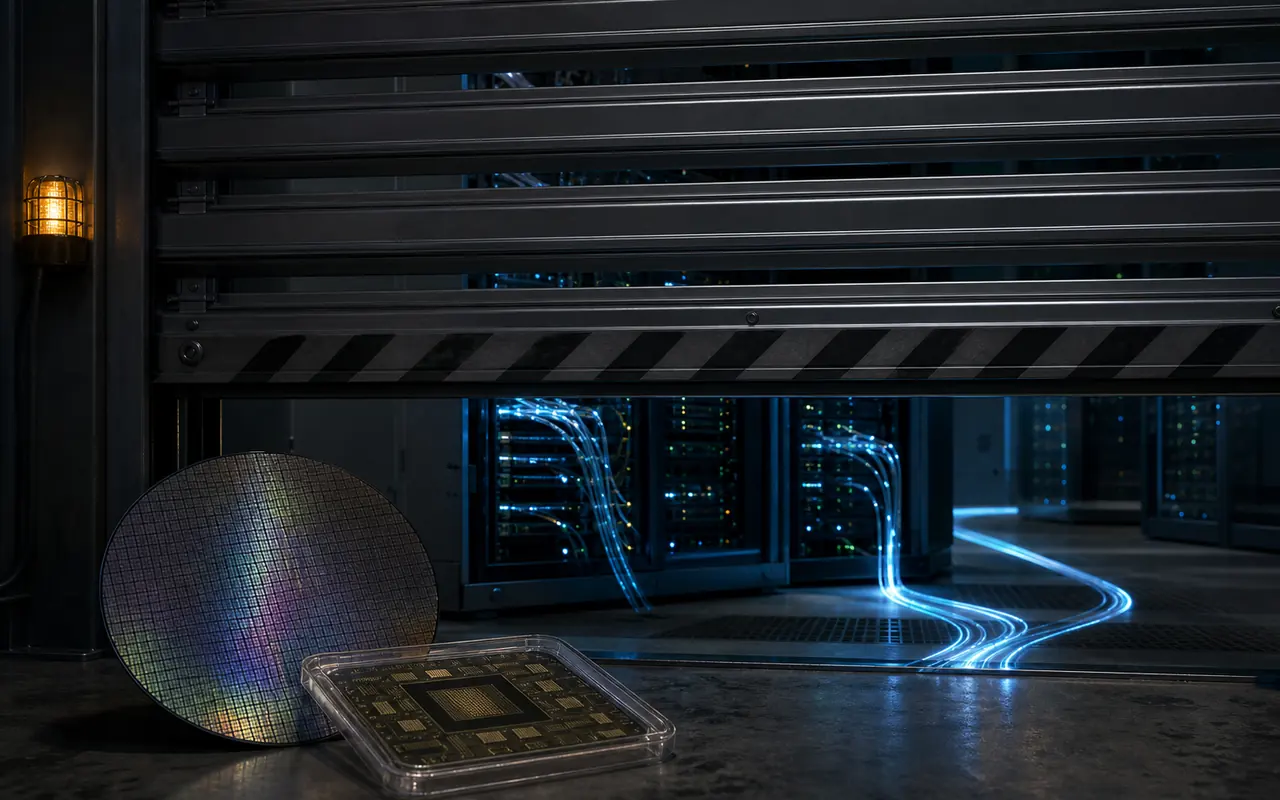
Is Beijing Building Its Own AI Wall? China Is Reportedly Weighing Limits on Models, Data and Chip Technology — Taiwan Should Not Rush to Score It as a Win
China's regulators are reported to be discussing restrictions on overseas access to its most advanced AI models. The policy options under discussion may also touch training data and chip design. As of 23 July, there is no formal rule, threshold or effective date. What actually needs preparing for is not a guess about when Beijing will shut the door, but pulling apart model weights, APIs, data and foundry manufacturing so there is room to substitute under different policy scenarios.