
AI Is No Longer Just Chips: Washington Received 78 "Full-Stack Export" Applications — Will Taiwan Be a Core Partner or Just the Contract Manufacturer?
The U.S. Department of Commerce has received 78 full-stack AI export proposals. The unit of competition has shifted from a single chip or a single server to a complete package of hardware, data, models, cybersecurity, financing and industry applications. Taiwan's hardware edge still matters, but without a seat at the customer interface, in-field integration and long-term operations, the busiest player in the room will not necessarily capture the most value.
Article contents01 / 10
- 78 is the number of applications received, not the number of selected consortia; the United States is still conducting an interagency review, and there is no public list of which Taiwanese firms, if any, have been chosen.
- Full-stack AI bundles hardware, data, models, cybersecurity, industry applications, financing and export licensing into a single market entry point — the unit of competition is no longer a single chip or server.
- Taiwan's upgrade path is not to blindly build its own large models, but to use trusted hardware as a base from which to secure a named position in field integration, data governance, cybersecurity, power and thermal management, and long-term operations.
Start with the number most likely to be carried away by the headline.
On 6 July 2026, the U.S. International Trade Administration, part of the Department of Commerce, announced that the American AI Exports Program had received 78 applications. Applicants proposed exportable "full-stack AI" packages in the form of company consortia, potentially spanning hardware, data, models, cybersecurity and industry-specific applications. [1]
This is not the United States having already chosen seventy-eight national teams, nor is it seventy-eight signed orders. The proposals still face an interagency review, with a final designation decision to be made by the Secretary of Commerce; as of this article's information cutoff, the complete list of selected consortia, their members and their first target markets had not been published. [1][2]
But this still-unfinished process already reveals a shift more important than any list: the unit of competition in AI exports is moving from a single chip or a single server to a complete system — one that can be built on-site, connected to data, brought into compliance with security rules, made to solve an industry's problems, and then maintained and updated over the long run. This direction traces back to a July 2025 executive order and AI Action Plan; it is not something the Department of Commerce invented on the spot in July. [4][5]
Taiwan is, of course, in this race. Official industry data show that Taiwan is a critical supply node for advanced chips, AI servers and related hardware; Taiwan's supply capacity is therefore likely to affect the delivery speed of some AI infrastructure — but "important" is not the same as "irreplaceable." This is a medium-confidence supply-chain inference, not a verified counterfactual. [6][7] When hardware, models, financing, licensing and the customer interface are bundled into a single package, the question that actually matters is not how many orders Taiwan can win, but this: does Taiwan have a name on this package? Can it see the end customer? Once the system goes live, who captures the long-run revenue from operations, data and renewals?
I. What Do the 78 Proposals Actually Represent?
The Department of Commerce announced the next phase on 16 March, and the formal application window ran from 1 April to 30 June. [2][14] The institutional design unveiled in March envisioned two kinds of consortium: pre-set consortia formed in advance, and on-demand consortia that assemble capabilities around a specific market opportunity — but the 1 April call for proposals applied only to the pre-set type; as of this article's information cutoff, the on-demand type still awaited further announcement or guidance. [2][13] An earlier public request for information had already asked companies what obstacles they faced in forming consortia, achieving full-stack integration and securing government support. [12]
The 78 applications announced in July are what came in during that call-for-proposals window. Commerce said that designated proposals may gain access to several kinds of federal support: priority treatment in government commercial initiatives, federal financing channels, and accelerated export-licence review. [1] The March institutional description also mentioned government-to-government engagement and interagency coordination. [2]
Three constraints have to be kept in view here.
First, "may gain access" does not mean every proposal automatically qualifies. Financing still depends on eligibility, export licences still have to meet national-security and foreign-policy standards, and a government initiative does not guarantee that a buyer will actually sign a contract. Second, the number of applications tells us nothing about the size of the consortia; a single company may take part in more than one application, and a single application may have many members. Third, 78 only proves that there is strong market interest in government support — it does not prove that a full-stack package is necessarily more efficient than exporting single products.
So the judgment one can make right now is that "the United States is building a new export gateway" — not that "the United States has already conquered the world with seventy-eight AI systems."
II. "Full-Stack" Is Not a Marketing Word — It Changes the Procurement List
Traditional hardware exports have looked more like selling building blocks. A chip company sells accelerators, a server maker sells racks, a networking vendor sells switches, and a cloud provider turns the equipment into a service on top. The buyer has to find its own data-center site, connect the power, obtain the data, choose a model, handle cybersecurity, and ultimately bear the risk that the pieces won't fit together. The Department of Commerce is building a National AI Center and an integrated export team; the formal call-for-proposals notice has already designated that center as the point of intake and coordination for proposals, but its public page still describes the organization and staffing as "being built," so it cannot be treated as fully operational and proven. [10][13]
What a full-stack package is meant to sell is a "house that's already built." Per the Department of Commerce's public description, a proposal can cover AI-optimized computing hardware, data-center storage, models, cybersecurity measures and industry applications. [2] The July announcement further specified that data is explicitly included at the level of the proposal itself. [1] When the United States launched this framework in 2025, it already treated hardware, software, models and applications as a single export package, and prepared to mobilize commercial officers and diplomatic networks to help match sellers with trusted buyers. [3]
This has real appeal for buyers. If a country wants to build a medical AI system, it needs more than GPUs — it needs to know whether patient records can lawfully be used, whether the model can handle the local language, how the system prevents data leaks, and who is responsible when a hospital's systems go down. A manufacturing park rolling out defect detection is not done once servers are dropped at the door either; it needs cameras, edge computing, model fine-tuning, factory networking, security segmentation, operating procedures and after-sales service.
When all of these pieces are jointly committed by one consortium, the buyer faces less multi-vendor coordination cost, and the U.S. government finds it easier to align export licensing, financing and diplomatic initiatives around one identifiable proposal. The trade-off is that power and responsibility inside the package become more concentrated: who defines the technical standard, who owns the customer relationship, and who controls the updates will matter more than the price of any single piece of equipment.
III. What America Is Actually Exporting Is Three Different Things
On the surface, the United States is exporting AI systems. Pulled apart, it is exporting three things at once.
The first is a technology bundle. Compute, storage, models, cybersecurity and applications are designed to be deployed together as one architecture. This lowers integration risk, but it may also create long-term dependence on a particular cloud, model and interface.
The second is a financing and licensing channel. Large data centers require enormous capital, and advanced chips may be subject to export controls. If a consortium can obtain financing and licensing review more quickly, what it is selling is not just equipment — it is the ability to "actually get the project built." [1][2]
The third is a security and diplomatic label. The Department of Commerce states explicitly that a proposal must align with U.S. national-security and foreign-policy goals. [1] When the United States approved advanced chip exports to the United Arab Emirates and Saudi Arabia in November 2025, that authorization was also tied to conditions on security, reporting and continued oversight; but the UAE rules were adjusted again in July 2026, so this historical case cannot be extrapolated to mean every current case follows the same authorization model. [9][15] This means full-stack export is not a purely commercial catalog — it also screens for acceptable uses and acceptable governance.
For partner countries, this may reduce the uncertainty of procuring high-risk infrastructure, but it may also trigger a different anxiety: is our own data, computing capacity and critical services becoming overly dependent on a U.S. supplier? So the real competition American proposals face in third countries comes not only from Chinese pricing, but also from each country's own demands around digital sovereignty, local employment, energy burden and bargaining room.
IV. Taiwan's Advantage Is Real — But It Does Not Automatically Convert into a Core Seat
Taiwan's Ministry of Foreign Affairs was clear in its public remarks on 17 July about Taiwan-U.S. AI cooperation: Taiwan leads in chip manufacturing and hardware, the United States is stronger in software and application innovation, and the two sides can build a complete ecosystem through complementarity. [6] This description matches supply-chain reality, but it also invites an overly optimistic conclusion — since the United States wants to export a full AI stack and Taiwan is a hardware powerhouse, Taiwan will naturally become a core player.
The problem is that "core" status inside a consortium is not decided by counting components.
Here is only an illustrative business model, not a general accounting or contractual rule that applies to every consortium: suppose a third-country project is worth 100 units of value. Chips, servers, power and cooling may account for a large share of the initial build-out cost, while the project may go on to generate cloud usage, model updates, security monitoring, data processing, application licensing, consulting and maintenance revenue for years afterward. Different proposals may use outright purchase, leasing, subscription or as-a-service models, and revenue recognition will vary by contract. More importantly, whoever controls the end customer relationship can see how demand is changing and gets to decide the specifications of the next generation of equipment.
The formal pre-set-consortia rules draw three boundaries at once: the consortium lead must be a U.S. entity; foreign companies can be members, but a foreign "national champion" designation is only recognized within its own home market; and there is a separate rebuttable presumption requiring hardware content to be at least 51% American. [13] So even when a Taiwanese company joins, it will not automatically gain lead status or cross-market control.
If a Taiwanese company only receives a bill of materials defined by someone else, its shipment volumes may look impressive even as it never learns why the system was designed that way, what problems the customer is actually facing, or how to turn feedback into the next generation of product. Conversely, if a Taiwanese company becomes a named consortium member within these constraints — responsible for field integration, power and thermal management, cybersecurity or long-term operations — it has a chance to move from "being told the spec" to "co-defining the spec."
So Taiwan's risk is not that hardware is suddenly unimportant — it is that hardware has been so successful that we mistake shipping volume for holding power.
V. Not Everyone Needs to Build a Foundation Model — Taiwan Needs to Fill In the "Deliverable Middle Layer"
The most common mistake when discussing upgrading is demanding that every Taiwanese company leap from hardware straight into training foundation models. That is neither realistic nor necessarily consistent with comparative advantage. The whole point of a full-stack consortium is to let different companies combine their capabilities — not to force one company to cover every layer by itself.
What Taiwan can genuinely fill in are several long-underrated middle layers between hardware and the end application.
The first is field engineering. Taiwan has dense manufacturing, healthcare, retail, transportation and urban-governance settings that can put a model into a real workflow — handling sensors, legacy equipment, permissions and human operators — rather than just running a demo.
The second is power and thermal integration. Whether an AI system can actually be deployed often hinges on power supply, data-center facilities, cooling, redundancy and maintenance. If Taiwan's server supply chain can extend its delivery beyond the box itself, into power efficiency, thermal management and uptime guarantees, it stops being merely a maker of boxes.
The third is trusted deployment. Cybersecurity, zero-trust architecture, model updates, software bills of materials, data provenance and audit trails directly affect government and critical-industry procurement decisions. When the United States promoted its program in Malaysia, it likewise listed cybersecurity, cloud, data analytics and industry cooperation together as market opportunities. [8]
The fourth is localization and operations. Many emerging markets are not short of an English-language chatbot — they are short of a team that can handle the local language, regulations, workflows and troubleshooting. When Taiwan and the United States discussed an AI computing center, 5G and smart transportation in Paraguay, Taiwan's Ministry of Foreign Affairs also listed information security and talent development as conditions of cooperation. [11]
These capabilities do not carry the star power of an advanced chip, but they determine whether a system survives from its ribbon-cutting to its third year of operation.
VI. Three Ledgers for Judging Whether Taiwan Has Reached the Core of the Value Chain
Evaluating a full-stack cooperation deal cannot rest on order value alone. Taiwan's government and companies need to look at three ledgers at the same time, at minimum.
The first is a revenue ledger. Who captures the initial hardware revenue? How are cloud, model licensing, security monitoring and operations fees split? When equipment is refreshed, does the Taiwanese supplier get priority position? If all that exists is a one-time shipment paired with a multi-year warranty obligation, an apparently large order may not actually be good business.
The second is a rights ledger. Who owns the customer relationship? Can the Taiwanese member obtain anonymized operating data and demand feedback? Who decides the interface and specification? If the consortium switches models or clouds, how easily can Taiwanese products be swapped out?
The third is a liability ledger. Who is responsible when data leaks, a model makes an error, chip controls change, a data center loses power, or cross-border maintenance is delayed? Government initiatives and accelerated licensing cannot erase commercial liability. If liability keeps getting pushed down onto the hardware layer while revenue stays at the platform layer, Taiwanese companies will gain scale and lose margin.
These three ledgers come much closer to the judgment a board of directors should actually make than the assumption that "Taiwan-U.S. relations are good, so Taiwan will surely benefit."
VII. Red-Team Test: Is This a Trusted Supply Chain, or the Expansion of an American-Spec Package?
From a Western policy standpoint, the full-stack model has a clear rationale. AI infrastructure involves dual-use chips, sensitive data and critical systems; if a buyer assembles the pieces on its own, the government has a hard time confirming end use, and companies struggle to handle licensing. Bundling a traceable consortium, security conditions, financing and diplomatic coordination together can lower transaction costs and let trusted partners access the technology faster.
From a non-Western and buyer-side perspective, the concerns are equally real. A full package backed by the U.S. government could lock America's cloud, models, security definitions and diplomatic conditions into a country's long-term infrastructure all at once. Buyers will ask: can data stay local? Can local teams tune the model? Will service be interrupted if U.S. policy changes? Does the domestic company get real capability transfer, or just responsibility for the data-center floor and sales?
The real divide between the two sides is not "whether security matters" — it is who gets to define security, who holds the right to exit, and who bears the cost. Taiwan does not need to pick a slogan from either narrative. Taiwan is simultaneously a trusted supply-chain partner for the United States and a participant that needs to preserve its own technical and commercial autonomy. The best strategy is to write portability, data boundaries, alternatives and liability into the contract — not to assume they will simply exist because of the political relationship.
VIII. Taiwan's Three-Tier Playbook: From "Having a Supply Role" to "Having a Seat"
At the national level, the first task should be a capability map. Not another tally of how much Taiwan's servers are worth, but an inventory of which companies can provide cross-border deployment, industry data governance, cybersecurity certification, power and thermal management, local-language capability and long-term operations. In talks with Washington, the questions should go beyond procurement and investment figures, to ask whether Taiwanese members can be named, whether they can reach end demand, and whether they can take part in government-to-government dialogue in third countries.
Taiwan and the United States' official economic and trade narrative in 2026 already places semiconductors, advanced manufacturing, critical technology and AI ecosystem cooperation side by side. [6][7] The next step is to turn "complementarity" into a verifiable division of labor: which layers Taiwan leads, which are jointly owned, which data cannot cross borders, and how incidents and policy changes will be handled.
Industry intermediaries and large companies should form exportable field consortia. Taiwan's most persuasive product is not a slide deck saying "we do AI too" — it is a case already running in a hospital, factory, port or city that can be measured for efficiency and risk. Hardware makers, telecom operators, security companies, software vendors and field operators can jointly define a reference architecture and then connect it to U.S. model, cloud and financing partners.
Care must be taken not to let the largest hardware vendor handle every negotiation alone. If small and medium software and security companies are only slotted into an unnamed subcontracting layer, they still won't earn international customer credibility. Consortium rules should give key modules a clear brand, a defined scope of service and a clear liability boundary.
SMEs, meanwhile, should start by "modularizing" their products: listing their APIs, supported data formats, deployment environments, security testing, models and third-party components, data provenance, service levels, cross-border maintenance arrangements and pricing. If an on-demand type of consortium is eventually rolled out along the lines of the March framework, it may not require covering every layer, and that could open an entry point for small companies — but this is a medium-confidence, conditional inference, not an application channel that is open today. [2][13] A company does not have to become full-stack itself; it only has to prove it is a piece of the full stack that cannot easily be replaced.
IX. Five Signals Worth Tracking Right Now
First, how many proposals make the final designated list, and which companies lead them. The lead typically controls the customer relationship and the design of the proposal, and has the largest influence on how revenue is split.
Second, whether Taiwanese companies are named members, equipment suppliers, or local partners. The three labels carry entirely different rights.
Third, which layer the first-wave markets are putting their budgets into. If the focus is mainly data-center construction, Taiwanese hardware benefits directly; if the focus is government cloud, models and applications, integration and regulatory compliance matter more.
Fourth, what conditions come attached to financing and export licensing. Speed is an advantage, but end-use, resale, remote access and security reporting requirements will also add to compliance obligations.
Fifth, whether a project requires local data, talent and suppliers. This will determine how the Taiwan-U.S. consortium divides labor with third-country companies, and whether the package can be accepted locally over the long term.
Companies do not need to wait for these answers to appear before acting. They can already finish their module documentation, security checklists, field case studies and partner inventories now — so that when a consortium goes looking for members, they are not a vague "Taiwan supply chain," but a name that can be written into a proposal, a contract and a liability ledger.
Final Judgment: Taiwan's Shortage Is Not Hardware — It's Turning Hardware into a Seat
Seventy-eight proposals are not a result; they are a starting gun. They tell the market that the United States is no longer content to simply sell chips — it wants to assemble compute, data, models, cybersecurity, financing and diplomatic support into a repeatable export machine.
For Taiwan, this is both an opportunity and a warning. The opportunity is that any AI system that can actually be deployed will need the hardware and manufacturing Taiwan is good at. The warning is that once the unit of competition becomes the entire package, the most valuable role will not necessarily go to whoever manufactures the most components — it will go to whoever defines the proposal, controls the customer, handles the data, bears operational responsibility and decides the next upgrade.
Taiwan does not need to rush to replicate every layer of American capability just because of the word "full-stack." The more practical path is to use trusted hardware as a foundation, and build up field engineering, power and thermal integration, cybersecurity, data governance and operations on top of it — securing a position within the consortium that is identifiable, renewable and capable of learning.
The thing truly worth celebrating will not simply be another quarterly record in AI server exports. It will be the moment, three years after the first third-country project goes live, when a customer with a new problem still picks up the phone and calls the Taiwanese team directly.
Sources
- U.S. International Trade Administration — Commerce Statement on Application Conclusion, Next Steps of the American AI Exports Program
- U.S. International Trade Administration — Department of Commerce Announces New American AI Exports Program Phase
- U.S. International Trade Administration — The Department of Commerce Announces American AI Exports Program Implementation
- The White House — Promoting the Export of the American AI Technology Stack
- The White House — Winning the Race: America's AI Action Plan
- Ministry of Foreign Affairs, Republic of China (Taiwan) — Foreign Minister Lin Chia-lung attends the "2026 Wealth Trend Forum," detailing deepened Taiwan-U.S. trade, investment and AI partnership
- U.S. Department of Commerce — Restoring American Semiconductor Manufacturing Leadership
- U.S. International Trade Administration — Malaysia Artificial Intelligence Opportunities
- U.S. Department of Commerce — Statement on UAE and Saudi Chip Exports
- U.S. International Trade Administration — National AI Center
- Ministry of Foreign Affairs, Republic of China (Taiwan) — Deputy Minister Chen Ming-chi meets with U.S. Charge d'Affaires to Paraguay Alt
- U.S. International Trade Administration — American AI Exports Program Request for Information
- U.S. International Trade Administration/Federal Register — Call for Proposals for Pre-Set Consortia
- U.S. International Trade Administration — Department of Commerce Begins Inaugural Call for Proposals
- U.S. Bureau of Industry and Security — Department of Commerce Eases Export Controls for UAE
Is Beijing Building Its Own AI Wall? China Is Reportedly Weighing Limits on Models, Data and Chip Technology — Taiwan Should Not Rush to Score It as a Win
China's regulators are reported to be discussing restrictions on overseas access to its most advanced AI models. The policy options under discussion may also touch training data and chip design. As of 23 July, there is no formal rule, threshold or effective date. What actually needs preparing for is not a guess about when Beijing will shut the door, but pulling apart model weights, APIs, data and foundry manufacturing so there is room to substitute under different policy scenarios.
The Submarine Cable in the Sky: When the Line Is Cut, Who Keeps Taiwan Connected to the World
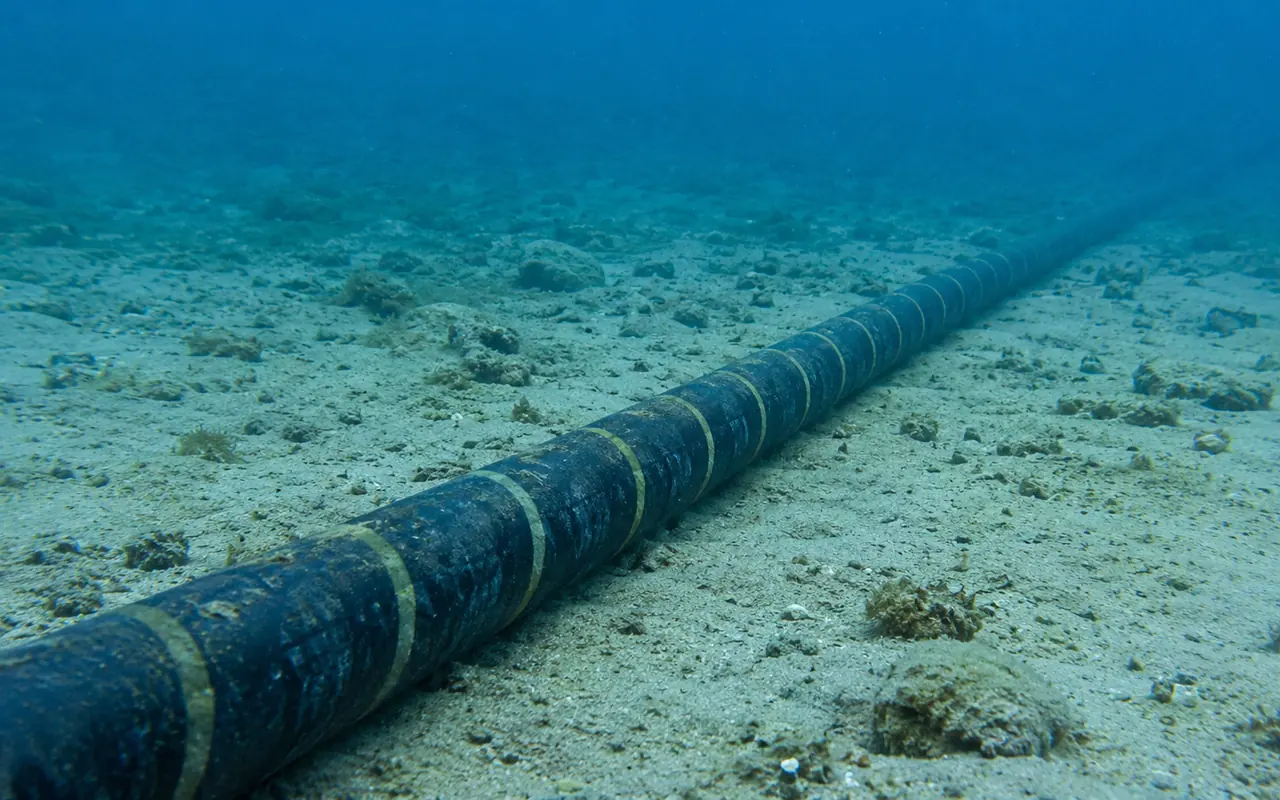
A submarine cable can be severed by a single ship dragging its anchor — so what is the backup? Low-earth-orbit satellites are Taiwan's last lifeline when the lines go dead. But should this line in the sky be woven by Taiwan itself, or rented from someone else? When Ukraine's drone boats lost contact and ran aground because of one decision by Elon Musk, Taiwan learned: true sovereignty is not about whether you have a satellite — it is about who holds the switch.