
The 2025 Check Already Bounced — Can Taiwan Still Make 2030? An Energy Transition Check-Up
Taiwan originally aimed for renewables to supply 20% of generation by 2025; the full-year actual came in at 13.3%. Offshore wind capacity, meanwhile, rose from 3.587GW at the end of 2025 to 4.8GW by June 2026. The 30% generation-share target for 2030 still stands, but the government has already added installed capacity as a rolling indicator alongside it. This is not a pro-nuclear vs. anti-nuclear shouting match — it is a math problem that requires carefully separating actuals, targets, and the terms in which each is measured.
Article contents01 / 09
- The 2025 renewable-generation-share target was 20%; the full-year actual came in at 13.3%. Offshore wind's installed capacity stood at 3.587GW at the end of 2025 and had risen to 4.8GW across 500 turbines by June 2026. The gap against the target is real, but it can no longer be described using the outdated snapshot of 372 turbines.
- The 2030 target of a 30% renewable share in generation is a policy goal published in 2025; in 2026 the government, because the total-electricity-demand denominator keeps shifting, added installed capacity as a rolling-review indicator. Taipower estimates that expansion across the semiconductor- and AI-related supply chain will add more than 5GW of new demand by 2030; the official night-time reserve margin for 2026–2029 runs, in sequence, at 12.8%, 12.5%, 8.0%, and 7.1%.
- This is not doom-mongering — Taiwan is a leader in Asia-Pacific offshore wind and its installed capacity keeps growing; the issue is the gap between 'speed' and 'target.' The honest solution is to calibrate to a path that can actually be held, with a clearly named backstop power source, and to put energy security (see 'Eleven Days'), AI electricity demand (see 'the AI Power Surge'), and the transition on the same balance sheet and account for them together.
“The 2025 Check Already Bounced — Can Taiwan Still Make 2030? An Energy Transition Check-Up” reports that 2025 Renewable Share: Target 20%, Actual 13.3%。 Full-year renewable generation of 38.60 billion kWh out of total generation of 289.71 billion kWh [1][10]。
“The 2025 Check Already Bounced — Can Taiwan Still Make 2030? An Energy Transition Check-Up” reports that Offshore Wind Keeps Catching Up: 500 Turbines by June 2026(4.8GW)。 3.587GW at the end of 2025; 4.8GW officially reported as of June 2026 [3][10]。
“The 2025 Check Already Bounced — Can Taiwan Still Make 2030? An Energy Transition Check-Up” reports that The 2030 Generation-Share Target Remains 30%, With a Capacity Indicator Now Added。 The share target was published in 2025; a rolling capacity review was added starting in 2026 [2][10]。
“The 2025 Check Already Bounced — Can Taiwan Still Make 2030? An Energy Transition Check-Up” reports that The 2026–2029 Night-Time Reserve Margin Is Thin(7.1–12.8%)。 An annual long-term planning indicator, not a daily operating reserve margin [10]。
“The 2025 Check Already Bounced — Can Taiwan Still Make 2030? An Energy Transition Check-Up” reports that 2030 Capacity Targets: Solar 31.2GW, Offshore Wind 10.97GW。 Geothermal 0.20GW; based on the latest 2026 supply-and-demand report [10]。
“The 2025 Check Already Bounced — Can Taiwan Still Make 2030? An Energy Transition Check-Up” reports that A Path That Can Be Held Matters More Than a Pretty Target(Calibrate)。 Honest reconciliation plus a clearly named backstop power source [6]。
The best way to judge whether a promise is credible is not to listen to how big it's shouted, but to check whether its last check bounced.
Taiwan's energy transition happens to have a check that has just come due. The government originally set a target of 20% of electricity generation from renewables by 2025; the Ministry of Economic Affairs' latest full-year statistics show that 2025 renewable generation came to 38.60 billion kWh out of total generation of 289.71 billion kWh, a share of 13.3% [1][10]. The path the government published in 2025 still treats reaching 20% by November 2026 as the goal to work toward, but in 2026, because the total-demand denominator kept shifting, it also added "installed capacity" as a rolling-review indicator; whether the target will be met should therefore continue to be tracked, rather than declared a foregone failure in advance [2][10].
So, the 2025 check has already bounced. Does that mean the new 2030 target of a 30% green-power share is still within reach? This, in fact, is an honest math problem.
“The 2025 Check Already Bounced — Can Taiwan Still Make 2030? An Energy Transition Check-Up” reports that 2025 Renewable Share: Target 20%, Actual 13.3%。 Full-year renewable generation of 38.60 billion kWh out of total generation of 289.71 billion kWh [1][10]。
How the Gap Formed: Offshore Wind Is Still Catching Up
To see whether 2030 is achievable, first dissect why the 2025 gap appeared. Offshore wind is one key link in that story.
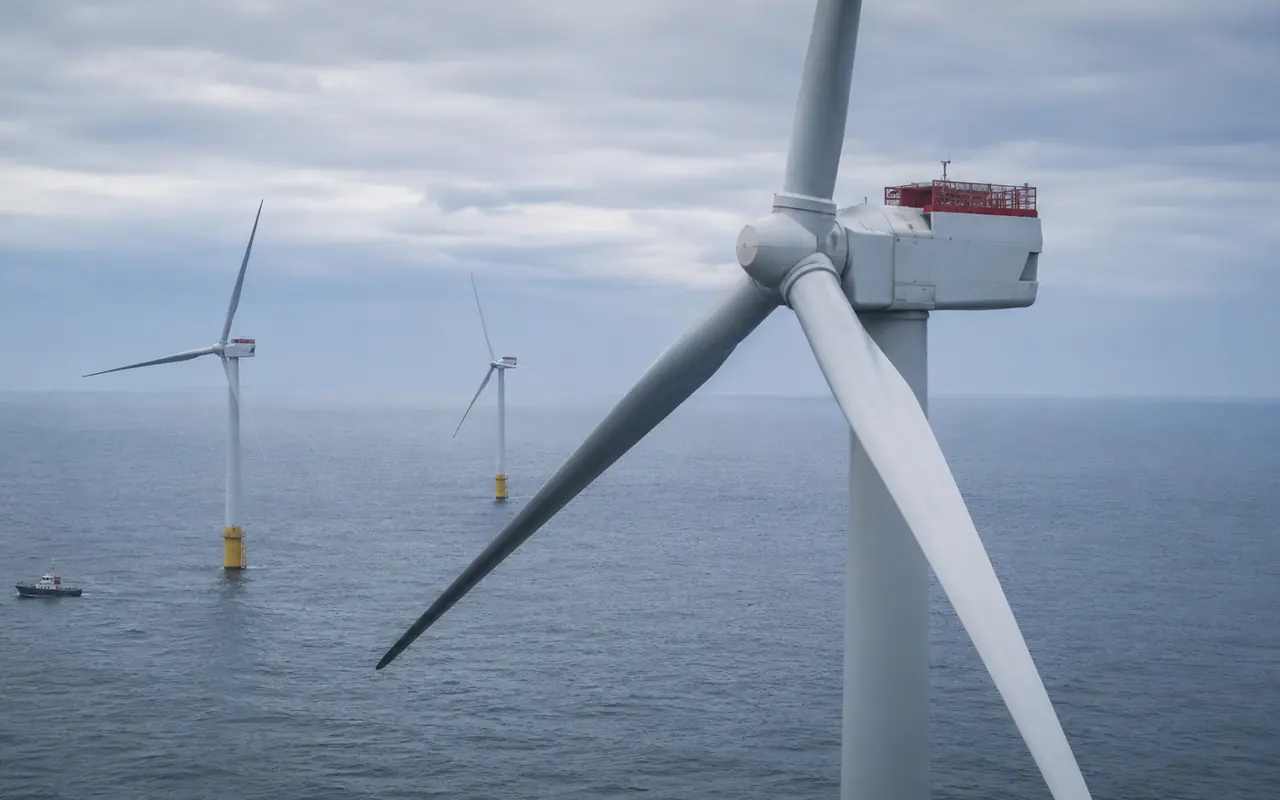
Taiwan originally planned to have 5.7GW of installed offshore wind capacity by 2025. The latest official data show that installed capacity at the end of 2025 stood at 3.587GW; by June 2026, 500 turbines had been completed, bringing total installed capacity to 4.8GW [3][10]. This still reflects a timeline gap, but it also confirms that the "372 turbines, 2.94GW" figure used in an earlier draft was an outdated snapshot and cannot be written as the current state. Whether grid-connected capacity and installed capacity are the same thing must be compared separately using data defined the same way — the two should not be conflated.
“The 2025 Check Already Bounced — Can Taiwan Still Make 2030? An Energy Transition Check-Up” reports that Offshore Wind Keeps Catching Up: 500 Turbines by June 2026(4.8GW)。 3.587GW at the end of 2025; 4.8GW officially reported as of June 2026 [3][10]。
The pace of renewable development still directly shapes the pathways to 2030 and 2050 [4][5]. Under the latest 2026 supply-and-demand report, the 2030 installed-capacity targets are 31.2GW for solar, 10.97GW for offshore wind, and 0.20GW for geothermal [10]. Taiwan's green power still stands on two legs — "wind" and "solar" — heavily; when judging progress, generation output, installed capacity, and dispatchable capability should all be examined together, rather than letting a single number stand in for overall performance.
Why Is Offshore Wind So Hard?
Taiwan's offshore wind sector was once seen as a model student in Asia — the wind fields in the Taiwan Strait are among the best in the world. But "good wind" does not equal "fast installation." It runs into several real-world obstacles: first, the engineering is extremely complex — pouring foundations and erecting turbines taller than Taipei 101 out at sea in strong winds and rough waves requires specialized work vessels, skilled labor, and cooperative weather, none of which can be skipped; second, the "localization" requirement — the government requires a certain proportion of components and construction work to be completed in Taiwan, meant to build up a domestic supply chain, but this has also slowed things down and raised costs in the early stages; third, permitting and environmental-review processes are lengthy, and repeated adjustments to the feed-in tariff (the government-guaranteed purchase price) have kept developers' financial models in flux.
These three factors combined are why installed capacity at the end of 2025, at 3.587GW, still fell short of the original 5.7GW target; but it had risen to 4.8GW by June 2026 [3][10]. The lesson here is that the hardest part of an energy transition has never been the resolve to "decide to do it" — it is the engineering, industrial, and administrative capacity to actually get it built; any assessment must also use the same point in time and the same capacity definition.
The 30% for 2030 Is Still Hard Math
Let's first pin the number down clearly: Taiwan's official target for 2030 is a "30% green-power share," alongside coal falling to 20% and gas holding at 50% [2]. (This is sometimes misreported as 40%, but the official documents state 30%.)
“The 2025 Check Already Bounced — Can Taiwan Still Make 2030? An Energy Transition Check-Up” reports that The 2030 Generation-Share Target Remains 30%, With a Capacity Indicator Now Added。 The share target was published in 2025; a rolling capacity review was added starting in 2026 [2][10]。
But even 30% faces a headwind — in fact, three headwinds blowing at once.
First, the starting point is lower. Going from the 2025 actual of 13.3% to 30% means renewable generation must accelerate significantly in the coming years, and the actual pace of growth over the past decade still falls well short of the slope this would require.
Second, the denominator keeps growing. Taipower estimates that, to keep pace with expansion across the semiconductor- and AI-related supply chain, new electricity demand will exceed 5GW by 2030 (see "the AI Power Surge"). This is not "AI alone adding 5GW"; even as renewable generation increases, growth in total electricity demand may still dilute the generation share [10].
Third, the long-term night-time supply margin is thin. The Ministry of Economic Affairs' latest report estimates that the night-time reserve margin from 2026 to 2029 will run, in sequence, at 12.8%, 12.5%, 8.0%, and 7.1% [10]. The government-approved target for a reasonable reserve margin is 15%. This is an annual long-term planning indicator, not a daily, real-time operating reserve margin; nor is that target a regulatory threshold for short-term dispatch. The transition timeline, AI and semiconductor demand, grid construction, and the retreat of nuclear power are all converging within the same five years.
“The 2025 Check Already Bounced — Can Taiwan Still Make 2030? An Energy Transition Check-Up” reports that The 2026–2029 Night-Time Reserve Margin Is Thin(7.1–12.8%)。 An annual long-term planning indicator, not a daily operating reserve margin [10]。
Not Doom-Mongering — Calibrating
At this point, it's worth hitting the brakes to avoid sliding into the opposite exaggeration of "Taiwan is about to collapse."
Red Team East's reminder holds up: Taiwan is in fact a leader in Asia-Pacific offshore wind, and its installed renewable capacity keeps growing — the direction is right [8]. The issue isn't "whether it's being done," but "whether the speed can keep up with the target."
But Red Team West's counter also holds up: "the direction is right" does not equal "the timeline will be met." Independent assessments have questioned whether the official energy forecasts are too optimistic [6]; the Ministry of Economic Affairs has itself already added installed capacity as a rolling-review indicator because of uncertainty in the demand denominator and construction progress [10]. Offshore wind rising from 3.587GW at the end of 2025 to 4.8GW by June 2026 shows progress is catching up, but the gap against the original timeline still exists. The overlap between the two sides is one pragmatic sentence: the 30% target for 2030 is a policy goal, not a guaranteed check that is certain to clear (confidence: medium).
To be fair, Taiwan's green power has not been standing still. Installed solar capacity keeps growing steadily, the "zonal development" phase of offshore wind is advancing, and investment in storage and the grid is being stepped up. The direction is right — it's just that this uphill road is steeper than originally planned, and slower than hoped. Admitting it is "slow" is not the same as admitting it is "wrong"; it is about redirecting resources from "chasing a number that may bounce" toward "reinforcing the real bottlenecks."
Where Has Everyone Else Gotten To?
Placing Taiwan on the international map makes things clearer. After Germany shut down its last three nuclear plants in 2023, renewable generation rose by 33TWh in the first year compared with the year before, while fossil-fuel generation actually fell by 26%; net imports rose at the same time, which Fraunhofer ISE attributes mainly to market pricing rather than a shortfall in generation capacity [11]. So Germany's experience should not be simplified into "closing nuclear plants means relying more on coal and gas." Japan, after the Fukushima disaster, has kept adjusting the balance among restarting reactors, importing fuel, and expanding renewables. The lesson these precedents offer Taiwan is: there is no "painless" version of an energy transition, but any comparison must first separate out the time period, the electricity-trading picture, and the causal structure of generation.
What makes Taiwan distinctive is that it is simultaneously an "energy island" (with no cross-border grid or pipeline to fall back on) and an "electricity-guzzling giant" (with semiconductors and AI consuming enormous amounts of power). This means Taiwan has far less room for error than most countries: when other countries' transitions run into trouble, they can buy power from a neighbor to tide themselves over; when Taiwan runs into trouble, it can only rely on itself. This dual identity — "island plus giant" — makes Taiwan's energy transition less forgiving of mistakes than any other country's.
“The 2025 Check Already Bounced — Can Taiwan Still Make 2030? An Energy Transition Check-Up” reports that 2030 Capacity Targets: Solar 31.2GW, Offshore Wind 10.97GW。 Geothermal 0.20GW; based on the latest 2026 supply-and-demand report [10]。
The Real Bottleneck May Not Be "Generation" but the "Grid"
When people talk about green power, everyone watches "how many GW have been installed," but often overlook a deeper bottleneck: the grid. Solar generates the most at midday, wind is strongest during the northeast monsoon, but peak electricity demand does not necessarily fall at those times — this mismatch between "when power is generated" and "when power is used" requires storage (banking surplus power to release when it's needed) and a smarter grid to manage.
A large part of Taiwan's grid was designed for "centralized, stable-output" traditional power plants; absorbing large amounts of "intermittent, distributed" green power is, in itself, an expensive and lengthy overhaul. If the grid can't keep up, then no matter how much green power is installed, it may still be curtailed because it "can't be delivered, can't be stored." So whether the 2030 target is met is not written only on turbines and solar panels — it is also written on that invisible grid that needs to be upgraded in sync — and this, in turn, competes for the very same grid investment the AI electricity surge is also drawing on (see "the AI Power Surge"). Taiwan's energy transition has never been a single-point project of "build a few more turbines" — it is a systems-engineering problem in which "generation, storage, the grid, and demand management" must all advance in step; leave out any one piece, and the whole system gets stuck.
A Path That Can Be Held Matters More Than a Pretty Target
So the answer to this question isn't a bet on "can 30% be hit or not" — it's a governance choice: rather than clinging to a target that may bounce, it is better to set a path that can actually be held.
Honestly calibrating targets and timelines, resolving the permitting and engineering bottlenecks in offshore wind, aligning grid and storage investment with the timeline of AI electricity demand, and clearly planning "what backstop power source kicks in if green power falls short" — these matter more than shouting the target number one more time. One question especially worth discussing seriously: when nuclear power exits because of a referendum and political deadlock (see the Nuclear Three referendum discussed in "the AI Power Surge"), and green power can't keep up, what exactly fills the gap in the years in between? Natural gas (whose stockpile is only 11 days — see "Eleven Days")? Life-extension of existing plants? Or rationing? Spelling out this "backstop power source" clearly is far more practical than arguing over whether 2030 should be 30% or 40%.
Energy security (see "Eleven Days"), AI electricity demand (see "the AI Power Surge"), and the energy transition must be placed on the same balance sheet and accounted for together — they have never been three separate issues, but three faces of the same one.
What Fills the Gap in the Years In Between?
This is the sharpest question of all — and the one most often drowned out by political noise. Taiwan's energy policy has made three promises at once: going non-nuclear (phasing out nuclear power), cutting coal (for air pollution and carbon reduction), and racing toward green power (30% by 2030). The problem is, when green power can't keep up and nuclear power is exiting, the supply gap in the years in between can only be filled by "natural gas."
But natural gas has two weak points: one is carbon emissions (which conflicts with decarbonization goals), and the other is that its safety stockpile is only about 11 days (see "Eleven Days"), making it extremely dependent on stable imports and receiving terminals. Taiwan is thus caught in an "impossible triangle": going non-nuclear, cutting coal, and maintaining stable supply are three things that are very hard to achieve at once at this moment, when green power cannot yet fill the gap. Honestly confronting the trade-offs within this triangle — rather than pretending it doesn't exist — is what mature energy policy should look like. This is also why the 2025 referendum on restarting Nuclear Three (which won a majority of "yes" votes but was rejected because turnout fell short of the threshold) was fought so fiercely: it touched precisely on this gap question that no one wants to answer directly.
“The 2025 Check Already Bounced — Can Taiwan Still Make 2030? An Energy Transition Check-Up” reports that A Path That Can Be Held Matters More Than a Pretty Target(Calibrate)。 Honest reconciliation plus a clearly named backstop power source [6]。
Three Taiwanese Perspectives
The state: Honestly calibrate targets and timelines, treat the bottlenecks in offshore wind (permitting, engineering, the pace of localization) as the top priority, keep grid, storage, and demand-response investment in step with AI demand, and clearly spell out the "backstop power source" — energy security and the transition must be accounted for together, not shouted about separately. A pretty target that ends up bouncing damages not just face, but the government's credibility on energy policy — and once credibility is lost, the public will start doubting even the plans that are genuinely achievable.
Industry (large power users / green power / storage): Don't treat the 2030 green-power target as a guarantee of supply — build your own green power and storage, and sign long-term power purchase agreements (CPPAs). Seen from another angle, precisely because the transition has a gap, green-power development and storage themselves are the most certain growth track of the next five years: someone else's bottleneck may be your business opportunity.
SMEs: The pressure for green power from RE100 supply chains, catch-up increases in electricity prices, and the risk of peak-time power rationing are hitting from three directions at once. Act early on energy-efficiency improvements, rooftop solar, and green-power procurement plans — don't wait until the big players have already signed away all the limited green power. For SMEs, "electricity saved" and "power generated on your own roof" are often more reliable than "waiting for the state to hit its target."
Finally, there's a hidden cost worth flagging: "time." The lead time for energy infrastructure — wind farms, the grid, storage — is measured in years; whatever isn't broken ground today will still be a gap five years from now. So the real meaning of "calibrating the path" is not shrinking the target number just to make the numbers work — it is setting every milestone at a point that can genuinely be achieved and genuinely will be pursued, and then completing them one by one, reliably. There is no miracle in an energy transition, only the discipline of steady engineering progress accumulated day after day — and that is exactly the lesson Taiwan most needs to make up.
An honest transition is not afraid to admit that its last check bounced; what it fears is covering that up with an even bigger number. Taiwan does not lack the courage to shout a pretty target — what it lacks is the discipline to set a path it can actually walk. Whether the 30% for 2030 can be reached is not the point — the point is whether Taiwan is willing to first honestly reconcile the check that has already bounced, then write the next check for an amount it can actually pay, and then, starting today, cash it in one installment at a time.
Sources
- Energy Administration, Ministry of Economic Affairs — 2025 Power Generation Overview (Renewable Share 13.3%)
- Executive Yuan — Accelerating Renewable Energy Development, 2030 Energy Mix (Green Power 30% / Coal 20% / Gas 50%)
- Ministry of Economic Affairs (2026-06-14) — Taiwan Completes 500 Offshore Wind Turbines, Total Installed Capacity Reaches 4.8GW
- Energy Administration, Ministry of Economic Affairs — 2025 National Electricity Supply and Demand Report
- Fraunhofer ISE (2024-04-15) — Status Quo: One Year Since Germany's Nuclear Exit
- Eco-Business — Taiwan delays 20% renewables target beyond 2026 as tighter solar rules slow rollout
- EUROVIEW (ECCT) — Taiwan's net zero crossroads
- Eco-Business (2026-02) — Taiwan may miss 2030 renewable target as gas capacity grows, minister says
- Taipei Times (2025-10-01) — EDITORIAL: Ministry's energy forecast too rosy
- Digitimes (2026-03-03) — Taipower forecasts over 5GW new power demand by 2030
- Renewable Energy Asia (2026-03) — Taiwan leads Asia-Pacific offshore wind power market
The December 4 Vote: If the IMO's Net-Zero Framework Passes, Which Bill Does Taiwan's Shipping Industry and Kaohsiung Port Pay First?
The IMO did not adopt the Net-Zero Framework in 2025, and December 4, 2026 is only the scheduled date for resuming the extraordinary session — contingent on confirmation by MEPC 85. Taiwan has no vote at the IMO, yet it will still feel the outcome through flag-state and port-state enforcement, fuel procurement, freight rates, and shipper contracts. What Taiwan should pay first is not an as-yet-undetermined carbon price, but three preparation costs: data, a fuel evidence chain, and contract transparency.
Not Just a Power Shortage: Taiwan's AI Data Centers Still Have to Clear Siting, Grid Interconnection and Equipment
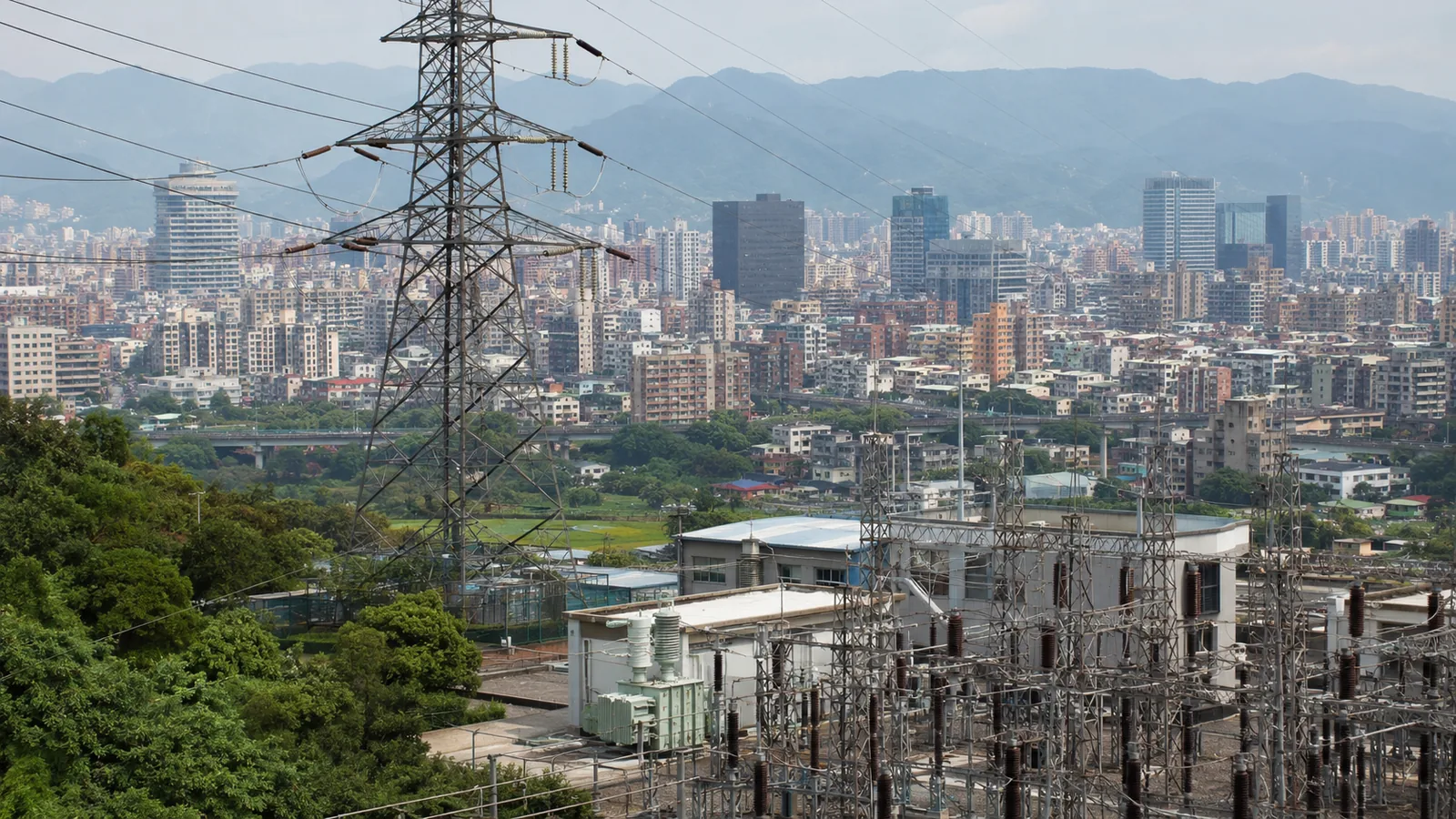
Taiwan's data-center constraint is not a binary choice between 'not enough electricity' and 'not enough parts.' Official data confirm that new applications above 5MW north of Taoyuan were once suspended from acceptance, that new or expanded facilities above 5MW must pass an energy-use review, and that the National Science and Technology Council is planning a 120MW Shalun computing center to come online in 2029; equipment lead times still have to be confirmed project by project with named suppliers.