
Hormuz Shock, Taiwan's Other Bill
The Strait of Hormuz was briefly blockaded, oil prices blew past $100 a barrel, and yet the price boards at Taiwan's gas stations barely moved. Don't relax just yet — that bill hasn't disappeared. It has just been hidden, given a different name, and set aside for a different time, before it comes back to find you.
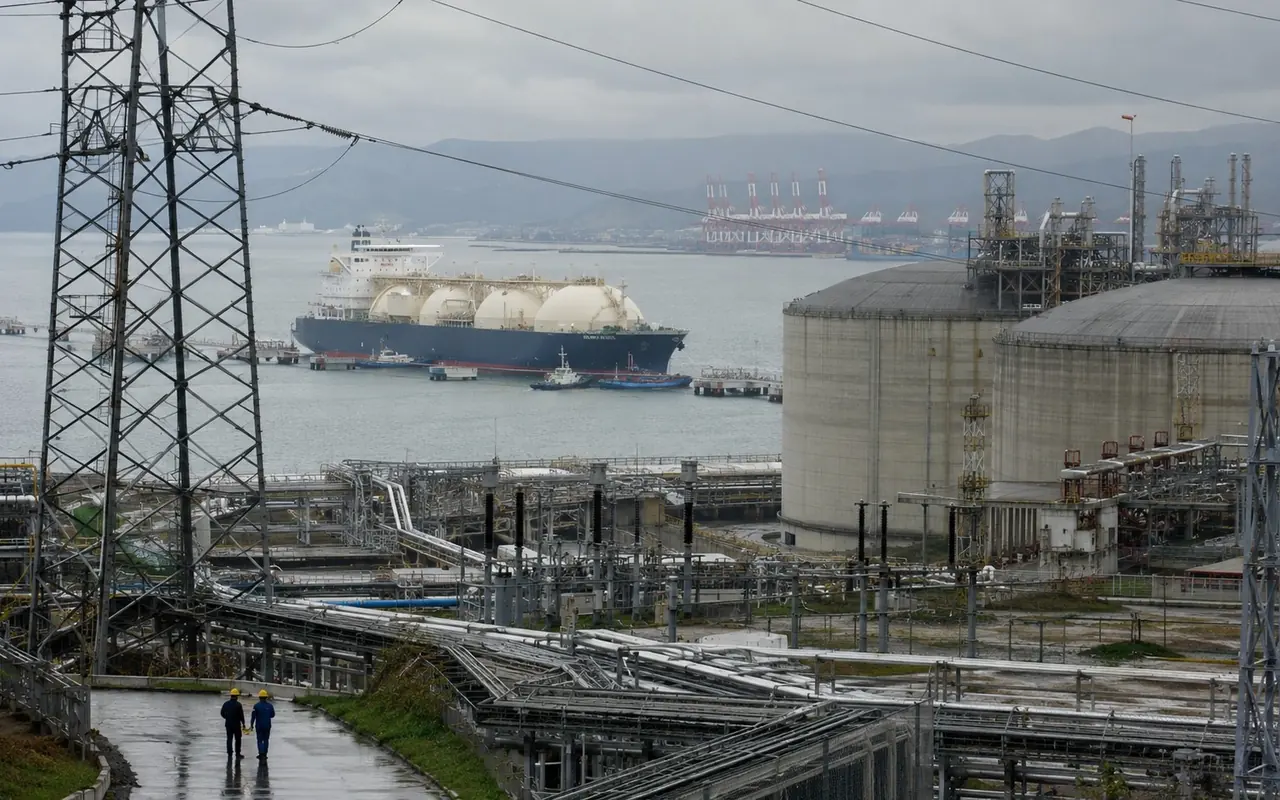
Article contents01 / 08
- The 2026 Hormuz crisis was the largest oil supply shock on record (global supply fell by roughly 10 million barrels a day at one point), and Brent crude briefly surged past $114; but the price board at Taiwan's gas stations was held down by a rate freeze, with the pain absorbed instead by CPC Corporation, Taiwan and Taipower — the price gap absorbed in this round (since the Middle East conflict began) had reached roughly NT$16.66 billion as of May 30, with cumulative losses approaching NT$80 billion.
- Taiwan's real energy vulnerability is not oil, it is natural gas: nearly half of Taiwan's electricity runs on gas, Qatar supplies about 34% of Taiwan's LNG (on a 2025 basis), plus Australia at about 33.5% — the top two sources together account for nearly 70% — and Qatar's supply must pass through the Strait of Hormuz, while safety stock sits at only about 7–11 days, depending on how it's measured.
- A seemingly mild CPI reading (the central bank revised its 2026 estimate upward to 1.8% in March) is a deferral, not an immunity — this hidden bill will eventually come back to businesses and the public through electricity-price catch-up increases and treasury top-ups; meanwhile, the bill businesses are already paying in cash right now is the one for ocean freight, air freight and fuel surcharges.
“Hormuz Shock, Taiwan's Other Bill” reports that Qatar Supplies About 34% of Taiwan's LNG (2025 Basis), and Must Pass Through Hormuz。 Safety stock about 7–11 days, depending on how it's measured [23][24]。
“Hormuz Shock, Taiwan's Other Bill” reports that Brent Crude Estimated to Average $86 in 2026 (vs. $69 in 2025)。 Briefly surged past $114 during the crisis [8]。
“Hormuz Shock, Taiwan's Other Bill” reports that Near-Half Reliance on Gas for Power Amplifies Hormuz Sensitivity(48%)。 Gas supplied 47.7% of national generation in 2025 (Energy Statistics Platform, Ministry of Environment) [22]。
“Hormuz Shock, Taiwan's Other Bill” reports that The Pain of Oil Prices Is Hidden in CPC's Books(NT$16.66bn)。 Price gap absorbed in this round (as of 5/30); cumulative losses roughly NT$79.2bn [20][21]。
In the spring of 2026, Iran declared a "blockade" of the Strait of Hormuz — the chokepoint that carries roughly 35% of the world's seaborne crude oil. Tankers stopped moving, ships rerouted, and global oil supply fell by roughly 10 million barrels a day at one point, the largest supply shock on record [3]. Brent crude ran up from about $71 a barrel, briefly surging past $114 a barrel in early May [8].
By rights, a shock like this should have hit every driver and every factory in Taiwan immediately. But go check the gas station — the price board barely moved.
The core question is: that bill hasn't disappeared, it has just been hidden. Taiwan used a rate freeze to press the pain of oil prices onto the books of CPC Corporation, Taiwan (CPC) and Taipower, so that the CPI would look well-behaved. But a bill is a bill — it is just waiting under a different name (an electricity-price catch-up increase) and a different time (after the crisis passes) before it comes back to find you; and there is another bill — shipping and insurance costs — that businesses are already paying in cash right now.
“Hormuz Shock, Taiwan's Other Bill” reports that Qatar Supplies About 34% of Taiwan's LNG (2025 Basis), and Must Pass Through Hormuz。 Safety stock about 7–11 days, depending on how it's measured [23][24]。
To make sense of this crisis, first split the cost into three separate bills — stop staring only at the number on the gas station sign.
Three Bills: What Taiwan Is Actually Paying Is Not Just One
- The gas-cutoff bill: natural gas and electricity. Nearly half of Taiwan's electricity runs on gas, and its largest LNG source, Qatar, must pass through Hormuz — this is a tail risk, and the worst case is a power shortage.
- The deferred bill: price increases in oil, electricity and gas absorbed by the rate freeze at CPC and Taipower. Invisible for now, but it will come back through electricity-price catch-up increases and treasury top-ups.
- The cash-now bill: ocean freight, air freight, fuel surcharges and war risk insurance. Nobody absorbs this one for you — it has to be paid right now.
Separate these three bills, and you will see that the "oil price" most businesses are worrying about is actually the least lethal of the three.
Bill One — Gas Cutoff: The Real Weak Point Isn't Oil, It's Gas
More than 95% of Taiwan's energy is imported — 95.4%, per the Energy Administration (Ministry of Economic Affairs) data for ROC Year 114 (2025) [4]. When people think of energy security, they instinctively think of oil — but oil is actually the most diversified, least fragile of the three bills. Of Taiwan's crude-oil sources, Saudi Arabia supplies about four-tenths and the Middle East as a whole about seven to seven-and-a-half tenths, but the United States already supplies about two-tenths, an important buffer; by comparison, about 95% of Japan's crude comes from the Middle East [4][16]. Expensive oil hurts, but it does not cut off supply immediately.
The real vulnerability is natural gas.
“Hormuz Shock, Taiwan's Other Bill” reports that Near-Half Reliance on Gas for Power Amplifies Hormuz Sensitivity(48%)。 Gas supplied 47.7% of national generation in 2025 (Energy Statistics Platform, Ministry of Environment) [22]。
In 2025, nearly 80% of Taiwan's electricity came from thermal power, of which gas supplied 47.7% — nearly half of Taiwan's electricity is generated by burning natural gas [22]. And Taiwan's LNG is highly concentrated in a handful of sources — on a 2025 basis, Qatar about 34%, Australia about 33.5%, and the United States about 10% [13][14], with the top two sources together accounting for nearly 70%. The problem is: Qatar's LNG has to pass through the Strait of Hormuz to be exported. When the strait was blockaded, and when Qatar's largest export facility, Ras Laffan, was hit by an attack and shut down production, the single largest chunk of Taiwan's gas supply was choked off [13][15].
Even more critical is the inventory. Taiwan's LNG safety stock is only about 7 to 11 days, depending on how it's measured [23][24]. Oil can be stockpiled and diversified gradually; natural gas cannot — it has to be frozen into a liquid at −162°C, requires dedicated ships and receiving terminals, and if you can't buy it on the spot market, you simply can't get it. During the crisis, the government relied on advance delivery of long-term contracts, sourcing swaps with other Asian neighbors, and an added round of U.S. natural gas purchases in June to fill the gap — but in May there was still a scheduling shortfall equivalent to four shipments [14][15].
Expensive oil is a bill that hurts. A natural-gas cutoff is a bill that causes blackouts. Taiwan's true energy-security vulnerability is that roughly 7-to-11-day line of natural-gas inventory.
The decision implication of this bill: large gas and power users (semiconductors, panels, petrochemicals, data centers) cannot assume "the government can always source more gas." Treat "a critical-process gas cutoff / regional power rationing" as a risk scenario, and take stock in advance of your own backup power, storage and production scheduling contingencies — this is a national-level risk, but it is your production line that stops.
Bill Two — Deferral: Prices Haven't Risen Because the Bill Has Been Hidden
This is the bill most likely to lead businesses to misjudge the situation.
International oil prices jumped by 50%, yet Taiwan's Consumer Price Index (CPI) barely moved — in March, the central bank had already revised its 2026 CPI forecast upward to 1.8%, still a mild range, though it could be revised upward again if oil prices keep climbing [19]. Many business owners see this figure and breathe a sigh of relief: "Looks like inflation hasn't hit Taiwan."
That is an illusion. The CPI is well-behaved because the pain has been absorbed by the "rate freeze."
“Hormuz Shock, Taiwan's Other Bill” reports that The Pain of Oil Prices Is Hidden in CPC's Books(NT$16.66bn)。 Price gap absorbed in this round (as of 5/30); cumulative losses roughly NT$79.2bn [20][21]。
The floating fuel price mechanism has repeatedly frozen prices during the crisis, with CPC continuing to absorb the price gap itself; cumulatively, the price gap absorbed in this round (since the Middle East conflict began) has reached roughly NT$16.66 billion as of May 30, and CPC's cumulative losses are already approaching NT$80 billion, forcing the Ministry of Economic Affairs to step in with capital injections and financing to rescue its finances — and the Directorate-General of Budget, Accounting and Statistics is already studying a subsidy top-up for CPC [12][20][21]. On Taipower's side, electricity prices have likewise been held down, with the state-run utility similarly swallowing the rise in generation costs — in late March, the electricity-price review committee decided to keep rates frozen, leaving on hold a 1.8% increase that should otherwise have taken effect, with Taipower's cumulative losses now around NT$350 billion [25].
So, the bill hasn't disappeared — it has simply moved from the price board at the gas station to CPC's and Taipower's losses, to future electricity prices, and to treasury top-ups. This is what CommonWealth Magazine called the "unexploded inflation bomb" — oil prices surging while the CPI stays flat does not mean Taiwan is immune to inflation, it means the bill has been deferred [9]. The central bank has already warned it may revise its inflation forecast upward because of oil prices; when a lawmaker also raised the possibility of a rate hike, the central bank gave no clear answer either way [19].
A rate freeze is not magic that makes the bill disappear — it is an IOU that defers it. IOUs always come due — usually in the form of an electricity-price catch-up increase.
The decision implication of this bill: don't be fooled by "the CPI hasn't risen." Treat an "electricity-price catch-up increase" as your baseline scenario for 2026–2027, not a risk scenario. Lock in prices on any long-term contract you can, and put in place energy and currency hedges you can arrange, before this bill comes due.
Bill Three — Cash Now: The Cash You Have to Pay Right Now
The first two bills are both "pay later." This one is "pay now."
The moment the crisis broke out, transportation costs jumped immediately. Container shipping rates on major routes have risen by more than 40% on average since May, with the Far East–U.S. West Coast route spiking 52% in a single month — driven partly by fuel and operating costs pushed up by Hormuz, and partly by a rush to ship ahead of tariff deadlines [17]. Industry sources also report that tanker freight rates and war risk insurance premiums have jumped in tandem, though no traceable public data confirms this. On the aviation side, EVA Air's fuel surcharge spiked along with oil prices in April, then pulled back from that high starting June 7 to US$35 per short-haul segment and US$91 per long-haul segment — still a cost businesses have to pay in cash (and it was cut again, to US$27.5 and US$71.5, starting July 7) [7][26]; airlines' profits are being squeezed by fuel costs, while shipping stocks are actually benefiting from higher freight rates — two very different fates in the same crisis.
There is no "rate freeze" to absorb this bill for you. For exporters, importers and logistics companies, it directly drives up your landed cost and eats into your quoted margins.
The decision implication of this bill: recalculate freight, fuel surcharges and currency effects into every single quote. Whatever can be passed on to customers, negotiate it now while freight rates are high and everyone else is raising prices too; whatever can be shifted to shorter shipping routes, diversified ports or advance stockpiling, do it early — of the three bills, this is the one you can control yourself the most.
Where Oil Prices Go From Here: Don't Be Scared by the Peak, and Don't Relax Because of the Average
So where do oil prices go from here? Two numbers that are easily conflated need to be separated.
“Hormuz Shock, Taiwan's Other Bill” reports that Brent Crude Estimated to Average $86 in 2026 (vs. $69 in 2025)。 Briefly surged past $114 during the crisis [8]。
One is the crisis peak: at the tensest point of the blockade, Brent briefly surged past $114 in early May [8].
The other is the full-year average. The World Bank's April 2026 forecast puts the full-year Brent average at about $86, a clear rise from $69 in 2025 — on the assumption that the most severe disruption ended in May and Hormuz gradually recovers before the end of the year, before falling back to about $70 in 2027 [1][5][6]. But under an adverse scenario, the full-year average could reach as high as $115 [1].
In practice, the strait reopened after roughly 110 days of blockade, though the situation remains volatile [11]. So the takeaway for businesses is simple: don't scare yourself into overreacting based on the $114 peak, and don't relax and stop preparing just because "the crisis has passed." Using $86 as a baseline and up to $115 as a stress test is more practical than betting on a single number.
Whose Fault Is It, and Which Way Should Taiwan Lean
Responsibility for this crisis is itself contested — and that contest will shape which way Taiwan leans.
One reading is: it was the United States and Israel that struck Iran first and attacked its energy facilities, and the blockade was a countermeasure; pinning the entire oil-price surge on Iran obscures the responsibility of whoever started the war, and under high oil prices, U.S. shale oil and LNG exports are actually the beneficiaries — Taiwan "buying more U.S. gas" is, to some extent, simply swapping its energy dependence from the Middle East for dependence on the United States.
Another reading is: motive does not change the consequence — what actually puts Taiwan at risk of a gas cutoff is the weaponization of a civilian energy shipping lane; what Taiwan should do is accelerate diversification toward rule-of-law, reliable long-term-contract partners (the U.S., Australia), rather than getting caught up in arguing over who struck first. "Reliable dependence" and "fragile diversification" carry entirely different kinds of risk.
This team does not take sides, but the two readings share one overlap, and that is what Taiwan should remember: concentration in a single strait plus a single source is a real risk Taiwan must reduce. However you assign blame, pinning a third of your gas supply on a strait that can be blockaded is not a bet a small country should be making.
Three Stances: Holding the Line on These Three Bills
Converging this down to three Taiwanese stances (decision-oriented, not investment advice), turned directly into the tools in the next section that you can put to use.
For the state, the gas-cutoff bill needs to be tackled by reducing source concentration (diversifying to the U.S. and Australia, strengthening receiving terminals and strategic gas reserves); the deferred bill needs a clearly communicated exit path for the rate freeze, so that neither the state enterprises' losses pile up without limit, nor businesses are caught flat-footed when the catch-up increase lands.
For industry intermediaries (associations, industry alliances), the task is to help members map their combined "energy plus transport" exposure down to the item level, and organize joint hedging, joint bargaining and shared dispatch information — spreading a tail risk that no single small company could bear alone.
For SMEs, the most practical first step is to split the three bills apart and calculate each one: which costs are being paid now, which are being deferred, and which could be cut off entirely. Once you understand that, you'll know which one to pass on, which one to lock in, and which one needs a contingency plan.
How Your Business Should Move: Three Tools You Can Use Right Away
Turning the judgments above into three tables you can apply directly.
Tool One: Self-Assessment of Combined Energy + Transport Cost Exposure
| Cost item | Which bill | Current status | Risk light | What to do |
|---|---|---|---|---|
| Electricity (near-half reliant on gas) | Deferred + gas cutoff | Rates currently frozen [25] | 🟠 | List an electricity-price catch-up increase as your baseline scenario; assess energy efficiency and storage |
| Natural gas process input (large gas users) | Gas cutoff | Safety stock about 7–11 days, depending on measurement [23][24] | 🔴 | Prepare a gas-cutoff/power-rationing contingency plan; build independent power capacity |
| Gasoline/diesel and owned-fleet logistics | Deferred + cash now | Rate freeze + rising freight costs [17][18] | 🟠 | Lock in prices; optimize routes |
| Ocean export freight | Cash now | Major routes up more than 40% | 🔴 | Recalculate landed costs; diversify routes; stockpile in advance |
| Air freight/fuel surcharges | Cash now | EVA Air long-haul US$91 per segment (cut to US$71.5 starting July 7) [7][26] | 🟠 | Pass on costs; switch to ocean freight or consolidate shipments |
| Oil-price-linked raw materials (e.g. petrochemicals) | Cash now | Fluctuates with oil price | 🟠 | Sign price-lock contracts with suppliers |
Tool Two: Three Bills × Three Stances Decision Matrix
| Stance | Gas-cutoff bill (LNG/power) | Deferred bill (rate freeze) | Cash-now bill (ocean/air freight) |
|---|---|---|---|
| The state | Diversify sources (U.S., Australia), build strategic gas reserves, expand terminal capacity | Communicate a clear exit path for the freeze; be transparent about subsidy timing and catch-up increases | Keep port logistics stable; provide freight relief if needed |
| Industry intermediaries | Help members map gas-use exposure; share dispatch information | Collectively push government for a buffer and support package on catch-up increases | Joint bargaining, joint warehousing, developing nearby-ocean markets |
| SMEs | Large gas users prepare a gas-cutoff contingency plan; assess independent power | Treat electricity-price catch-up increases as baseline; lock in prices as a hedge | Recalculate landed costs, pass on costs, diversify routes |
Tool Three: A 5-Step Framework for Modeling Landed Costs + Electricity-Price Scenarios (illustrative figures)
| Step | Ask yourself | Illustration |
|---|---|---|
| ① Split the bills | Which costs are cash-now, which are deferred, which could be cut off? | Freight = cash now; electricity = deferred; gas = cutoff risk |
| ② Calculate cash-now costs | How much do freight, fuel surcharges and currency add to your landed cost? | Export product landed cost +8–15% |
| ③ Prepare for the deferred bill | If electricity prices rise 10–15% at catch-up, how much does your annual power cost increase? | Annual power spend of NT$5 million → +NT$500,000–750,000 |
| ④ Guard against gas cutoff | If gas/power is cut for 3 days, how much production is lost? Is there backup? | Estimate the loss from a shutdown → decide whether independent power is worth buying |
| ⑤ Decide | Which of pass-on / price-lock / route change / backup capacity will you actually do? | Pass on the cash-now bill; lock in the deferred bill; build backup for the gas-cutoff bill |
Note: the figures in Tool Three illustrate the calculation logic only, and are not the actual figures for any specific company; substitute your own electricity usage, export structure and actual freight rates.
The oil-price peak will pass, and the Hormuz blockade will reopen, tighten again, tighten again, and ease again. But for businesses in Taiwan, what truly needs to be remembered is not any single oil-price figure, but this structure: the bill you're paying was never just the one at the gas station. Only by looking at the gas-cutoff bill, the deferred bill and the cash-now bill separately will you avoid being caught off guard, in the false calm of the CPI, by an IOU that is bound to come due eventually.
Sources
- World Bank — Commodity Markets Outlook (2026-04): 2026 Brent average $86, Hormuz carries 35% of seaborne crude, supply fell by roughly 10mb/d
- CRS — Iran Conflict and the Strait of Hormuz: Impacts on Oil, Gas, and Other Commodities
- IEA — Oil Market Report (March 2026)
- Energy Administration, Ministry of Economic Affairs — Overview of Energy Supply (2024)
- World Bank Blog — Strait of Hormuz disruption sends oil prices surging
- US EIA — Short-Term Energy Outlook (Global oil markets)
- EVA Air — Fuel surcharge (official notice)
- Al Jazeera — Oil prices surge as violence flares in Strait of Hormuz
- CommonWealth Magazine — International oil prices surged 50%, yet Taiwan's CPI fell instead of rising? Unpacking the unexploded inflation bomb behind the data
- PTS PNN — Iran announces blockade of the Strait of Hormuz, international oil and gold prices surge
- PTS PNN — Strait of Hormuz reopens after a hundred-day blockade, delayed negotiations send international oil prices rebounding again
- PTS PNN — CPC absorbs the price gap under the rate freeze, Directorate-General of Budget, Accounting and Statistics studies a subsidy top-up
- Business Today — Qatar LNG production halted, will Taiwan face a "gas cutoff"? CPC has 3 contingency plans, electricity prices could be affected as early as April
- Commercial Times — Middle East fighting still unresolved, is natural gas inventory enough? An added round of U.S. gas purchases in June to fill the gap
- Liberty Times Finance — Qatar's largest LNG export plant damaged, Ministry of Economic Affairs admits a 4-shipment scheduling gap remains in May
- Liberty Times Finance — 95% of Japan's crude oil comes from the Middle East, Taiwan has already diversified its risk
- Economic Daily News — Container shipping rate increases widen this month, major routes up more than 40% on average since May
- Economic Daily News — Will the rate freeze on oil prices continue? Ministry of Economic Affairs: reviewed and adjusted weekly (CPC absorbs the price gap)
- Business Weekly Wealth — Could oil-price volatility force an upward revision to the CPI? Central bank to release forecast and inflation assessment in June
- CNA (Central News Agency) — Oil price freeze continues, CPC's cumulative absorbed amount reaches roughly NT$16.66 billion
- Storm Media — Cumulative losses of NT$79.2 billion! The US-Iran conflict blows a financial hole in CPC, Ministry of Economic Affairs fires off 3 rescue measures
- Energy Statistics Platform, Ministry of Environment — Electricity Generation Mix, ROC Year 114 (2025)
- TechNews — U.S. think tank: Taiwan's natural-gas reliance hits 48%, a factor in summer power supply
- CPC Corporation, Taiwan — Domestic natural-gas reserves all meet regulatory requirements (press release)
- Environmental Information Center — Electricity rates frozen in H1, Taipower still has room to maneuver despite NT$350bn in losses
- Trip.com — Fuel surcharge reduction notice
The December 4 Vote: If the IMO's Net-Zero Framework Passes, Which Bill Does Taiwan's Shipping Industry and Kaohsiung Port Pay First?
The IMO did not adopt the Net-Zero Framework in 2025, and December 4, 2026 is only the scheduled date for resuming the extraordinary session — contingent on confirmation by MEPC 85. Taiwan has no vote at the IMO, yet it will still feel the outcome through flag-state and port-state enforcement, fuel procurement, freight rates, and shipper contracts. What Taiwan should pay first is not an as-yet-undetermined carbon price, but three preparation costs: data, a fuel evidence chain, and contract transparency.
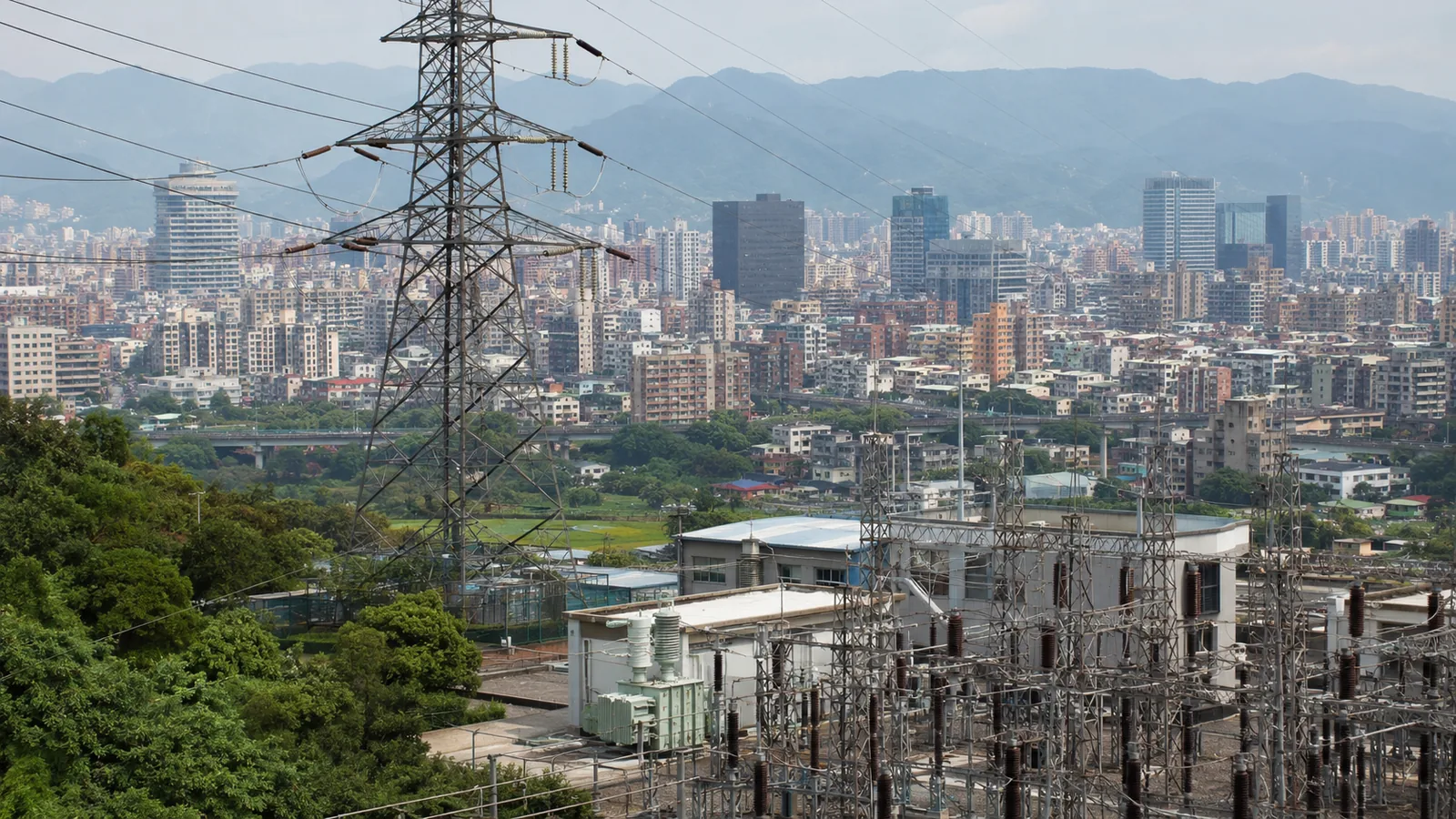
Not Just a Power Shortage: Taiwan's AI Data Centers Still Have to Clear Siting, Grid Interconnection and Equipment
Taiwan's data-center constraint is not a binary choice between 'not enough electricity' and 'not enough parts.' Official data confirm that new applications above 5MW north of Taoyuan were once suspended from acceptance, that new or expanded facilities above 5MW must pass an energy-use review, and that the National Science and Technology Council is planning a 120MW Shalun computing center to come online in 2029; equipment lead times still have to be confirmed project by project with named suppliers.