
Taiwan’s NT$46 Billion Support Program: Why Businesses Still Need Financing When Exports Grow
Growing exports do not remove every company’s financing, technology or market constraints. Taiwan’s support figures through August 13 show continued use of the tools; whether they work depends on subsequent orders, margins and market diversification.
Article contents01 / 12
- The NT$46 billion figure is the combined special-budget scale of four types of measures — export credit guarantees, diversified loans, R&D transformation subsidies and overseas market development — whose case counts and dollar amounts use different accounting bases and cannot simply be added together as a measure of policy effectiveness.
- First-half exports hit a record for the period, while June was ranked third-highest when its figures were released on July 9; telecommunications/audio-visual products and electronic components together accounted for nearly 80% of June's exports. The industries that repeatedly appear at the top of covered, approved or passed cases are metals, machinery, wholesale and consumer manufacturing — but that ranking is not the same as a complete list of applicants or a ranking of who has been hurt most.
- Companies should first diagnose their cash-flow, margin, product and market-concentration problems before choosing a tool; the government needs to upgrade from tracking budget execution to evaluating results a year later — orders, margins, employment and market diversification.
For an exporter, growth in national exports may do little to close the payment gap on a particular order. First-half trade figures released in July and a support-program snapshot released in August bring that problem into focus.
The first set was dazzling. June exports came to US$74.83 billion, up 40.3% year on year — the third-highest single month in the ranking published on July 9; exports for January through June totaled US$416.66 billion, up 47.1% year on year, a record for the period. [2][9] ICT and AI demand pushed Taiwan's foreign trade to a new height.
The other set records companies’ use of support measures. On August 17, the Ministry of Economic Affairs reported on its roughly NT$46 billion program: as of August 13, export guarantees covered 126 cases, led by metal products and machinery; R&D transformation subsidies had approved 1,067 cases, led by metal products and plastics and rubber products; and overseas market-development support had approved 149 cases, mainly in machinery, consumer goods and metal manufacturing. [1]
Wasn't first-half export value a record for the period? So why do these companies still need to borrow money, apply for subsidies, and rebuild overseas sales channels?
The export breakdown helps explain why. Ministry of Finance data shows that from January through June, exports related to electronics and ICT grew 63.5% year on year, while products outside electronics and ICT grew 7.4%; base metals grew 1.2%, transport equipment fell 3.5%, and textiles fell 6.7%. [9]
Reading these breakdowns alongside the PMI and the caseload of processed support measures, the reasonable inference (medium confidence) is that Taiwan's economy is advancing at two different speeds, not that traditional industries are collapsing across the board. AI servers, ICT and electronic components are expanding at high speed and pulling up the overall average; some metals, machinery, consumer manufacturing and wholesale businesses, by contrast, may be facing U.S. tariff absorption, price competition, delayed orders and the rebuilding of sales channels. An average for all exporters cannot reveal how long a particular company’s cash will last.
This is also what puts the NT$46 billion program to its real test: the number of approved cases the government announces can only prove the life ring has been thrown into the water; whether these companies have better orders, margins and market mixes a year from now is what will show whether it actually brought anyone back to shore.
1. The NT$46 Billion Is Not One Bag of Cash — Separate the Four Tools First
The roughly NT$46 billion the Ministry of Economic Affairs refers to is the combined scale of the relevant special budget funding four major support measures. [1] It is not the amount already disbursed to companies, nor is it a single loan pool. The terms below are those listed in the August 17 announcement; actual applications require checking the applicable program documents. The Executive Yuan and the International Trade Administration provide information portals. [5][6]
The enhanced preferential guarantee for export loans addresses companies that need financing but whose banks are wary of the risk. SMEs can apply for a guarantee of up to NT$60 million per company at a 95% guarantee ratio, with the guarantee fee waived for up to two years; non-SMEs face different limits and guarantee terms. As of August 13, 126 cases had been covered, with covered financing of about NT$872 million, led by metal products, followed by machinery and equipment. [1]
The enhanced Diversified Development Project Loan for small and micro enterprises handles broader operating, transformation and development funding needs. The cap is NT$35 million per company, with an official interest-rate ceiling of 2.22%; loans up to NT$10 million carry a six-month interest-rate discount, and smaller loans also carry a higher guarantee ratio. As of the same date, 1,893 cases had been approved, with NT$17.56 billion in approved loans, led by wholesale, followed by metal products. [1]
The R&D transformation subsidy is not a loan — it is co-funded by companies and the government for R&D innovation or equipment upgrades. The cap is NT$5 million per individual case and NT$40 million per industry alliance; the company's own contribution must exceed half of the total budget, and there are also proportional limits on equipment purchases. As of August 13, 1,067 cases had been approved, assisting 1,189 companies, with NT$5.093 billion in subsidies, led by metal products and plastics and rubber products. [1]
The overseas-order-development measure supports building overseas channels such as showrooms, repair centers, distribution warehouses, agents or distributors. The cap is NT$5 million for a single company and NT$20 million for a joint application, likewise requiring a self-funded contribution of at least half. As of August 13, 149 cases had been approved, assisting 165 companies, with NT$620 million in subsidies. [1]
These figures cannot simply be lumped together. Covered financing, approved loans and subsidies use different accounting bases; loans ultimately have to be repaid, and subsidies typically also require a company's own contribution. Adding them up and then saying how much the government has "invested" or how much impact it has "created" would produce a total with no real economic meaning.
2. First-Half Exports Hit a Record for the Period — Industrial Divergence Still Requires Looking at the Breakdown
June's export mix provides the most direct answer. Exports of telecommunications and audio-visual products came to US$33.92 billion, 45.3% of the total, up 72.3% year on year; electronic components came to US$25.39 billion, 33.9% of the total, up 32.8% year on year. [2] The two categories together accounted for nearly 80% of that month's exports.
The Ministry of Finance attributes growth to demand for AI, high-performance computing and cloud services, alongside higher product prices. [9] These are nominal dollar values: the full increase cannot be treated as an increase in shipment volumes or company profits.
But precisely because growth is so concentrated, the aggregate total becomes less representative of other industries. Suppose electronics exports rise by NT$100 while metals or textiles fall by NT$10 — the total would still show strong growth; for a machine-tool maker that has lost its U.S. orders, a record-high aggregate cannot pay wages and material bills.
In the same historical period, the Chung-Hua Institution for Economic Research's June Purchasing Managers' Index (PMI) for manufacturing shows the same pattern of "overall expansion, internal divergence." The seasonally adjusted PMI came to 60.7%, staying in expansion territory for several consecutive months; the non-seasonally-adjusted PMI for electronics and optical industries reached 66.1%, and for electrical and machinery equipment 60.2%. [3][10] But looking at the six-month outlook, food and textiles came in at only 43.5%, and transport equipment at 45.2%, both still in contraction territory. [3]
The subsequent figures have also changed. July exports, released on August 7, totaled US$75.30 billion, up 32.9% year on year. In January–July, electronics and ICT exports grew 59.1%, while other products grew 8.6%; base metals rose 4.4% and machinery 16.7%. [14] The August seasonally adjusted PMI, released on September 1, was 62.5%, with all six industry PMIs expanding. Food and textiles’ six-month outlook had returned to 54.0%, while transport equipment remained at 47.1%. [15]
These updates do not support a claim of a broad collapse in traditional industries, and it is equally wrong to use the PMI and the export total to deny that companies are under pressure. Combining the export breakdown with the PMI, a more accurate description — though still a reasonable inference (medium confidence) — is that AI-related export growth can coexist with cash-flow pressure at some exporters, but rankings of approved cases cannot establish that an entire industry is contracting. [9][10]
3. What Does the Distribution of Processed Cases Tell Us — And What Can't It Tell Us?
The fact that metals, machinery, wholesale and consumer manufacturing repeatedly appear at the top of the covered, approved or passed cases across the four measures, as of August 13, is a useful signal. [1]
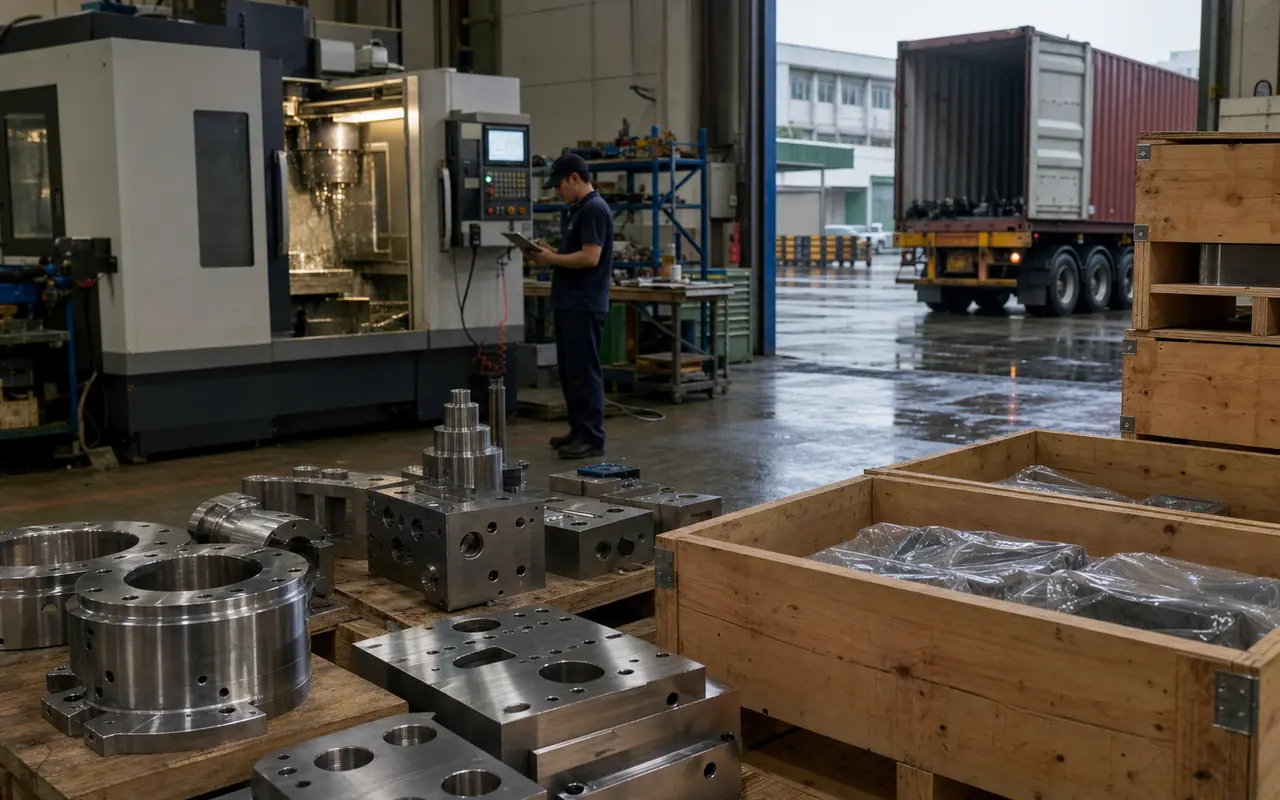
Metal and machinery products tend to be highly customized, have long lead times, involve large sums per order, and require overseas installation and after-sales service. When tariffs rise, buyers may ask suppliers to absorb part of the cost, delay placing orders, or switch to local or third-country suppliers. Even a company that still has orders on its books may face cash-flow pressure at the same time, because of delayed collections, rising inventory and overseas-deployment spending. These are reasonable financial-mechanism inferences (medium confidence), not empirical conclusions about every company receiving assistance. The Ministry of Economic Affairs' export-order statistics and their sub-categories can be used to keep tracking changes in base metals, machinery and U.S. orders, [7][8] but a single month's orders are still not the same as a company's eventual shipment and collection.
Export wholesalers may stock goods and pay freight and suppliers before collecting from overseas customers, creating a working-capital gap. Guarantees and interest-rate discounts may help with this timing mismatch. This is an inference about a financing mechanism (medium confidence); wholesale’s ranking in approved loans cannot prove it or establish a general change in banks’ lending practices.
But the distribution of processed cases is not a complete "ranking of injured industries." The August 17 announcement does not provide the total applicant pool or the approval rate for each industry; an industry with more covered or passed cases may genuinely have been hit hard, or it may simply be that its trade association promoted the program more actively, its companies were more familiar with the paperwork, or the program's eligibility criteria happened to fit better. A company absent from the approved list may not have applied, may have been rejected, may not need the help, may not know about it, or may have already exited the market. Looking only at the approved list misses the group of companies that lack the capacity to complete an application in the first place.
These figures can therefore only answer "which industries, as of August 13, more often appear near the top of covered, approved or passed cases" — they cannot answer the full ranking of applicants, still less answer, on their own, "who has lost the most" or "who needs rescuing the most."
4. How Might Tariffs Put Pressure on Metals and Machinery Companies’ Cash Flow?
A tariff hit does not only cost a company extra money at customs. It travels into a company's finances along four channels.
The first is price absorption. U.S. importers may ask Taiwanese suppliers to cut prices to share the tariff burden. Revenue does not disappear right away, but margins thin out first. An anonymous overseas-market-development case published by the Ministry of Economic Affairs mentions a machinery and equipment maker whose customer asked it to absorb part of the tariff cost, prompting it to switch to a distributor model to expand into other U.S. states; this was a single case in the July 20 announcement, not representative of every recipient. [4]
Tariff policy also needs to be read by event date. The February Section 122 proclamation originally specified an end time of 12:01 a.m. Eastern daylight time on July 24, with an exception for an extension by Congress. [13] On July 23, USTR announced final action in its forced-labor Section 301 investigations; CBP guidance specified implementation on July 24, with exemptions by economy, product and transit status. [11][16] Section 232 measures are issued separately by product: an August 13 proclamation on unmanned aircraft set September effective dates for some goods and the following February for certain components, with exceptions. [17] These events show how cost conditions change; no single date or rate determines the duty payable on a particular order today.
The second is delayed orders. Customers wait for policy, exchange rates and prices to stabilize, stretching out their decision timelines. If a single equipment order accounts for a large share of revenue, a three-month delay may substantially widen the funding gap; the effect depends on order concentration, advance payments and payment terms.
The third is inventory and receivables. Companies stock up on materials in advance to meet delivery dates, while customers ask for extended payment terms or split shipments. The income statement may still show revenue, but the bank account thins out first.
The fourth is the cost of shifting markets. Moving from the United States to Europe, ASEAN or other markets is not as simple as changing a website's language. Products may need to be recertified, agents need to be cultivated afresh, and repair sites and spare-parts inventory need up-front investment. The requirement that overseas-order subsidies require companies to cover at least half the cost also shows that the government cannot cover a company's entire cost of trial and error. [1]
These four channels form a mechanism-based framework (reasonable inference, medium confidence) for understanding why loans, R&D transformation and channel subsidies might be used at the same time — they are not a proven causal account of who actually applied. Companies may face margin, timing, inventory and market pressure simultaneously, and may also be affected by program eligibility, publicity and administrative capacity.
5. A Loan Is Not a Rescue Grant: First Judge Whether Time Alone Can Solve the Problem
Sections 5–9 present this article’s recommendations for business diagnosis and policy evaluation, not the programs’ approval criteria.
A preferential loan is best suited to companies with "real business, but cash coming in and going out on mismatched timing."
For example, a factory has confirmed orders and its product is still competitive, but a customer has delayed payment, or it needs to pay a lump sum up front to set up an overseas warehouse. In this situation, guarantees and interest-rate discounts can lower the financing threshold and help a company bridge a short-term gap.
If a company's real problem is that its product has long lacked price competitiveness, its main customers have already switched suppliers, or its technical specifications have fallen behind, a loan will not automatically create demand. It merely trades today's pressure for tomorrow's principal and interest. Even at a low interest rate, as long as margins keep falling, debt will still amplify the risk.
So before borrowing, a company should run one brutal but necessary test: excluding government subsidies, does every order still generate a positive contribution margin after the tariff? What verifiable orders and collections can it count on over the next twelve months? If sales come in 20% below expectations, can it still service the principal and interest?
Banks and the government should also stop treating "how much has been approved" as good news on its own. What really needs to be distinguished is a company facing a temporary cash-flow gap versus one that has structurally lost competitiveness; the former needs time, while the latter needs to change its products, change its markets, or even wind down in an orderly way — not take on yet another debt.
6. 1,067 Transformation Cases: Results Cannot Be Judged Just by How Much Equipment Was Bought
As of August 13, the R&D transformation subsidy had approved 1,067 cases and assisted 1,189 companies, [1] which shows the program's reach is not small. But "transformation" is the one measure, of the four, most easily papered over with attractive-sounding language.
Buying automation equipment, adopting AI, upgrading a production line — all of these can be valuable; the question is whether they actually target a company's real competitive bottleneck.
If customers are leaving because lead times are too long, automated scheduling and a digital supply chain may help. If the problem is that small-batch, high-variety production drives up changeover costs, the fix is better flexible manufacturing and tooling management. If the problem is that overseas customers need real-time repair support, adding one more machine to the factory floor may matter less than building remote diagnostics and a parts network. If a product has already been displaced by cheaper alternatives, simply raising output will only increase inventory instead.
So every transformation case needs at least one verifiable benchmark: how much the quotation time was shortened, how much the yield rate improved, how many hours per unit were cut, how much the lead time shortened, how much non-U.S.-market revenue increased. Without outcome benchmarks, assessment can become focused on equipment inputs, making it difficult to judge whether competitiveness has improved.
Adopting technology also needs to avoid "AI-washing." AI can help with quality inspection, scheduling, predictive maintenance and document automation, but not every bottleneck needs a model. For SMEs, being able to reliably collect data and connect work orders with inventory is often more important than buying an expensive generative-AI package.
7. Overseas Market Development Is Not Measured by How Many Trade Shows You Attend, But by Whether You Can Stay in the New Market
The Ministry of Economic Affairs' overseas-order measure supports showrooms, repair centers, distribution warehouses, agents and distributors. [1] This design is closer to the real needs of machinery and industrial goods than simply subsidizing trade-show attendance, because customers are buying not just equipment but also repair speed and parts supply.
But an overseas presence carries risk of its own. Rent, staffing, inventory and regulatory compliance are all fixed costs; a new agent may also represent a competing brand; and when the market is not large enough, a single company can struggle to sustain a repair network on its own. The NT$20 million cap for joint applications opens up the possibility of shared industry services, but it also requires sorting out customer ownership, branding and cost-sharing.
Judging the effectiveness of market development cannot rely only on how many trade shows were attended or how many memoranda of cooperation were signed. Better indicators are: the number of valid new leads in a new market, the conversion rate from trial orders to formal orders, the share of revenue from outside the United States, after-sales response time, actual sell-through by distributors, and how much market-development cost it took to earn one additional dollar of gross margin.
Trade shows, showrooms and distributor development all need follow-up on orders. Activities are inputs; orders and margins are outcomes. Without tracking the same participants over a defined period, activity counts cannot establish effectiveness.
8. A Decision Tree for Companies: Do You Need Working Capital, Transformation, or a New Market?
The first question: Do you currently have verifiable orders that still carry a positive gross margin?
If yes, and the only issue is that collections lag behind payments, prioritize working-capital support and the export guarantee. Lay out your orders, collections, inventory and stress scenarios for the bank, and match the loan term to your cash-collection cycle — don't borrow to the maximum simply because the interest rate is cheap.
If no, move to the second question: Is the product still competitive with other customers or in other markets?
If its specifications, quality and after-sales service are still wanted, and the company is only lagging on cost, lead time or small-batch flexibility, then move into R&D transformation. Define the bottleneck and quantify a target first, then decide on equipment, software or AI — don't let the subsidy category decide what the company should do.
If the product is competitive but overly concentrated on U.S. customers, move to the third question: What local capability does the new market require?
If certification is needed, calculate the time and cost of certification first; if repair service is needed, evaluate setting up a shared service center with industry peers; if inventory is needed, calculate the turnover of an overseas warehouse. Only then does the overseas-order subsidy become an accelerator.
If the answer to all three questions is no — no orders with a positive margin, no product differentiation, and no clear demand in a new market either — the most responsible decision may not be to borrow more, but to shrink the product line, sell assets, transform into a service provider, or look for a merger or exit option. Policy cannot promise that every company survives unchanged, but it can lower the cost of the chaos involved in transformation and exit.
9. The Government's Report Card Needs to Move from "How Much Was Spent" to "What Actually Changed"
The August 17 announcement provides an execution snapshot: how many cases, how much money, which industries. [1] The next step requires four layers of outcome data.
The first layer is accessibility. How long does it take from application to approval? What are the approval rates across different counties, company sizes and industries? Which companies dropped out because of self-funding requirements, collateral or paperwork?
The second layer is short-term stability. Six months after receiving assistance, did the company maintain employment, avoid default, complete its orders and reduce inventory? This layer is suited to evaluating the loans.
The third layer is competitiveness. A year later, has the gross margin, lead time, yield rate, R&D revenue and the share of new products improved? This is the layer that is the real test for the transformation subsidy.
The fourth layer is market diversification. Two to three years later, has concentration in the single U.S. market fallen? Are the new channels bringing repeat orders, rather than one-off trial orders?
Ideally there would also be a control group: how do similarly sized companies in the same industry that did not receive assistance perform? Without a control, when the economy recovers all companies improve together, and the government can easily credit an external recovery to its own policy; when the economy worsens, the actual losses the measures prevented can just as easily be underestimated.
This is not a call for every subsidy to be run as an academic experiment — it is simply a call not to treat the budget execution rate and the case count as the finish line. [12]
10. A Red-Team Test: Is Support Buying Time, or Delaying the Inevitable?
Supporters would say that tariffs and policy shifts are external shocks, and companies should not go under because of a temporary cash-flow break. By stepping in with guarantees, interest-rate relief, R&D support and market development together, the government can preserve technology, jobs and the supply chain, giving companies time to adjust. From July 16 to August 13, export guarantees rose from 109 to 126 cases and diversified loans from 1,766 to 1,893 cases. [1][4] These are increases between administrative snapshots using the same definitions, showing continued use of the tools—not net additions to the number of companies or proof of policy effectiveness.
The opposing view would ask whether the government is attributing every problem to tariffs. Some of the pressure on traditional industries may come from long-standing cost structures, product homogeneity, Chinese overcapacity, exchange rates, energy costs and labor shortages; without a mechanism for exit and consolidation, preferential loans may simply let low-competitiveness companies postpone facing reality, while crowding out capital and talent that could go to companies with more potential.
Both sides have a point, and the dividing line is not "whether to help," but whether policy can tell apart a reversible short-term shock from an irreversible structural problem. The life ring should go to companies that can still swim back to shore and are only temporarily choking on water; those that need a different boat require transformation, consolidation and exit tools — not an endless supply of more flotation devices.
11. Three Layers of Action for Taiwan: Turning a Two-Speed Economy into a Manageable Gap
At the national level, the government should stop using total exports alone to represent industrial health. Each month it should present ICT, electronics and non-electronics exports, orders, employment, financing, and covered/approved/passed cases side by side, so that policy can see the divergence hidden behind the average. The four measures should also disclose the total applicant pool, approval rates and a shared outcome framework, so the public can see what problem each of the loans, subsidies and market-development support is actually solving.
Banks, trade associations and large companies should become diagnostic gateways, not just paperwork agents for applications. Trade associations can sort their members into four groups — working capital, technology, channels and structural adjustment — and match them to the right resources; large companies can provide order visibility, joint verification and supplier upgrading, lowering the risk that each individual SME has to invest on its own.
SMEs should first draw up three twelve-month tables: a cash-flow table, a product-margin table, and a customer-and-market-concentration table. They should write down who absorbs the tariff, how the exchange rate is moving, how much collections have been delayed, and how much a new market will cost. Only once the problem has been quantified will the NT$46 billion in tools stop becoming a case of "apply for whatever you're eligible for."
The most valuable use of government resources is not to save a company money on an investment it would have made anyway — it is to let companies make, sooner, the changes they were otherwise too afraid to make because of information gaps, risk, or coordination costs.
Final Judgment: A Record First-Half Export Value Does Not Mean Every Boat Is Afloat
Taiwan’s first-half export value reached a record for the period, and July exports also grew year on year. The AI-related demand and price effects identified by the Ministry of Finance jointly increased nominal export values; that can coexist with companies’ need for financing, technology or market support. [9][14]
At the same time, the industry ranking of covered, approved or passed cases as of August 13 shows metals, machinery, wholesale and consumer manufacturing making use of cash, technology and market-development tools; it cannot represent the complete applicant pool or a ranking of who has been hurt most. Only by looking at this administrative snapshot alongside the export breakdown can we see the internal structure behind the aggregate figures.
The roughly NT$46 billion program has already been launched, and it now needs to move from "was there a life ring" to "was it used correctly." Companies with orders but short on time need working capital; companies with a market but short on capability need transformation; companies with a good product but overly concentrated customers need new channels. Companies that have lost their competitiveness need a more honest restructuring option than another loan.
A year from now, the most meaningful headline will not be how many more cases have been approved, but how many metal and machinery companies managed to turn tariff absorption into a new pricing capability, turn a one-off subsidy into repeat orders, and turn a single concentrated U.S. customer into a more stable mix of markets.
A company can start with one order. If the constraint is a supply interruption, “Resilience and Recovery Time” offers a way to examine it. If it involves customer relocation or origin requirements, continue with “The Three-Layer Dividend of De-Risking from China.” Related reading is collected in the Geopolitical Economy topic.
Sources
- Industrial Development Administration — Four Tariff-Support Measures, Status as of August 13
- International Trade Administration, Ministry of Economic Affairs — Summary of Taiwan's Foreign Trade Statistics, June 2026 (ROC Year 115)
- Chung-Hua Institution for Economic Research — Taiwan Manufacturing Purchasing Managers' Index, June 2026
- Industrial Development Administration — Four Tariff-Support Measures, Status as of July 16
- Executive Yuan — Taiwan-U.S. Tariff Negotiations and Industry Support Program
- International Trade Administration, Ministry of Economic Affairs — Guidance and Assistance Measures for Industries Affected by U.S. Reciprocal Tariffs
- Department of Statistics, Ministry of Economic Affairs — Export Order Statistics, May 2026 (ROC Year 115)
- Department of Statistics, Ministry of Economic Affairs — Export Orders by Major Commodity
- Department of Statistics, Ministry of Finance — Preliminary Statistics on Customs Import and Export Trade, June 2026 (ROC Year 115), Press Release
- National Development Council; Chung-Hua Institution for Economic Research — Taiwan Purchasing Managers' Index Press Release, June 2026
- USTR — Final Action in Forced Labor Section 301 Investigations, July 23, 2026
- Legislative Yuan Budget Center — Special Resilience Budget Assessment: Ministry of Economic Affairs
- U.S. Federal Register — Imposing a Temporary Import Surcharge To Address Fundamental International Payments Problems
- Ministry of Finance — July 2026 Customs Trade Statistics Press Release
- Chung-Hua Institution for Economic Research — Taiwan Manufacturing PMI, August 2026
- U.S. Customs and Border Protection — CSMS 69326983: Section 301 Forced Labor Import Duties
- The White House — Section 232 Proclamation on Unmanned Aircraft and Components, August 13, 2026

Taiwan's Two Faces
The whole world depends on Taiwan's chips — and is quietly preparing for the day it might lose them. The same island is both the heart of the supply chain and a geopolitical powder keg. How can Taiwan's companies turn "irreplaceable" into an advantage that lasts?
Japan Takes Economic Security Overseas: Can OESA Bring Taiwan's Supply Chains Into State-Level Financing?
Japan has created OESA, extending policy finance to overseas projects that matter for economic security but are hard for existing tools to carry. Taiwan has an opening, but the law taking effect is not the same as Taiwan already being on the list — the real threshold lies in Japan's own interests, project design, and implementing rules that have yet to be published.