
Taiwan's 15% Tariff: A Locked-In Warranty, or a Contract That Could Be Revised Any Time?
Taiwan traded US$250 billion in investment pledges in the U.S. for 'certainty' on a 15% tariff to the U.S., plus exemptions on 2,072 products and an average tariff — for products with an actual U.S. export track record — down to about 12.33%. But three things that happened in the first half of 2026 put a question mark over that 'certainty': the agreement still hasn't formally taken effect, the U.S. Supreme Court struck down the legal basis for the IEEPA tariffs, and the U.S. and China are renegotiating again. What did Taiwan actually buy — a warranty that's locked in, or a contract that could be revised at any time?
Article contents01 / 09
- The relative advantage is real: Taiwan's 15%, not stacked on MFN, is below China's 30% and on par with Japan and South Korea; the ART won exemptions from the reciprocal tariff on 2,072 products shipped to the U.S., pushing the average tariff on products with an actual U.S. export track record down to about 12.33%, and (as of May 2026) only 9 countries worldwide had signed an ART with the U.S. — this is a genuine negotiating gain and should be acknowledged.
- But the 'certainty' is conditional: the Agreement on Reciprocal Trade (ART) was signed on 2026-02-12 but has 'not yet formally taken effect' — only the tariff schedule has been implemented, from 5/1; the pace of U.S.-China tariffs has kept shifting too (holding at 30% with a 60-day pause on higher tariffs in June 2025, then dropping to 20% in a one-year arrangement after their late-October meeting that year), and Taiwan's relative position moves along with it.
- The legal basis needs to be understood precisely: the U.S. Supreme Court ruled on 2026-02-20 that IEEPA does not authorize tariffs, but Section 232 and related executive orders are 'unaffected' — what was struck down is the IEEPA surcharge; the Section 232 chip benefit (duty-free import up to 2.5x planned capacity for plants built in the U.S.) and the agreement's other elements remain in place. Businesses should treat 15% as the current baseline and hedge against tariff scenarios.
“Taiwan's 15% Tariff: A Locked-In Warranty, or a Contract That Could Be Revised Any Time?” reports that Taiwan's tariff to the U.S. drops from 20% to 15%, not stacked on MFN。 Below China's 30%, on par with Japan and South Korea [1][7]。
“Taiwan's 15% Tariff: A Locked-In Warranty, or a Contract That Could Be Revised Any Time?” reports that The ART won exemptions from the reciprocal tariff on 2,072 products shipped to the U.S.(2,072 items)。 Average tariff for products with an export track record down to about 12.33% [4]。
“Taiwan's 15% Tariff: A Locked-In Warranty, or a Contract That Could Be Revised Any Time?” reports that The ART was signed on 2/12, but still 'has not formally taken effect'(Not yet in effect)。 Only the tariff schedule has been implemented, from 5/1 [3]。
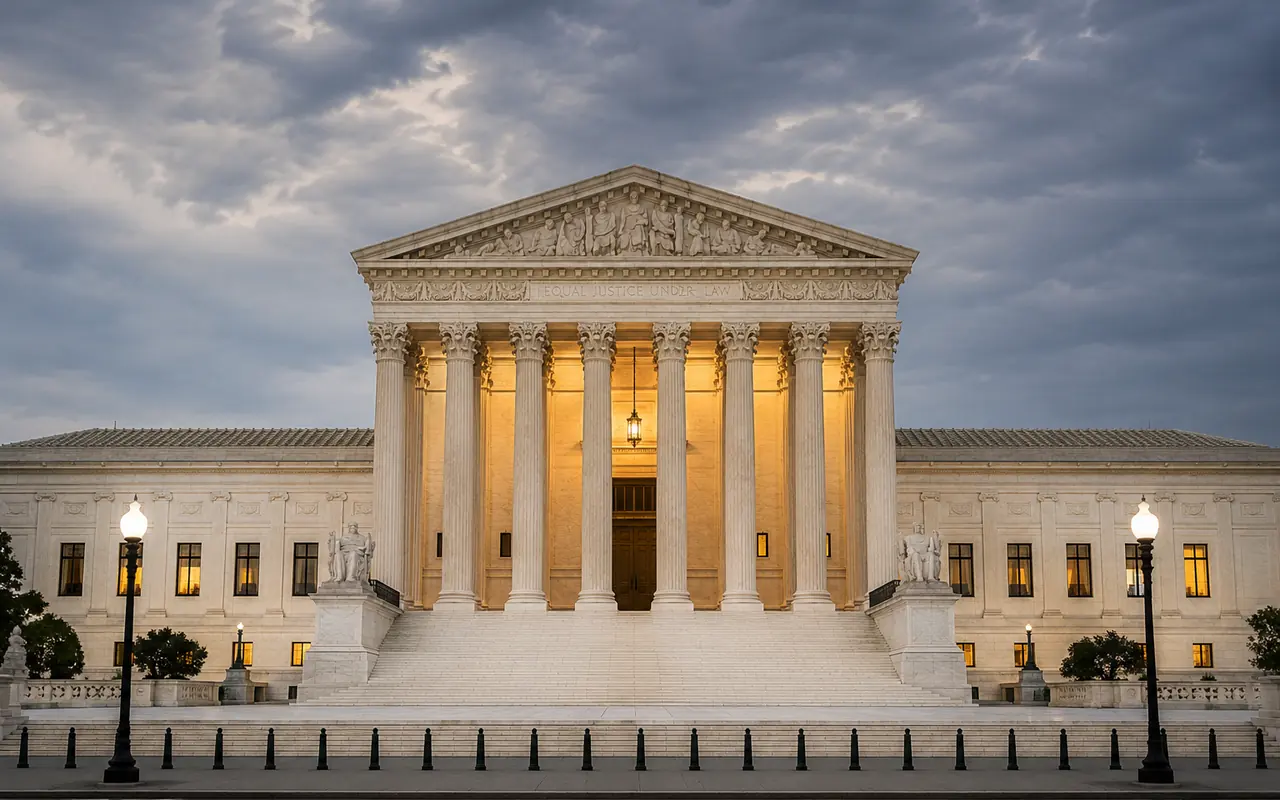
“Taiwan's 15% Tariff: A Locked-In Warranty, or a Contract That Could Be Revised Any Time?” reports that The U.S. Supreme Court ruled IEEPA tariffs unlawful(2/20)。 But Section 232 and related executive orders are 'unaffected' [3][5]。
“Taiwan's 15% Tariff: A Locked-In Warranty, or a Contract That Could Be Revised Any Time?” reports that The Section 232 semiconductor benefit: plants built in the U.S. can import duty-free up to 2.5x planned capacity。 Ties tariff stability directly to U.S. investment [2]。
“Taiwan's 15% Tariff: A Locked-In Warranty, or a Contract That Could Be Revised Any Time?” reports that US-China tariff pace keeps shifting, not a single 60-day pause(US-China renegotiate)。 2025: 30% down to 20%, extended for one year [5]。
In early 2026, Taiwan closed a major deal: the U.S. lowered the tariff on Taiwanese goods from 20% to 15%, and did not stack it on top of the existing most-favored-nation (MFN) rate [1][7]. The U.S. side publicly committed to taxing Taiwan's exports to the U.S. at "whichever is higher of MFN or 15%" — effectively setting 15% as a ceiling [9]. For an export-driven economy, this is genuinely good news — half of China's 30%, and on par with Japan and South Korea.
What was the price? About US$250 billion in pledged investment in the U.S. (see "Taiwan's Silicon Shield in Depth"), plus a special clause no other country has: a requirement that Taiwan keep defense spending above 3% of GDP. In effect, Taiwan traded its "strongest chip" for "certainty" — something predictable, no longer threatened by tariffs day after day.
But three things that happened in the first half of 2026 put a question mark over that word "certainty." What did Taiwan actually buy — a warranty that's locked in, or a contract that could be revised at any time?
Give Credit First: The Relative Advantage Is Real
Let's not overcorrect and dismiss the outcome as worthless. What Taiwan secured is objectively good, and more concrete than most people realize.
According to figures published by the Executive Yuan, this "Agreement on Reciprocal Trade" (ART) doesn't just push the rate down to 15% without stacking on MFN — it also won exemptions from the reciprocal tariff on 2,072 products shipped to the U.S., bringing the average tariff on Taiwan's products with an actual U.S. export track record down to about 12.33% [4]. Set against the world, (as of May 2026) only 9 countries had signed this kind of agreement with the U.S. — Taiwan is one of them.
“Taiwan's 15% Tariff: A Locked-In Warranty, or a Contract That Could Be Revised Any Time?” reports that Taiwan's tariff to the U.S. drops from 20% to 15%, not stacked on MFN。 Below China's 30%, on par with Japan and South Korea [1][7]。
Semiconductors got an even better deal under Section 232 — Taiwanese firms building plants in the U.S. can, during the plant-approval period, import duty-free up to "2.5 times their planned capacity" [2].
“Taiwan's 15% Tariff: A Locked-In Warranty, or a Contract That Could Be Revised Any Time?” reports that The ART won exemptions from the reciprocal tariff on 2,072 products shipped to the U.S.(2,072 items)。 Average tariff for products with an export track record down to about 12.33% [4]。
In a world of tariff chaos, this is a contract that lets exporters breathe a sigh of relief. The only question is: how long can that relief last?
Why Is "Certainty" Worth So Much?
To understand the value of this agreement, you first have to remember the chaos of 2025. That year, the Trump administration, under the banner of "Liberation Day," rolled out wave after wave of tariffs on the entire world — announced one moment, paused the next, escalated after that — leaving every exporter trapped in a state of "not knowing how much tax they'll owe next month." For a Taiwanese export factory, the scariest thing was never "the rate is high" — it was "the rate is unpredictable." You can't quote a price, you can't sign a long-term contract, you can't plan capacity, because the rules of the game can change at any moment.
Against that backdrop, "a fixed rate, written in black and white," became a rare commodity in itself. What Taiwan bought by negotiating down to 15% wasn't so much "cheapness" as "predictability" — letting exporters restart doing business on at least one known number. That's also why, even at a steep price (US$250 billion in investment plus the defense pledge), the government still treats it as a major achievement: in a disordered tariff world, order itself has value. And the fact that only 9 countries worldwide have signed an ART with the U.S., with Taiwan among them, both shows that Taiwan's leverage (chips) is strong enough, and shows that this "tariffs traded for investment and pledges" model is becoming the template the U.S. is using to reshape global trade — with Taiwan as its "early sample." The McKinsey Global Institute has likewise observed that global trade is being redrawn along geopolitical fault lines, forcing companies and countries to reweigh "efficiency" against "security" — Taiwan's agreement is a microcosm of that larger reshuffling [6].
Three Variables That Discount the "Certainty"
First, the agreement still hasn't fully taken effect. Taiwan and the U.S. signed an MOU on January 15, 2026, and the "Agreement on Reciprocal Trade (ART)" on February 12 (U.S. Eastern Time) [1]; on February 13, Taiwan time, the Executive Yuan held a joint press conference with the Presidential Office, walking through the agreement's content and timeline question by question [8]. But according to the U.S. Federal Register, the ART has still "not formally taken effect" as of now — the Department of Commerce and USTR have only implemented part of it so far, with the tariff-schedule adjustments taking effect from May 1 [3]. The most complete version of the agreement is still stuck at "signed, but not yet locked in."
“Taiwan's 15% Tariff: A Locked-In Warranty, or a Contract That Could Be Revised Any Time?” reports that The ART was signed on 2/12, but still 'has not formally taken effect'(Not yet in effect)。 Only the tariff schedule has been implemented, from 5/1 [3]。
Second, the legal basis for the tariff has been shaken — but this needs to be understood precisely. On February 20, 2026, the U.S. Supreme Court ruled in Learning Resources v. Trump that the president may not impose additional tariffs under the International Emergency Economic Powers Act (IEEPA) [5]. That's a heavy blow. But the crucial detail is this: according to the Federal Register, this ruling only struck down the part imposed "under IEEPA"; Section 232, along with the related executive orders (EO 14346, 14257), are "unaffected by this ruling" [3]. But note that "unaffected" refers to the legal authorization underlying Section 232 itself and these two executive orders — it does not mean Taiwan's original 15% rate, which was imposed under the IEEPA mechanism, was itself left unchanged. That portion of the rate has since been superseded following the IEEPA ruling, taken over by other mechanisms such as Section 122 and Section 301 (see the "Later Development" note at the end of this article).
“Taiwan's 15% Tariff: A Locked-In Warranty, or a Contract That Could Be Revised Any Time?” reports that The U.S. Supreme Court ruled IEEPA tariffs unlawful(2/20)。 But Section 232 and related executive orders are 'unaffected' [3][5]。
This distinction matters a great deal for Taiwan: the Section 232 semiconductor benefit that Taiwan cares about most has not been struck down; what's been shaken is the portion of tariffs imposed under IEEPA, which now has to be rebuilt under other laws such as Section 232 and Section 122. So the accurate description isn't "the whole legal foundation was pulled out" — it's "part of the foundation got replaced, and the house needs to be re-inspected." This remains uncertain, but it's not the doomsday scenario it might sound like.
Third, the pace of U.S.-China tariffs is itself unstable. In June 2025, Trump announced a deal with China, holding the tariff at 30% (20% "fentanyl" plus 10% reciprocal) and pausing a higher tariff for 60 days [5]; after several rounds of extensions and adjustments, following the Trump-Xi meeting in South Korea in late October 2025, the fentanyl tariff dropped to 10%, bringing China's total tariff to the U.S. down to 20%, extended into a one-year arrangement (through November 2026). The relative rate between the U.S. and China has kept shifting, and Taiwan's relative competitive position moves along with it. The "value" of that 15% was never an isolated number — it's relative: when a competitor's rate moves, your advantage scales along with it.
“Taiwan's 15% Tariff: A Locked-In Warranty, or a Contract That Could Be Revised Any Time?” reports that US-China tariff pace keeps shifting, not a single 60-day pause(US-China renegotiate)。 2025: 30% down to 20%, extended for one year [5]。
The True Face of "Certainty": Conditional
Put all three things together, and the most accurate description is this: what Taiwan bought is "conditional certainty."
It's in effect now, and it's a relative advantage — that's real. But it isn't a warranty locked in forever. The ART hasn't fully taken effect, part of its legal basis is being rebuilt, and the U.S. and China keep renegotiating — if any one of these variables shifts, some of the terms of this contract could be revised. And don't forget: the Section 232 semiconductor benefit is tied to "investment in the U.S." — Taiwan's tariff stability has been bundled together with the U.S. expansion discussed in "Taiwan's Silicon Shield in Depth" into a single package: the benefits are shared, but so is the risk. If the pace of investment in the U.S. falls short of expectations, the foundation of this tariff benefit could loosen along with it.
The overlap between the two red teams is clear: the Eastern Eye says "it's written in black and white, it's been implemented since 5/1, there are 2,072 exemptions — don't scare yourself"; the Western Eye says "the ART hasn't fully taken effect, the legal basis is being rebuilt, the U.S. and China keep renegotiating — treating it as a warranty will stop businesses from hedging." The outcome should be credited, but a negotiating result should not be mistaken for a permanent parameter.
For Taiwan, What Actually Matters Most Is the Chip Clause
Of all the clauses, the one with the most long-term significance for Taiwan isn't actually the 15% — it's the semiconductor treatment under Section 232.
The U.S. has, since early 2026, imposed a 25% Section 232 tariff on certain advanced chips (such as Nvidia's H200 and AMD's MI325X-class chips) on "national security" grounds, and continues to evaluate whether to expand the scope of that tariff — meaning the risk of the "chip card" has moved from "could happen" to "partly already happened, with the scope still potentially expanding." What Taiwan negotiated is a design that "rewards investment in the U.S.": Taiwanese companies building plants in the U.S. can, during the plant-approval period, import chips duty-free under Section 232 up to "2.5 times planned capacity" [2]. This effectively links "TSMC and peers' expansion into the U.S." directly to "tariff exemption" — the more you invest in the U.S., the more duty-free chips you can import.
“Taiwan's 15% Tariff: A Locked-In Warranty, or a Contract That Could Be Revised Any Time?” reports that The Section 232 semiconductor benefit: plants built in the U.S. can import duty-free up to 2.5x planned capacity。 Ties tariff stability directly to U.S. investment [2]。
The two-sided nature of this clause is exactly an extension of the debate in "Taiwan's Silicon Shield in Depth": optimistically, it keeps Taiwan's chips competitive in the U.S. market and ties the Taiwan-U.S. industries more tightly together; pessimistically, it's a "carrot" that lures Taiwan into moving its most precious capacity and capital to the U.S. step by step. For Taiwan, this clause isn't simply a net positive — it's a long-term deal that needs careful calculation.
The Problem on a Single Quotation
Boil all of this down into the daily reality of a machine-tool factory owner in Taichung, and it becomes clearer. He gets a U.S. order with delivery six months out. Which rate should he quote? 15%? That's today's number, but the ART hasn't fully taken effect; if the legal basis gets rebuilt or the rate adjusted slightly six months from now, he could earn less — or even lose money. Nor can he assume "it will definitely stay at 15%," because even the U.S. Supreme Court can strike down the president's own tariff.
For him, the practical move isn't to bet on which number will hold — it's to write a "tariff-change clause" into the contract, build some buffer for currency and tariff swings, and diversify markets so he isn't putting all his eggs in the U.S. basket. That's the real meaning of "writing the possibility of a revision into every single quotation" — not pessimism, but professionalism.
Not Every Industry Is Standing on the Same Line
"15%" is an average concept, but it lands very differently across industries. For TSMC-level "irreplaceable" cutting-edge semiconductors, the tariff is almost entirely "the customer's problem" — if you don't sell to them, there's nowhere else in the world for them to go. But for thin-margin, highly competitive traditional industries and non-semiconductor SMEs (machine tools, bicycles, screws, plastics, textiles), the situation is completely different: a 15% tariff can be the line between "profit and loss," and it's very hard to pass on to price-squeezing U.S. buyers.
That's also why the same "15% agreement" gets described in the news as a "major win," while to a screw-factory owner in central Taiwan, it might sound like "one more slice of margin gone." The negotiating outcome is real, but its benefits and pains are distributed extremely unevenly across industries — this is exactly the injury map that "After the 15% Tariff" set out to address. A responsible government can't just celebrate that "the average tariff rate came down" — it also has to see the people standing below that average, the ones actually being bitten by the tariff.
Don't Forget: Taiwan Paid a Price for This Contract Too
Talking about "what was bought" also means being honest about "what was paid."
Beyond the US$250 billion in pledged investment in the U.S., the clause in the ART requiring "Taiwan's defense spending to stay above 3% of GDP" is something no other country that has signed with the U.S. has (see "Defense Spending at 5%: Protection Money for Trump, or Deterrence Bought for Taiwan Itself?"). That means this trade agreement is, in effect, a "bundled economic-plus-security contract" — what the U.S. wants isn't only Taiwan's investment and market access, but Taiwan's defense commitment too. For Taiwan, this is both an opportunity to "turn defending Taiwan into a verifiable commitment" and a cost of "having its sovereignty and policy autonomy written into someone else's contract." Reading it as a simple "trade win" would underestimate its complexity.
Three Taiwanese Perspectives
The state: Push for the ART to formally take effect as soon as possible, and lock down the stability of the legal basis after the Supreme Court ruling; negotiate the linkage clause between "investment in the U.S. and tariff benefits" to Taiwan's greatest advantage; and prepare a contingency script for if the legal basis changes again. Taiwan should also make use of that list of 2,072 exemptions as an industrial-policy tool: help more of Taiwan's vulnerable product categories get onto the exemption list, or expand the list in the next round of negotiations, so the benefits of "certainty" get distributed as much as possible to the SMEs and traditional industries that need them most. At the same time, the state needs to stay clear-eyed about that "defense at 3%" bundling — managing it as "a verifiable commitment that benefits Taiwan," not an open-ended contract anyone can keep raising.
Export industries: Treat 15% as "the current baseline," not something permanent; semiconductor firms should make full use of the Section 232 "2.5x duty-free import" window in coordinating their U.S. buildout; every exporter should build hedging and quoting flexibility around "tariff scenario changes." More practically, exporters should proactively check the itemized lists published by the Ministry of Economic Affairs and USTR, to confirm whether their own products' tariff classification (HS code) falls under the 15% rate or within those 2,072 exemptions — even within "exports to the U.S.," a difference of a few classification codes can mean a wildly different tax burden. Figuring this out is more useful than reading ten news articles about "the 15% agreement." Remember: in an era where even a superpower's own tariff can be struck down by its own Supreme Court, no rate is "permanent."
SMEs: Traditional industries and non-semiconductor businesses are the most exposed (following on from "After the 15% Tariff"). Keep close track of the ART's effective timeline and item-level details — especially checking whether your own products are on that list of 2,072 exemptions. Don't be lulled by the false sense of security that "it's already settled" — before the contract is fully locked in, prepare a Plan B: diversify markets, control costs, keep a cash buffer, so that even if the rules suddenly change, you still have room to turn around.
15% is an impressive negotiating result, but impressive doesn't mean solid. What Taiwan bought is a contract that's in effect now, but not yet fully locked in. The smart move isn't to celebrate certainty, nor to panic over uncertainty — it's to treat it as "the current baseline," while writing the possibility of a revision into every single quotation. Because in this era, the only certainty is that "nothing is permanently certain" — and the businesses able to keep steadily running their operations within that uncertainty have never gotten there by guessing the right number, but by preparing their next move early, just in case things get revised.
Later Development (as of August 2026): At the time this article was published (2026-06-23), 15% was the correct baseline for Taiwan's tariff to the U.S. But on July 24, 2026, the temporary global tariff authorization under Section 122 expired, and the U.S. shifted to charging new tariffs based on the findings of a Section 301 "forced labor" investigation. Because Taiwan had already made forced-labor commitments under the ART — including a ban on importing forced-labor-tainted goods — it was assigned a preferential 10% rate instead, not stacked on MFN, below the 15% originally negotiated under the ART [10][11]. Deputy Premier Cheng Li-chun has publicly stated that this 10% rate is "not final" and still depends on the outcome of a separate overcapacity investigation [11]. In other words, the "15%" used throughout this article's title and body is, as of the latest developments, no longer the tariff rate actually applied to Taiwan's exports to the U.S. — which only reinforces this article's core point: 15% was never a permanent warranty, but a "current baseline" that could be revised at any time.
Sources
- USTR — Fact Sheet: U.S.-Taiwan Agreement on Reciprocal Trade
- U.S. Department of Commerce — Fact Sheet: Restoring American Semiconductor Manufacturing Leadership (U.S.-Taiwan)
- Federal Register (2026-05-28) — Implementing Certain Tariff-Related Elements of a Trade & Security Agreement (AIT/TECRO)
- Executive Yuan — Taiwan and the U.S. Sign the "Agreement on Reciprocal Trade," Setting the Reciprocal Tariff at 15%, Not Stacked, With 2,072 Exemptions
- Tax Foundation — Trump Tariffs: Trade War by the Numbers (including the Supreme Court ruling and the U.S.-China tariff timeline)
- McKinsey Global Institute (2026) — Geopolitics and the geometry of global trade: 2026 update
- Focus Taiwan (2026-01-16) — U.S. lowers tariff on Taiwanese goods to 15% in trade deal
- Central News Agency (CNA) — Taiwan-U.S. Agreement on Reciprocal Trade Signed: Key Q&A From the Joint Presidential Office-Executive Yuan Press Conference
- Supply Chain Dive — US commits to 15% tariff limit for Taiwan goods
- Taipei Times (2026-07-25) — USTR notices a 10% tariff on Taiwan under Section 301
- Focus Taiwan (2026-07-24) — U.S. announces Section 301 tariffs; some Taiwan goods to face 10% duty
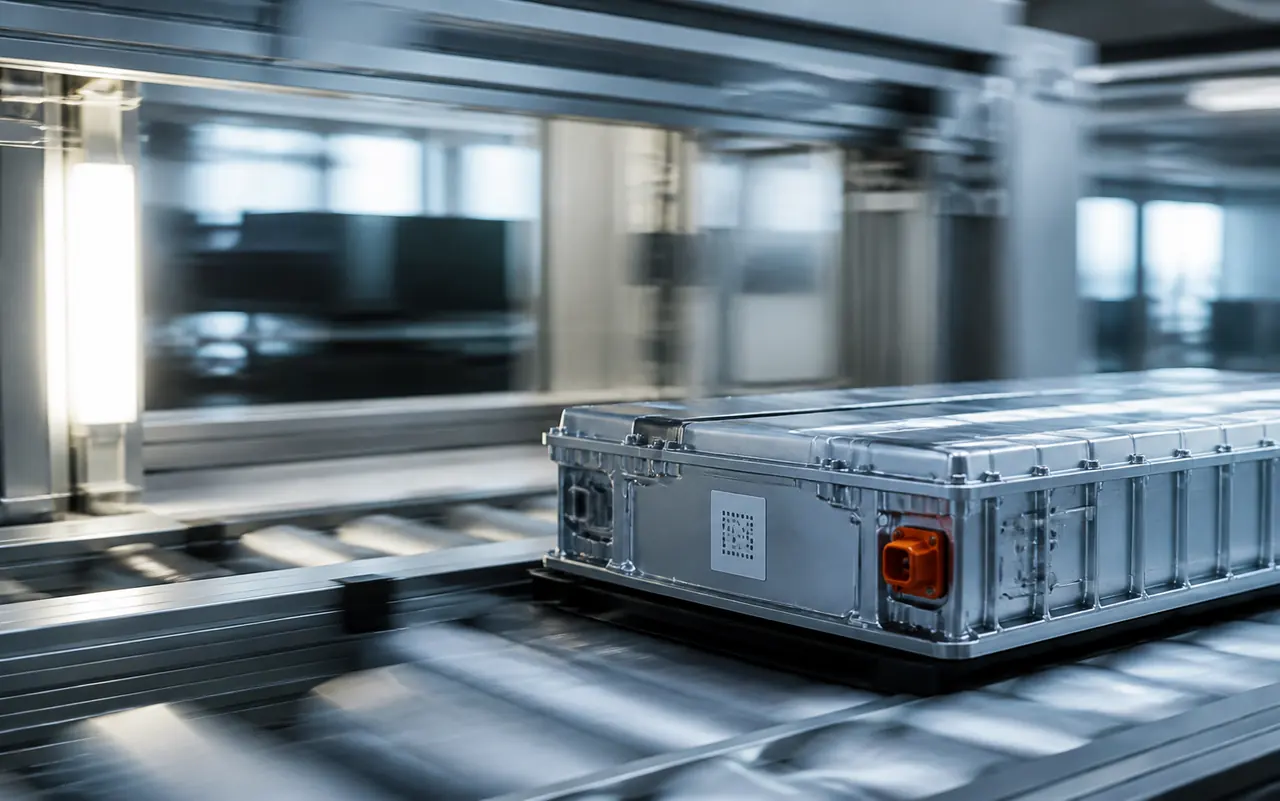
Products Need a Résumé Too: The EU's DPP Registry Is Live — Who Controls Taiwanese Suppliers' Data?
The EU's DPP Registry has gone live, but not every product becomes mandatory on the same day, and it does not mean a complete data set gets uploaded to a central EU database. What Taiwanese suppliers really need to decide now is who controls identifiers, hosting, access, updates and transfer.
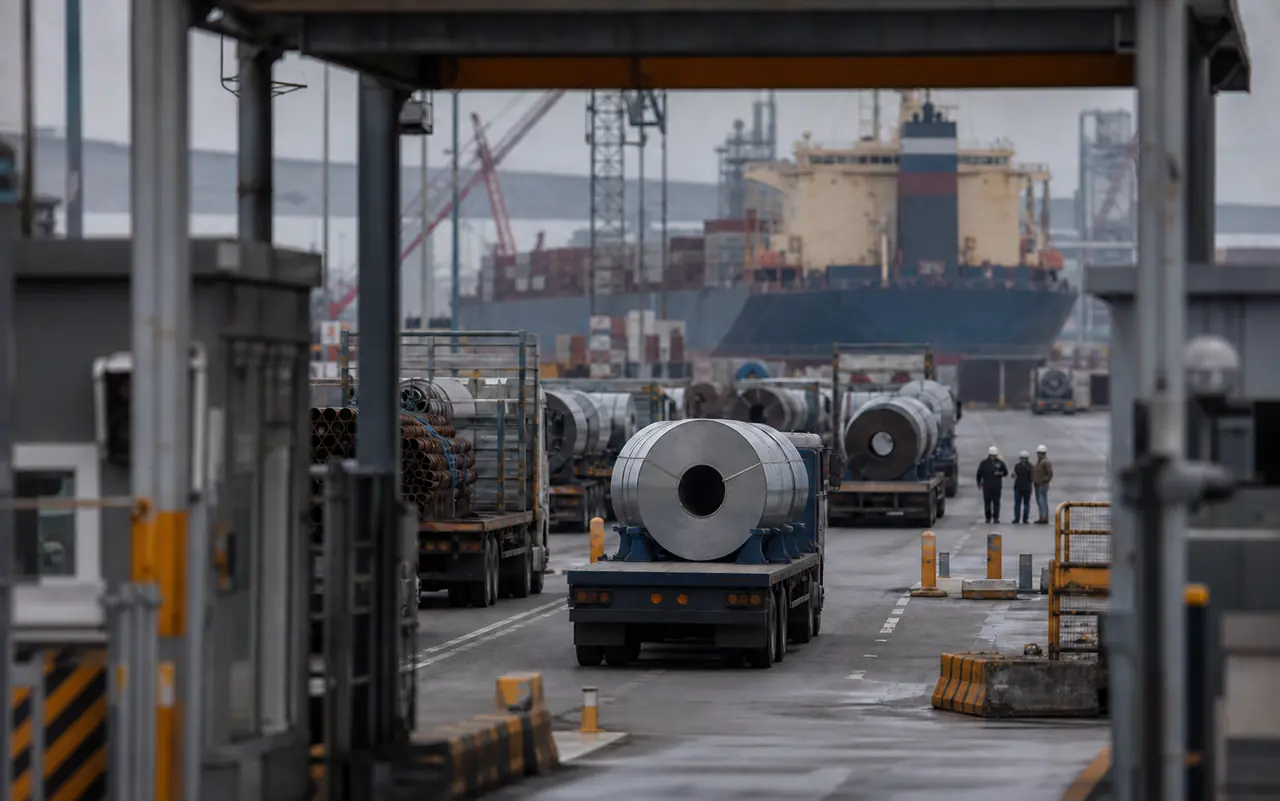
Once the Quota Runs Out, It's Fifty Percent: How the EU's New Steel Tariff Reshuffles Nine Categories of Taiwanese Exports
The EU's new steel regime does not slap 50% on every tonne of Taiwanese steel from the first shipment. Instead it places 26 product categories inside tariff-rate quotas, and only once the relevant quota is exhausted does a 50% out-of-quota surcharge apply. Taiwan holds country-specific allocations in nine categories, but what actually decides whether a given order keeps its margin is the CN classification, origin, quarter, quota order number, and the date the EU accepts the import declaration.