
Once the Quota Runs Out, It's Fifty Percent: How the EU's New Steel Tariff Reshuffles Nine Categories of Taiwanese Exports
The EU's new steel regime does not slap 50% on every tonne of Taiwanese steel from the first shipment. Instead it places 26 product categories inside tariff-rate quotas, and only once the relevant quota is exhausted does a 50% out-of-quota surcharge apply. Taiwan holds country-specific allocations in nine categories, but what actually decides whether a given order keeps its margin is the CN classification, origin, quarter, quota order number, and the date the EU accepts the import declaration.
Article contents01 / 10
- 18,345,922 tonnes is the system's annualized total capacity, not a balance still available at any given moment.
- Taiwan's nine country-specific quota categories are managed by quarter; whether a given order actually secures quota is decided by the EU import declaration and the balance remaining at that moment.
- Certificates of origin, low-carbon data and special specifications can improve traceability or bargaining power, but none of them automatically constitutes a quota exemption.
Let's put the most jarring number in the headline back where it belongs: the EU is not charging fifty percent on every tonne of Taiwanese steel from the first shipment.
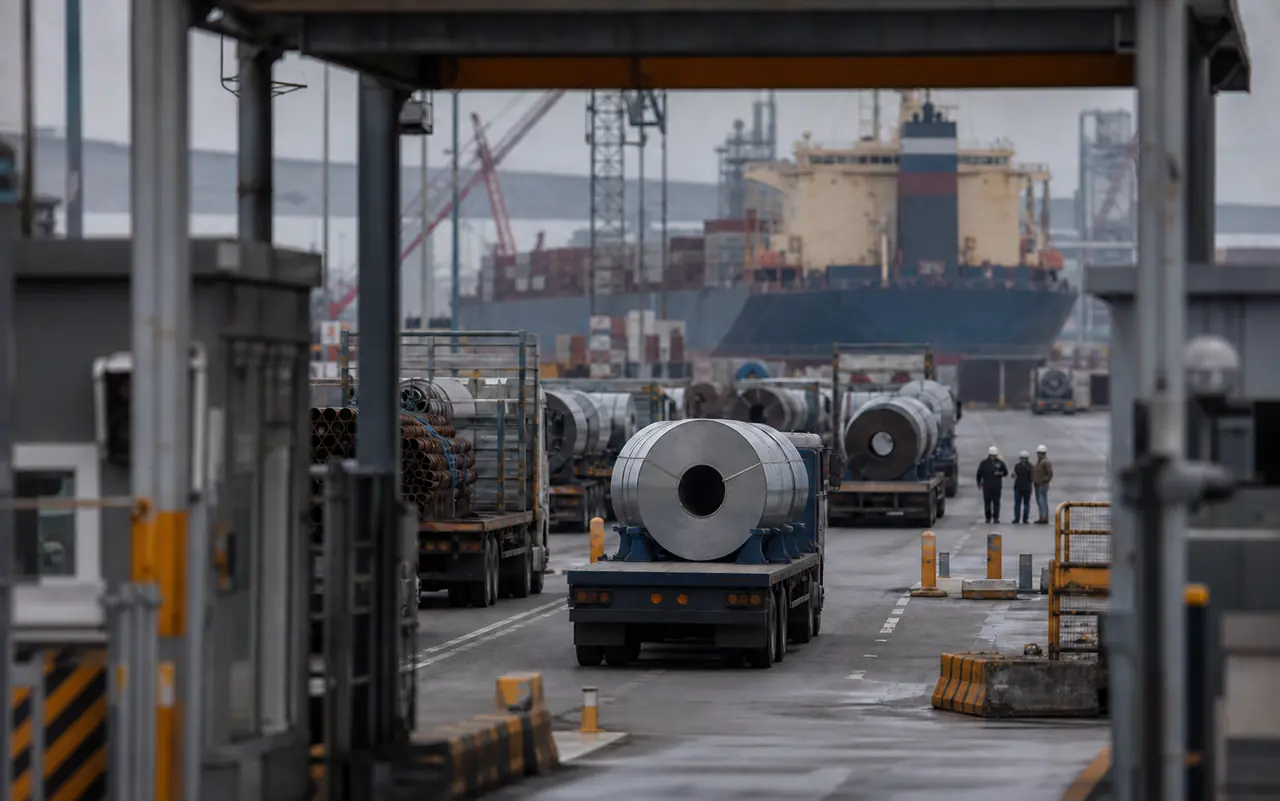
The new regime, effective 1 July 2026, places twenty-six steel product categories inside tariff-rate quotas. Goods within the relevant quota receive in-quota treatment; only once the quota is exhausted does a 50% ad valorem surcharge apply to the out-of-quota volume, and how this surcharge interacts with other applicable duties must be worked out under the actual tariff schedule and regulations. [1][2] Taiwan holds country-specific quotas in nine categories — 1A, 2, 3B, 4A, 5, 8, 9, 15, and 26 — but these nine numbers are not a reservation slip sitting in an exporter's hand. [2][7]
The quota is administered on the EU import side. Which CN code applies, which product category the goods fall under, what the origin is, which quota order number is used, which quarter it falls in, and when the EU customs authority accepts the import declaration — any of these can change the outcome. A Taiwanese mill obtaining an export certificate of origin, a container leaving port, a buyer signing a contract, even a ship arriving in Europe — none of this necessarily means the quota has already been locked in. For steel orders with thin margins and large cargo values, that gap is enough to turn an ordinary transaction into a 50% risk that nobody wants to bear.
So what the new regime actually reshuffles is not a tariff schedule but the timing and allocation of responsibility within an order. Sales teams used to be able to negotiate specification, price, freight, and delivery date first; now, without first confirming classification, quota, origin, and the declaration window, the quotation itself is missing its most important cost condition.
I. The Skeleton of the Regime First: Total Volume, Categories, Quarters, Countries
EU Regulation (EU) 2026/1384 establishes the basic framework for the new steel measure. The European Commission states that the old steel safeguard measure expired on 30 June 2026, and the new framework sets tariff-rate quotas for twenty-six product categories while raising the out-of-quota rate from the old regime's 25% to 50%. [1][3] Commission Implementing Regulation (EU) 2026/1457 then allocates the specific volumes for the second-half emergency period: an annualized total of 18,345,922 tonnes, managed by quarter and divided between country-specific and other-country (residual) quotas. [2]
"Annualized" is the word that must not be dropped. Regulation 2026/1457 applies from 1 July to 31 December 2026, and its annexes present system capacity as annual and quarterly figures; 18,345,922 tonnes cannot be treated as if it were all released at once on 1 July, and still less, as of 24 August, can it be described as an unused balance. [2] When each quarter opens, how unused prior-quarter amounts are handled, and whether a given quota can be carried forward, all have to be read case by case from the annexes and the implementing rules.
Taiwan's nine country-specific quota categories reflect the EU's design of allocating quotas based on historical import shares from 2022–2024. Take the two largest-volume items in the annex as examples: Taiwan's Category 1A gets an annual allocation of 278,922.56 tonnes, or 69,730.64 tonnes per quarter; Category 2 gets an annual allocation of 134,346.16 tonnes, or 33,586.54 tonnes per quarter. [2] These figures are useful for capacity and customer planning, but they only mean something for an individual shipment once they are tied back to the quota order number, the quarter, and the real-time balance.
The EU also distinguishes between free trade agreement (FTA) partners and non-FTA sources. A European Commission factsheet states that roughly half of the total quota is reserved for FTA partners; non-FTA countries that reached a threshold share of EU imports in a given product category during 2022–2024 can be granted a country-specific allocation. [3] Taiwan has no FTA with the EU, so its nine quota categories arise from the non-FTA country-specific design. This does not mean "Taiwan has received preferential agreement treatment," nor does it mean products in categories outside the nine are necessarily unable to enter at all — that must be assessed against each category's annex and the other-country quotas.
II. Fifty Percent Is Not an Average Cost — It's a Cliff Edge
Ordinary tariff changes can be averaged across a year's worth of quotations, but a tariff-rate quota has a discontinuity. The same specification, the same exporter, the same buyer: if one shipment is allocated quota while it still has a balance, and another is declared after the quota has run out, the duty owed can be entirely different. When the out-of-quota surcharge reaches 50%, that difference usually cannot be absorbed by a price discount of two or three percentage points.
This is also why "first come, first served" cannot be understood merely as "whichever ship arrives at port first." Regulation 2026/1457's quota is administered under the EU's tariff quota management rules, and what matters is the customs declaration and the sequence in which customs accepts and allocates it; in practice there are also time gaps from weekends, document corrections, batching of declarations, and pending applications. [2][6] What the export side can control is documentation and shipping schedule; it cannot control the precise order in which each importer's declaration is processed in the EU.
For the seller, the most dangerous kind of quotation is "delivered duty paid, with no defined quota assumption." If the quota runs out and the seller alone bears the full tariff difference, the 50% surcharge can consume most of a shipment's margin and working capital. For the buyer, the most dangerous position is "we'll handle customs clearance ourselves, but we won't commit to declaring in time" — if a delay occurs, the seller may refuse to absorb the tariff while the goods are already sitting at port. Both sides must treat quota risk as a contractual event, not something to be haggled over after the fact.
At a minimum, four things must be spelled out in writing: when and from what data source the exhaustion of the quota will be checked; who is responsible for the import declaration and by what deadline; who bears the cost of shipping or documentation delays; and whether the shipment can be cancelled, rerouted, resold, or renegotiated if customs changes the CN classification, origin, or quota order number. Without these clauses, the 50% surcharge is not a policy risk — it is an unpriced credit risk.
III. Taiwan's Nine Quota Categories Cannot Be Managed by Chinese Product Names Alone
The nine categories listed by Taiwan's Bureau of Foreign Trade under the Ministry of Economic Affairs cover different product groups — hot-rolled, cold-rolled, electrical steel, metallic-coated sheet, hot-rolled stainless steel plate, wire rod, steel tube, and others — but formal identification still runs on the EU regulation's product category, CN code, and quota order number. [7][9] A sales order that simply says "galvanized steel coil" or "stainless steel plate" is not enough to determine which quota it falls under.
Product classification involves, at minimum, material, alloy composition, dimensions, shape, processing state, and end use. Similar commercial names can fall under different CN codes, and a classification a customer has used in the past is no guarantee it remains correct under the new regime. Exporters need to keep the EU importer's tariff classification opinion, past customs clearance records, and product specification sheets in the same file; for high-value or borderline products, obtaining a formal binding classification opinion may be necessary — quota determination should not be left entirely to sales-team experience.
Since 24 July, Taiwan has activated export-side certificate-of-origin and quota management for 463 items of Taiwan-manufactured relevant goods bound for the EU, allocated domestically through mechanisms such as export-performance-based quotas and open application quotas; exporters must obtain a certificate identifying Taiwan as the country of origin before the goods are released. [8] This mechanism helps the export side prove origin and protect Taiwan's country-specific quota, but it does not mean the EU customs authority has already completed quota allocation for an individual shipment. Three things must not be conflated: first, whether Taiwan permits export and issues the relevant documents; second, whether the goods are determined to be of Taiwanese origin under the EU's non-preferential rules of origin; third, whether the relevant quota still has a balance at the time of the EU import declaration.
Holding a Taiwanese certificate of origin does not guarantee an EU country-specific quota will be granted; conversely, incomplete documentation may mean a company cannot even meet the basic conditions to apply for quota. Companies should treat the certificate of origin as one part of an evidence package, not as a "quota guarantee." When making commitments to customers, sales staff should also avoid language such as "we have already secured duty-free allocation," which cannot be proven unilaterally from the export side.
IV. Melt and Pour: Beyond Origin, Asking Where the Steel Was First Melted
Another important change in the new regime is the requirement to provide evidence of the country where the steel was first melted and poured ("melt and pour"). [1] This field is different from the exporting country, the country of shipment, or the country of final processing that typically appear on ordinary trade documents. A steel billet may be melted and cast in one country and then hot-rolled, coated, cut, or made into tube in Taiwan; if a system only retains the location of final processing, it cannot answer the question of the raw-material pathway.
For Taiwanese mills, the evidence chain required differs depending on whether they smelt their own steel, purchase billets, or buy in hot-rolled base material for further processing. For cutting centers and trading companies, the real difficulty is obtaining consistent heat numbers, casting/pour numbers, material certificates, and commercial documents from multiple layers of suppliers, and linking that data back to the final shipment batch. If this tracing is only attempted right before shipment, suppliers may no longer be able to reconstruct the full chain of evidence.
But as of 24 August 2026, not all implementation details can be treated as settled. The European Commission has indicated that the implementing act specifying the type of evidence is expected to be adopted by 31 August, and to apply from 1 October. [1][11] The basic-act requirement to provide such evidence is confirmed; the final document format and transitional customs practice must still await the formal act. Companies can start gathering supporting data now, but should not unilaterally declare that any particular private-sector form has already been accepted by the EU.
The most workable preparation is to make sure every batch of product can be traced back, from its shipment number, to base material, heat number, country of first melt and pour, processing steps, and document provider — while retaining the original certificates, not merely entering a single country field in an ERP system. Once the new rules are formally published, the required format can then be mapped into the system. That way, even if field names change, the underlying evidence remains intact.
V. Real-Time Balances Cannot Be Read From Press Releases — They Must Go Back to QUOTA
The annual annex answers "how much the system allows"; it cannot answer "how much is left today." The EU's tariff quota balances can be checked via the QUOTA consultation service, and TARIC helps confirm the tariff measures applicable to a given commodity; both are dynamic tools essential to customs decision-making. [5][6] But the figures shown on a real-time page can also lag behind applications still pending allocation or under customs processing, so a screenshot should not be treated as an irrevocable guarantee.
Taiwanese exporters should, at minimum, check three times. Before quoting, check the product and the current quarter's quota to decide whether the out-of-quota tariff needs to be built into the scenario price; before shipment, check the balance and the rate at which it is being drawn down, to assess whether the shipping schedule still has reasonable room; before arrival at port, have the EU importer check again to confirm customs arrangements and alternatives. Every check should record the time, the quota order number, the data source, and who is responsible.
More important than the balance itself is the "velocity." If a quarterly quota still has ten percent remaining but has been falling rapidly over the past few days, a shipment arriving in three weeks should not be priced as if the light were green. Companies can set up a three-color scenario system: green means the balance and drawdown rate are sufficient to cover a conservative arrival date; yellow means a balance remains but is approaching a warning level, so the quotation must carry a tariff-adjustment clause; red means the quota has been exhausted or is highly likely to be, and negotiation should proceed directly on the basis of out-of-quota cost or a delayed-declaration scenario.
This judgment cannot be made unilaterally by the Taiwanese exporter. The EU importer holds the customs clearance capability, warehousing, and other orders, and also bears the responsibility for the customs declaration. If a Taiwanese supplier only asks "is there still quota" and gets a verbal "yes" in reply, that is not enough to support a large credit exposure. Both sides should share the quota order number, screenshots of checks performed, the projected declaration date, and the responsibility clauses.
VI. The EU's Policy Rationale and Taiwan's Case-by-Case Responsibility Must Be Kept Separate
The EU places the new regime within the context of global steel overcapacity, subsidies, import pressure, and the cost of the green transition. [1][3] The OECD's 2026 Steel Outlook estimates that global excess capacity stood at about 640 million tonnes in 2025 and, if existing plans go ahead, could reach 745 million tonnes by 2028; roughly 139 million tonnes of new capacity is planned for 2026–2028, while demand growth remains limited. [10]
These figures support the policy premise that "there is a structural supply-demand imbalance in the global market," but they do not directly prove that any given batch of Taiwanese steel is subsidized, dumped, or causing injury to the EU. The political advantage of an aggregate quota is that it responds quickly and makes the level of protection predictable; the drawback is that it allocates capacity by category and by country to suppliers with very different cost structures, carbon efficiency, and market behavior, in advance. Upstream EU steelmakers gain protection, while automakers, machinery makers, construction firms, and SMEs that use steel may face higher costs and fewer sources.
Nor is it necessary to fully embrace either an Eastern or a Western policy narrative. On one hand, the EU is preserving market space for high-cost decarbonization investment, which has an industrial-security logic of its own; on the other hand, a cliff-edge 50% rate combined with the FTA/non-FTA allocation structure does raise the weight of regionalization and political bargaining. Taiwan's policy response can do both things at once: at the government level, continuing to press for transparency, stability, and reasonable quota levels; at the enterprise level, not staking everything on diplomatic expansion of the quota, but instead turning every individual order into a contract that can withstand different scenarios.
VII. Low-Carbon and Specialty Steel Are Not Exemptions, But They Are Still a Way Forward
Facing a 50% risk, the most intuitive strategy is to chase quota — but it should not be the only strategy. If Taiwanese suppliers compete only on price for standard products, the quota system amplifies importers' incentive to choose large-volume, low-price, or regional suppliers. Specialty compositions, narrow specifications, stable quality, small batch sizes, short lead times, joint development, and after-sales processing allow customers to evaluate total cost of switching suppliers, rather than simply the lowest price per tonne.
Low-carbon data and traceable raw materials also carry value, but their boundaries must be stated clearly. They help customers with procurement, carbon management, and compliance, and can improve bargaining power; they do not automatically exempt a shipment from a tariff-rate quota. Treating low-carbon status as a quota exemption is another dangerous form of misdirection. Companies should build "tariff-quota compliance," "carbon data," and "product differentiation" as three complementary capabilities, not substitutes for one another.
For small and mid-sized steel processors, building an in-house EU regulatory team individually may be too costly. Trade associations or core supply-chain firms can provide a shared CN/product-category cross-reference, quota order number alerts, templates for certificates of origin and melt-and-pour documentation, and a case library of anomalies — but final classification and contract terms must still be confirmed by the company itself and the EU importer. Shared infrastructure lowers duplicated cost; it does not outsource case-by-case responsibility.
VIII. Turn Every Quotation Into a Five-Box Decision Table
The first box is "product": CN code, EU product category, specification, and the basis for classification. The second box is "origin": non-preferential origin, country of first melt and pour, certificate of origin, and the underlying evidence. The third box is "quota": quota order number, this quarter's opening volume, the balance and drawdown rate at the time of checking. The fourth box is "timing": projected shipment date, conservative arrival date, and the EU import declaration date. The fifth box is "responsibility": in-quota price, out-of-quota price, who bears the tariff in the event of delay or reclassification, and what exit options exist.
If any of the five boxes is missing, a quotation should not be marked as guaranteed duty-free. If classification is still to be confirmed, quote a conditional price; if the quota is at yellow, require the buyer to prepay a tariff guarantee or shorten the payment cycle; if the quota is at red, negotiate deferral to the next quarter, switching to another compliant quota, redirecting to a non-EU market, or reassessing directly under a 50% scenario. Not all of these options will be commercially viable, but they are better than discovering the cost only after the goods have arrived at port.
Boards and credit departments should also see this table. Quota risk is not only a customs-affairs issue: it can change accounts receivable, inventory, shipping schedules, credit lines, and customer concentration. If a company relies heavily on duty-paid delivery terms and has not included the out-of-quota tariff in its stress tests, the margin estimates in its financial statements may be overly optimistic.
IX. As of 24 August, Which Answers Still Cannot Be Given
First, one cannot say how much of a given category is "currently available" without checking QUOTA. Quota balances change daily; what this report presents is only the regulatory capacity and the system's methodology. [6] Second, there is no guarantee that every shipment in the nine categories will secure quota; product classification, origin, documentation, and the order of declaration will all affect the outcome. Third, the consultation content on melt and pour cannot be treated as the final implementation format; it must be re-verified once the formal act is published. [11]
Fourth, the second-half allocation under Regulation 2026/1457 cannot simply be extrapolated to future years. That implementing regulation is an emergency-period arrangement; subsequent acts, country-specific allocations, and bilateral arrangements with FTA partners may be adjusted. [2] When a customer asks for a multi-year fixed duty-paid price, companies must retain a regulatory-change clause and cannot promise a three-year cost based on one 2026 annex.
Fifth, one cannot say that low-carbon status, quality, or certificates of origin "get around" the quota. They address evidence, competitiveness, or other compliance issues; they do not change whether a product falls within the scope of the regulatory category. When policy is complicated, the easiest thing to sell is often a simple guarantee — but for a high-value, low-margin trade like steel, an unbounded guarantee is the most expensive one of all.
X. Conclusion: Quota Management Has Become Part of the Product
The EU's new regime changes a steel transaction from "one product, one price" into "product plus timing, origin, and declaration capability." Taiwan has indeed secured country-specific quotas in nine categories, which provides market access; the 50% out-of-quota rate is also indeed a significant risk. But between these two facts lies an entire chain of dynamic management that no single slogan can replace.
For government, the job is to keep pressing for quota, track implementation details, help build certificate-of-origin and melt-and-pour capability, and make sure SMEs have access to usable information. For industry, the job is to move CN classification, quota order numbers, balances, customs declaration dates, and responsibility clauses to the front of the quotation process. For company executives, the most important question is no longer "how much quota did we get this year," but "on the day this shipment is declared for import, if the quota has run out, do we know who pays, and do we still have a way out."
When the out-of-quota rate is fifty percent, the shipping schedule is not a logistics footnote, the certificate of origin is not an administrative attachment, and customs clearance is not a black box on the customer's side. Together, they make up the cost of the product. Suppliers who can spell these conditions out clearly, write them into contracts, and keep the evidence will have a chance to hold onto their orders at the edge of the protectionist cliff; companies that price solely off annual quota press releases may only discover, once the goods reach Europe, that what they sold was not steel but an unpriced option.
Sources
- EUR-Lex — Regulation (EU) 2026/1384, basic rules for the steel tariff-rate quota
- EUR-Lex — Commission Implementing Regulation (EU) 2026/1457 and the quota annexes
- European Commission — Factsheet on the new steel measure's quotas, tariffs and allocation
- European Commission — Explanation of the EU's integrated tariff database TARIC
- European Commission — Explanation of the tariff quota system and the QUOTA consultation
- European Commission — QUOTA real-time quota consultation database
- Bureau of Foreign Trade, Ministry of Economic Affairs — Explanation of the EU's new steel tariff-rate quotas and Taiwan's nine-category allocation
- Bureau of Foreign Trade, Ministry of Economic Affairs — Announcement on managing certificates of origin for 463 Taiwan-manufactured steel items exported to the EU
- Office of Trade Negotiations, Executive Yuan — Summary of Taiwan's nine country-specific steel quota categories
- OECD — 2026 Steel Outlook and global overcapacity forecast
- European Commission — Consultation on melt-and-pour evidence documentation and implementation timeline
Products Need a Résumé Too: The EU's DPP Registry Is Live — Who Controls Taiwanese Suppliers' Data?
The EU's DPP Registry has gone live, but not every product becomes mandatory on the same day, and it does not mean a complete data set gets uploaded to a central EU database. What Taiwanese suppliers really need to decide now is who controls identifiers, hosting, access, updates and transfer.

100 Percent Is Not All Drugs: Taiwan's Real Exposure and Window Under the U.S. Pharmaceutical Section 232 Tariff
The U.S. pharmaceutical Section 232 measure establishes a current, conditional structure of 100%, 20%, 15%, and 0% treatments for certain imported branded pharmaceuticals and related ingredients; the Section 232 additional duty rate on UK-origin covered goods changed from +10% to +0%, effective 12:01 a.m. Eastern Time on July 31, 2026. Taiwan's exports to the U.S. are dominated by generics, keeping overall short-term exposure below the headline number — but the reprieve, the one-year reassessment, company-level agreements, and import classification mean the real risk sits with individual products and customers.