
Cooling Down or Shifting Gears? The Puzzle of Declining Military Pressure in the Taiwan Strait
In the first half of 2026, public statistics show a decline in PLA air activity around Taiwan; but shows of force, coast guard activity, and blockade-control drills still need to be watched together. A drop in sortie counts alone can only prove that air activity has decreased — it cannot, by itself, prove that overall threat has declined.
Article contents01 / 06
- AEI and CSIS compilations show that air activity in June 2026 was about 134 sorties, below the roughly 156-sortie monthly baseline from January 2022 to April 2024; this is a secondary compilation and should be cross-read against the Ministry of National Defense's day-by-day data.
- GTI estimates that about 10 rockets from the 'Justice Mission-2025' exercise landed within the 24-nautical-mile contiguous zone; coast guard activity and blockade-control drills are also increasing, but this evidence still is not enough to quantify whether 'total pressure' has risen.
- The safer conclusion is that 'air activity has declined, and the form of pressure may be shifting'; think-tank inferences should not be written up as a strategy Beijing has confirmed, nor should unverified premium increases be cited.
“Cooling Down or Shifting Gears? The Puzzle of Declining Military Pressure in the Taiwan Strait” reports that PLA Monthly ADIZ Incursion Sorties(134 sorties)。 Pre-Lai baseline 156, post-Lai monthly average 319, only 134 sorties in June 2026 [12][1]。
“Cooling Down or Shifting Gears? The Puzzle of Declining Military Pressure in the Taiwan Strait” reports that From a Show of Force to a Silent Shift(2025.12 → 2026.06)。 Jingtao 2025A blockade-and-boarding drill → Justice Mission rockets close in on the 24-nautical-mile line → sorties decline and balloons stop in H1 2026 [5][7]。
For the past two years, people in Taiwan have gotten used to taking the Strait's temperature with a single number: how many sorties and ships the PLA sent out today, how many crossed the median line. The bigger the number, the more anxious the headlines. Read off that thermometer, the Taiwan Strait in the first half of 2026 looks like it's cooling down — air sorties have fallen back to pre-Lai Ching-te levels, days with zero median-line crossings have become more common, and even the reconnaissance balloons that drifted overhead for two years have vanished.
The problem is that, over that same period, think tanks estimate that some rockets landed inside Taiwan's 24-nautical-mile contiguous zone, and coast guard activity and blockade-control drills have also drawn more attention [5][7]. These signals cannot simply be added to the sortie count, but they remind us: a decline in a single indicator is not enough to mean that overall threat has declined in step.
A lower reading on the thermometer doesn't mean the illness is gone. Sometimes it has simply moved to a different site — one the thermometer in your hand can't measure.
Put the Facts on the Table First: The Numbers Really Are Falling
To talk about "cooling down," we first need a baseline to compare against. According to CSIS ChinaPower's long-running statistics, from January 2022 to April 2024 the PLA's monthly incursions into Taiwan's Air Defense Identification Zone (ADIZ) averaged about 156 sorties, with a low of 64 sorties in a single month in January 2024 [12]. This was the norm "before Lai Ching-te took office."
After Lai Ching-te took office in May 2024, the curve shot up sharply. From May 2024 to December 2025, the monthly average surged to 319 sorties, an increase of roughly 129% over the pre-inauguration baseline, and no month ever fell below 209 sorties again [12]. The high points during that stretch were two large "Joint Sword" exercises encircling Taiwan: in the May 2024 "Joint Sword-2024A," Taiwan detected 111 aircraft in a single exercise, 82 of which entered the ADIZ, along with 53 navy and coast guard vessel-sorties [12]; in the October "Joint Sword-2024B" that same year, the PLA deployed as many as 153 aircraft and 111 median-line crossings in a single day, setting the highest single-day record at the time [13]. This is the backdrop against which Taiwanese society was trained, over these two years, to "take the Strait's temperature by watching the sortie count."
Precisely because of that, the decline in the first half of 2026 looks so abrupt. Week-by-week tracking by the American Enterprise Institute (AEI) shows that the monthly totals for both January and February 2026 fell below 200 sorties; from March 11 onward, most days saw fewer than 5 incursions [2]; and by June, total ADIZ incursions for the whole month came to only about 134 sorties, with 12 days seeing no aircraft or ships cross the median line at all [1].
“Cooling Down or Shifting Gears? The Puzzle of Declining Military Pressure in the Taiwan Strait” reports that PLA Monthly ADIZ Incursion Sorties(134 sorties)。 Pre-Lai baseline 156, post-Lai monthly average 319, only 134 sorties in June 2026 [12][1]。
Notice a point that is often missed: 134 sorties is not merely "back to baseline" — it is actually below the 156-sortie baseline from 2022–2024. Looking only at air sorties, the Taiwan Strait in June 2026 was calmer than it was even "before" Lai Ching-te took office. Add in a detail that's easy to overlook — the high-altitude reconnaissance balloons once treated as the new normal have not entered Taiwan's ADIZ again since February 2026 [1] — and putting these three sets of numbers together (sorties cut roughly in half, more zero-crossing days, balloons grounded), it's hard not to come away with an impression of "cooling down."
In one line: the decline in numbers is a fact — traceable and consistent, cross-confirmed by Grade-A/B sources. But "the numbers are falling" does not equal "the threat is falling." Treating the former as a conclusion is fine; treating the latter as a conclusion turns an observation into a fact. What this article sets out to take apart is exactly that switched equal sign between the two.
One more caveat: the cooling is not a straight line. Late June already saw a rebound — a single day when 14 aircraft were detected, 10 of which crossed the median line; on June 24 it was 11 aircraft, with 3 crossings [3]. Consolidating at a low level with intermittent spikes is itself a rhythm that can be turned up or down at will — not simply an "exit." For an adversary that can switch freely between 300 sorties a day and just 134 in a whole month, its "few" is as much a choice as its "many" — not a ceiling on capability.
The Other Curve: Climbing Upward
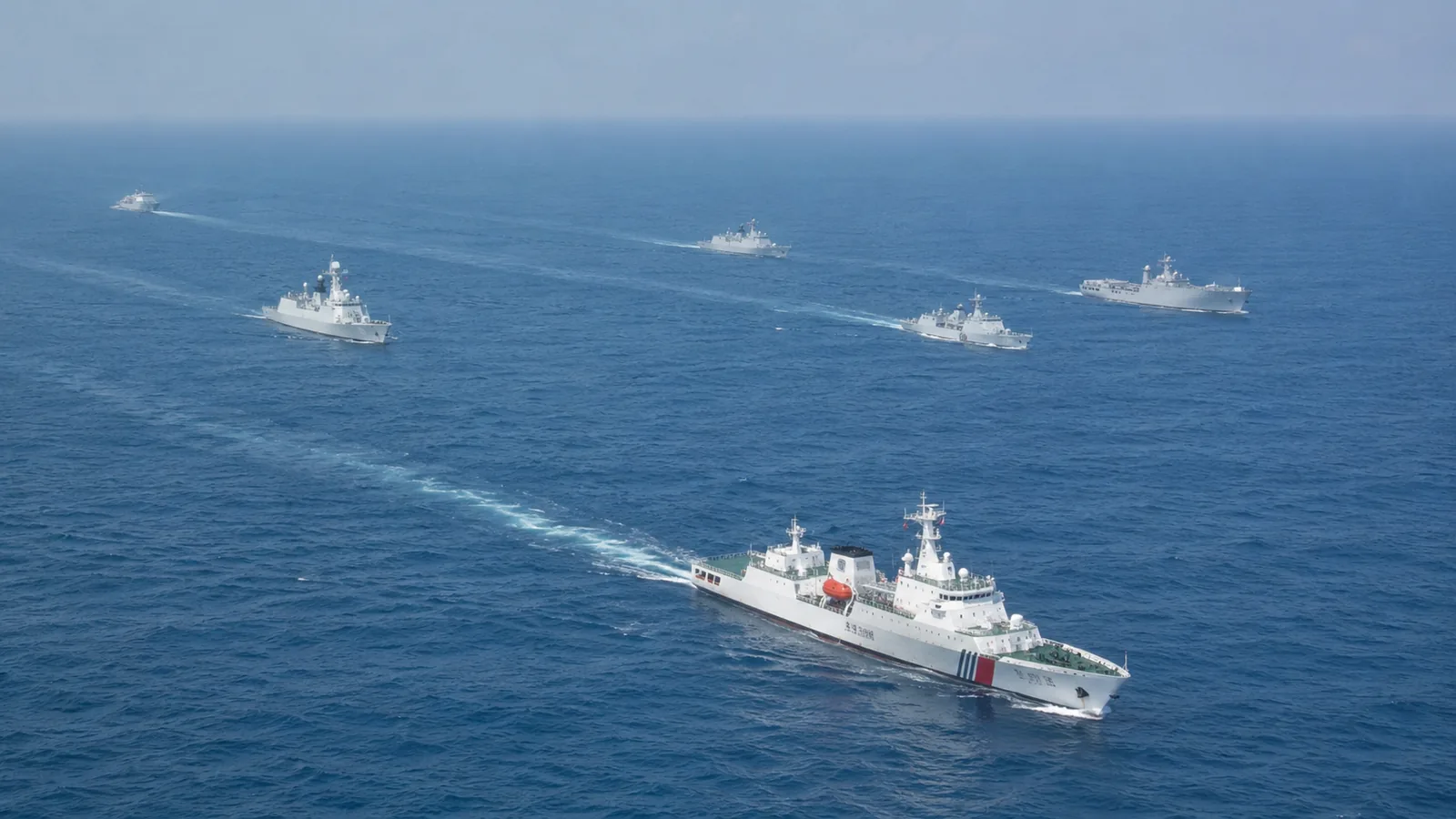
If you watch only the aircraft, you'll miss the real change. Just before air sorties began to decline, the PLA staged one of its closest shows of force against Taiwan's main island in recent years.
In the "Justice Mission-2025" exercise on December 29–30, 2025, research organizations compiled 27 long-range rockets, and estimated that about 10 landed within Taiwan's 24-nautical-mile contiguous zone [5][6]. This is an estimate based on public information, not coordinates for each rocket released by the Ministry of National Defense; without a complete record of past impact points, it also cannot be asserted to be "the closest ever." Chinese state media separately singled out Taiwan's HIMARS system, showing that asymmetric firepower has already been folded into the exercise narrative [8].
Earlier still, the "Strait Thunder-2025A" exercise in April 2025 incorporated blockade-control and coast guard law-enforcement roles [7]. Public data supports the existence of blockade-related drills, but is not enough to prove this was "the first time a merchant ship was actually boarded and inspected." AEI separately reports that Chinese coast guard activity east of Taiwan increased starting in June 2026, and recorded research-vessel operations [1][4]; these remain think-tank compilations of publicly observable activity and should be cross-read against data from Taiwan's competent authorities.
“Cooling Down or Shifting Gears? The Puzzle of Declining Military Pressure in the Taiwan Strait” reports that From a Show of Force to a Silent Shift(2025.12 → 2026.06)。 Jingtao 2025A blockade-and-boarding drill → Justice Mission rockets close in on the 24-nautical-mile line → sorties decline and balloons stop in H1 2026 [5][7]。
Overlay the two curves, and the picture changes: the "quantity" in the air is retreating, while the "presence" at sea and the "quality" of firepower are advancing. This is exactly the "cabbage strategy" that gray zone researchers have long warned about — wrapping layer upon layer with coast guard ships, maritime militia, and research vessels to sustain a steady pressure that stays below the threshold of armed conflict yet keeps eroding Taiwan's control [9][10]. Both CNAS and ASPI note that since 2025 this maritime paramilitary force has shifted from an "intermittent signal" to "sustained pressure," turning its everyday presence itself into a declaration of sovereignty [9][10]. There are fewer aircraft, but the layer of "cabbage leaves" wrapped around Taiwan has, if anything, been packed tighter.
So What Is This, Really? Multiple Readings, Each Labeled by Confidence
Facing "the numbers down, the pattern shifting," the honest answer is: no one can be 100% certain what Beijing is thinking. Below are several readings that coexist, each labeled with a confidence level — these are inferences, not conclusions.
Reading one: a genuine easing. (Confidence: low) The decline since the start of the year might reflect Beijing wanting to manage tension in the Strait, to avoid being squeezed on multiple fronts at once, including its economy and its relationship with the United States. But this is the weakest reading: Beijing's official rhetoric has not softened, rocket impact points have moved closer instead, blockade-control drills keep intensifying, and it's hard to explain the combination of fewer aircraft on one hand and rounds landing inside the 24-nautical-mile line on the other as "goodwill."
Reading two: shifting gears and reorganizing. (Confidence: medium-high) This is the mainstream view among most think tanks. AEI states plainly that the decline since the start of the year "more likely reflects an adjustment in Beijing's coercive strategy than seasonal or short-term factors"; cutting the monthly sortie count can free up PLA flight hours and logistics resources to reinforce joint-operations training, while also restoring the scarcity value of ADIZ incursions as a short-term political signal — when incursions happen every day, at 300 sorties a day, they stop being a signal and become background noise; making them rarer instead gives each deliberate spike more weight, letting it be aimed more precisely at a particular political moment (such as a Taiwanese election, a major speech by Lai Ching-te, or a U.S.-Taiwan interaction) [1][4]. This is re-forging "pressure" from a blunt instrument into a blade that can be drawn at a chosen moment.
Reading three: an interface shift. (Confidence: medium) Pressure has not decreased — it has simply moved from "air force sorties," the interface Taiwanese media loves to count and that is easiest for the international community to see, to interfaces such as coast guard ships, maritime militia, research vessels, and rockets that are harder to quantify with a single number. It looks like cooling from the outside, but the actual total amount of pressure may not have fallen at all, and may even have risen — it has simply moved to a channel with no ready-made thermometer [9][10].
Reading four: an escalation disguised as stillness. (Confidence: medium) Even though sortie counts have fallen, rockets closing in on the 24-nautical-mile line and the formation of blockade-and-boarding drills represent a qualitative escalation — pushing exercises from "deterrence by circling the island" toward a more combat-realistic stage of "blockade-control and fire coverage." The calm in the numbers may instead be the surface appearance of a period spent building capability and honing tactics — the silence of sharpening tools before a storm [6][11].
These four readings are not mutually exclusive. Based on the available evidence, the most likely reality is that "shifting gears" and "qualitative escalation" are happening at the same time: Beijing is lowering its day-to-day air expenditure, turning sorties back into a political signal it can deploy at a moment of its choosing, while at the same time pushing its exercises toward a form that is more combat-realistic, closer in, and more targeted at Taiwan's asymmetric capabilities. Confidence: medium-high. This is not an easing — it is a repositioning.
A Real Disagreement: How to Talk to Society About This
How to convey this to Taiwanese society is itself a contested question, and it's worth laying both sides out.
The "don't let your guard down" camp argues: framing the sortie decline as good news is doing the last mile of the adversary's cognitive warfare for it. Over the past two years, Taiwan's debates over the defense budget, reserve mobilization reform, and investment in social resilience have largely been anchored to the highly visible number of "how many sorties today." Once that number shrinks, the first thing to slacken tends to be public threat awareness, followed by political support for defense investment and reform — precisely the effect the adversary wants most. This camp would say: the adversary gets the maximum benefit of Taiwanese society relaxing on its own, at the lowest possible cost (flying a few fewer sorties) — and that is exactly where "shifting gears" really pays off [9][11].
The "don't exaggerate" camp counters: if every fluctuation in sortie counts is, over the long run, dramatized as "a storm about to break," it produces alarm fatigue. When the wolf has been cried for two years, every single day, society's sensitivity to threat actually dulls; and relentlessly pitching alarm can also draw criticism from the opposition and parts of public opinion that the government is manufacturing fear to justify its budget. This camp argues: honestly acknowledging that "the numbers really have fallen, but the threat structure hasn't changed and the pattern is more dangerous" preserves the government's and media's long-term credibility better than reflexively reading the numbers upward — only by first honestly admitting the cooldown does pointing to a "gear shift" become persuasive.
The two camps are not actually in conflict. The disagreement is not over the facts (both sides agree "the numbers are down") but over communication strategy and risk appetite. The fair synthesis is: report the numbers as they are, but interpret them within the "shifting gears" framework — neither downplaying them (don't say "the Strait has become safe") nor dramatizing them (don't say "a drop in sorties is itself a sign of coming war"). Guiding readers' attention from "how many sorties" to "how the pattern is changing" is the responsible narrative.
Industry Exposure: The Real Risk Pattern Is Quietly Changing Face
For Taiwan's industries and SMEs, "shifting gears" is not an abstract strategic term — it is a concrete cost that shows up directly in insurance premiums, shipping schedules, and cash flow. And its transmission path is shifting in exact step with "the numbers down, the pattern changing."
The Taiwan Strait is one of the world's major maritime chokepoints. A 2025 Nature Communications study estimates the annual expected trade value affected by various risks across 24 global maritime chokepoints at about US$192 billion, with major contributors including geopolitical risk in the Taiwan Strait and risks at places such as the Suez Canal [14]. The same study finds that the Taiwan Strait and the Malacca Strait each carry roughly one-fifth of global maritime trade value; this is not the same measure as "the Taiwan Strait accounts for 30% of global container volume," and the original draft has already been corrected on this point.
Shipping risk can be transmitted through rerouting, insurance premiums, delays, and inventory costs, but the "40% rise in war-risk surcharges" and "15% to 22% increase in semiconductor logistics costs" cited in the original draft came only from commercial websites; no underwriting data or shipping index on the same basis could be found to reproduce them, so they have been removed. Companies should monitor their actual policies, quotes, and shipping schedules, rather than treating market figures that cannot be reproduced as facts that have already occurred.
This is the most insidious thing about "shifting gears" for industry: while air sorties decline and international headlines cool off, the insurance market is repricing around maritime blockade-control drills. One side is a visible cooldown; the other is an invisible price hike. If a company reads only the headlines and not the rate tables, it will miss, amid the illusion of "less news," the signal that risk is actually changing face and shifting toward something longer-term and normalized.
Three Taiwanese Perspectives: Don't Mistake a Cooldown for Safety
For the state (the decision-making level) — change the thermometer, not your vigilance. The public threat narrative built mainly around "monthly sortie counts" is being systematically routed around by the adversary. Taiwan's early-warning and external-communication framework should, as soon as possible, expand from a single "sortie count" into a set of indicators that weigh quality alongside quantity: the number of days China's coast guard patrols eastern waters, the distance of rocket impact points from the coast, the scale and content of blockade-and-boarding drills, and research-vessel survey activity. Internally, it should proactively explain to the public that "fewer sorties does not mean less threat," to avoid letting go of the defense budget, reserve mobilization, and whole-of-society defense resilience just because one number has fallen. The cooldown period is precisely the window in which the adversary is reorganizing, and the window in which we should be accelerating — especially for asymmetric capabilities such as the HIMARS system the adversary has singled out, and for resilience in energy and communications against a blockade. Externally, it should take the quality curve of "PLA exercises becoming more combat-realistic and closing in on the 24-nautical-mile line" as new evidence to win international support, rather than letting international opinion be pacified by the surface appearance of "fewer sorties."
For industry (semiconductors, shipping, precision manufacturing) — expand the scenario from "outbreak of war" to "long-term gray zone." Past supply-chain stress tests were mostly built around a sudden blockade or the outbreak of war. But gray zone coast guard activity, exercise zones, and blockade-control drills can also affect route scheduling, shipping timetables, and underwriting conditions. Companies can incorporate these scenarios into their business-continuity plans, re-examine the insurance structure and war-risk clauses for critical cargo, and quantify risk using their own quotes and delivery-time data.
For SMEs — what should worry you most is the illusion that "less news means you can stop paying attention." Taiwan Strait risk was never mostly transmitted to SMEs through the sound of gunfire — it travels through exchange rates, shipping, and the confidence and orders of key customers. When international media cover the Strait less because sortie counts have fallen, SMEs need, if anything, to build a baseline inventory that doesn't depend on headlines: does a critical component have a second source? What share of revenue depends on a single market, especially China? How many months of shipping disruption or customer hesitation can your cash flow withstand? Doing this preparation "while it's cooling down" costs far less than scrambling to catch up "when it's heating up." For SMEs without a hedging department, the most practical step may be turning "geopolitical risk" from a vague worry in the owner's head into a concrete exposure list next to the financial statements.
The most dangerous moment in the Taiwan Strait may not be when the news is loudest. Sometimes, someone has quietly swapped the thermometer, and you're still watching the old one, thinking the fever has broken.
The cooldown is real — 134 sorties, 12 blank days, grounded balloons: every one of these is traceable and holds up. The signals of a gear shift also exist — rockets closing in on the 24-nautical-mile line, more attention on coast guard patrols and blockade-control drills; but this remains an analysis of public data, not a policy shift Beijing has confirmed. Putting the two together, the honest conclusion is not "the Taiwan Strait has become safe," but rather — pressure may have moved to an interface that is harder to quantify. The real risk is that if we watch only a single sortie indicator, we may let our guard down too soon.
Sources
- American Enterprise Institute (AEI) — China & Taiwan Update, July 2, 2026 (134 sorties in June, 12 days without a crossing, balloons grounded since February, coast guard patrolling the east since June 1)
- American Enterprise Institute (AEI) — China & Taiwan Update, March 20, 2026 (below 200 in January–February, fewer than 5 sorties a day from March 11)
- ANI News — Taiwan detects uptick in Chinese incursions around itself (14 sorties/10 crossings in late June, 11 sorties/3 crossings on June 24)
- American Enterprise Institute (AEI) — China & Taiwan Update, June 26, 2026 (coast guard patrols in the east, assessment of a strategic adjustment)
- Global Taiwan Institute (GTI) — The PLA's "Justice Mission-2025" Exercise Around Taiwan (27 rockets, about 10 landing in the contiguous zone)
- South China Morning Post — PLA fires rockets in waters near Taiwan on second day of drills (launched from Pingtan and Shishi; PHL-16 / PCL-191)
- Jamestown Foundation — "Strait Thunder-2025A" Drill Implies Future Increase in PLA Pressure (blockade and boarding, coast guard taking the enforcement role)
- Focus Taiwan (CNA) — China highlights Taiwan's HIMARS as major threat in latest military drills
- Center for a New American Security (CNAS) — Resisting China's Gray Zone Military Pressure on Taiwan
- Australian Strategic Policy Institute (ASPI), The Strategist — China's grey-zone fleet is eroding Taiwan's control at sea
- The Diplomat — China's Taiwan Drills Are Crossing a New Line
- CSIS ChinaPower Project — Tracking China's Increased Military Activities in the Indo-Pacific in 2025 (pre-Lai baseline of 156, post-Lai monthly average of 319, Joint Sword-2024A data)
- IISS — China's Joint-Sword B exercise: a calculated follow-on (153 aircraft and 111 median-line crossings in a single day)
- Nature Communications — Systemic impacts of disruptions at maritime chokepoints (global chokepoint-exposed expected trade value of about US$192 billion/year)
- Republic of China Air Force — Data on PLA sea and air activity around the Taiwan Strait
- CSIS ChinaPower — Taiwan ADIZ Violations data
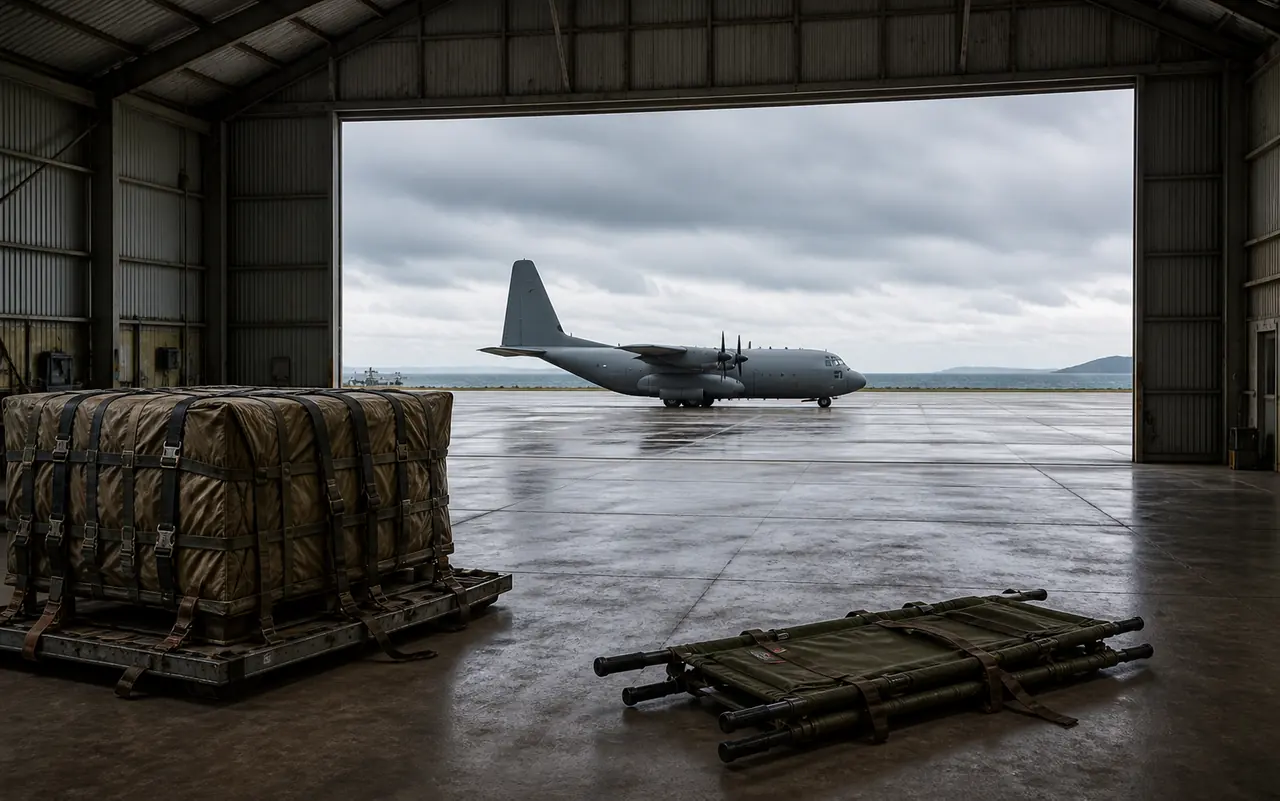
The Philippines' Double Signal: If the Taiwan Strait Erupts, Is EDCA Strategic Depth or a Political No-Go Zone?
Marcos says, on one hand, that the Philippines will not become a springboard for a US attack on China — and, on the other, admits it cannot stay out of a Taiwan Strait crisis. EDCA's real significance is that capability has already been built, while specific activities remain subject to Philippine approval and bilateral mechanisms.
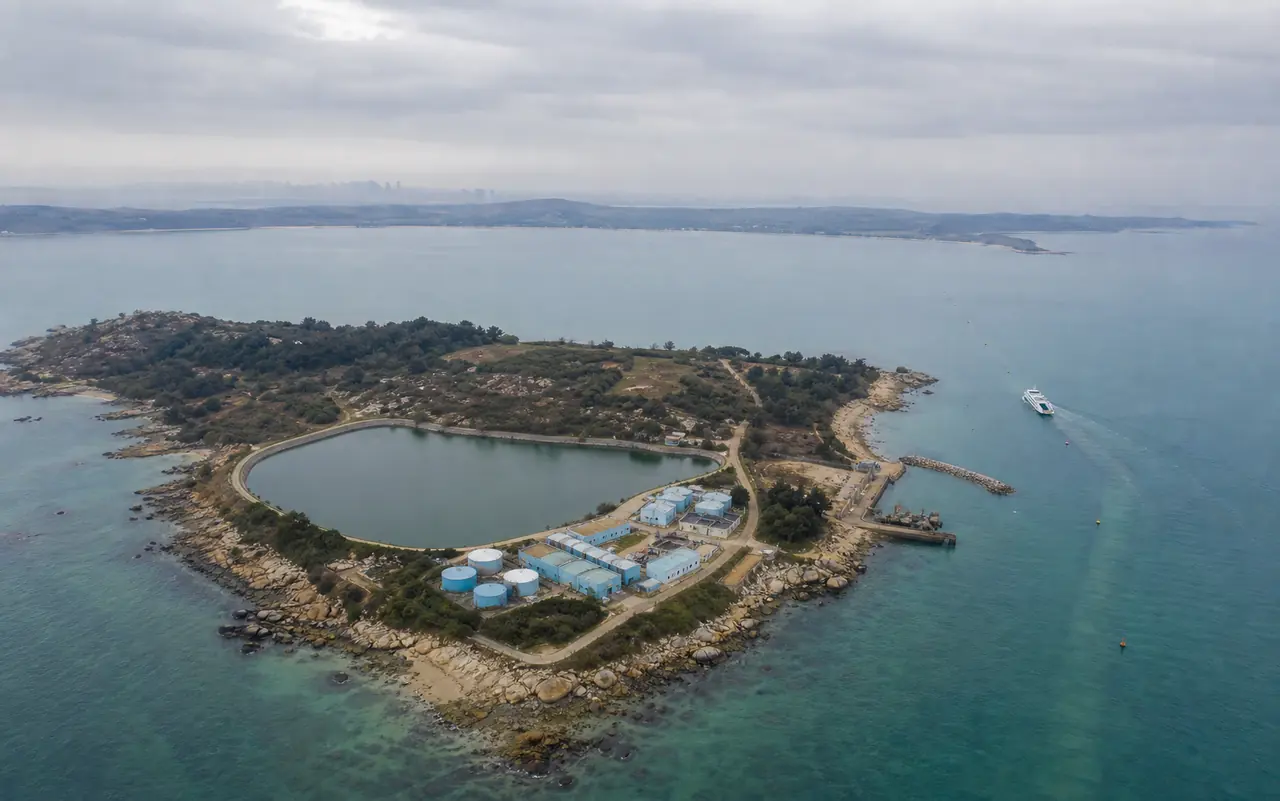
Kinmen and Matsu's Quasi-Integration: How Water Supply, Transport, and Cross-Strait Policy Are Amplifying the Outlying Islands' Resilience Test
Kinmen's water transfer from Fujian, the rebound in Mini Three Links traffic, and Fujian's integration policy are forcing outlying-island governance to face both livelihood convenience and single-source risk at once. The verifiable question is not whether the islands have 'already been taken over,' but how to make backup supply, transport, and commercial options more resilient.