
Taiwan's 1.71 Million SMEs Face Their Midterm Exam
AI, labor shortages and electricity prices are hitting all at once. Whether Taiwan's 1.71 million SMEs — the "second half" of the economy that the sacred mountain's spotlight never reaches — can successfully transform will decide the country's foundation.
Article contents01 / 07
- Taiwan has 1.71 million SMEs that carry most of its employment and exports, yet they face three questions at once — AI, labor shortages and electricity prices — this is the lower half of Taiwan's economy that the sacred mountain's spotlight never reaches.
- SMEs' AI-adoption rate is only 11.9%, versus 40% for large enterprises (close to the OECD international benchmark; whether this is a Taiwan-specific figure still needs verification); more than 60% of subsidy recipients show no measurable improvement a year after adoption — what's missing isn't tools, but a method for plugging AI into the business.
- The government has invested more than NT$46 billion, but if the subsidies only cover "buying tools" rather than "changing workflows, providing method, and developing talent," they risk replicating the world's 95% divide; Taiwan's way forward is to shift subsidies from handing out tools to walking alongside method.
“Taiwan's 1.71 Million SMEs Face Their Midterm Exam” reports that SME AI Adoption Lags Far Behind(11.9%)。 Digitimes survey, close to OECD international benchmark [2]。
“Taiwan's 1.71 Million SMEs Face Their Midterm Exam” reports that Over 60% of Subsidy Recipients See No Effect a Year Later。 No measurable improvement [2]。
“Taiwan's 1.71 Million SMEs Face Their Midterm Exam” reports that Globally, 95% of Corporate AI Pilots Show No Bottom-Line Impact。 MIT NANDA, "The GenAI Divide" [6]。
“Taiwan's 1.71 Million SMEs Face Their Midterm Exam” reports that Government's AI-Transformation Budget(NT$46bn)。 About US$1.4 billion (currency-conversion estimate)。
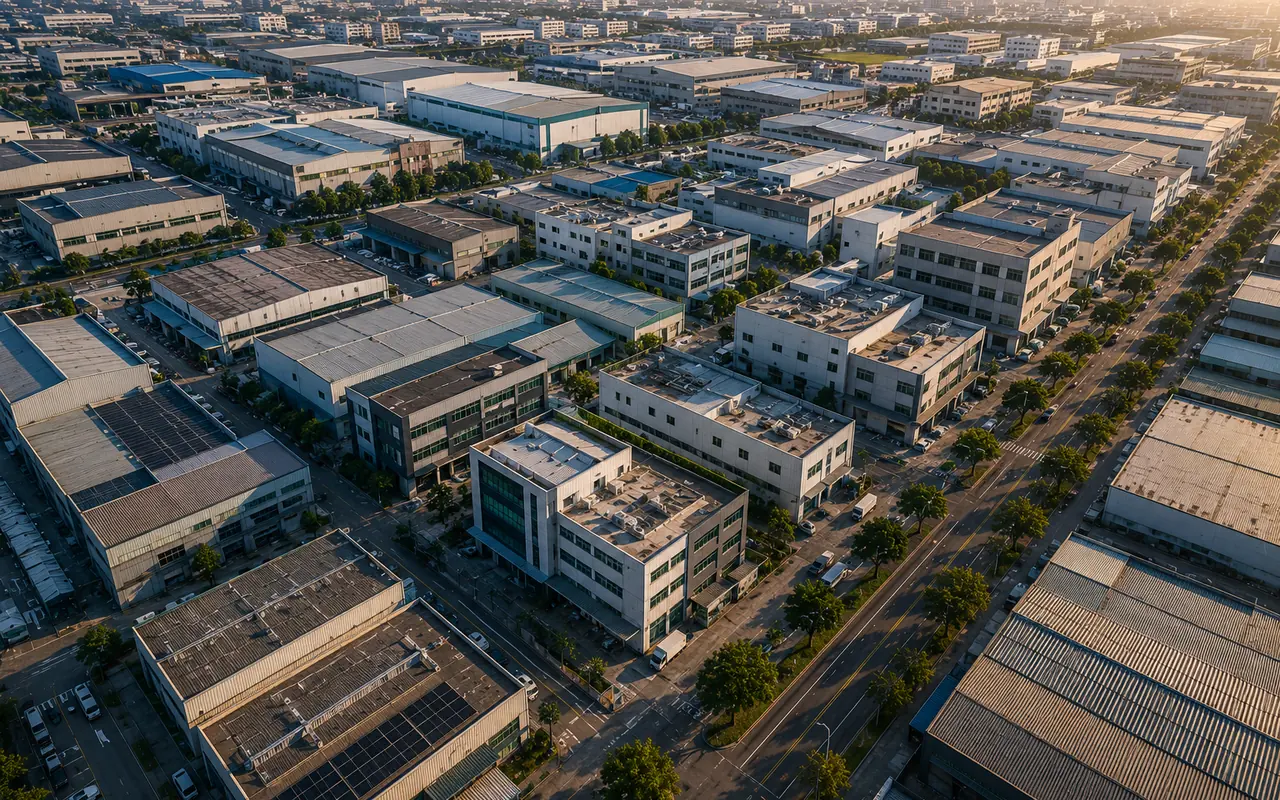
Whenever people talk about Taiwan's economy, the spotlight always falls on the sacred mountain — TSMC, AI, advanced process nodes. But at the foot of that mountain lies another world, rarely seen, that carries most of the island's employment and exports: 1.71 million SMEs [1]. Taiwan has grown from a semiconductor powerhouse into an AI hub [12], yet the spotlight rarely reaches into this dense forest. They are machine-tool makers, parts suppliers, food processors, trading houses, and local service businesses — the true lower half of Taiwan's economy.
In 2026, these 1.71 million companies are facing three questions at the same time: AI has arrived, workers are scarce, and electricity has gotten expensive. Any one of these on its own would be enough to keep an SME owner up at night; stack all three together, and what's really being tested is whether these companies can transform. The more practical question is: how does the dividend from the sacred mountain actually reach these 1.71 million companies at its foot?
The Weight of 1.71 Million Companies
First, understand the weight of this number. Taiwan's economic narrative is often monopolized by semiconductors, but the businesses that actually employ the most people and reach into every corner of the island are its SMEs. In the policy the Ministry of Economic Affairs rolled out in 2026, the target is explicitly these 1.71 million companies — because they are both the base of employment and domestic demand, and the capillaries of supply-chain resilience [1].
As this publication discussed in "Taiwan's Two Faces," most of Taiwan's exports are actually non-semiconductor industrial goods, and it is these SMEs standing behind them; quite a few industries carry a high dependence on the US market (observation/inference, confidence: low; precise share not yet confirmed). When waves like tariffs, AI, labor shortages and electricity prices roll in, it is not the sacred mountain that gets soaked first — it's this dense cluster of small communities at its foot. Their resilience is Taiwan's economic resilience.
These 1.71 million companies also play a role that is often overlooked: they are the ballast that keeps Taiwanese society stable. They provide the majority of jobs, spread across every township and every street, sustaining the livelihoods and domestic consumption of countless households. When people worry about AI replacing jobs, or about industries moving offshore, whether this group of SMEs can successfully transform and keep on hiring is directly tied not just to the GDP figure, but to the whole of society's sense of security.
Structurally, SMEs account for the overwhelming majority of Taiwan's businesses, forming the densest capillaries along the "order — production — export" chain, and have long been treated by officials as the foundation supporting employment and economic resilience [11]. They don't make international headlines the way TSMC does, but they are the real underlying operating system of Taiwanese manufacturing. However tall the sacred mountain grows, it still needs this soil beneath it; if the soil dries up, the mountain cannot stand alone either. That is why discussing Taiwan's economic resilience cannot mean looking only up at the sacred mountain — it also means looking down to honestly assess the health of these 1.71 million companies.
It's also worth remembering that these 1.71 million companies are not a single monolithic bloc. They span manufacturing, services, trade, and agricultural and fisheries processing — from precision machinery in Taichung and fasteners in Changhua, to food products in Tainan and design services in Taipei — each with different pain points and a different rhythm. That diversity is a source of resilience for Taiwan's economy, but it also dooms any "one-size-fits-all" policy to fail. Taking care of them well requires not louder slogans, but more finely segmented, more tailored support.
The AI Divide Is Here Too
This publication discussed the global "95% divide" in corporate AI adoption in "The Frontier Is Not the Finish" — most pilots never show a return. Among Taiwan's SMEs, this divide is more concrete, and more brutal.
“Taiwan's 1.71 Million SMEs Face Their Midterm Exam” reports that Globally, 95% of Corporate AI Pilots Show No Bottom-Line Impact。 MIT NANDA, "The GenAI Divide" [6]。
The numbers speak for themselves: Taiwan's SME AI-adoption rate, per Digitimes [2], is close to the OECD international benchmark — only about 11.9% (versus an OECD average of 40% for large enterprises); more alarming still, even when the government provides subsidies, the results often fall short — the survey found that more than 60% of SMEs receiving digital-transformation subsidies reported "no measurable improvement in revenue or efficiency" a year after adoption. This comes from a single source and should be read with caution, but its direction echoes MIT's research finding that "95% of corporate AI pilots deliver no bottom-line contribution" [6].
“Taiwan's 1.71 Million SMEs Face Their Midterm Exam” reports that SME AI Adoption Lags Far Behind(11.9%)。 Digitimes survey, close to OECD international benchmark [2]。
Buying the tool is not the same as completing the transformation. What Taiwan's SMEs have never lacked is AI — what they lack is a method for plugging AI into their business.
On the two ends of this divide stand two kinds of companies: one embeds AI into its existing quoting, scheduling and customer-service workflows, feeds it with its own proprietary data, and turns it into a line on the P&L; the other buys the tool but never changes its workflow — it builds a demo, but never connects it to revenue. The difference isn't budget size, but method — the key point this piece will come back to in the sixth section.
Why do subsidies so often go to waste? The problem usually isn't that companies aren't trying — it's a mismatch of resources. Under the anxiety of "everyone else is doing AI," many SMEs buy the tool and install the system, but no one is there to help them redesign their workflow or work out which specific step AI should be applied to in order to actually save or make money. The tool is off-the-shelf, and the subsidy is visible — but the method for plugging AI into a specific business is both scarce and hard to replicate.
What makes this even harder is that this kind of method can't be "standardized and distributed." Every SME has different pain points, workflows and data; an AI-adoption playbook that works for a machine-tool maker may completely fail when moved to a food-processing plant. That means genuinely effective help has to be "close-contact," not "scaled" — it requires people who understand the specific industry and can embed themselves inside that particular factory. Shifting subsidies from "handing out tools" to "pairing companies with consultants and method" is the key to flipping that unresponsive 60%.
What does "close-contact support" actually look like? It might be an industry-savvy digital consultant embedded in a factory for two or three months, working with the owner to take the quoting process apart step by step and find the point where AI should — and most easily can — be applied; producing one small project first that saves hours and shows visible results, building confidence, then scaling up gradually. This kind of hands-on companionship is far slower and more expensive than "handing out money and installing a system" — but it is the only way to make transformation actually take root.
Labor Shortage: Workers Pulled Away by High Tech
The second question is people. Taiwan's high-tech and capital-intensive industries have expanded rapidly in recent years, pulling away a large share of the limited pool of skilled labor, and leaving traditional SMEs with an increasingly severe shortage of skilled workers, professional technicians and engineering-related positions [4].
Consulting firms observe that the labor shortage has gone "deep enough" that companies must formally build "workforce risk" into strategic planning — it is no longer just a day-to-day headache for HR departments [4]. For a machine-tool maker or a parts supplier, this means that even with orders in hand and the technical know-how, it may still be unable to take on or complete the work simply because it cannot recruit or retain enough people. Labor shortage is escalating from a "cost problem" into a "survival problem."
Ironically, AI is both part of the pressure and a possible solution. When workers can't be hired, handing repetitive, standardizable steps over to automation and AI becomes a path SMEs have little choice but to take. But making that path actually work circles back to the question from the second section: method.
There is also a deeper layer to the labor shortage: a generational and skills gap. Many veteran craftsmen in traditional industrial clusters have accumulated decades of skill, but can find no young people willing to take over; the younger generation is drawn instead to tech and services. If this gap isn't closed, the "hidden champion" supply chains Taiwan takes such pride in will be lost, piece by piece, as these craftsmen retire.
In this sense, AI's value to SMEs goes far beyond "saving on labor." It may be the last chance to record, digitize and pass on the tacit knowledge locked inside a veteran craftsman's head — which material pairs with which machine setting, what sound from the machine means it needs maintenance. When workers can't be hired and veteran craftsmen can't be retained, turning experience into data, and data into a model, may be the key step for Taiwanese manufacturing to hold onto its competitiveness. The pressure of the labor shortage is, in effect, forcing out the real reason to go through digital transformation.
This also echoes the core insight of this publication's "The Frontier Is Not the Finish": for companies that don't build their own models, the strongest moat is "proprietary data that nobody else can take away." The decades of processing parameters, customer preferences and quality records accumulated by each small factory are exactly the kind of exclusive asset no general-purpose model has. Organize that data well and feed it to AI, and an SME can build applications that even a large conglomerate cannot replicate. The starting point of transformation is often not buying a new tool, but first taking stock of the sleeping gold mine of data already sitting in one's own hands.
Power Shortage and Electricity Prices: The Kilowatt-Hour Crowded Out by AI
The third question is electricity. The astonishing appetite of AI data centers is reshaping Taiwan's power landscape — and the crowding-out effect will ultimately land on SMEs.
Policy has already started moving. From November 2025, the Ministry of Economic Affairs has imposed PUE energy-efficiency thresholds of 1.3 for ultra-large data centers and 1.4 for colocation data centers [5]. The intent of this mechanism is to steer limited electricity toward efficient use. But for many SME factories running on old equipment with low energy efficiency, rising electricity prices and uncertainty over supply stability represent a real, tangible erosion of competitiveness [5].
As the sacred mountain and AI data centers become the island's biggest power consumers, the SMEs at its foot are facing a structural problem they cannot solve on their own: on an island where electricity is growing ever tighter, how to secure — and how to make the best use of — every kilowatt-hour.
The electricity issue also lays bare an internal contradiction in Taiwan's economy: on the same island, AI data centers and large semiconductor makers are the engines of power demand and growth, but their expansion also crowds out the power capacity and cost position available to other industries. Finding a balance between "nurturing the sacred mountain" and "not crushing what's at its foot" is the dilemma at the heart of energy policy.
For SMEs, this dilemma has a practical reading: energy efficiency has moved from being an ESG moral slogan to a matter of bare-knuckle cost competitiveness. Under tightening energy-efficiency thresholds and gradually rising electricity prices, whichever company can use every kilowatt-hour more efficiently will ride out this wave of cost pressure more securely. This also turns "digital transformation" and "energy transformation" into the same thing — using AI and sensors to bring down the energy consumption of the production process saves on electricity bills while also protecting competitiveness.
Facing electricity prices, some SMEs have already turned from defense to offense: installing solar panels on factory roofs, adopting energy storage and energy-management systems, turning a passive cost pressure into an active energy strategy. As the obligations of being a "major power user" and tightening energy-efficiency thresholds become the new normal, whoever folds energy management into their digital transformation can turn a disadvantage into an advantage in this efficiency contest. Electricity, in other words, is turning from a problem into another battlefield worth investing in.
The Government's Cards, and Their Gap
Faced with these three questions, the government has not been sitting idle. The Executive Yuan has allocated NT$46 billion under the "Special Act for Strengthening Economic, Social and People's Livelihood Resilience and National Security" to support industrial transformation; based on that, the Ministry of Economic Affairs has launched the "Industrial Competitiveness Support Corps," integrating seven categories of support covering AI, digital transformation, talent development, financing and market expansion [13]. Converted at the prevailing exchange rate, that comes to roughly US$1.4 billion (currency-conversion estimate, confidence: medium; whether this matches an independent estimate in Digitimes' [3] original text still needs verification), and this four-part plan is meant to drive digital and AI transformation across more than one hundred thousand company-instances. There is also a dedicated diversified revitalization and development program for SMEs [7], along with various AI-adoption subsidies [9].
“Taiwan's 1.71 Million SMEs Face Their Midterm Exam” reports that Government's AI-Transformation Budget(NT$46bn)。 About US$1.4 billion (currency-conversion estimate)。
But no matter how many cards the government holds, there is still a gap. The earlier figure — "over 60% of subsidies show no effect" — is precisely the biggest warning sign: handing out the money is not the same as making the transformation happen. If the subsidy only covers "buying tools," without also covering "changing workflows, providing method, and developing talent," then this NT$46 billion could well replicate the world's 95% divide — spent with great fanfare, and felt by almost no one.
“Taiwan's 1.71 Million SMEs Face Their Midterm Exam” reports that Over 60% of Subsidy Recipients See No Effect a Year Later。 No measurable improvement [2]。
For that NT$46 billion to be spent effectively, the key is to shift the subsidy's "acceptance criterion" from "was it adopted" to "did things actually get better." If subsidies are tied to measurable revenue growth, cost reduction or yield improvement — rather than just "which system was purchased" — then the effort of both companies and support agencies will naturally shift from "spending the money" to "solving the problem."
Beyond how subsidies are designed, SME transformation is also missing one more thing: patient capital. Investment in AI and automation often takes years to pay back, but not many SMEs have cash flow that can withstand that kind of wait. If the financial system could offer financing and credit guarantees that better match the rhythm of transformation — letting companies dare to invest and survive the growing pains — then these 1.71 million companies could cross the divide much faster. The money needs to be disbursed, but disbursed with method, and matched with patience.
The talent question ultimately comes back to education and retention. As automation takes over repetitive labor, what's left for people will be work that requires more judgment and carries more value — provided Taiwan's vocational education and industry-academia collaboration can bring young people into these new roles in time. Turning a "grease-handed mechanic" into "a technical expert who can operate AI and robots" not only solves the labor shortage, it also makes the younger generation willing to come back to these industrial clusters. In the end, the solution to the labor shortage is making these jobs worth doing.
What's Missing Isn't Tools, It's Method
Pull the three questions together, and they turn out to point to the same answer: method is scarcer than tools.
Looking across many such cases, a pattern emerges: the small minority of companies that successfully adopt AI don't do it by buying the most expensive tools — they do it by embedding AI deeply into existing workflows, feeding it their own proprietary data, and setting a measurable profit-and-loss threshold for every application. For Taiwan's SMEs, this means the real lever of transformation isn't "whether to buy AI," but "whether there's someone to help plug AI into the business." Labor shortage forces automation; electricity prices force efficiency — and both of these can only be solved through digital transformation done with "the right method." The three questions turn out to be one question.
This is also where Taiwan has the best chance. Taiwan has a dense network of trade associations, non-profit institutes and support systems that are closer to the real conditions of these 1.71 million companies than in any other country. If the focus of subsidies could shift from "handing out tools" to "walking alongside method" — sending people who understand the industry, the workflow and the ROI, and leading SMEs by hand from one bank of the divide to the other — then Taiwan has what it takes to score better on this exam than anyone else.
Taiwan actually holds an asset other countries envy: the density and trust of its industrial clusters. Companies within the same cluster are suppliers to each other, customers of each other, and neighbors as well; the success of one benchmark company can spread quickly through the entire supply chain via trade associations and word of mouth.
If the support system can make good use of this "cluster diffusion" trait — letting the companies out in front pull the ones behind, letting people who know the method teach hand-in-hand, turning one success story into a template for the whole cluster — then Taiwan has the chance to spread the AI dividend from a handful of benchmark companies to the broader SME supply chain faster than any large, loosely organized economy could. This is precisely the irreplaceable value of Taiwan's trade associations, non-profit institutes and local support systems: they are the bridge that carries the dividend from the mountaintop down to its foot.
String together these six links — segmented support, close-contact coaching, data stock-taking, energy positioning, vocational-talent retention, and cluster diffusion — and you get a complete playbook for helping these 1.71 million companies survive this stress test. It isn't glamorous, and it won't make headlines, but it is the real substance behind whether the lower half of Taiwan's economy can stand firm.
Three Stances: Spreading the Dividend to the Foot of the Mountain
From Taiwan's vantage point, the exam facing these 1.71 million companies falls on three kinds of actors.
For the state, the task is to upgrade subsidies from "subsidizing tools" to "subsidizing method": tie the effectiveness of the NT$46 billion to measurable improvements in revenue and efficiency, not to the spending itself; at the same time, treat the labor shortage (talent development, technical immigration) and the power shortage (supply stability, tiered guidance) as foundational infrastructure work for SME competitiveness.
For industry intermediaries, the task is to be a good bridge: in a way that stays closest to each cluster, spread the "right-method" adoption experience from a handful of benchmark companies across the entire SME supply chain — this is precisely the irreplaceable value of trade associations and non-profit institutes.
For SMEs themselves, the most practical piece of advice is: don't ask "whether to do AI," ask "which piece to start with, and where to set a stop-loss." Start from a workflow that genuinely hurts (quoting, scheduling, customer service, quality inspection), set a measurable target, produce a first result people can feel, and then expand. Put your limited resources on the piece of know-how that is most uniquely yours, the part nobody else can take away.
The glow of the sacred mountain is so bright that it often makes people forget: Taiwan's real economic resilience is hidden in whether these 1.71 million companies at its foot can successfully turn themselves around. Spreading the dividend down to them is not just a matter of fairness — it is the key to whether the lower half of Taiwan's economy can stand firm.
In the end, the exam facing these 1.71 million companies tests not just the companies themselves, but the entire support system: how the government designs its subsidies, how well trade associations can diffuse knowledge, how patient the financial system's capital is, and how well education supplies talent. If any single link in that chain chases only the glow of the sacred mountain, transformation at its foot will fall one step behind.
Treating these 1.71 million companies as "the roots of Taiwan's economy," rather than as background scenery for the sacred mountain, is the long-term strategy that will let this island stand tall for the long run. From Taiwan's vantage point, the height of the sacred mountain is certainly something to be proud of, but a nation's economic resilience ultimately depends on whether its most ordinary companies can survive and keep transforming. Spreading the dividend down to these 1.71 million companies at the mountain's foot is not just a matter of fairness — it is the key to whether the lower half of Taiwan's economy can stand firm.
The sacred mountain decides how high Taiwan can fly. The 1.71 million SMEs decide how steadily Taiwan can stand.
Sources
- Digitimes — Ministry of Economic Affairs Pushes AI Plan to Transform 1.71 Million SMEs
- Digitimes — SME AI Adoption Rate 11.9% vs. 40% for Large Enterprises / Over 60% of Subsidy Recipients See No Effect
- Digitimes — Taiwan's AI Investment, Structure and ROI (NT$46 Billion, etc.)
- Turner & Townsend — Structural Pressures as AI Steers Growth (Labor Shortage)
- Digitimes — AI and Industrial Electricity Demand Reshape Taiwan's Power Grid (Energy-Efficiency Threshold: PUE 1.3/1.4)
- MIT NANDA, "The GenAI Divide" — 95% of Corporate AI Pilots Show No ROI
- Executive Yuan — Diversified Revitalization and Development Program for Small and Micro Enterprises
- FPRI / Taiwan Insight — SME Dependence on the US and Tariff Impact
- ACTGSYS — 2026 Taiwan SME AI Subsidy Guide
- CPA Australia (Malay Mail) — Taiwan SME Confidence and AI Adoption
- Taiwan Today — A Future for Small & Medium Enterprises
- w.media — Taiwan: From Semiconductor Superpower to AI Hub
- Industrial Development Administration, Ministry of Economic Affairs — Launch of the "Industrial Competitiveness Support Corps," Integrating Seven Categories of Support (NT$46 Billion Special Budget)
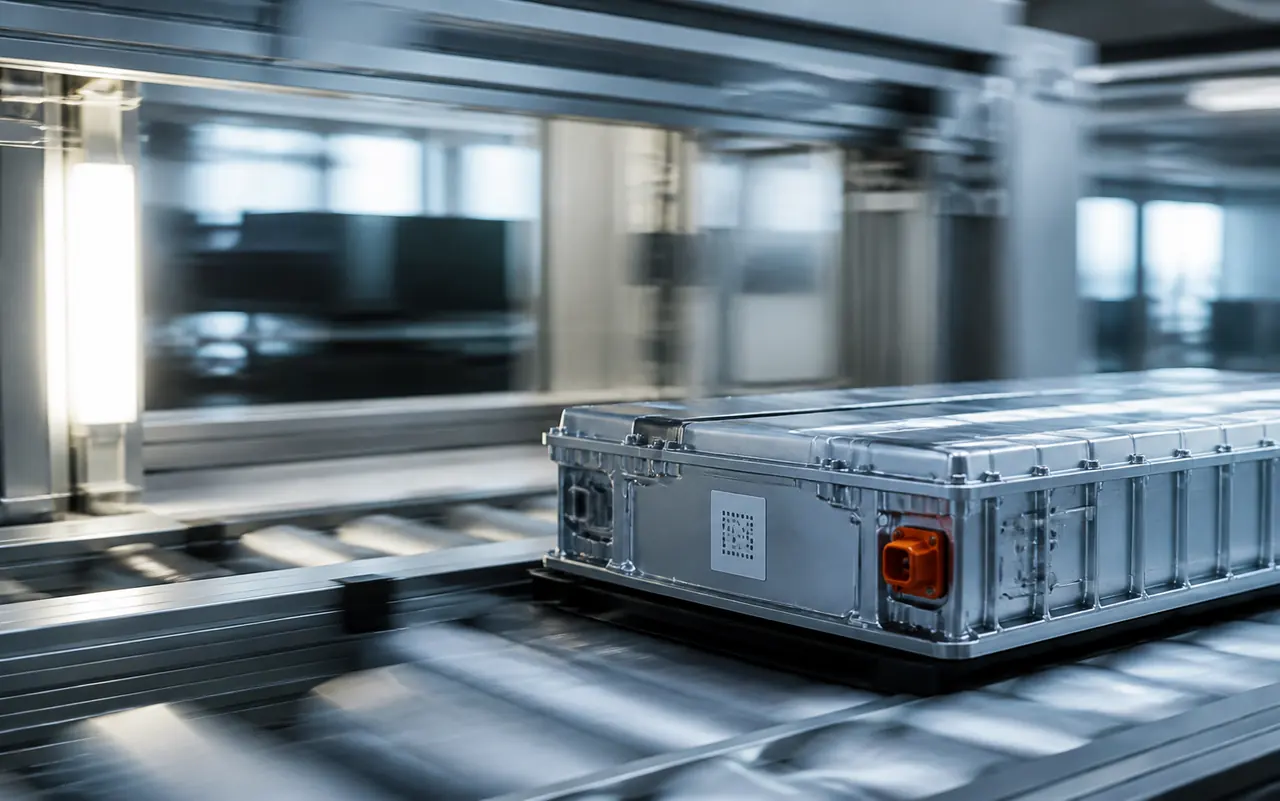
Products Need a Résumé Too: The EU's DPP Registry Is Live — Who Controls Taiwanese Suppliers' Data?
The EU's DPP Registry has gone live, but not every product becomes mandatory on the same day, and it does not mean a complete data set gets uploaded to a central EU database. What Taiwanese suppliers really need to decide now is who controls identifiers, hosting, access, updates and transfer.
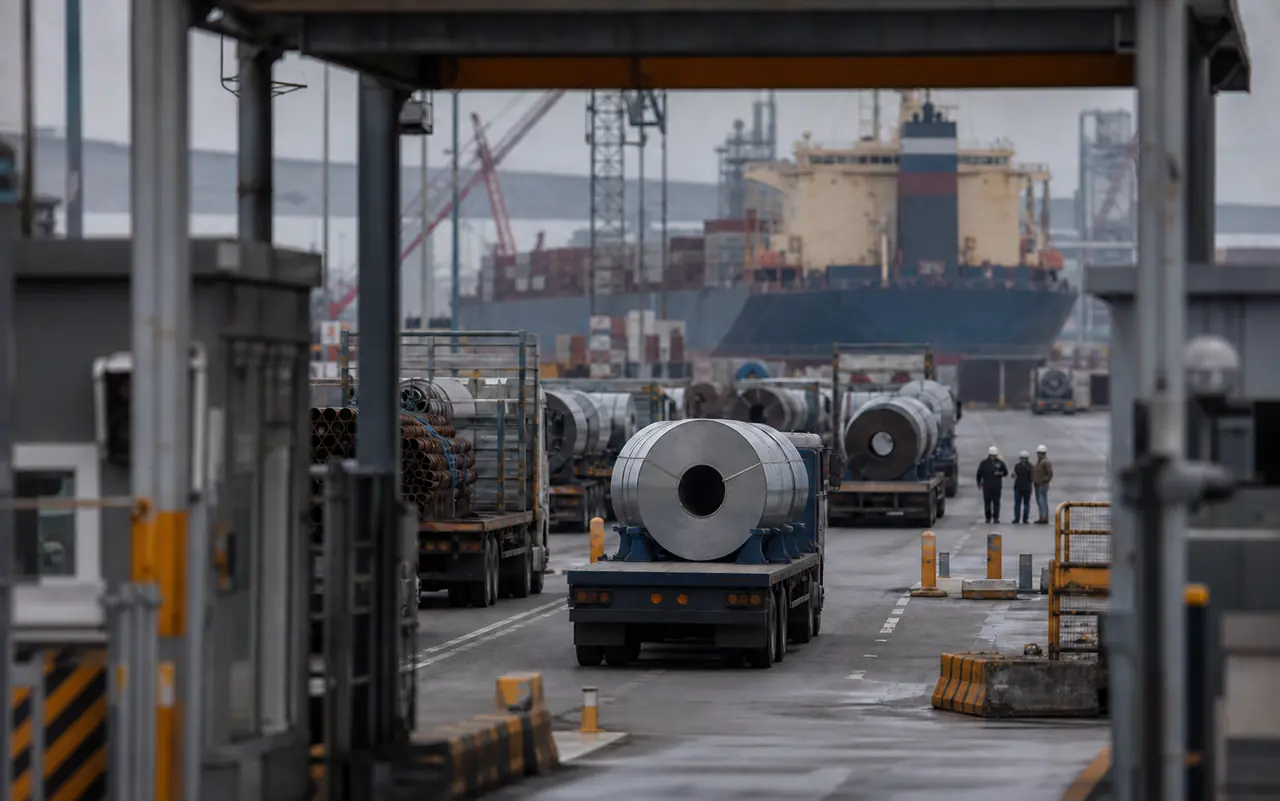
Once the Quota Runs Out, It's Fifty Percent: How the EU's New Steel Tariff Reshuffles Nine Categories of Taiwanese Exports
The EU's new steel regime does not slap 50% on every tonne of Taiwanese steel from the first shipment. Instead it places 26 product categories inside tariff-rate quotas, and only once the relevant quota is exhausted does a 50% out-of-quota surcharge apply. Taiwan holds country-specific allocations in nine categories, but what actually decides whether a given order keeps its margin is the CN classification, origin, quarter, quota order number, and the date the EU accepts the import declaration.