
Silicon Shield in Depth
After the US-Taiwan $250 billion chip deal, Arizona is building fabs while Taiwan may be simultaneously building as many as 10 new ones on the island — is the sacred mountain doubling down, or being diluted? The real answer about the silicon shield is more subtle than either side admits: it isn't fading — it's growing into a new shape.
Article contents01 / 08
- Two fronts are building at once: Taiwan may have as many as 10 fabs advancing simultaneously on the island, with 2026 capital expenditure up 30% — the U.S. fabs are addition, not relocation.
- The technology gap is the moat: U.S. fabs are at 4nm versus Taiwan's 2nm — the silicon shield's core should hold at least through 2028–2030.
- The N-1 export control is an institutional guardrail: the deputy premier has publicly rejected moving 40% of the chip supply chain to the U.S., but ASML's cautionary tale shows enforcement resilience is not ironclad.
- Second-tier suppliers are the structural weak point: they cannot follow to the U.S., but advanced packaging (CoWoS) is a window of local opportunity.
- The silicon shield is transforming, not being hollowed out: it is shifting from deterrence-by-geographic-concentration to deterrence-by-shared-interest, and its medium-term credibility hinges on whether Taiwan can hold its A14 lead.
“Silicon Shield in Depth” reports that Taiwan Holds 90% of Global Most-Advanced Chip Capacity。 U.S. fabs are in volume production at 4nm; Taiwan is already in volume production at 2nm — a gap of at least two generations [4][10]。
“Silicon Shield in Depth” reports that Investment on the Island Isn't Shrinking — It's Growing: TSMC's 2026 Capex Up More Than 30%($54 billion)。 As many as 10 fabs may be advancing simultaneously on the island — the silicon shield's core stays in Taiwan [2][21]。
“Silicon Shield in Depth” reports that CoWoS Advanced-Packaging Capacity Triples in Three Years, Taiwan's Supply Chain Benefits First(3.7x)。 Lifting ASE, King Yuan Electronics, and other Taiwanese packaging/testing firms — the AI-chip packaging dividend stays on the island [29]。
“Silicon Shield in Depth” reports that Samsung's Texas Fab Warning: Engineering Staff Cut to a Quarter of Plan, Volume Production Delayed Again and Again(25%)。 Without a technology moat or customer stickiness, building more fabs is just political theater [18][24]。
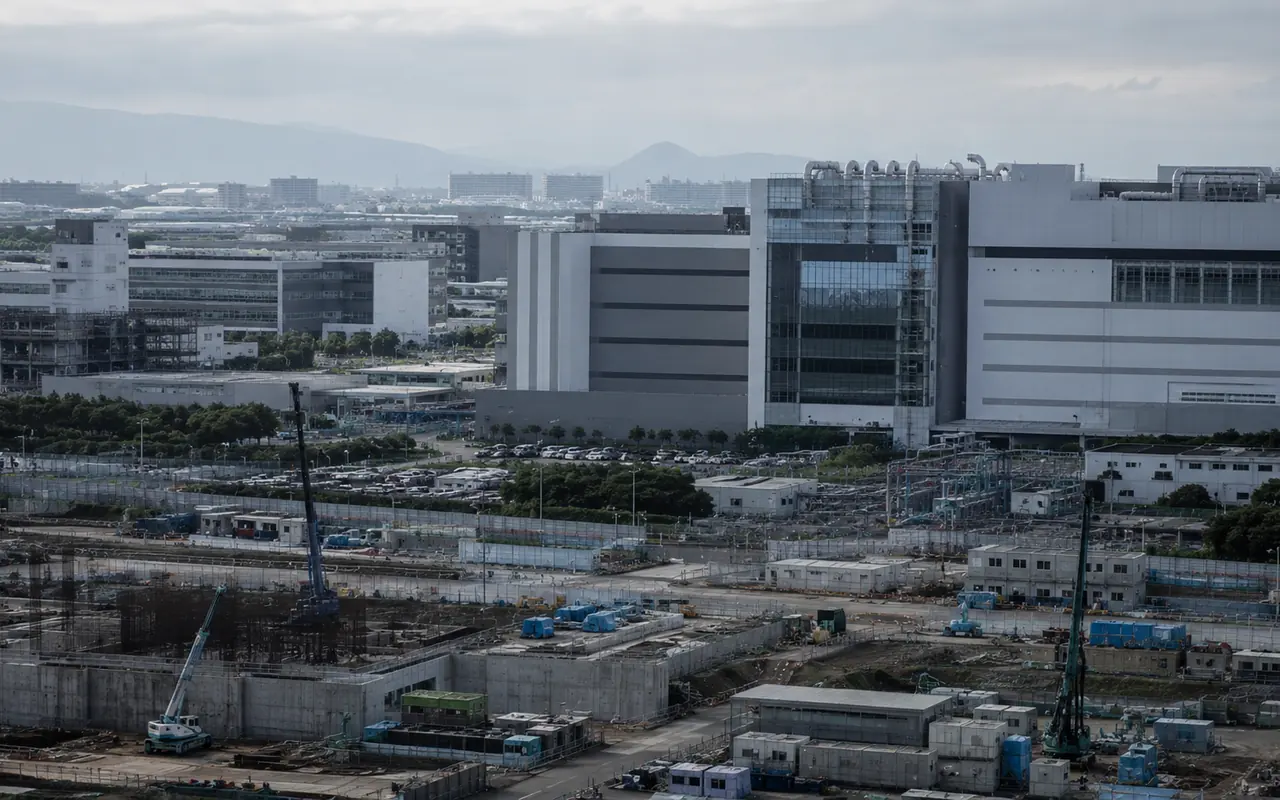
Put everything we know about the investment and fab construction into a single frame: in Arizona, drilling rigs are pounding foundations into the ground; at Fab 25 in the Central Taiwan Science Park, construction is advancing too — the same company, two continents, expanding at the same time. [1][21][22]
TSMC's total investment in the United States has climbed to $165 billion, with six Arizona fabs (an expansion from the three fabs originally announced in 2025) plus advanced-packaging facilities and R&D centers coming online in stages [1] — and according to the company's CFO, the Arizona expansion is not finished even after this round of U.S. investment [6]. At the same time, as many as 10 fabs may be under simultaneous construction or start-up on the island of Taiwan itself [21]. The US-Taiwan $250 billion direct-investment agreement [5] has produced an unprecedented phenomenon: the sacred mountain isn't moving away — it has grown a twin. That has made "does this agreement thicken or dilute Taiwan's silicon shield" the focal point of debate on all sides [7], and the agreement itself still leaves a number of questions unresolved [16].
This unprecedented development has brought two long-running, opposing camps to a simultaneous boil. The "thickening" camp says Washington is pouring hundreds of billions of dollars into binding its own technology ecosystem to TSMC, upgrading the silicon shield. The "hollowing-out" camp cites warnings from Japanese media, worried that TSMC's "great global migration" is chipping away at the silicon-shield myth [30] — the supply chain dispersing, Taiwan's "irreplaceability" being managed away bit by bit, and the silicon shield at risk of erosion [15]; Beijing has gone further still, declaring the agreement will "drain Taiwan's economy" [8]. Both accounts have evidence behind them, but neither is the whole picture.
Getting the Numbers Straight First
The headline $500 billion figure in the US-Taiwan agreement needs to be broken down first: $250 billion in direct investment and $250 billion in credit guarantees [5] — the latter is a backstop, not cash outlay. TSMC's $165 billion for its U.S. fabs [1] is the sum of a long-term plan across six fabs (the count after the plan was expanded more than once); it will not land all at once.
The more decisive comparison is on the island itself: TSMC's 2026 capex guidance is $52–56 billion, up roughly 30% from $40.9 billion in 2025 [2][3][27] — the sacred mountain's investment in Taiwan is not shrinking, it's growing. 2nm entered volume production in Kaohsiung and Hsinchu by the end of 2025 [26], and foundation work for 1.4nm (A14) has already begun at Fab 25 in the Central Taiwan Science Park [22]. Let the numbers speak: Taiwan and the United States are addition, not a zero-sum trade-off.
“Silicon Shield in Depth” reports that Investment on the Island Isn't Shrinking — It's Growing: TSMC's 2026 Capex Up More Than 30%($54 billion)。 As many as 10 fabs may be advancing simultaneously on the island — the silicon shield's core stays in Taiwan [2][21]。
But the comparison isn't only about numbers. Arizona's first fab entered volume production at 4nm at the end of 2024 [4]; Taiwan is now in volume production at 2nm, with A14 targeting 1.4nm [22]. That's a two-generation technology gap — and in the semiconductor industry, closing two generations takes at least five years. That gap is the silicon shield's real moat.
Why "Moving One Fab" Can't Actually Move the Sacred Mountain
To understand this debate, one intuitive misconception has to be cleared away first: many people assume "TSMC building fabs in the U.S." is the same as "moving the sacred mountain that protects the nation, piece by piece." But the real anatomy of a chip fab is far more complicated than that picture suggests.
For an advanced fab to run, it takes more than buildings and equipment — it takes an entire ecosystem: upstream, hundreds of suppliers of specialty gases, photoresists, sputtering targets, and components, clustered within a few dozen kilometers of the science parks in Hsinchu, Taichung, and Tainan; midstream, decades of tacit process know-how that never makes it into a manual, living in veteran technicians' hands and engineers' heads; downstream, a maintenance network that can take a call at three in the morning and have someone at the fab within the hour to save a machine. This is a dense forest grown over thirty or forty years by hundreds of thousands of people — it cannot be replicated by crating up a few EUV machines and shipping them overseas. The reason the Arizona fab has had to send engineers over from Taiwan in batches to hold the line [14], and the reason its yield and schedule keep getting dragged down by a local talent shortage [14], is exactly this: equipment can be bought, buildings can be built, but an "ecosystem" cannot be moved. That is also why, even with the U.S. building six fabs at once, the most advanced light, for now, still only shines on Taiwan's side.
The Thickening Thesis: Shared Interests Make Attacking Taiwan a Worse Bet
The thickening camp's core logic comes from the Stimson Center: the very nature of the silicon shield is upgrading.
It is shifting from "Taiwan's geographic position makes America want to protect it" to "the U.S. and Taiwan share an interest structure that America cannot afford to see Taiwan attacked" [11]. Once Washington has bet more than a hundred billion dollars on TSMC, any conflict in the Taiwan Strait is no longer just an alliance issue for the U.S. — it's a direct loss of assets.
The institutional side is being reinforced too. Taiwan's government has obtained statutory authority and uses the "N-1" export-control principle to bar the most advanced nodes from moving overseas [25]. Deputy Premier Cheng Li-chun has publicly rejected Washington's request to move "40% of the chip supply chain" to the U.S., calling it "impossible" [9]. TSMC's senior leadership has repeatedly stressed that the company's R&D core stays in Taiwan — pointing, for instance, to the roughly 10,000 R&D engineers based on the island [2]. Washington has also revoked TSMC's Nanjing fab's VEU exemption since late 2025 [19], shrinking TSMC's flexibility in China and binding it more tightly to the American side.
MIT Technology Review's own reporting points the same way: Taiwan produces 90% of the world's most advanced chips [10], and while U.S. fabs remain stuck at 4nm, Taiwan's relative irreplaceability still holds.
“Silicon Shield in Depth” reports that Taiwan Holds 90% of Global Most-Advanced Chip Capacity。 U.S. fabs are in volume production at 4nm; Taiwan is already in volume production at 2nm — a gap of at least two generations [4][10]。
The Hollowing-Out Thesis: Three Real Worries
But the hollowing-out thesis's three worries are not baseless.
Engineers are the carriers of knowledge. The Arizona fab has already sent more than 1,000 engineers to Taiwan in batches for 3nm and 2nm process training, as manpower preparation for volume production [28]. A Rest of World investigation found the Arizona fab facing a long-running local talent shortage, relying almost entirely on Taiwanese engineers to hold it together [14]. Knowledge travels with people, not by copying equipment — when a training pipeline moves across the ocean, the tacit knowledge moves with it.
The second-tier supply chain may not be able to follow (inference; medium confidence). Leading packaging and testing firms such as ASE and King Yuan Electronics can ride TSMC's expansion, but second-tier SME suppliers of materials, equipment, and components may not have the capacity to set up alongside them in the U.S. [9][13]. Commerce Secretary Lutnick demanded that 40% of the chip supply chain relocate to the U.S.; even if the final number is discounted, the squeeze these second-tier firms face — their orders on the island possibly shrinking while they cannot follow along — is a risk worth preparing for in advance.
The sharpest point is Stimson's "fallback thesis." The same report also writes: "America First" policy contains an internal contradiction — the day the U.S. has enough capacity at home, the necessity of risking war for Taiwan declines [11]. Taiwan would be downgraded from "must be protected" to a "negotiable" chip. The logic of deterrence doesn't rest on technological superiority — it rests on "no alternative option." The moment an alternative appears, deterrence starts to loosen.
Samsung's Texas Fab: A Cautionary Tale of "Built but Unusable"
There is a comparison case in the silicon-shield debate that is easy to skip over.
Samsung took $4.7 billion in U.S. government subsidies for its fab in Taylor, Texas, pledging more than $37 billion in investment. After the building structure was completed, the site effectively stalled — contractors pulled out, the engineering headcount shrank to a quarter of the original plan, and volume production slipped repeatedly from 2024 all the way to 2027 [18][24]. The problem isn't the money to build the fab — it's that the process technology lags TSMC by one to two generations, and customers aren't buying.
“Silicon Shield in Depth” reports that Samsung's Texas Fab Warning: Engineering Staff Cut to a Quarter of Plan, Volume Production Delayed Again and Again(25%)。 Without a technology moat or customer stickiness, building more fabs is just political theater [18][24]。
This case illustrates the essence of the silicon shield: the moat isn't the building — it's technological leadership and customer stickiness. TSMC is far ahead of Samsung on both counts, but "far ahead" is not "forever." If the technology gap narrows and customers gain a choice, the moat gets shallower.
The Netherlands' ASML is another warning sign. As the sole supplier of EUV machines, ASML has still been forced under American pressure to significantly scale back its sales to China, sending its share price lower [20] — a small country's critical technology, under great-power tech geopolitics, ultimately finds it hard to remain fully autonomous. Taiwan's situation is a different version of the same story: not being restricted from exporting, but being semi-compelled to export capital and knowledge to the United States. The form differs; the substance is similar.
The Silicon Shield Isn't Disappearing — It's Growing a New Shape
Putting all the evidence together, the most accurate description is: the silicon shield hasn't been hollowed out, but it is transforming — from "deterrence through pure geographic concentration" toward "deterrence through a shared-interest structure."
The logic of "pure geographic concentration" is: the world's most advanced chips can only be obtained on this one island, so no one dares to strike. The logic of "shared-interest structure" is: America's, Taiwan's, and the entire democratic bloc's technology ecosystems are all deeply bound to TSMC, upgrading the cost of a conflict in the Taiwan Strait from "Taiwan hurts" to "the whole world hurts."
This logic holds in the short term (2026–2028): the technology gap is real, the N-1 export control has a legal basis, and America's financial entanglement is deepening. One American scholar has even said outright that reliable substitute capacity is at least a 2030s prospect — and that reaching a level able to absorb a major shock to Taiwan without triggering severe global shortages likely won't come until the middle of this century, or later [31] — pointing out that in the short-to-medium term, the sacred mountain's core is still hard to move.
The key precondition for the medium term (2028–2030 and beyond) is that Taiwan must keep leading on technology. Arizona's third fab (A16 node) was originally slated for volume production in 2028, though a September 2025 report said the timeline had been pulled forward to as early as 2027 [23]; if Taiwan's A14 (1.4nm) can reach volume production on schedule at that point [22], the gap holds. If Taiwan's technology development stalls or A14 slips, the "shared-interest structure" deterrence logic will start to fail.
Three Stances: How Taiwan Should Play This
For the state: actively manage the pace of the silicon shield's transformation. The N-1 export control cannot remain just a clause on paper — it needs enforcement precedent and diplomatic backbone. ASML's case shows that under pressure, a "principle" can be eroded bit by bit [20]. At the same time, American export controls (the VEU revocation, CHIPS Act guardrails) [17][19] make it harder for China to route around Taiwan — this leverage should be used actively in diplomacy, not merely absorbed passively.
For the semiconductor industry: the A14 technology roadmap must advance steadily, but advanced packaging is the more proactive track for differentiation. CoWoS monthly capacity is targeted to rise from 35,000 wafers at the end of 2024 to about 130,000 by the end of 2026 [29] — a window where Taiwan's supply chain can capture the AI-chip boom dividend without having to go to the U.S.
“Silicon Shield in Depth” reports that CoWoS Advanced-Packaging Capacity Triples in Three Years, Taiwan's Supply Chain Benefits First(3.7x)。 Lifting ASE, King Yuan Electronics, and other Taiwanese packaging/testing firms — the AI-chip packaging dividend stays on the island [29]。
For second-tier SME suppliers: the situation now is not "already hurt" — it is "the window is still open, but it won't stay open forever." With as many as 10 fabs under construction on the island [21] and the A14 volume-production path confirmed [22], orders on the island won't shrink in the near term. The danger isn't today — it's the watershed some years from now if the scale of relocation to the U.S. keeps growing. The most important thing right now is to move early to localize the advanced-packaging supply chain, making yourself part of TSMC's AI-chip manufacturing chain — rather than relying only on marginal orders from legacy processes.
A Question Too Easily Overlooked: Who Does the Silicon Shield Protect?
One last blind spot, often romanticized, needs to be added: the silicon shield has never been a shield that "guarantees Taiwan won't be attacked." At best, it's a shield that "makes attacking Taiwan more costly." Those two things are very different.
The Stimson Center's sharpest line, the "fallback thesis" [11], matters precisely because it punctures a story Taiwanese people love to hear but that is dangerous: "Because we have TSMC, America is bound to come save us." The truth is colder: what America cares about is that "the world's most advanced chips must not fall into a rival's hands, and supply must not be cut off" — not "the sovereignty of this piece of land called Taiwan." As long as those two goals can be satisfied some other way — say, sufficient domestic U.S. capacity, or critical technology already backed up elsewhere — the "necessity" of protecting Taiwan quietly gets discounted. This is exactly what makes "managed diffusion" so unsettling for Taiwan [12]: it isn't betrayal, it's a rational form of risk diversification — but for the side being diversified away from, past a certain point, you go from "indispensable" to "dispensable."
So the silicon shield's real strategic meaning isn't letting Taiwan lie back and be protected — it's forcing Taiwan to think through one thing clearly: as the scarcity of the "chip" card is being diluted by the whole world working together, Taiwan must simultaneously embed itself in more cards that cannot be easily copied — talent, R&D hubs, advanced packaging, even the trust of a democratic supply chain. Only by moving the eggs out of "the geographic concentration of one island" and into "multiple forms of irreplaceability" will the silicon shield avoid thinning, inch by inch, with every new fab that opens overseas.
Here is the silicon shield's paradox: the more the world depends on Taiwan, the safer Taiwan is — but the whole world is working hard to depend on Taiwan less. What Taiwan can do is make sure "the speed of dilution" never outpaces "the speed of staying ahead on technology." The odds in this contest, for now, still favor Taiwan — but those odds aren't free. They have to be bought, together, by every generation of engineers, every supplier that stakes out a position early, every decision that holds the technological lead. The sacred mountain doesn't get shorter just because it has grown a twin — but whether it can keep being the sacred mountain depends on whether Taiwan is willing to keep raising it higher than any twin it grows.
Sources
- TSMC Official Press Release (2025-03) — TSMC Intends to Expand Its Investment in the United States to US$165 Billion
- TSMC SEC Filing FY2026 Q1 (Form 6-K) — Capex Guidance and Earnings Call
- TSMC SEC Filing FY2025 Q4 — Form 6-K
- TSMC Arizona — Official Information Page
- CNBC (2026-01-15) — Taiwan will invest $250 billion in U.S. chipmaking under new trade deal
- CNBC (2026-01-16) — TSMC's Arizona chip expansion isn't done after U.S. investment: CFO
- CNBC (2026-01-19) — What the U.S.-Taiwan deal means for the island's silicon shield
- CNBC (2026-01-21) — China says trade deal with U.S. will 'drain Taiwan's economy'
- CNBC (2026-02-10) — 'Impossible': Taiwan pushes back against Washington's 40% chip supply relocation goal
- MIT Technology Review (2025-08-15) — Taiwan's "silicon shield" could be weakening
- Stimson Center (2025) — Why Taiwan Fears 'America First' Risks Eroding Its 'Silicon Shield'
- Ketagalan Media (2026-02-08) — Rethinking Taiwan's Silicon Shield in an Era of Managed Diffusion
- Fortune (2025-03-12) — TSMC's $100 billion U.S. investment won't shake up the supply chain
- Rest of World (2024) — Inside TSMC's Phoenix, Arizona expansion struggles
- ISDP (2025) — The Silicon Shield Erosion: Fortifying Taiwan Against Geopolitical Shocks
- CFR (2026) — U.S.-Taiwan Trade Agreement Leaves Major Questions Open
- CSIS — Guardrails on CHIPS Act Funding to Restrict Investments in China
- Nikkei Asia — Samsung delaying completion of US chip plant due to lack of customers
- CNBC (2025-09-03) — The U.S. makes it harder for TSMC, SK Hynix and Samsung to produce chips in China
- CNBC (2026-04-07) — ASML shares fall after proposed U.S. export curbs target an already fragile China market
- TrendForce (2026-02-23) — TSMC Speeds up Expansion in Taiwan: up to 10 Fabs Reportedly under Construction
- TrendForce (2025-12-31) — TSMC May Fast-Track 1.4nm at Central Taiwan Science Park
- TrendForce (2025-09-30) — TSMC Reportedly Pulls Arizona Third Fab to 2027
- TrendForce (2025-07) — Samsung Reportedly Delays Texas Fab Launch Amid Client Shortage
- Tom's Hardware — Taiwan's government strengthens 'silicon shield,' restricts exports of TSMC's most advanced process technologies
- Digitimes (2025-12-30) — TSMC hits its 2nm milestone on schedule as China flexes military muscle
- Digitimes (2026-04-16) — TSMC capex hits US$56 billion, reshaping global semiconductor supply chain
- WCCFTech — TSMC's Arizona Plant Is Sending Engineers In Batches To Taiwan For 3nm & 2nm Production Training
- Mega Bank Wealth Management Academy (2026-06) — U.S.-Taiwan Trade Agreement Finalized, Tariffs Cut to 15%
- Liberty Times Finance — Is TSMC's Global Migration Shaking the Myth of Taiwan's "Silicon Shield"? Japanese Media Cuts Through to a Harsh Reality
- Storm Media — Will TSMC's Massive U.S. Investment Hurt Taiwan's "Silicon Shield"? American Scholar: That's a Matter for After 2050 at the Earliest
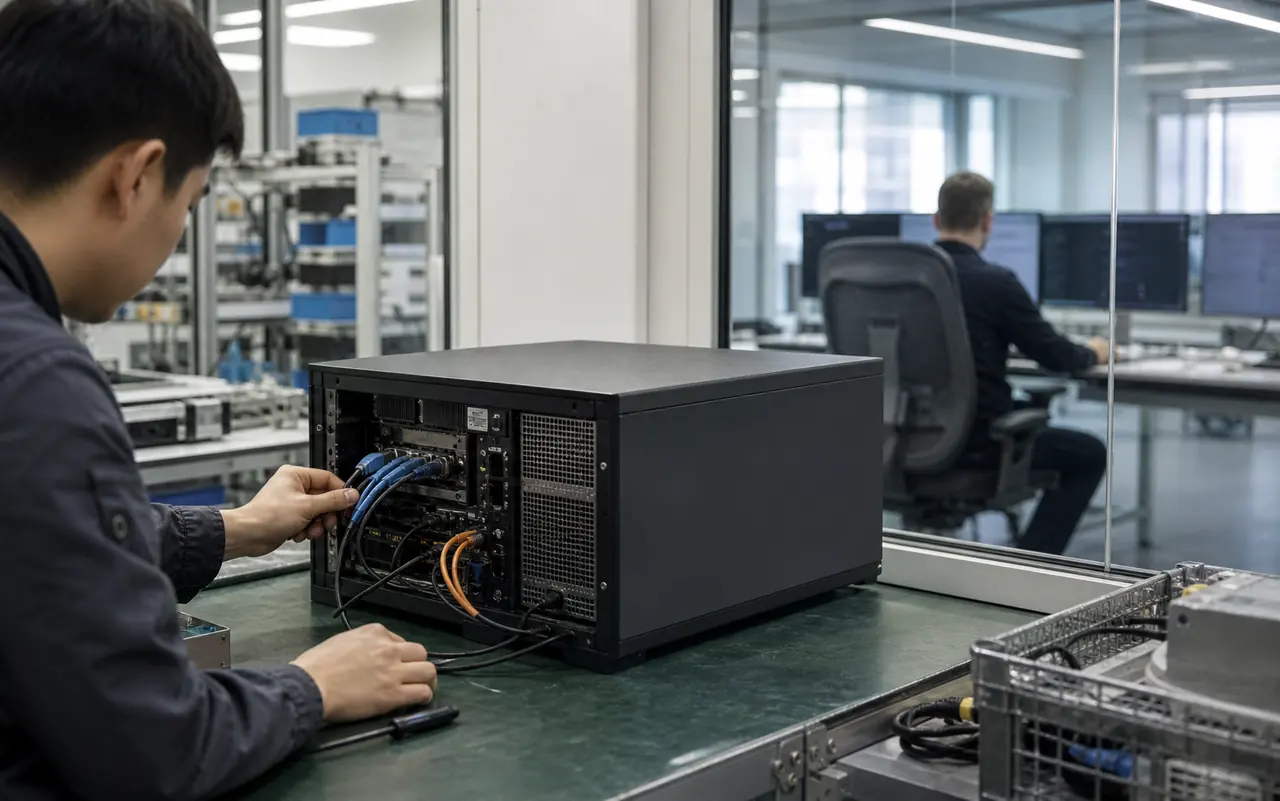
The AI Act Starts Enforcing: For Taiwanese Models, SaaS and Content Platforms Entering the EU, Who Is Provider, Who Is Deployer?
The EU AI Act has entered a new phase of enforcement and transparency obligations. The real first question for Taiwanese companies is not where the underlying model comes from, but which legal role they occupy in each product, brand and use case.
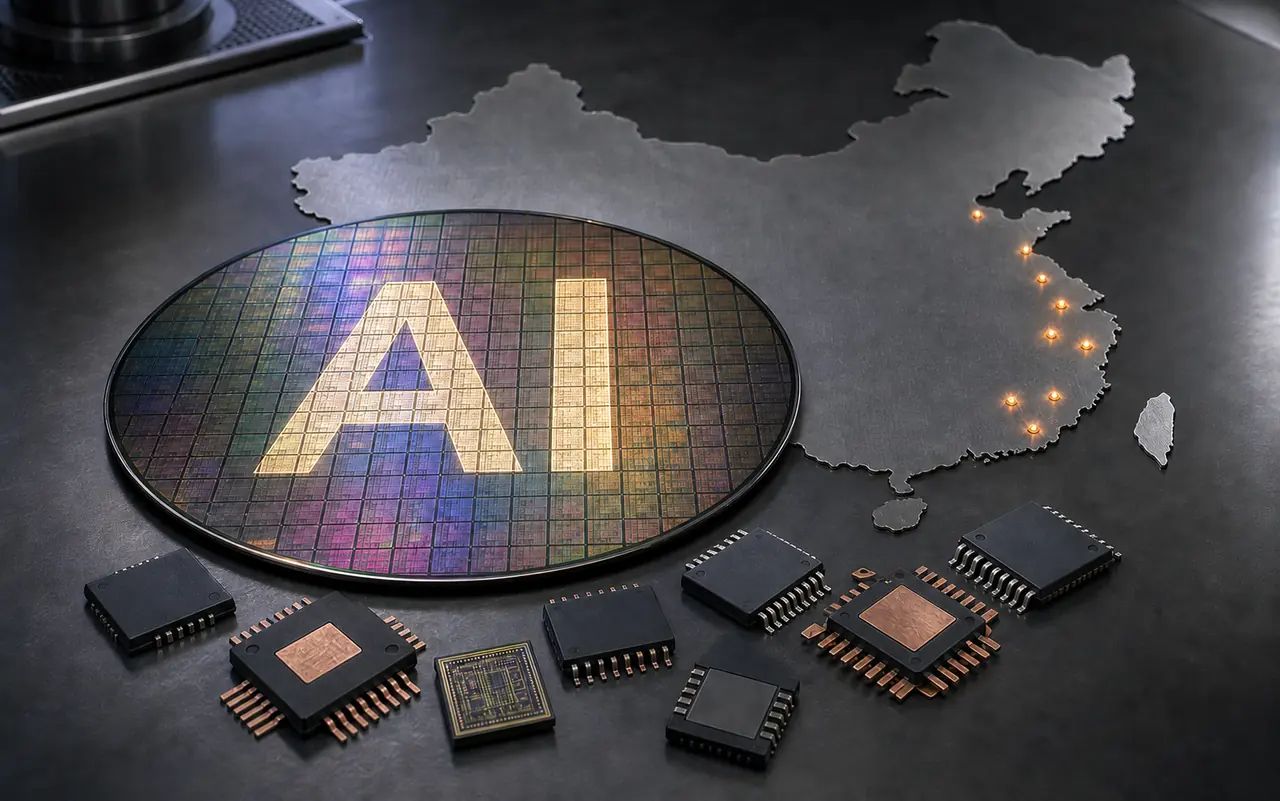
The AI Boom Reaches Mature Nodes: TSMC Revenue Hits a Record — Will Chip Price Hikes Reach Your Products?
June revenue of NT$442.68 billion and roughly NT$1.27 trillion for the second quarter — TSMC has again hit a record, driven by AI demand. At the same time, word is spreading through the industry that mature-node prices are about to be adjusted too. The real story is not that every chip is getting more expensive at once — it's that AI servers have started consuming huge volumes of power-management, control and optical-communication peripheral chips, handing pricing power back to production lines once written off as old.