
The Vanishing Seats: How Beijing Squeezes Taiwan's International Space One Venue at a Time
From a human rights summit forced to cancel in Zambia, to a passport turned away at the door in Geneva — Beijing's exclusion of Taiwan is not a single incident but a decades-long project that takes away Taiwan's seats one at a time. Taiwan is trying to trade the seats it has lost for more friends elsewhere.
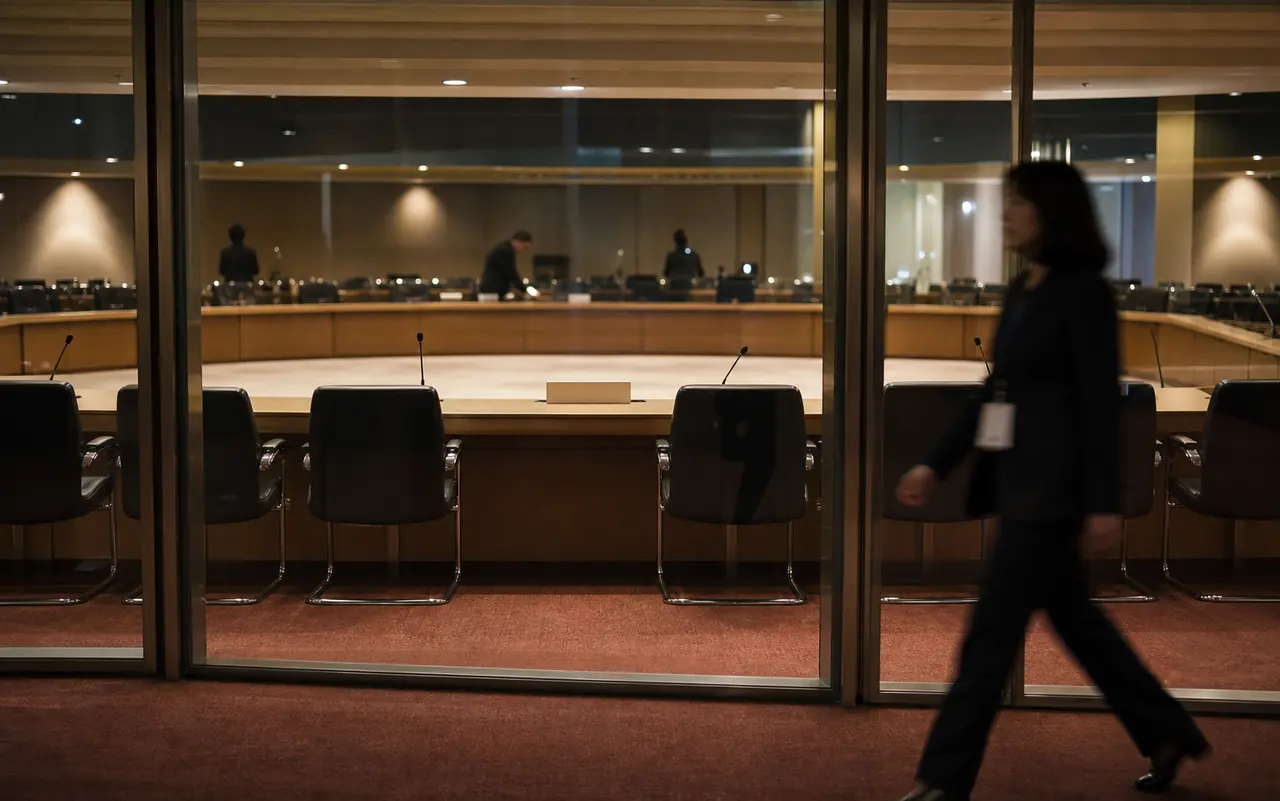
Article contents01 / 06
- Beijing's exclusion is a systematic project: it extends from intergovernmental organizations such as the WHA, ICAO, and Interpol to civil-society forums such as RightsCon, and even a public tour in Geneva has been restricted by passport.
- The same set of facts can be read two ways: one, that Taiwan is being substantively isolated, with its usable 'unofficial space' narrowing step by step; two, that the pressure has instead consolidated sympathy from like-minded countries and pro-Taiwan forces in their legislatures.
- Taiwan's countermeasures are shifting toward 'decentralization': transit diplomacy, pro-Taiwan congressional letters, digital diplomacy, and civil-society networks are converting blocked formal seats into scattered support nodes that are hard to eliminate all at once.
“The Vanishing Seats: How Beijing Squeezes Taiwan's International Space One Venue at a Time” reports that Seats Taken Away, One at a Time(2016 → 2026)。 After 2016 Taiwan lost its WHA observer invitation and ICAO guest status in succession; in 2024 it was turned away from Interpol as well, and in 2026 even the civil-society forum RightsCon was forced to cancel [1][3][4][6]。
“The Vanishing Seats: How Beijing Squeezes Taiwan's International Space One Venue at a Time” reports that Number of Diplomatic Allies (2016→2026)(12 Allies)。 Taiwan lost 10 diplomatic allies during Tsai Ing-wen's presidency; Lai Ching-te has held the line at 12 with no further losses since taking office [11]。
“The Vanishing Seats: How Beijing Squeezes Taiwan's International Space One Venue at a Time” reports that WHA's Consecutive Years Rejecting Taiwan's Participation(9th Year)。 The 2025 World Health Assembly failed for a ninth consecutive year to place Taiwan's participation on its agenda; Germany, France, Japan, and New Zealand spoke up by name in support, while the United States remained absent [3]。
The Empty Chair in Zambia
In May 2026, an international human rights summit originally scheduled to be held in Zambia was cancelled without warning just days before it was set to open.
RightsCon is the largest annual gathering in the world of digital human rights, covering topics such as internet censorship, electronic surveillance, and cyber warfare — precisely the kind of subjects authoritarian governments least want dragged into the light. The organizer, the New York-based civil society group Access Now, said Zambian officials told them the Zambian government had come under pressure from China to exclude "high-risk communities" from participating in the venue and online, with Taiwanese participants explicitly named [1].
Zambia has deep ties with China; this mineral-rich southern African country has much of its economic lifeline bound up with Chinese mining interests. When "excluding Taiwanese people" became a precondition for holding the event, Access Now chose to cancel the entire summit rather than turn Taiwanese participants away.
Taiwan's Minister of Digital Affairs, Lin Yi-ching, said the cancellation exposed precisely Beijing's anxiety about "the ideas of freedom, democracy, and the rule of law that Taiwan and RightsCon represent" [1][2].
This is not just news of a single conference being cancelled. It reveals a project that has been running for decades and keeps tightening its grip: how Beijing takes away Taiwan's international seats, one venue and one notch at a time.
From Formal Halls to Civil Forums: The Depth of Exclusion
Discussions of Taiwan's international isolation have traditionally focused on intergovernmental organizations within the UN system. That is where exclusion is at its most naked, and most institutionalized.
The World Health Organization (WHO) is the clearest example. From 2009 to 2016, Taiwan attended the World Health Assembly (WHA) in a limited observer capacity under the name "Chinese Taipei." But after the Democratic Progressive Party government took office in 2016 and cross-strait relations cooled, that door was closed. In May 2025, the WHA failed for a ninth consecutive year to place Taiwan's participation on its agenda; with China and Pakistan leading the opposition, the proposal was blocked once again [3]. This vote did not get Taiwan onto the agenda as it had hoped, but countries such as Germany, France, Japan, and New Zealand took the unusual step of speaking up by name in support of Taiwan's participation — only the United States still left its own seat empty. Also speaking up for Taiwan were Belize, Saint Vincent and the Grenadines, and the small handful of remaining diplomatic allies [3].
The International Civil Aviation Organization (ICAO) is another notch. Taiwan is the world's 11th-largest aviation market, and the Taipei Flight Information Region (Taipei FIR) handled nearly 1.64 million flights in 2024 [4][5]. Yet after 2016, even Taiwan's opportunity to attend the ICAO Assembly as a guest was revoked. At the 42nd ICAO Assembly, held in Montreal in September 2025, Taiwan was once again turned away at the door — even as Beijing's unilateral activation of the third extension of the M503 air route directly affects the safety of airspace over the Taiwan Strait, Taiwan is at times unable to obtain even ICAO's technical information [4][5].
A flight information region excluded from the global aviation-safety coordination mechanism manages one of East Asia's busiest airspaces. This is not only an injustice to Taiwan — it is a gap in global aviation safety [5].
Interpol is the third notch. Taiwan was a formal Interpol member under the name of its National Police Agency starting in 1961, but was expelled in 1984 when the People's Republic of China joined. For more than three decades since, Beijing has continued to invoke the "one-China principle" and various political justifications to ensure Taiwan cannot obtain even observer status — at the 92nd Interpol General Assembly, held in Glasgow in November 2024, Taiwan was blocked once again [6]. The result is that Taiwan is frequently shut out of the shared network for real-time intelligence on cross-border fraud, human trafficking, and terrorism. The U.S. Congress responded by introducing the Taiwan Interpol Endorsement and Inclusion Act (H.R. 6262) in the 119th Congress, requiring the executive branch to help Taiwan pursue observer status [7].
What truly warrants alarm is that the "depth" of this exclusion is now extending into civil society. Civil-society forums, academic conferences, and NGO venues — once seen as relatively free spaces not held hostage by one-China politics — have now also become targets for pressure. What makes the RightsCon Zambia incident so glaring is precisely that it was not an intergovernmental organization within the UN system, but a civic space organized by a civil-society group and centered on technology and human rights. As these "unofficial participation" spaces also start being taken away one at a time, the last few informal channels Taiwan relies on to sustain its international connections are being systematically squeezed.
One Passport, One Threshold
Sometimes exclusion doesn't need a vote — just a guard at the door.
The United Nations Office at Geneva has, on at least two documented occasions over the past decade or so, turned away Taiwanese holders of Republic of China passports: in 2015, a Taiwanese traveler who simply wanted to join the daily public tour was turned back by UN staff on the grounds that "Taiwan is part of China" [15]; in 2017, a Taiwanese professor bringing students to sit in on a public session of the Human Rights Council was likewise turned back on the grounds that their documents were not recognized. More concretely, during the 2024 WHA, reporters from the Central News Agency were denied press credentials by the United Nations on the grounds that they held Taiwanese passports — UN officials even demanded that the Taiwanese reporters produce a "Chinese passport" in order to gain access [9].
The legal basis for this practice is Beijing's expansive interpretation of UN General Assembly Resolution 2758. The 1971 Resolution 2758 addressed only the question of who exercises "China's representation at the United Nations"; the text of the resolution never mentions Taiwan, nor does it determine that Taiwan is part of the People's Republic of China [8]. But for decades Beijing has repeatedly bundled this resolution together with the "one-China principle," shaping it into a threshold that appears to carry the force of international law, and on that basis demands that countries and international organizations shut Taiwanese people out [8].
The German Marshall Fund (GMF) points out that Beijing's "distortion" of Resolution 2758, not the resolution itself, is the real tool restricting Taiwan's access to the UN system — it substitutes a settled verdict on Taiwan's sovereign status for what was originally a procedural question of representation [8].
The human rights organization ARTICLE 19 defines this kind of pressure — extending beyond China's own borders and targeting Taiwanese people and Taiwan-related issues — as a form of "transnational repression": ranging from pressuring third countries to cancel visas and deny entry, to disrupting Taiwanese participation in international conferences [14]. The RightsCon Zambia incident is the newest, and most typical, notch on this spectrum.
Two Readings: Substantive Isolation, or a Reverse Consolidation?
The same set of facts can support two conclusions pointing in opposite directions. This is precisely where this topic most demands intellectual honesty.
The first reading: Taiwan is being substantively isolated, and its usable space is narrowing notch by notch.
Looking at the cold hard numbers of seats, the trend is indeed unfavorable. Since Xi Jinping took power, the number of countries recognizing Taipei has nearly halved [11]. Over Tsai Ing-wen's eight years in office, Taiwan lost 10 diplomatic allies, five of them in Latin America and three in the Pacific [11]. By the time Lai Ching-te took office in 2024, only 12 diplomatic allies remained [11]. The doors of intergovernmental organizations have closed one after another, and now even civil forums, academic venues, and even a public tour in Geneva have thresholds erected against them. Extrapolating this line, Taiwan's "unofficial participation" space could be squeezed down to little more than a symbolic crack — this is an inference, medium confidence: the trend is clear, but whether the marginal returns on Beijing's pressure are diminishing remains an open variable.
The second reading: the pressure has instead consolidated sympathy and support.
But seats are not the only scoreboard. The outcome of the RightsCon episode was that the organizer chose to cancel the entire summit rather than go along with excluding Taiwan — that in itself is a form of solidarity. Taiwan's exclusion from ICAO and Interpol was met with bipartisan bills and named co-sponsorships in the U.S. Congress [7]; the WHA's year-after-year blockade has turned Taiwan's very absence into a moral case study repeatedly invoked by the democratic camp. When Taiwan suffered its worst earthquake in 25 years in 2024, the Presidential Office thanked 47 diplomatic allies and like-minded countries for their concern [16]. As Taiwan's voice is suppressed in formal diplomatic settings, overseas Taiwanese communities and civil-society networks have instead opened up new public space outside the system [10]. Read this way, every seat Beijing takes away also manufactures a fresh batch of sympathizers for Taiwan — this, too, is an inference, medium confidence.
Pragmatically speaking, both readings are correct — they are simply scoring different units. On formal seats, Taiwan is losing ground; on international sympathy and political mobilization among like-minded countries, Taiwan is gaining ground. The real question is when, and in what form, these two curves intersect — that is what will decide whether Taiwan ultimately lands on the side of "being isolated" or "being championed."
There is a risk here that is easy to overlook: sympathy is not the same as action. The concern shown by 47 countries after the earthquake, a single congressional letter, and an organizer's solidarity in canceling a summit are all well-meaning gestures; but whether those gestures can be converted into substantive participation — getting Taiwan back into the room, sharing intelligence, signing agreements — is another matter entirely. Beijing understands this very well — it is willing to bear the moral label of "oppressor" in exchange for the concrete benefit of Taiwan's continued institutional absence. Beijing's bet is this: the world's sympathy for Taiwan will, in the end, never outweigh countries' reluctance to offend China. The success or failure of Taiwan's countermeasures hinges on whether it can close this "gap between sympathy and action," bit by bit.
Taiwan's Countermeasures: Trading One Seat for Many Friends
Facing a "centralized" blockade, the logic of Taiwan's countermeasures is shifting toward "decentralization" — no longer fixating on reclaiming any single formal seat, but instead spreading support across many nodes that are hard to eliminate all at once.
Transit diplomacy is a traditional but still critical move. Taiwan's president transiting through the United States en route to diplomatic allies has long been a low-key but stable element of Washington's Taiwan policy, and is encouraged under the Taiwan Travel Act [12]. In July 2025, the Trump administration reportedly refused, at one point, to allow President Lai Ching-te to transit through New York, citing concerns about affecting U.S.-China trade negotiations [12]. The move drew immediate pushback in Congress: House Foreign Affairs Committee ranking member Meeks, Select Committee on China ranking member Krishnamoorthi, and Congressional Taiwan Caucus co-chair Stanton jointly wrote to Secretary of State Rubio, calling it "a significant departure from precedent" that would send Beijing the dangerous signal that "we are willing to make concessions on core strategic interests" [12]. The episode itself demonstrated how a Taiwan-related issue can automatically trigger a set of pro-Taiwan reactions within the U.S. political system.
Pro-Taiwan networks in Congress are the second layer. From ICAO to Interpol, the U.S. Congress has in recent years densely endorsed Taiwan's international participation through resolutions, bills, and open letters [7][4]. These moves may not immediately get Taiwan back into the room, but they institutionalize "Taiwan's international space" as one of the few issues on which Washington's two parties still hold consensus, forming a political inertia that is hard for Beijing to dismantle piece by piece.
Digital diplomacy is the layer most distinctively Taiwan's own. The vTaiwan deliberative-democracy platform, the Polis collaboration tool, and the Presidential Hackathon, all championed by former Digital Minister Audrey Tang [13] — the hackathon's international track alone drew 34 countries and 147 teams in 2023 [17] — have become one of the "soft connections" that Taiwan exports. Audrey Tang's line, "no democracy is an island, and neither is Taiwan," captures the core of this strategy: when formal seats are blocked, use open, transparent, civic-collaboration technology networks to bypass the gatekeepers and connect directly with the civil societies of other countries [13]. This kind of connection is not entered in any membership registry, which makes it that much harder for a single sheet of one-China principle to erase.
Beijing's blockade is "centralized" — capture a single gatekeeper (a national government, an organization's secretariat) and an entire door swings shut. Taiwan's countermeasures are deliberately "decentralized" — spreading the bet across legislatures, civil groups, academic communities, and technology networks, so that no single node gives an adversary the ability to disable everything at once.
Taiwan's Three Perspectives: Not Just a Matter for the Foreign Ministry
This contest over seats is often treated as a purely diplomatic matter. But its ripples have long since spilled over the walls of government buildings.
The State's Perspective. For Taipei, the key is to run "defending formal diplomatic ties" and "advancing informal connections" as two separate lines of effort. The Lai government has held the line at 12 diplomatic allies with no further losses since taking office, proving the bleeding can be stopped [11]; but the real growth point lies outside the formal system — pro-Taiwan networks in legislatures, civil society, and digital networks. What the state should invest in is connecting these scattered nodes to one another so they reinforce each other, rather than betting all of its limited resources on intergovernmental organizations that are hard to move. This is a judgment, not a settled conclusion: the resilience of a decentralized strategy has not yet been tested by a genuinely systematic crackdown.
The Industry Intermediary Perspective. Industries that rely heavily on international standards and intelligence-sharing — aviation, health, fintech — bear the most direct cost of exclusion. Taiwan being shut out of ICAO means it is absent from the table where global aviation-safety coordination happens, forcing the relevant operators, airlines, and the trade associations behind them to close that information gap on their own, through bilateral channels, foreign partners, or civil international organizations [4][5]. These industry intermediary organizations — trade associations, standards bodies, industry alliances — are gradually becoming key vehicles for Taiwan's unofficial participation, which also makes them more likely targets for Beijing's next wave of pressure.
The SME and Professional Community Perspective. This layer is the easiest to overlook, yet potentially the most personal. Taiwan's SMEs, academic researchers, and professionals are participating ever more frequently in international trade shows, academic conferences, open-source communities, and transnational NGO forums. The RightsCon incident reminds us: once civil-society venues are also brought within the scope of pressure, a Taiwanese engineer, a researcher, or a startup's international participation can be disqualified without any warning. This is no longer distant diplomatic news, but an operational variable that needs to be built into risk assessment — when submitting to an international conference, applying to hold an overseas event, or joining a cross-border collaboration, the host location's relationship with China and how registration forms define "nationality/region" can both become invisible thresholds. For these individuals and small teams, the most practical preparation is to identify alternative channels in advance and build direct connections with like-minded peers overseas, rather than treating any single international venue as the only way out to sea.
What Beijing takes away are seats, but what it truly wants to take away are the invisible threads connecting Taiwan to the world. Whether this project ultimately succeeds will not be decided by the roll call of any single conference, but by whether Taiwan can open more windows for itself outside every door that gets closed.
Sources
- ABC News / AP — Rights summit in Zambia is canceled after Chinese pressure to exclude Taiwanese activists
- Formosan Association for Public Affairs — RightsCon 2026 Canceled After Chinese Pressure to Exclude Taiwanese Activists
- U.S. News / AP — World Health Organization Countries Don't Invite Taiwan to Annual Assembly
- Focus Taiwan — U.S. lawmakers call for Taiwan's participation in ICAO assembly
- Asia Times — Taiwan's ICAO exclusion a danger to global aviation
- ASPI The Strategist — Taiwan's exclusion from Interpol is the world's loss
- Congress.gov — H.R.6262 Taiwan Interpol Endorsement and Inclusion Act (119th Congress)
- German Marshall Fund — The Distortion of UN Resolution 2758 and Limits on Taiwan's Access to the United Nations
- Committee to Protect Journalists — UN asks Taiwanese journalists for Chinese passports to attend WHO assembly
- The Conversation — Democracy from the front lines: How Taiwan and the Taiwanese diaspora combat global isolation
- The Diplomat — Can Lai's Taiwan Hold on to Its Diplomatic Allies?
- House Foreign Affairs Committee Democrats — Democratic Lawmakers Urge Secretary Rubio to Approve Transit by Taiwan President Lai Ching-te
- TIME — Inside Audrey Tang's Plan to Align Technology with Democracy
- ARTICLE 19 — China: Escalation of transnational repression against Taiwan must end
- Global Voices — UN Does Not Recognize Taiwanese Passport, Denies Entrance to Geneva Office
- Office of the President, Republic of China (Taiwan) — Presidential Office thanks international community
- Ministry of Digital Affairs (MODA) — 2023 Presidential Hackathon draws 34 countries, 147 teams
The Twelve Remaining Seats: Diplomatic Dominoes and the Vatican's One-of-a-Kind Line of Defense
The Ministry of Foreign Affairs' latest statistics show Taiwan has twelve diplomatic allies, with the Holy See its only partner in Europe. The Holy See maintains a provisional agreement with China on the appointment of bishops, but that agreement has not changed Taiwan-Vatican diplomatic relations; the two relationships must be understood as strictly separate.
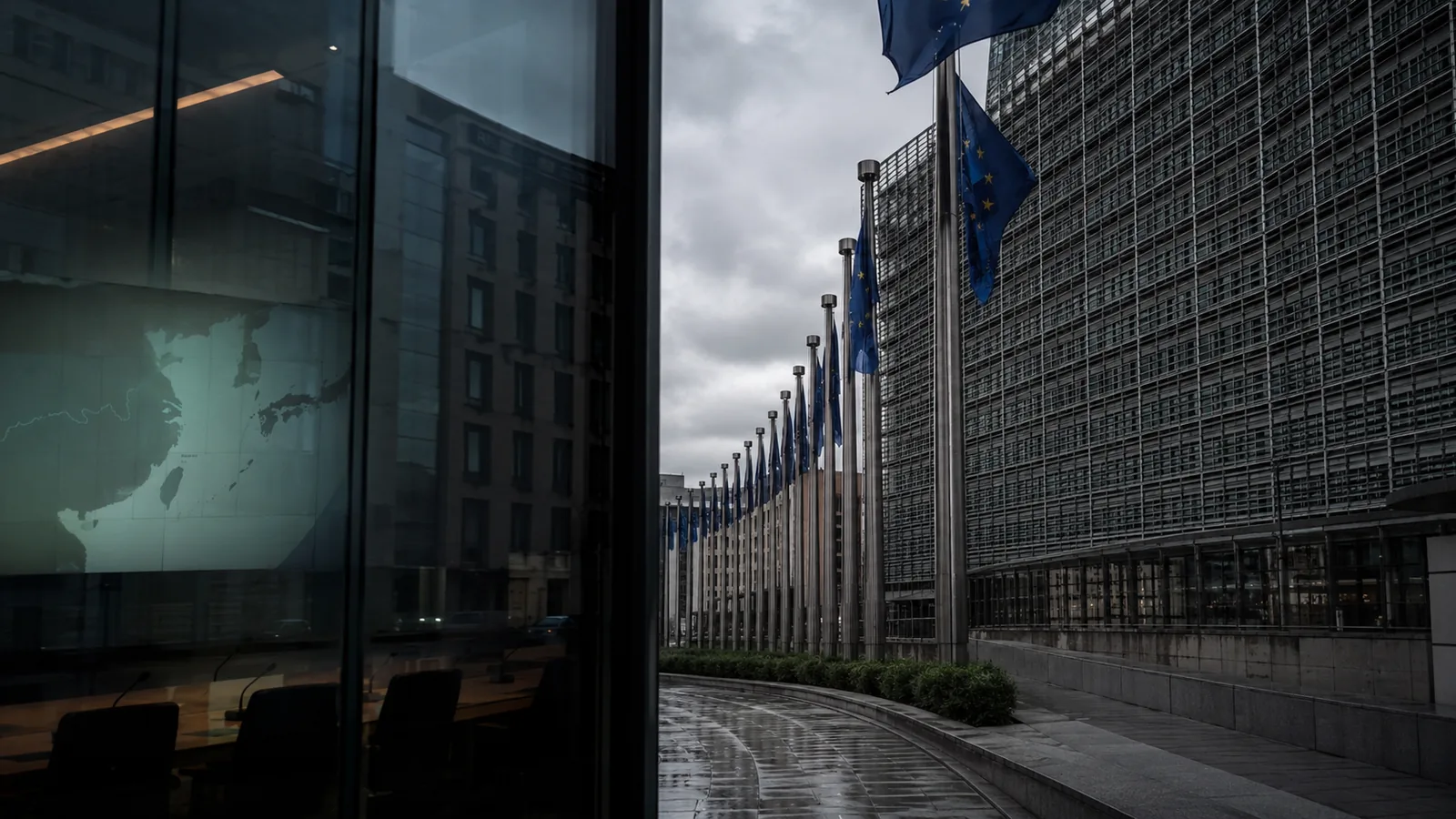
The EU's Taiwan Pivot: From Polite Silence to Strategic Concern, Brussels' New Calculus on the Taiwan Strait
The European Parliament has sharpened its language on Taiwan, the Taiwan-EU Trade and Investment Dialogue has become institutionalized, and the Netherlands has widened export-licensing requirements for certain semiconductor equipment — but none of this amounts to a security commitment, nor a blanket exemption for Taiwan. The EU's Taiwan policy is growing more concerned, but it has not crossed the line set by the One-China policy and the limits of member-state competence.