
A Second Sacred Mountain? Taiwan Biotech's Opportunity and Its Ceiling
Beyond semiconductors, Taiwan wants to build another sacred mountain, and biotech is the popular answer. But open the ledger: its output value trails semiconductors by 7 to 13 times, biotech stocks are still stuck in winter, and National Health Insurance keeps drug prices among the lowest in the world. This is not a ready-made mountain — it's a grove of trees just planted. Worth planting, but don't hype it into a sacred mountain.
Article contents01 / 07
- Scale is a hard fact: in 2024, semiconductor output value was NT$5.3 trillion, versus biotech's broad-definition NT$0.78 trillion and just NT$0.41 trillion for its three core fields — a gap of 7 to 13 times. "A second sacred mountain" is, for now, a vision, not a reality.
- Capital markets are in winter: biotech's market cap of NT$1.6 trillion against revenue of NT$0.78 trillion leaves a P/S ratio of just 2.07x, and nearly 60 listed and OTC biotech companies have net worth below par value; even the Minister of Economic Affairs has flagged the wide gap between output value and market value.
- The opportunity is real but needs prioritizing: CDMO (geopolitical de-risking dividend plus cash flow, with Bora as the bellwether) is closest to being scalable, with the cross-domain "electronics plus biomedicine" path next; original new-drug development has the highest potential return but is the slowest and riskiest. There are three layers to the ceiling: scale, National Health Insurance drug pricing, and international clinical capability.
“A Second Sacred Mountain? Taiwan Biotech's Opportunity and Its Ceiling” reports that Semiconductors vs. Biotech: A Gap of an Order of Magnitude(NT$5.3tn)。 2024 output-value comparison, in NT$ trillion [1][2]。
“A Second Sacred Mountain? Taiwan Biotech's Opportunity and Its Ceiling” reports that Biotech's P/S Ratio Down to Just 2.07x。 Sharply down from near 9x in 2018 [4]。
“A Second Sacred Mountain? Taiwan Biotech's Opportunity and Its Ceiling” reports that 64% of Essential Medicines Rely on Imports。 Domestic API usage rate is only 16.8% [9][16]。
“A Second Sacred Mountain? Taiwan Biotech's Opportunity and Its Ceiling” reports that Bora Pharmaceuticals' 2024 Revenue Hits a Record High(NT$19.25bn)。 CDMO brought in NT$7 billion in a year, 38% of revenue [5]。
“A Second Sacred Mountain? Taiwan Biotech's Opportunity and Its Ceiling” reports that PharmaEssentia's Ropeg for ET Enters Substantive FDA Review(Aug 30)。 August 30, 2026 is the target review date; if cleared, it would be the first new ET drug in nearly 30 years (estimated) [8]。
Every so often, Taiwan asks itself the same question all over again: besides semiconductors, what else do we have? TSMC shines so brightly that it makes people anxious — a single sacred mountain propping up a nation's exports, tax revenue and international standing is certainly something to be proud of, but it also makes for restless nights. So "a second sacred mountain" has become an incantation repeatedly summoned by politicians and industry alike, and in recent years, the answer named most often is biotech and medicine.
Precision medicine, CDMO (contract development and manufacturing organizations), smart medical devices, original new drugs — each one has been crowned with the hope of being "the next sacred mountain." The Lai Ching-te administration's "Healthy Taiwan" initiative has even explicitly placed biomedicine alongside semiconductors and AI as a national strategy [13][14]. The vision is beautiful, but from Taiwan's vantage point, the question we should be asking is not "can we say it," but "how solid is the foundation, and where is the ceiling." This article aims to do something plain and simple: open up the ledger, and count honestly.
Start With Scale: The Gap Isn't Small
Before talking about a sacred mountain, talk about size. In 2024, Taiwan's semiconductor industry (IC design, manufacturing and packaging/testing combined) crossed the NT$5 trillion mark in output value for the first time, reaching NT$5.3151 trillion, up 22.4% year on year, with 2025 estimated to reach as much as NT$6.18 trillion [1]. How tall is this mountain? This single industry alone accounts for roughly one-fifth of Taiwan's GDP.
Now look at biotech. In 2024, the revenue of Taiwan's entire biotech industry — and this is already the "broad definition," lumping together pharmaceuticals, medical devices, applied biotech, regenerative and digital medicine, and health and wellness — came to about NT$775.4 billion, up just 2.32% year on year [2]. If you count only the three core fields of "pharmaceuticals, medical devices, and applied biotech," revenue in 2023 — the most recent year with core-field statistics available — was about NT$413.3 billion, across 2,276 companies employing roughly 103,000 people [3].
“A Second Sacred Mountain? Taiwan Biotech's Opportunity and Its Ceiling” reports that Semiconductors vs. Biotech: A Gap of an Order of Magnitude(NT$5.3tn)。 2024 output-value comparison, in NT$ trillion [1][2]。
Put the numbers side by side, and the gap is obvious at a glance: semiconductors' NT$5.3 trillion against biotech's broad-definition NT$0.78 trillion is a gap of about 6.9 times; against the core three fields' NT$0.41 trillion, it's about 12.9 times. This is not a gap that is "about to close" — it is an entire order of magnitude. "A second sacred mountain" is, at this moment, a policy vision, not an already-grown fact — and that is a hard truth that needs to be stated up front, or every discussion that follows will be built on inflated expectations.
This does not mean biotech isn't worth pursuing. A nation's economy shouldn't rest its bets on a single mountain — however strong semiconductors remain, a second and third pillar are still needed to spread the risk. The only issue is this: don't use a word like "sacred mountain," which misleads resource allocation and public expectations, to dress up a grove of trees that has only just been planted.
Capital Markets Are in Winter
If biotech really were a sacred mountain on the rise, the capital markets should be the first to smell it coming. But the reality is the opposite.
The combined market capitalization of Taiwan's listed, OTC and emerging-market biotech and medical companies has surpassed NT$1.6 trillion [2]. That doesn't look small at first glance, but put it next to revenue and the truth comes out: market cap of NT$1.6 trillion against revenue of NT$0.78 trillion leaves biotech's P/S ratio (market cap divided by revenue) at just 2.07 times in 2024, barely keeping pace with the manufacturing-sector average — and back in 2018, that same figure was still close to 9 times [4]. A valuation cut in half, and then in half again, over six years — that is the body temperature of a "winter," not of a "sacred mountain."
“A Second Sacred Mountain? Taiwan Biotech's Opportunity and Its Ceiling” reports that Biotech's P/S Ratio Down to Just 2.07x。 Sharply down from near 9x in 2018 [4]。
What's even more glaring is the underlying health of the sector. As of August 2025, among listed, OTC and emerging-market biotech and medical companies, roughly 60 had net worth below par value, a share of 24.34% [11]. One company in every four trading below face value — an awkward signal for an industry that people are hoping will become a national sacred mountain. Even Minister of Economic Affairs Kung Ming-hsin has said plainly that, set against a market cap of NT$1.6 trillion, biotech's revenue shows a clear gap between output value and market value, and that companies should actively expand their scale of operations and grow real output value [2].
When even the regulator is warning that "market value can't support the output value it should," that is precisely the point: Taiwan biotech's problem is not that the market refuses to pay a premium for the dream — it's that the dream hasn't yet been converted into profit and loss. Semiconductors' market capitalization was built up out of real, hard cash profits; if biotech wants to be a sacred mountain, it has to make up this lesson first.
CDMO: The Path Closest to "Scalable"
Break biotech apart, and not every sub-sector has the same underlying strength. The one most favored, and closest to a track Taiwan already knows well, is CDMO — the biotech version of "contract manufacturing."
The logic here suits Taiwan's appetite well. The global CDMO market was worth about US$120 billion in 2018, has already reached about US$190 billion in 2024, and is estimated to reach as much as US$290 billion by 2030 [15]. Even more critical is the geopolitical dividend: the US BIOSECURE Act would ban federal funding from flowing to specific Chinese CXO companies, pushing multinational drugmakers to "de-risk from China" and look for other manufacturing partners [6]. Taiwan, with its PIC/S GMP alignment with European and American regulations and high political trust, is seen as one of the top choices for "friend-shored" outsourcing.
Taiwan already has a compelling model. Bora Pharmaceuticals posted 2024 revenue of NT$19.25 billion, up 35.5% year on year, and has earned more than three times its paid-in capital in profit for two consecutive years; of that, CDMO business contributed about NT$7 billion, or 38% of revenue, and the company completed its core North American footprint (sterile injectable plants in Minnesota and Maryland), while also acquiring a rare-disease drug developer in New Jersey [5]. Tanvex, Mycenax, TaiBaCo and others each hold their own contract-manufacturing niches in antibodies and cell therapy.
“A Second Sacred Mountain? Taiwan Biotech's Opportunity and Its Ceiling” reports that Bora Pharmaceuticals' 2024 Revenue Hits a Record High(NT$19.25bn)。 CDMO brought in NT$7 billion in a year, 38% of revenue [5]。
But don't celebrate too soon. China's WuXi group, among the world's leading CDMO players, earns roughly US$3.7 billion from its US business alone — about 65% of its total revenue [6] — a scale still several times larger than Taiwan's players. Bora's CDMO business, at roughly NT$7 billion a year (a bit over US$200 million), is a chaser worth being proud of, not the leader of the pack. And the other side of this dividend is that it partly depends on the US-China rivalry continuing: if the legislation changes, or drugmakers conclude after all that they still can't do without China's cost structure and capacity, order transfers may not materialize as expected. This is an opportunity, but not a guarantee — and it is exactly the point where the East and West red teams clashed in our panel discussion: is de-risking from China a structural long-term trend, or a short-term dividend hanging on a single piece of legislation? The answer lands at "medium confidence."
The National Health Insurance Dilemma: The Cost of Suppressed Drug Prices
If scale is the external ceiling, then National Health Insurance drug pricing is an internal wall Taiwan has built for itself.
Taiwan's National Health Insurance is a world-class achievement, but it has long kept drug prices at a level low by global standards. The cost is now surfacing: over the past decade, 13 originator drugs have withdrawn from the Taiwanese market one after another [7]. Supply resilience is also fragile — the Ministry of Health and Welfare has admitted that the domestic usage rate for active pharmaceutical ingredients is only 16.8%, and about 64% of essential medicines rely on imports [9][16]; in 2023, Taiwan's pharmaceutical trade deficit even reached roughly US$4.8 billion [17].
“A Second Sacred Mountain? Taiwan Biotech's Opportunity and Its Ceiling” reports that 64% of Essential Medicines Rely on Imports。 Domestic API usage rate is only 16.8% [9][16]。
This is a real dilemma with no elegant solution. Keeping drug prices low lets the public's medical burden stay manageable, so everyone can afford to see a doctor; but that same move also thins out domestic drugmakers' profits, drives away originator drugs, and weakens the incentive for industrial expansion and supply self-sufficiency. A domestic market that can't even fatten up its own drugmakers, let alone keep originator drugs around, is missing a foundational piece from the start if it wants to serve as the backing for a biotech sacred mountain.
The government has not been idle. The Executive Yuan has approved a "National Pharmaceutical Resilience Program," investing NT$24 billion over four years, with the goal of achieving domestic production for at least 50 critical drugs and establishing a national-level drug stockpile center [9]. The revised Biotech and Pharmaceutical Industry Development Act also brings regenerative medicine, precision medicine, digital medicine and CDMO all under its incentives, with R&D spending eligible for tax credits of up to 25% [10]. The direction is right, but this is an infrastructure-repair project, not a magic spell that builds a mountain overnight — its effectiveness will have to be judged by the numbers several years from now.
International Clinical Trials and the FDA: Isolated Breakthroughs, Not Yet a System
Talking about a sacred mountain cannot avoid the hardest wall of all: getting an original new drug onto the international stage and past the FDA.
This is a longstanding consensus across the global new-drug development industry: by nature it is "high-risk, high-investment, low success-rate," and success rates in recent years have not visibly improved despite technological advances like gene editing and cell therapy (a broad industry observation, not a single study's data). But Taiwan has not turned in a blank paper. PharmaEssentia's drug Ropeg has already been approved in nearly 50 countries worldwide for polycythemia vera; at the end of 2025, its new indication for essential thrombocythemia (ET) formally entered substantive FDA review, with a target review date of August 30, 2026; if it clears that review, it would be the first new drug approved by the FDA for ET in nearly 30 years — since 1997 (an estimate based on past approval records) [8].
“A Second Sacred Mountain? Taiwan Biotech's Opportunity and Its Ceiling” reports that PharmaEssentia's Ropeg for ET Enters Substantive FDA Review(Aug 30)。 August 30, 2026 is the target review date; if cleared, it would be the first new ET drug in nearly 30 years (estimated) [8]。
This is a remarkable achievement, proof that Taiwan "can" produce internationally competitive new drugs. But to be honest about it: this is an isolated breakthrough, not a systemic capability. One or two star drugs cannot hold up an entire sacred mountain — semiconductors' irreplaceability was built out of decades of depth, an entire supply chain, and thousands of companies; biotech, for now, is still just a few unusually tall trees, and the forest has not yet formed.
Electronics Plus Biomedicine: Taiwan's Most Likely Differentiator
So where does Taiwan's real winning chance lie? The answer most people favor is stacking two strengths together — "electronics plus biomedicine."
Taiwan has some of the world's strongest ICT hardware capabilities and AI momentum. Electronics giants like Foxconn (its "M" business group), Quanta (BU12), Wistron and Inventec have all moved into medical AI and smart medical devices in recent years [12]; at COMPUTEX 2026, these companies pushed the "physical AI" front line directly into hospitals and homes [12]. The Ministry of Economic Affairs' medical-device strategy of "leading with software, carrying the hardware" and prioritizing home-based care [2] is precisely an attempt to use Taiwan's strongest software-hardware integration to carve out a niche that others find hard to replicate.
The appeal of this path is that it doesn't require competing with the global pharma giants in the money-burning marathon of new-drug development — instead, it plays to what Taiwan does best, "integration and manufacturing." But it has its own ceiling too: the scale of medical devices and digital medicine remains small, and it gets stuck on clinical validation and regulatory regimes in different countries (FDA, CE, TFDA). Transplanting semiconductors' success directly onto biomedicine will hit a wall — biomedicine's bottleneck isn't process yield, it's human clinical trials and regulatory review. This is the right path, but it is not a fast one.
It's worth noting that "electronics plus biomedicine" is not an idea unique to Taiwan either. America's Apple and Nvidia, and South Korea's Samsung, are all using their own hardware and AI strengths to push into digital health and medical imaging; if Taiwan simply carries its contract-manufacturing mindset into hospitals, it will quickly fall back into being a "three-to-four-percent margin" hardware supplier on a track the whole world can already see. What can genuinely build a moat is stacking two things unique to Taiwan on top of each other: first, the solid clinical settings of its medical centers and the massive real-world data accumulated through National Health Insurance; second, top-tier semiconductor and systems-integration capability — using the former to feed and validate AI and smart medical devices developed with the latter, producing products that "even someone with the chips still can't get this clinical data and setting." Taiwan's winning chance lies not in "being able to make the hardware," but in "binding hardware, AI and local clinical data into a system outsiders can't easily replicate" — which requires the medical community, industry and regulators all willing to work together to pave the road for data governance and clinical validation. It is hard, but it is the one wall that truly cannot be carried away.
Three Stances: Those Who Plant Trees Shouldn't Rush to Call It a Sacred Mountain
Once the ledger is closed, Taiwan's position is actually clear. Biotech is worth investing in, but "a second sacred mountain" should be downgraded to an aspiration for "a second pillar" — which is really about putting resources in the right place. This falls into three stances:
For the state, the most practical positioning is to treat biomedicine as a "resilience and hedging asset," not another single-point sacred mountain that concentrates risk. First, deal with the internal wall: find a more sustainable balance between public affordability and industry incentives on National Health Insurance drug pricing, and treat supply self-sufficiency (raw materials, key formulations) as a national-security project; only then talk about scaling up. Both the NT$24 billion drug-resilience program and the direction of the Biotech and Pharmaceutical Industry Development Act are right — the key is to tie effectiveness to measurable milestones, not to the spending itself.
For industry intermediaries (trade associations, non-profit institutes, venture capital), the task is "prioritization," not "spreading resources evenly." Put the most resources behind the two paths with the strongest footing — CDMO's geopolitical de-risking dividend, and the cross-domain integration of "electronics plus biomedicine"; for a high-risk bet like original new-drug development, invest in batches keyed to international clinical milestones, and don't let limited patient capital be diluted by spreading it evenly.
For small and mid-sized biotech and medical-device makers, the most honest thing to say is: know which layer you're standing on. Those with cash flow should dig deeper into contract manufacturing and niche medical devices, turning Taiwan's regulatory alignment and manufacturing flexibility into a moat; those betting on new drugs should set a stop-loss first, and tie their resources to the piece of know-how and international data that is most uniquely theirs and that nobody else can take away — don't bet the whole company in the middle of a winter.
This generation of Taiwanese is planting trees for the next generation. Planting trees is the right thing to do — a nation shouldn't live off a single mountain alone. But what those planting the trees most need is honesty: knowing the trees are still small, knowing which ones are growing fastest, knowing which wall has to come down first. Calling biotech "an already-secured second sacred mountain" is lying to ourselves; treating it as "a forest worth patiently planting, capable of spreading risk," is the judgment that actually serves Taiwan. A sacred mountain isn't declared into being — it grows into being. And that growth starts with admitting it isn't a sacred mountain yet.
Sources
- CNA (Central News Agency) — Minister Kung Ming-hsin: Wide Gap Between Output Value and Market Value; Biotech Revenue NT$775.4 Billion, Market Cap NT$1.6 Trillion
- CNA (Central News Agency) — National Pharmaceutical Resilience Program: NT$24 Billion Over Four Years, Targeting Domestic Production for At Least 50 Critical Drugs
- Liberty Times Net (Finance) — Biotech Act Now Covers Regenerative, Precision and Digital Medicine, Passes Third Reading in the Legislature
- Office of the President — Healthy Taiwan Promotion Committee: Calling for Taiwan's AI/High-Tech Industry and Biomedical Industry to Team Up
- CNA (Central News Agency) — BTC Preparatory Meeting: Wu Cheng-wen Proposes Tightly Integrating Semiconductors, AI and Biomedicine
- United Daily News (UDN) — National Pharmaceutical Resilience Program Press Conference: Domestic API Usage Rate Only 16.8%, 64% of Essential Medicines Import-Reliant
- Cnyes.com — Taiwan's Semiconductor Output Value Tops NT$5 Trillion for the First Time in 2024 (NT$5.3151 Trillion)
- Taipei City Department of Economic Development — Three Core Biotech Fields' Revenue at NT$413.3 Billion, 2,276 Companies, 102,000 Employees
- GBI Monthly — Taiwan Biotech's P/S Ratio Down to Just 2.07x
- GeneOnline — Bora Pharmaceuticals' 2024 Revenue NT$19.25 Billion, CDMO NT$7 Billion at 38%, North American Footprint
- TechNews — BIOSECURE, De-Risking From China, CDMO Order Transfers and Taiwan's Opportunity
- Common Health Magazine — As Drug Prices Keep Getting Cut, 13 Originator Drugs Withdraw From Taiwan
- Cnyes.com — PharmaEssentia's Ropeg for ET Indication Formally Enters Substantive FDA Review
- GBI Monthly — Biotech Winter: About 60 Listed and OTC Biotech Companies Have Net Worth Below Par Value
- GBI Monthly — COMPUTEX 2026: Inventec, Foxconn, Wistron and Quanta Push Into Physical AI Healthcare
- GeneOnline — Global CDMO Market Size: US$120 Billion in 2018 to an Estimated US$290 Billion by 2030
- Cnyes.com — Taiwan's Pharmaceutical Trade Deficit Reached Roughly US$4.8 Billion in 2023
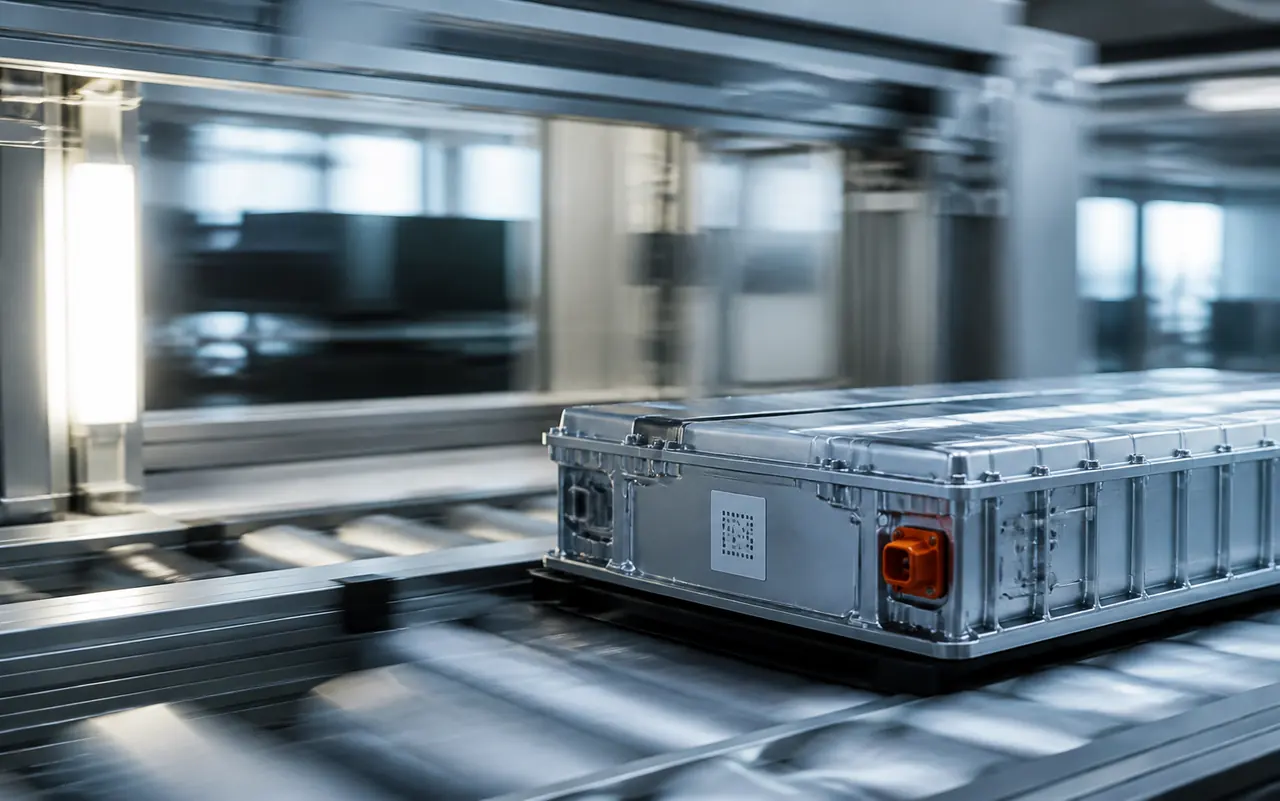
Products Need a Résumé Too: The EU's DPP Registry Is Live — Who Controls Taiwanese Suppliers' Data?
The EU's DPP Registry has gone live, but not every product becomes mandatory on the same day, and it does not mean a complete data set gets uploaded to a central EU database. What Taiwanese suppliers really need to decide now is who controls identifiers, hosting, access, updates and transfer.
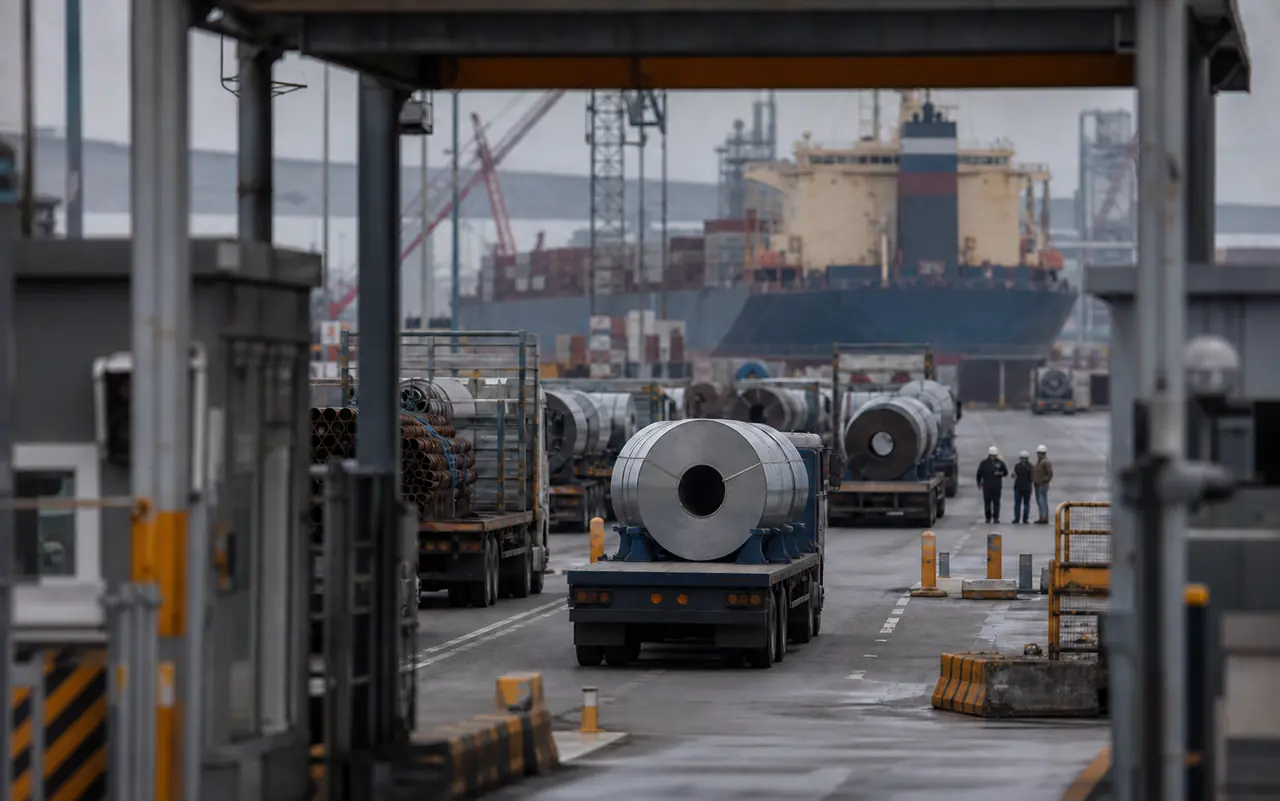
Once the Quota Runs Out, It's Fifty Percent: How the EU's New Steel Tariff Reshuffles Nine Categories of Taiwanese Exports
The EU's new steel regime does not slap 50% on every tonne of Taiwanese steel from the first shipment. Instead it places 26 product categories inside tariff-rate quotas, and only once the relevant quota is exhausted does a 50% out-of-quota surcharge apply. Taiwan holds country-specific allocations in nine categories, but what actually decides whether a given order keeps its margin is the CN classification, origin, quarter, quota order number, and the date the EU accepts the import declaration.