
How Far Is Rare Earths' Break From China? The Progress and the Gaps in Alternative Supply Chains
'The Rare-Earth Chokehold' tallied the cards Beijing was holding: about 60% of mining and 90% of refining. A year on, we check the progress on alternatives: the hardest segment, heavy rare earths, has seen its first commercial-scale production outside China, and the U.S. simply made its own defense department the buyer. At the same time, China expanded controls from 7 categories to 12, rolled out an extraterritorial rule that '0.1% Chinese content triggers restriction,' and in June blacklisted 10 U.S. firms including MP. Something is genuinely moving, but it isn't there yet — what does that mean for Taiwan, which mines no rare earths but cannot do without magnets?
Article contents01 / 09
- Alternatives are moving from 'intent' to 'execution': in May 2025 Lynas became the first company outside China to commercially produce dysprosium oxide, at its Malaysia plant (the most tightly held heavy rare earth); the U.S. Department of Defense took a $400 million equity stake in MP Materials, set a price floor, and committed to buy its future magnet output, while also signing a $500 million long-term contract with Apple — breaking the old pattern of China dumping to kill off Western mines.
- But the controls are getting harsher, and the gap is still large: China controlled 7 categories of medium and heavy rare earths in April 2025 and added 5 more in October, rolling out an extraterritorial rule under which 'products with 0.1% or more Chinese-origin content are restricted'; refining and magnets remain roughly 90% concentrated in China, and Benchmark estimates the West will still rely on China for 91% of heavy rare earths in 2030 (versus 99% in 2024).
- For Taiwan: it mines no rare earths but cannot do without magnets (motors, wind power, electronics) — the alternative supply chain taking shape is a medium-to-long-term improvement in pricing power and supply-cutoff risk; but in the short term Taiwan remains constrained by 'case-by-case review plus the 0.1% extraterritorial rule,' and China's pause on the October controls only runs to November 2026, with 10 more U.S. firms blacklisted in June — the truce can be pulled back at any time (see 'The Rare-Earth Chokehold').
“How Far Is Rare Earths' Break From China? The Progress and the Gaps in Alternative Supply Chains” reports that China Controls Roughly 90% of Global Rare-Earth Refining and Processing (About 60% of Mining)。 Refining and magnets are the hardest links to break away from [1][3]。
“How Far Is Rare Earths' Break From China? The Progress and the Gaps in Alternative Supply Chains” reports that The West's Heavy Rare Earths Are Still Estimated at 91% Reliant on China by 2030。 Versus 99% in 2024 — the pace of substitution is slow [7]。
“How Far Is Rare Earths' Break From China? The Progress and the Gaps in Alternative Supply Chains” reports that China's List of Controlled Medium and Heavy Rare Earths Expands(7 → 12 categories)。 7 categories controlled in April 2025, 5 more added in October [2][6]。
“How Far Is Rare Earths' Break From China? The Progress and the Gaps in Alternative Supply Chains” reports that Lynas Becomes the First Producer of Commercial-Scale Heavy Rare Earths Outside China, May 2025(Dysprosium Oxide)。 MP received a $400M DoD equity stake plus a $500M Apple long-term contract [3][5]。
“How Far Is Rare Earths' Break From China? The Progress and the Gaps in Alternative Supply Chains” reports that China's Pause on the October Controls Runs Only to November 2026; 10 More U.S. Firms Blacklisted in June(2026-11)。 The truce is temporary and can be pulled back at any time [3]。
“How Far Is Rare Earths' Break From China? The Progress and the Gaps in Alternative Supply Chains” reports that The Extraterritorial Rule: Magnets and Products With 0.1%+ Chinese Content Face Re-Export Restrictions。 Alternative technologies like iron-nitride magnets and magnet-free motors are emerging [6][9]。
"The Rare-Earth Chokehold" tallied just how big the hand Beijing was holding really was: roughly 60% of the world's rare-earth mining and 90% of its refining and processing sit in Beijing's hands [1][3]. When China imposed "case-by-case review" on critical minerals, that chokehold closed around the lifeline of the entire world — Taiwan included.
A year has passed, and it's time to check a key question: how far has the West actually gotten with the "alternative supply chain" it has been talking about for so long?
The answer is actually simple: something is genuinely moving, but it isn't there yet. And while the West has been loosening the chokehold, Beijing has also been pulling the rope tighter and braiding it more intricately.
“How Far Is Rare Earths' Break From China? The Progress and the Gaps in Alternative Supply Chains” reports that China Controls Roughly 90% of Global Rare-Earth Refining and Processing (About 60% of Mining)。 Refining and magnets are the hardest links to break away from [1][3]。
Why Can a Handful of "Dirt" Choke the Whole World?
Many people are puzzled: rare earths aren't actually that rare in the earth's crust, so why can China wield them as a weapon? The key isn't "who has the ore" — it's "refining."
Mining rare earths is only the first step; separating the dozen-plus elements mixed together and purifying them to an industrially usable grade is an extremely polluting, technically demanding, and thin-margin dirty job. Over the past thirty years, the West, for reasons of environmental cost and economic incentive, was happy to outsource this step to China; China quietly absorbed it and built up roughly nine-tenths of the world's refining capacity. So the truth of "rare-earth hegemony" is this: it's not that China monopolizes the resource — it's that China monopolizes the ability to turn the resource into a usable material. That also explains why substitution is so hard — you can dig ore out of the ground in Australia or the United States, but you can't build, in three to five years, an entire refining-and-magnet industry able to rival thirty years of Chinese accumulation.
The Progress Is Real: Two Breakthroughs
For the past decade, "de-China rare earths" was almost a joke — every time the West tried to mine its own, China would dump ore at low prices and drive Western mines out of business. In 2026, this deadlock showed its first real crack, thanks to two breakthroughs.
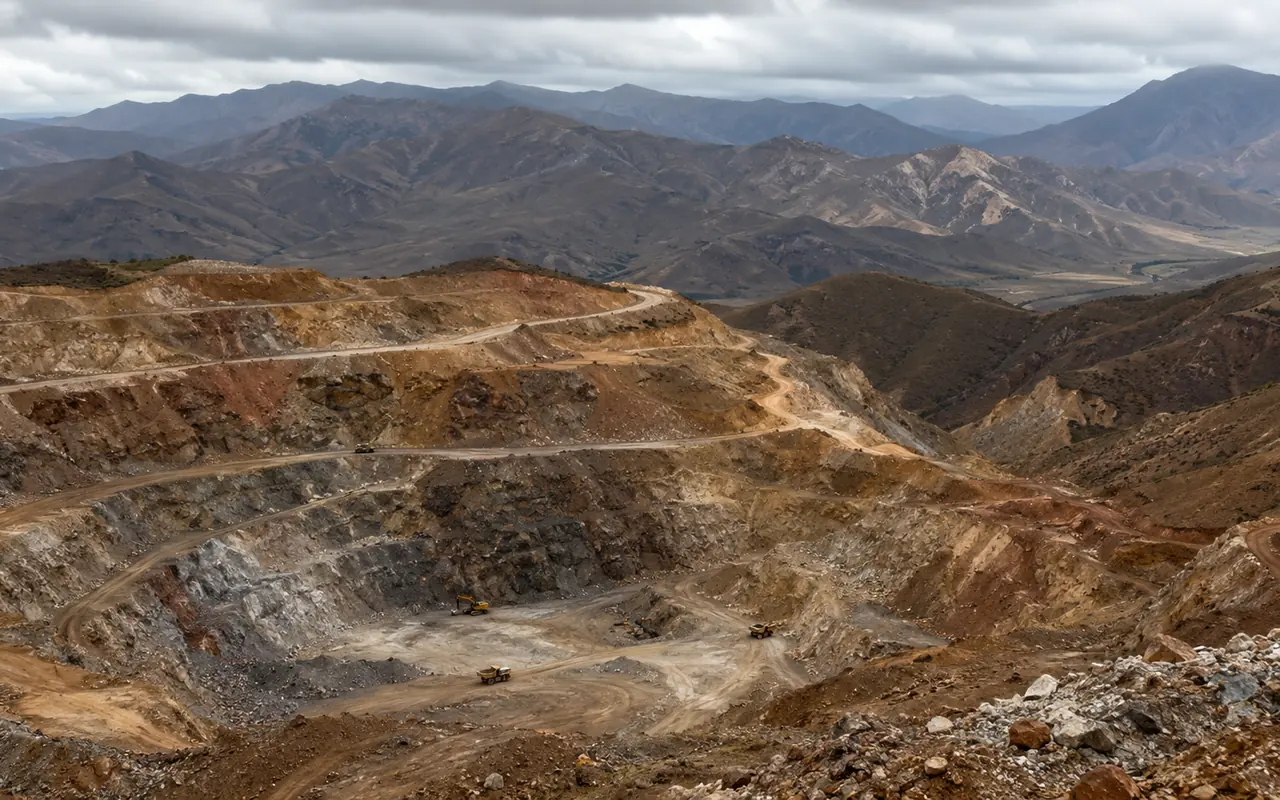
First, the hardest segment — heavy rare earths — has been taken. Dysprosium and terbium, the "heavy rare earths" that keep magnets performing at high temperatures, are also the segment China has held tightest. In May 2025, Australia's Lynas, at its Malaysia plant, became the first company outside China to commercially produce dysprosium oxide [3]. The most tightly held link has loosened.
Second, the United States simply made the state the buyer. The U.S. Department of Defense bought a $400 million equity stake in MP Materials (making the DoD its largest shareholder), and did several more critical things: it set a price floor, committed to buy its future magnet output, and separately extended a $150 million loan to help the company build a heavy rare-earth separation plant in California; right after that, Apple also signed a roughly $500 million long-term supply contract with MP [3][5]. This directly broke the old pattern of "China dumps, and the Western mine dies" — when the buyer is a defense department and Apple, neither of which will go bankrupt, a price war can't kill it.
“How Far Is Rare Earths' Break From China? The Progress and the Gaps in Alternative Supply Chains” reports that Lynas Becomes the First Producer of Commercial-Scale Heavy Rare Earths Outside China, May 2025(Dysprosium Oxide)。 MP received a $400M DoD equity stake plus a $500M Apple long-term contract [3][5]。
By early 2026, the consensus among analysts was: capital is flowing in, governments are intervening directly, and Western projects are moving from "intent" to "execution." This is the first time in a decade that the sentence "we can make our own rare-earth magnets" has had some real backing behind it.
But China Is Also Pulling the Rope Tighter
Don't rush to declare decoupling a success, though — even as the West has been loosening its grip, Beijing has been upgrading its own tools.
The control list is expanding. In April 2025, China imposed national-security export licensing on 7 categories of medium and heavy rare earths and related permanent-magnet materials — samarium, gadolinium, terbium, dysprosium, lutetium, scandium, and yttrium; by October, it added holmium, erbium, thulium, europium, and ytterbium — 5 more categories — bringing the total scope to 12 categories [2][6]. After the April controls took effect, export volumes of yttrium, dysprosium, and terbium fell by roughly 50% from the previous year's average, and the impact of this new round of restrictions has been progressively showing up [9].
“How Far Is Rare Earths' Break From China? The Progress and the Gaps in Alternative Supply Chains” reports that China's List of Controlled Medium and Heavy Rare Earths Expands(7 → 12 categories)。 7 categories controlled in April 2025, 5 more added in October [2][6]。
The more toxic part is the "0.1% rule." The new rule states plainly: NdFeB magnets containing terbium or dysprosium, samarium-cobalt magnets, and any part, component, or finished product containing 0.1% or more Chinese-origin content, are subject to control when re-exported to a third country [6]. This is a kind of "extraterritorial effect" — meaning that even if you buy a non-Chinese magnet, as long as it has even a trace of Chinese material mixed in, selling a product containing it to another country can still get blocked by Beijing. This indirectly ties the whole world's downstream manufacturing — Taiwan included — into the net.
“How Far Is Rare Earths' Break From China? The Progress and the Gaps in Alternative Supply Chains” reports that The Extraterritorial Rule: Magnets and Products With 0.1%+ Chinese Content Face Re-Export Restrictions。 Alternative technologies like iron-nitride magnets and magnet-free motors are emerging [6][9]。
The "Truce" Is Temporary
Between late 2025 and 2026, after a summit in South Korea (Busan), the U.S. and China reached a kind of détente: China announced it would pause enforcement of the October round of controls, for one year, until November 2026 [3]. Markets breathed a sigh of relief.
But that relief shouldn't run too deep. There are two reasons: first, the April licensing regime was never paused — meaning the most core controls are still in effect; second, during this very "truce," China's Ministry of Commerce, in June 2026, added 10 U.S. companies including MP Materials and USA Rare Earth to its export-restriction list, banning the export of rare earths and magnetic materials to them [3].
This "truce" looks much more like "a pause that can be called off at any time." For Taiwan, mistaking a brief loosening for the new normal is dangerous — no one can guarantee what happens after November 2026.
“How Far Is Rare Earths' Break From China? The Progress and the Gaps in Alternative Supply Chains” reports that China's Pause on the October Controls Runs Only to November 2026; 10 More U.S. Firms Blacklisted in June(2026-11)。 The truce is temporary and can be pulled back at any time [3]。
The Gap Is More Stubborn Than It Looks
Pulling the camera back, the gap is large enough to be sobering.
The real bottleneck was never "digging" — it's "refining" and "turning it into a magnet," and China still holds roughly 90% of both [1]. The timeline is even harsher: consulting firm Benchmark Mineral Intelligence estimates that by 2030, the West's demand for heavy rare earths will still be about 91% reliant on Chinese supply — a figure that has fallen only 8 percentage points from 99% in 2024 (this refers to the West's demand-side dependence, a different measure from the 99% refining-and-processing capacity share cited in "The Rare-Earth Chokehold") [7][10]. (Observation/inference, medium confidence) The industry consensus is that by 2035, the gap in non-Chinese heavy rare earth supply will still be large.
“How Far Is Rare Earths' Break From China? The Progress and the Gaps in Alternative Supply Chains” reports that The West's Heavy Rare Earths Are Still Estimated at 91% Reliant on China by 2030。 Versus 99% in 2024 — the pace of substitution is slow [7]。
The West can dig up the ore, but it still doesn't have enough capacity to turn that ore into magnets; and for the most critical heavy rare earths, truly breaking free of China is probably a matter for the 2030s or later. The two red teams meet on this point. Red Team East says: "Ninety percent of refining is still in China, and by 2030 it'll still be 91% reliant on China — don't get ahead of yourselves." Red Team West says: "Heavy rare earths have had their first production outside China, and the state itself is now the buyer — that's a qualitative shift, stop writing it off." Both are right — the progress and the gap are simultaneously true.
There's a Third Path Too: Simply Not Using Rare Earths at All
It's worth noting that being "choked" hasn't just driven a search for "other sources of rare earths" — it has also driven innovation aimed at "not needing rare earths at all."
Facing China's controls, companies in the U.S., Germany, and Japan have already invested in developing alternatives such as "iron-nitride magnets" and "magnet-free motors," trying to route around dependence on rare earths at the material level [9]. These technologies are still early-stage and will need time to commercialize, but they point to a more fundamental possibility: when a resource is weaponized to its fullest extent, the world's strongest countermeasure is often not "finding an alternative source" but "making that resource no longer needed." For Taiwan's motor and EV industries, this is also a direction worth a long-term bet.
For Taiwan: No Rare-Earth Mining, but No Escaping Magnets
Taiwan is not a rare-earth producing country, so at first glance this issue looks unrelated to Taiwan. But that's an illusion.
Taiwan makes heavy use of NdFeB permanent magnets — in motors, offshore wind power, electric vehicles, and all kinds of electronics. Rare earths' hand is ultimately played against Taiwan through "magnets." The good news is that, per an assessment by the Ministry of Economic Affairs, the elements covered by this latest round of expanded controls differ from what Taiwan's semiconductor processes require, so there is for now no significant impact on chip production [8]; the Ministry has also stated it will continue monitoring and strengthen supply-chain resilience [2]. But the bad news is that Taiwan's traditional motor, wind-power, and electronics supply chains remain genuinely exposed to the risk of rising magnet prices, delivery delays, and that "0.1% extraterritorial rule."
Don't underestimate that unremarkable little NdFeB magnet. It's hidden in many places in Taiwan you can't see: EV drive motors, offshore wind-turbine generators, servo motors in machine tools, hard drives, speakers, and all kinds of precision industrial equipment. Taiwan's prized precision-machinery, EV supply chain, and domestic wind-power localization all need a stable, affordably priced, high-performance magnet supply. So when rare earths' hand is played against Taiwan through magnets, the ones who get hurt won't just be the big companies in the headlines — it will be the large cluster of precision-machinery SMEs in central Taiwan that make motors and components. They have weak bargaining power and limited inventory; the moment magnets get more expensive or run short, their margins get eaten away and their delivery schedules blow open. That is exactly why "breaking rare earths' hold on China" is not a distant geopolitical issue for Taiwan, but a matter of survival for an entire domestic industrial chain.
So the alternative supply chain taking shape has a very concrete meaning for Taiwan: in the medium-to-long term, Taiwan's bargaining power on magnets and its exposure to supply cutoffs should improve; but in the short term, Taiwan remains constrained by China. The key is — whether Taiwan can move early enough to get its procurement into "non-Chinese magnet" supply chains like Lynas and MP, while simultaneously investing in recycling and alternative technologies.
November 2026 Is Taiwan's Alarm Clock
Pulling all these threads together, there's one date worth circling in red: November 2026. That's when China's "pause" on the October round of controls expires. No one can guarantee what will happen then — the truce could be extended, full controls could be reinstated, or things could escalate further. For Taiwan's magnet supply chain, this means: whatever inventory needs building, whatever non-Chinese sourcing needs negotiating, whatever substitute materials need validating, all of it has to be done ahead of time — not scrambled together after the rope has already tightened. The thing to fear most in geopolitical risk isn't that "it will happen" — it's that "it happens before you're ready."
But history also reminds us not to bet everything on "substitution." China understands perfectly well that if it pushes too hard and forces Western alternative capacity and "rare-earth-free" new technologies into existence, the value of the card in its own hand permanently depreciates. Some analysts therefore believe Beijing actually prefers "intermittent, adjustable" controls — applying pressure without forcing the other side into full decoupling. This is a subtle reminder for Taiwan: China's rare-earth card won't disappear anytime soon, but it also won't be played all at once, to the very end. What Taiwan needs to do is build up its own resilience, bit by bit, over this long game of "tightening and loosening."
Three Taiwanese Perspectives
For the state: bring "non-Chinese rare-earth and magnet supply chains" into critical-materials strategy, connect with friendly-shore supply chains in the U.S., Australia, and Japan, and compete for non-Chinese quotas on magnets and heavy rare earths; simultaneously build up critical-mineral inventories and "urban mining" recycling capacity. The date to watch most closely is November 2026, when that "truce" expires — if China reinstates full controls at that point, Taiwan's magnet supply chain needs to already have a backup in place, not be scrambling at the last minute.
For industry (motors / wind power / EVs / electronics): bring magnet-source diversification (non-Chinese magnets from Lynas/MP) into procurement strategy, and invest in rare-earth recycling and use-reduction design — using less and recycling more means being controlled less. At the same time, keep an eye on alternative technologies like iron-nitride magnets and magnet-free motors, and treat "not needing rare earths at all" as long-term insurance.
For SMEs: rising magnet prices and delivery volatility will pass straight through to downstream component makers. Track the availability and certification of non-Chinese magnets, and move early to secure a position in "de-China magnet" supply chains — pay special attention to that "0.1% rule": if your product has even a trace of Chinese rare-earth material mixed in, it could get blocked at export. This window only exists while the alternative supply chain is taking shape, and it is a risk that must be inventoried early — falling behind by one step now could mean falling behind by several years later.
A year ago, China's rare-earth chokehold looked unbreakable. A year later, the West has proven for the first time that this chokehold can be loosened, inch by inch — only it isn't loose enough to breathe freely yet, and Beijing's other hand is pulling the rope tighter and braiding it more intricately. For Taiwan, the homework isn't to worry about when China will tighten its grip — it's to use this open window to connect itself into the magnet supply chain now growing outside Beijing's reach — and to remember that this window may well be shut again, at the latest, in November 2026. In the game of geopolitics, there is never a "decoupling that solves everything once and for all" — only the continuous, ongoing effort of "making yourself harder to choke." That is work Taiwan has to do, bit by bit, every single day this window stays open.
Sources
- IEA — With new export controls on critical minerals, supply concentration risks become reality
- Ministry of Economic Affairs (MOEA) — In Response to China's Rare-Earth Export Controls, Taiwan Will Continue Monitoring and Strengthening Supply-Chain Resilience
- CSIS — Rare Earth Export Restrictions One Year Later
- CSIS — The Consequences of China's New Rare Earths Export Restrictions
- Benchmark Mineral Intelligence — Geopolitics to drive rare earth supply diversification (original estimate that the West's 2030 heavy-rare-earth demand will still be 91% reliant on China, versus 99% in 2024)
- C&EN — US invests in rare earth firm MP Materials
- Clark Hill PLC — China Expands Export Controls on Rare Earths, Magnets, and High-Tech Materials
- TechNews (2025-11) — The West Wants to Build Its Own Magnet Supply Chain, but Faces a Heavy Rare-Earth Scarcity Problem
- Public Television Service News Network (PNN) — China Expands Rare-Earth Export Controls: The Methods and the Impact on the Global Supply Chain at a Glance
- The News Lens — Iron-Nitride Magnets and Magnet-Free Motors Break Out of the Rare-Earth Supply Chain Crisis

Taiwan's Two Faces
The whole world depends on Taiwan's chips — and is quietly preparing for the day it might lose them. The same island is both the heart of the supply chain and a geopolitical powder keg. How can Taiwan's companies turn "irreplaceable" into an advantage that lasts?
Japan Takes Economic Security Overseas: Can OESA Bring Taiwan's Supply Chains Into State-Level Financing?
Japan has created OESA, extending policy finance to overseas projects that matter for economic security but are hard for existing tools to carry. Taiwan has an opening, but the law taking effect is not the same as Taiwan already being on the list — the real threshold lies in Japan's own interests, project design, and implementing rules that have yet to be published.