
100 Percent Is Not All Drugs: Taiwan's Real Exposure and Window Under the U.S. Pharmaceutical Section 232 Tariff
The U.S. pharmaceutical Section 232 measure establishes a current, conditional structure of 100%, 20%, 15%, and 0% treatments for certain imported branded pharmaceuticals and related ingredients; the Section 232 additional duty rate on UK-origin covered goods changed from +10% to +0%, effective 12:01 a.m. Eastern Time on July 31, 2026. Taiwan's exports to the U.S. are dominated by generics, keeping overall short-term exposure below the headline number — but the reprieve, the one-year reassessment, company-level agreements, and import classification mean the real risk sits with individual products and customers.
Article contents01 / 11
- 100 percent is the baseline treatment for certain branded pharmaceuticals and related ingredients — not a blanket rate applied to all imported drugs.
- Generics accounted for 86.5% of Taiwan's finished-dosage exports to the U.S. in 2024, indicating lower overall short-term direct exposure — but this cannot substitute for company-by-company, product-by-product determination.
- Generics are not currently subject to the Section 232 adjustment, but the proclamation requires a reassessment within one year — this is a preparation window, not a permanent certificate of safety.
Let's start with the bottom line: the United States' 100 percent pharmaceutical tariff is not on all drugs, and not on all of Taiwan's pharmaceutical exports to the United States.
On April 2, 2026, U.S. Presidential Proclamation 11020 addressed imports of pharmaceuticals and pharmaceutical ingredients under Section 232 of the Trade Expansion Act. The proclamation sets a 100 percent rate for branded pharmaceuticals and related ingredients covered by its annexes, and builds a current tiered structure of 20 percent, 15 percent, and 0 percent based on country of origin, corporate reshoring commitments, drug-pricing agreements, specified special drugs, and effective dates. [1][2] For UK-origin covered branded pharmaceutical goods, the Section 232 additional duty rate under 9903.04.63 changed from +10% to +0%, effective for goods entered for consumption, or withdrawn from warehouse for consumption, on or after 12:01 a.m. Eastern Time on July 31, 2026; CBP subsequently confirmed the tariff-line coverage and system updates. [14][15][16] This +0% applies only to the Section 232 additional duty — it does not mean other otherwise-applicable duties and fees also drop to zero. Generic drugs, related ingredients, and biosimilars are "at this time" not subject to this Section 232 adjustment, and the Secretary of Commerce must report to the President within one year of the proclamation on whether further action is necessary. [1][3]
Structural data for 2024 published by Taiwan's Food and Drug Administration (TFDA) show that among Taiwan's finished-dosage-form exports to the United States, generic drugs accounted for roughly NT$8.472 billion, or 86.5 percent of finished-dosage exports to the U.S.; branded pharmaceuticals were a single item worth roughly NT$1.32 billion, or 13.5 percent. Active pharmaceutical ingredient (API) exports to the U.S. totaled roughly NT$544 million, or 9.9 percent of Taiwan's total API exports. [10] These figures support the judgment that "Taiwan's overall short-term direct exposure is lower than a blanket 100 percent across every product," but they do not prove that every Taiwanese drugmaker is safe.
The actual applicable rate is not settled once and for all by a company's passport — it requires answering at least six questions: Does the good fall within the scope of the proclamation's annexes? Is it a branded pharmaceutical, a generic drug, a biosimilar, or a related ingredient? Where is its country of origin? Which company's agreement or reshoring plan does the product belong to? On what date is it imported? And if a product simultaneously qualifies for multiple treatments, which lower rate applies?
These six questions are also the management tool Taiwan should be building right now. Answering only "we mainly make generics" or "our customer is a major pharmaceutical company" is not enough to support U.S. customs declarations or capital-investment decisions.
I. Breaking Down the Current Rate Tree: What 100, 20, 15, and 0 Actually Mean
The first layer is the product. For branded pharmaceuticals and related pharmaceutical ingredients listed in the proclamation's annexes, the baseline treatment is 100 percent. [1][2] But Section 7 of the proclamation also provides that, for products affected by both this proclamation and the HTSUS Column 1 rate, the combined total generally equals the applicable rate listed in the proclamation; where the Column 1 rate itself is higher, the higher Column 1 rate applies instead — and this provision expressly does not apply to the United Kingdom. [1] Describing this across the board as "100 percent stacked on top of the existing tariff" can therefore overstate or misread the actual calculation; for the UK, the +0% additional duty under 9903.04.63 and any other otherwise-applicable duties and fees must be assessed separately.
The second layer is corporate reshoring plans. Companies whose reshoring plans have been approved by the Department of Commerce, or that the Department considers likely to be approved in the near term, may have their relevant products qualify for a 20 percent rate; this treatment is scheduled to rise to 100 percent on April 2, 2030. [1] This is not automatically obtained simply by announcing a U.S. investment. The proclamation requires the Department of Commerce to set standards and monitor milestones, and it may require periodic reporting and external audits; if a company fails to perform, commits fraud, or is misleading, the government can raise the rate or even retroactively restore the tariff. [1][5]
The third layer is country or jurisdiction. Relevant products from the European Union, Japan, South Korea, and the Switzerland-Liechtenstein customs union qualify for a 15 percent rate. [1] The United Kingdom was set at a +10% Section 232 additional duty in the original version of Proclamation 11020, but the U.S. Department of Commerce subsequently, under the U.S.-UK agreement, changed 9903.04.63 — covering UK-origin branded pharmaceutical goods falling within U.S. Note 40(c) and 40(g) — to +0%, effective for goods entered for consumption, or withdrawn from warehouse for consumption, on or after 12:01 a.m. Eastern Time on July 31, 2026. [14][15][16] The determination looks at the good's country of origin and the proclamation's scope, not the shipping location or the company's nationality. Taiwan is not on the 15 percent list, and it is not part of this UK zero-rate arrangement either. But "not on the 15 percent list" does not mean all Taiwanese products fall under the 100 percent rate, because the generics reprieve, corporate agreements, and special-drug status remain separate layers of judgment.
The fourth layer is the path to a zero rate. One category covers certain specified special drugs — for example, products whose every approved indication is an orphan drug, nuclear medicine products, plasma-derived therapies, fertility treatments, cell and gene therapies, antibody-drug conjugates, certain medical countermeasures, and animal drugs — but these still need to meet the proclamation's jurisdictional-agreement or U.S. urgent-health-need determination requirements. [1] The other category covers companies that already qualify for reshoring treatment and have also reached a most-favored-nation drug-pricing agreement with the U.S. health system, which may apply a zero rate through January 20, 2029. [1][2]
The proclamation also provides that where a product simultaneously falls under multiple rates set by this proclamation, the lowest applicable rate governs. [1] This makes the tariff structure more like a decision tree than a single country table. If a Taiwanese company merely asks its customer, "do you have an exemption," without obtaining the corresponding company, product, and tariff-line evidence, it has no way to judge whether that answer applies to its own shipment.
II. Effective Dates Are Also Tiered: July 31 and September 29
The proclamation splits the effective dates into two batches. Products of companies listed in Annex III apply from 12:01 a.m. Eastern Time on July 31, 2026; other companies apply from September 29. [1][2] As of this article's August 24 cutoff, the first batch has already entered its implementation period, and the second batch still has a little over a month to prepare.
This date looks at when the goods enter the United States for consumption, or are withdrawn from a warehouse for consumption — not Taiwan's export date, invoice date, or the date the vessel leaves port. [1] A batch shipped from Taiwan in late August and imported at the end of September must be judged according to the U.S. import timing and the rules in force at that moment. This timing gap matters especially for cold-chain, ocean-freight, bonded-warehouse, and staggered-withdrawal shipments.
In relaying U.S. Customs implementation information, Taiwan's Bureau of Foreign Trade under the Ministry of Economic Affairs also noted that relevant goods under Chapters 29 and 30 need to declare Chapter 99 tariff lines as circumstances require; even though generics currently fall into a zero-rate Section 232 category, that does not mean classification and declaration can be skipped. [9] But that bureau's August 20 page still lists 9903.04.63 at +10%, which does not reflect the Notice 2026-15799 update or the two CBP updates; this outdated figure should not be relied on when determining the UK's current additional duty rate. [9][14][15][16] Where the same product involves a company's transitional treatment, origin preferences, or other tariff regimes, it must also be handled according to the latest HTSUS and CBP guidance.
Companies therefore cannot build their product inventory just once. They should keep at least three versions: before July 31, from July 31 to September 28, and from September 29 onward. Each time the White House, the Federal Register, BIS, or CBP updates the company list and tariff lines, the inventory should be updated by effective date rather than overwriting the old version — otherwise there will be no way to later prove which set of rules applied to a given import at the time.
III. Why Taiwan's Short-Term Picture Is Less Dire Than the Headline
The profile of Taiwan's pharmaceutical exports to the United States is the first necessary condition for judging overall impact. TFDA's 2024 data show that generics account for 86.5 percent of finished-dosage export value to the U.S., and branded pharmaceuticals account for 13.5 percent; API exports to the U.S. account for 9.9 percent of Taiwan's total API export value. [10] The proclamation also explicitly states that, at this time, it does not adjust generic drugs and their related ingredients, including biosimilars. [1]
So if the question is "will Taiwan's overall pharmaceutical exports immediately face a blanket 100 percent," the answer is no. Taiwan's official assessment that the overall short-term impact is manageable has a factual basis. [8][10] For finished-dosage manufacturers whose exports to the U.S. are genuinely generics, the immediate priority is not to build 100 percent straight into company-wide quotes, but to demonstrate that the product's classification and declaration pathway genuinely falls under the current zero Section 232 treatment.
But averages mask tail risk. In TFDA's data, the single branded pharmaceutical item accounts for only a tiny share of the product count, yet reaches 13.5 percent of value. [10] If a given company's revenue is concentrated in that category of product, a specific licensed brand, or a related ingredient, the impact could be far greater than the industry average. A CDMO facility may also manufacture for different customers at the same time: one customer covered under an annex agreement, the other not; the same plant and the same process do not mean the same U.S. import treatment.
APIs cannot be judged by the letters "API" alone, either. The proclamation distinguishes between branded-pharmaceutical-related ingredients and generic-related ingredients, and the annexes describe scope using HTSUS codes; the same chemical entity may have different uses, customers, and supporting declaration evidence. [1][2] Taiwanese suppliers must ask the U.S. importer of record or a professional consultant to confirm the specific tariff line and end use, rather than automatically placing every API under the generics reprieve.
IV. Generics Are a Window, Not a Permanent Exemption
The proclamation's own language is "at this time": it does not, at this stage, apply a Section 232 adjustment to generic drugs, related ingredients, and biosimilars, and it requires the Secretary of Commerce to report within one year on whether circumstances have arisen that require further action on imports. [1][3] The statutory text itself tells companies that the zero Section 232 rate is a policy state that can be revisited, not a permanent entitlement; it does not mean that other otherwise-applicable duties and fees are all zero.
There is a supply-and-pricing reality behind why the U.S. is not directly taxing generics for now. The industry group Association for Accessible Medicines emphasizes that generics and biosimilars account for a very high share of U.S. prescription volume but a comparatively low share of spending, and it supports excluding them from this round of tariffs. [11] This is an interest-driven industry position and cannot be treated as policy fact on its own, but it does point to the mechanism by which low-margin products struggle to absorb a high tariff burden. The Brookings Institution likewise warns in its policy analysis that crudely taxing low-margin generics could cause companies to exit products or markets, and that shortage risk would not necessarily fall as a result of the tariff. [13]
On the other hand, U.S. supply-security concerns are not manufactured. FDA data from 2025 indicate that roughly 53 percent of branded finished-drug products and 69 percent of generic finished-drug products sold in the U.S. market are manufactured overseas; among known API manufacturers, the United States accounts for roughly 9 percent, China roughly 22 percent, and India roughly 44 percent. [6] These ratios use a different statistical basis than Taiwan's export figures and cannot be added together directly, but they do explain why U.S. policy will keep looking for ways to reduce overseas dependence.
Future tools will not necessarily be limited to tariffs. The FDA has already proposed PreCheck and a domestic-manufacturing prioritization pilot for generic ANDAs; the latter offers priority-review incentives to applications where the required bioequivalence testing is completed in the U.S. (or qualifies for a waiver), the finished dosage form is manufactured in the U.S., and the API is supplied only by U.S. suppliers. [6][7] For low-margin, high-shortage-risk products, the U.S. may use a mix of procurement commitments, expedited review, subsidies, and stockpiling. Taiwanese companies that monitor only "will we be taxed" will miss the more practical shifts in market access.
V. The 20 Percent Reshoring Rate Is Not a Coupon — It Is an Enforceable Commitment
The presidential proclamation authorizes the Department of Commerce to review corporate reshoring plans. The procedures set out in the Federal Register notice require companies to provide their plan, investment, and production milestones, and to explain the relationship between U.S. sales and U.S. manufacturing; the plan must be approved, after which it is subject to monitoring and enforcement. [5] The presidential proclamation further specifies that the government may require periodic reporting and external audits, and that if a company fails to perform or willfully misleads, the rate can be raised, and relevant imports can even be treated retroactively. [1]
This means the three forms of "going to the U.S." available to Taiwanese companies are not equivalent. First, having only sales or packaging operations in the U.S. does not necessarily satisfy manufacturing-reshoring conditions. Second, partnering with a U.S. CDMO may secure production capacity faster, but eligibility still depends on the applicant company's plan and the Department of Commerce's determination. Third, building one's own plant secures long-term capacity, but carries risks around siting, environmental review, talent, validation, technology transfer, and capacity ramp-up. None of these can be evaluated for return on investment using only the 80-percentage-point tariff gap.
Pharmaceutical manufacturing capacity is bound to regulatory approval. Finishing a plant does not mean it can immediately substitute for Taiwan-based production; equipment validation, process transfer, quality systems, and supplemental applications or inspections must also be completed. If a customer only says verbally that it "wants U.S. manufacturing" without offering a minimum purchase volume, price, term, and shared validation costs, a Taiwanese manufacturer may end up committing irreversible capital expenditure first and be left, in the end, with only a low-utilization plant.
Investment decisions should therefore compare at least three scenarios. Scenario one keeps manufacturing in Taiwan, focusing on the currently exempted generics and high-reliability supply. Scenario two partners with an existing U.S. plant or adopts dual sourcing, reducing upfront capital and validation risk. Scenario three builds U.S. capacity from scratch, trading for customer, policy, and market proximity, but requiring a long-term volume-and-price commitment. Every scenario must factor in possible rate changes, the generics reassessment, eligibility for customer agreements, and capacity ramp-up — it cannot be calculated using a single policy year alone.
VI. Drug Pricing and Manufacturing Location Have Been Bundled Into a Single Deal
The proclamation gives companies that both qualify for reshoring treatment and have reached a most-favored-nation drug-pricing agreement with the U.S. health authorities a zero rate through January 20, 2029. [1][2] The significance of this design lies not only in the rate itself, but in the fact that the U.S. has folded drug-pricing commitments, R&D, and manufacturing investment into a single company-level negotiation.
Large multinational drugmakers may trade their global product portfolio, pricing, and U.S. investment for favorable treatment; an individual Taiwanese supplier does not hold the same leverage. Even where a Taiwanese CDMO's product is itself manufactured in Taiwan, the ultimate treatment may still depend on whether the brand-name customer is listed in the annex, whether it has an agreement, and which legal entity handles the import. Suppliers need to obtain citable proof of eligibility from their customers, rather than guessing from press releases on their own.
Industry positions clearly diverge here. PhRMA argues that pharmaceutical tariffs will raise costs and weaken the U.S. investment momentum they were meant to encourage; AAM, by contrast, supports excluding generics and biosimilars from this round. [11][12] Both are stakeholder positions and cannot be treated as neutral forecasts. But there is one common message for Taiwanese decision-makers: the interests of different business models do not align. Innovator drugs, generics, APIs, and CDMOs should not all be discussed through a single "pharmaceutical industry" position on policy.
If the Taiwanese government wants to communicate with U.S. counterparts, it also needs layered data: which items are generics facing U.S. shortages or limited supply sources; which Taiwanese APIs can add sources outside China and India; which new-drug or CDMO investments could be complementary; and which high-value branded products face asymmetric treatment. Simply demanding "treat Taiwan like the 15 percent countries" is a negotiating position, not an answer companies can use for customs declarations today.
VII. The Six-Question Rate Tree: Every SKU Must Run Through It
Question one: does the product fall within the HTSUS scope of the proclamation's annexes? Question two: is it a branded pharmaceutical, a generic drug, a biosimilar, or which category of related ingredient? Question three: what is its country of origin as determined under U.S. rules? Question four: is the brand or importing company listed in an annex agreement, has it received an approved reshoring plan, or does it qualify as a specified special drug? Question five: when is the good imported for consumption, and does July 31 or September 29 apply? Question six: if it simultaneously qualifies for multiple treatments, which is the lowest applicable rate under the proclamation and the HTSUS?
Each question needs evidence. The annexes and the HTSUS support question one; the FDA application type, the Orange Book or corresponding regulatory data, and customer end-use declarations support question two; supply-chain and substantial-transformation data support question three; formal lists and agreement documents from the White House, the Department of Commerce, or the Federal Register support question four; import documentation supports question five; and a customs broker's calculation together with CBP guidance supports question six.
Internal data also needs to descend from the company level down to the SKU level. For every product, record the NDC or application identifier, brand/generic status, patent or licensing relationship, API end use, HTSUS classification, country of origin, importer of record, customer group, agreement eligibility, effective date, and the date of the last review. If the same API is supplied to multiple customers or uses, do not apply one default rate across the board — break it down into separate transaction scenarios.
The last box in the rate tree can be "unknown." Unknown is not a failure — it is a control point that forbids sales from quoting a fixed tax-inclusive price. Where a product's patent status is not yet clarified, let regulatory affairs and the customer supply the missing documents; where a corporate agreement is uncertain, demand formal proof; where CBP technical guidance is being updated, use conditional quotes and tariff-adjustment clauses. Marking things as unknown is safer than filling the system with the most optimistic assumption.
VIII. Three Strategies for Taiwanese Companies — Building a Plant in the U.S. Is Not the Only Option
The first strategy is to deepen existing manufacturing in Taiwan. Generics' current zero Section 232 treatment gives companies time to strengthen FDA compliance, supply stability, alternative APIs, shortage-drug items, and quality records. If a company can demonstrate that it is hard to replace in the U.S. market, its Taiwan-based capacity itself becomes a supply-security asset. The risk of this path is a policy shift after the one-year reassessment of generics, so scenario stress-testing must be carried out in parallel.
The second strategy is collaborative localization: jointly validating a second source with an existing U.S. drugmaker, CDMO, or customer, starting with high-certainty-volume items. The advantage is lighter capital commitment and the chance to learn U.S. operations; the disadvantage is that capacity control, quality responsibility, and agreement eligibility need to be clearly allocated. A partner claiming to have a U.S. plant does not mean the product automatically obtains reshoring treatment.
The third strategy is selective in-house construction or acquisition. It suits products that have long-term U.S. customers, margins sufficient to support running two plants, mature technology transfer, and the ability to secure a volume-and-price commitment. Decision gates should include: the customer's minimum purchase volume and term, the legal certainty of state and federal incentives, the FDA validation timeline, talent and raw materials, capacity utilization, exchange rates, and an exit plan. If a proposal does not clear these gates, construction should not begin early just because of a tariff headline.
These three paths can be combined; the supply chain does not need to become a binary choice between "Taiwan or the United States." Keeping core processes and R&D in Taiwan, moving some formulation or packaging to the U.S., dual-sourcing APIs, and jointly holding safety stock with customers may all prove more resilient than a wholesale relocation. What policy wants is verifiable U.S. supply capability; what companies want is sustainable cost and quality. How much these two overlap needs to be demonstrated through contracts and product economics.
IX. Patient Access Cannot Be Dismissed as Just Industry Lobbying
Pharmaceuticals differ from ordinary industrial goods: a supplier's exit does not merely change prices, it can also interrupt treatment. Generics are typically low-priced, span many items, and carry thin margins, so added costs cannot necessarily be passed through; if a manufacturer halts production or leaves the market, a quality incident at a remaining supplier converts more easily into a shortage. [11][13] This does not mean any tariff necessarily causes a shortage — rather, it means policy assessment must look at market concentration, substitutes, inventory, and production lead times.
The U.S. goal of raising domestic supply capability also serves a public interest. Overseas dependence, a single-region concentration of API production, geopolitical conflict, and pandemics can all disrupt pharmaceutical supply. [1][6] The question is not whether resilience is needed, but which tool can add resilience without forcing low-margin items out of the market. For generics, long-term procurement, guaranteed pricing for shortage items, expedited review, and multi-sourcing requirements may be more precise than a sudden, across-the-board high tariff; for high-margin branded pharmaceuticals, the U.S. instead chooses to trade tariff rates for drug-pricing and investment commitments.
Taiwan can position itself as part of supply diversification, rather than merely seeking an exception. If Taiwanese producers can offer APIs not concentrated in a single region, stable quality, traceable manufacturing processes, rapid replenishment, and a credible regulatory track record, they can elevate the policy conversation from "please don't tax us" to "how to reduce U.S. supply risk for specific drugs." But this must be backed by product and capacity evidence — it cannot rely on friendly political narrative alone.
X. As of August 24, Four Unknowns That Cannot Be Skipped Over
First, it is not possible to determine on behalf of an individual Taiwanese company whether it falls within Annex II, Annex III, an approved reshoring plan, or a drug-pricing agreement. Company lists and agreement status may be updated, and the official documents must be checked before publication and before every batch of imports. [2][5] Second, branded/generic or related-ingredient treatment cannot be determined from the drug's name alone; complex licensing arrangements, multiple uses for the same active ingredient, and the importing entity all require professional judgment.
Third, the generics' zero Section 232 treatment cannot be written up as a permanent exemption. The proclamation has already set a one-year reassessment. [1][3] Fourth, the 2024 export share cannot be treated as each company's 2026 revenue structure. TFDA's data outlines the policy picture — it is not a substitute for corporate due diligence. [10]
There is also an operational unknown: as of the point covered by the CBP guidance compiled by Taiwan's Bureau of Foreign Trade, no company had yet been able to use the 20 percent treatment for specific HTSUS lines; if new plans are approved later, the codes and the list will change. [9] This is exactly why companies cannot lock today's rate table permanently into their ERP systems — they must retain effective dates, source versions, and a re-verification mechanism.
XI. Conclusion: Turning the One-Year Reprieve Into a Future of Choices
The U.S. pharmaceutical Section 232 measure is not a single, neat 100 percent tariff wall. It is a system of overlapping treatments across products, countries, corporate agreements, drug pricing, investment, and time. For Taiwan, the fact that overall exports are dominated by generics makes the short-term direct impact smaller; the fact that Taiwan is not on the 15 percent country list means case-by-case risk for branded pharmaceuticals and related ingredients cannot be ignored. Both facts must be held at once.
The most important task for companies right now is not to declare themselves winners or losers, but to run every SKU through the six-question rate tree to identify concentrated exposure — then use the generics reprieve window to make regulatory compliance, quality, API diversification, customer commitments, and second sourcing real. Building a plant in the United States can be one answer, but it is only a sound business answer when volume, price, validation, and exit conditions are actually in place.
The government, for its part, should treat the one-year reassessment as a policy clock: compiling data on items where the U.S. depends on Taiwan, on drug shortages, and on alternative sources; helping small and medium-sized drugmakers understand the HTSUS and company-level agreements; and preparing procurement, financing, and cooperation plans for possible changes in generics policy. Waiting until the U.S. reassessment is complete before starting to collect data leaves only room to react.
One hundred percent is the headline; the real unit of management is the product. The generics reprieve is breathing room; real competitiveness means that even if the rules change, a company still has multiple paths — manufacturing in Taiwan, collaborative localization, building its own capacity, and reorganizing customers. Only the companies that turn this window into real options have truly understood this proclamation.
Sources
- The White House — Presidential Proclamation 11020, Adjusting Imports of Pharmaceuticals and Pharmaceutical Ingredients
- The White House — Presidential Proclamation 11020, Annexes I–IV and Company Lists
- Federal Register — Official Published Text of Presidential Proclamation 11020
- U.S. Department of Commerce, Bureau of Industry and Security — Section 232 Pharmaceuticals Investigation and Reshoring Plan Portal
- Federal Register — Pharmaceutical Reshoring Plan Application, Monitoring, and Data Requirements
- U.S. Food and Drug Administration — Public Meeting Materials on Onshoring Manufacturing of Drugs and Biological Products
- U.S. Food and Drug Administration — ANDA Prioritization Pilot to Support U.S. Generic Drug Manufacturing and Testing
- Bureau of Foreign Trade, Ministry of Economic Affairs (Taiwan) — Explanation of U.S. Pharmaceutical Section 232 Measures and Impact on Taiwan
- Bureau of Foreign Trade, Ministry of Economic Affairs (Taiwan) — Compilation of U.S. Customs Pharmaceutical Section 232 Tariff Lines and Declaration Guidance (its UK-rate field does not reflect the U.S. side's 0% update)
- Taiwan Food and Drug Administration, Ministry of Health and Welfare — Structural Statistics on Taiwan's Finished-Dosage and API Exports to the United States
- Association for Accessible Medicines — Position on Tariffs for Generic Drugs and Biosimilars
- PhRMA — Industry Statement on the Section 232 Pharmaceutical Tariff
- Brookings Institution — Analysis of Pharmaceutical Tariffs, Generic-Drug Margins, and Shortage Risk
- U.S. Department of Commerce — Federal Register Notice Reducing the Section 232 Rate on UK Branded Pharmaceuticals and Related Ingredients to 0%
- U.S. Customs and Border Protection — CSMS #69415934: Update of UK Pharmaceutical 9903.04.63 Rate to 0%
- U.S. Customs and Border Protection — CSMS #69440938: ACE Deployment HSU 2619 Update
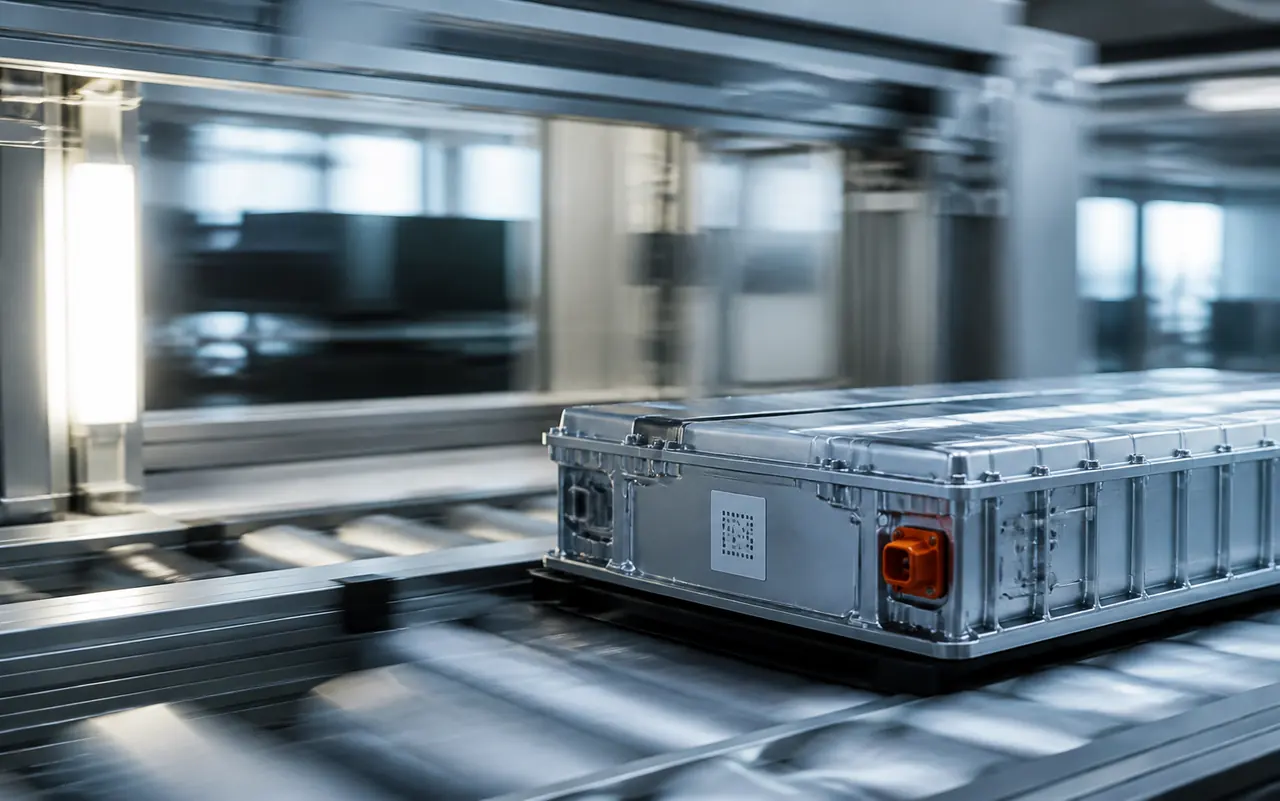
Products Need a Résumé Too: The EU's DPP Registry Is Live — Who Controls Taiwanese Suppliers' Data?
The EU's DPP Registry has gone live, but not every product becomes mandatory on the same day, and it does not mean a complete data set gets uploaded to a central EU database. What Taiwanese suppliers really need to decide now is who controls identifiers, hosting, access, updates and transfer.
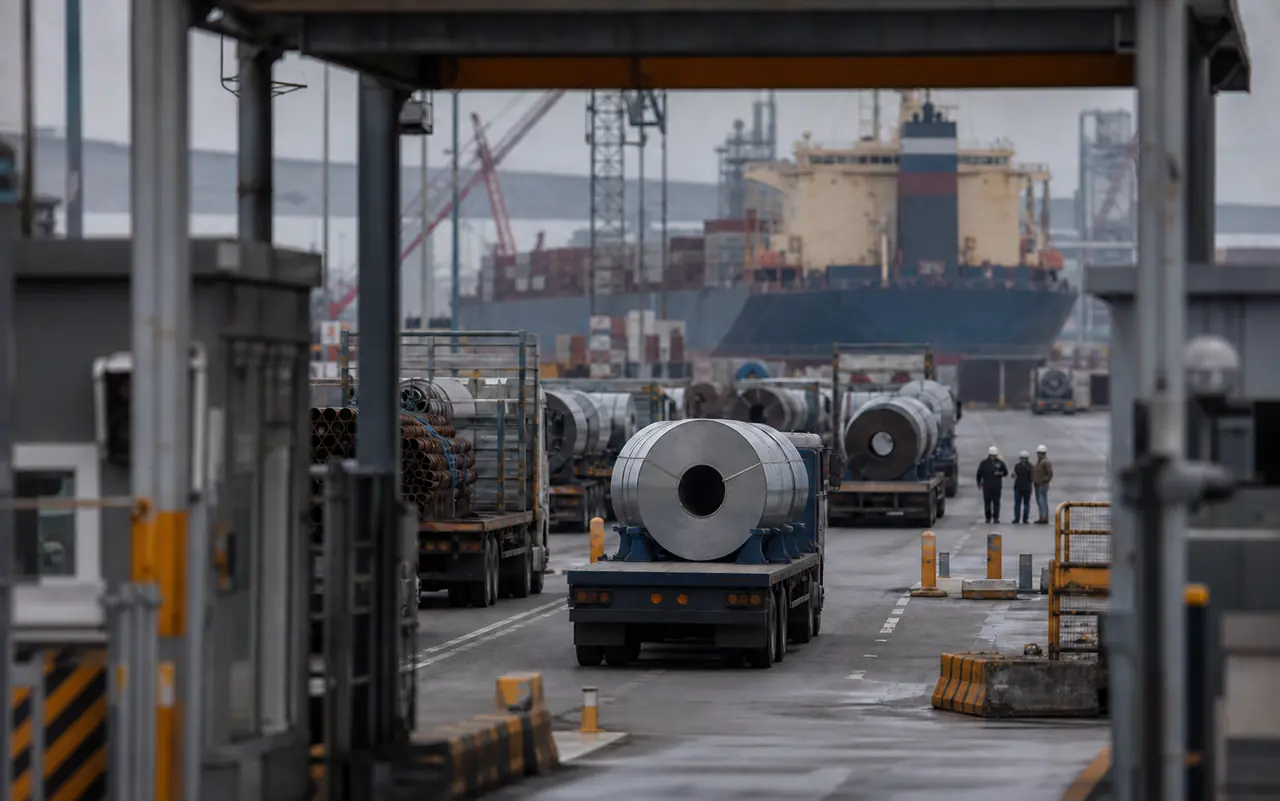
Once the Quota Runs Out, It's Fifty Percent: How the EU's New Steel Tariff Reshuffles Nine Categories of Taiwanese Exports
The EU's new steel regime does not slap 50% on every tonne of Taiwanese steel from the first shipment. Instead it places 26 product categories inside tariff-rate quotas, and only once the relevant quota is exhausted does a 50% out-of-quota surcharge apply. Taiwan holds country-specific allocations in nine categories, but what actually decides whether a given order keeps its margin is the CN classification, origin, quarter, quota order number, and the date the EU accepts the import declaration.