
The Lithuania Model: How a Country of Three Million Said No to Beijing and Didn't Get Crushed
In 2021, Lithuania allowed Taiwan to open a representative office under the name 'Taiwan.' Beijing's retaliation was diplomatic downgrading, economic sanctions, and supply-chain pressure. Nearly five years later, Lithuania had not backed down, and China had not escalated further. What does this case tell democracies beyond Taiwan? What was the price? And what can Taiwan not simply copy?
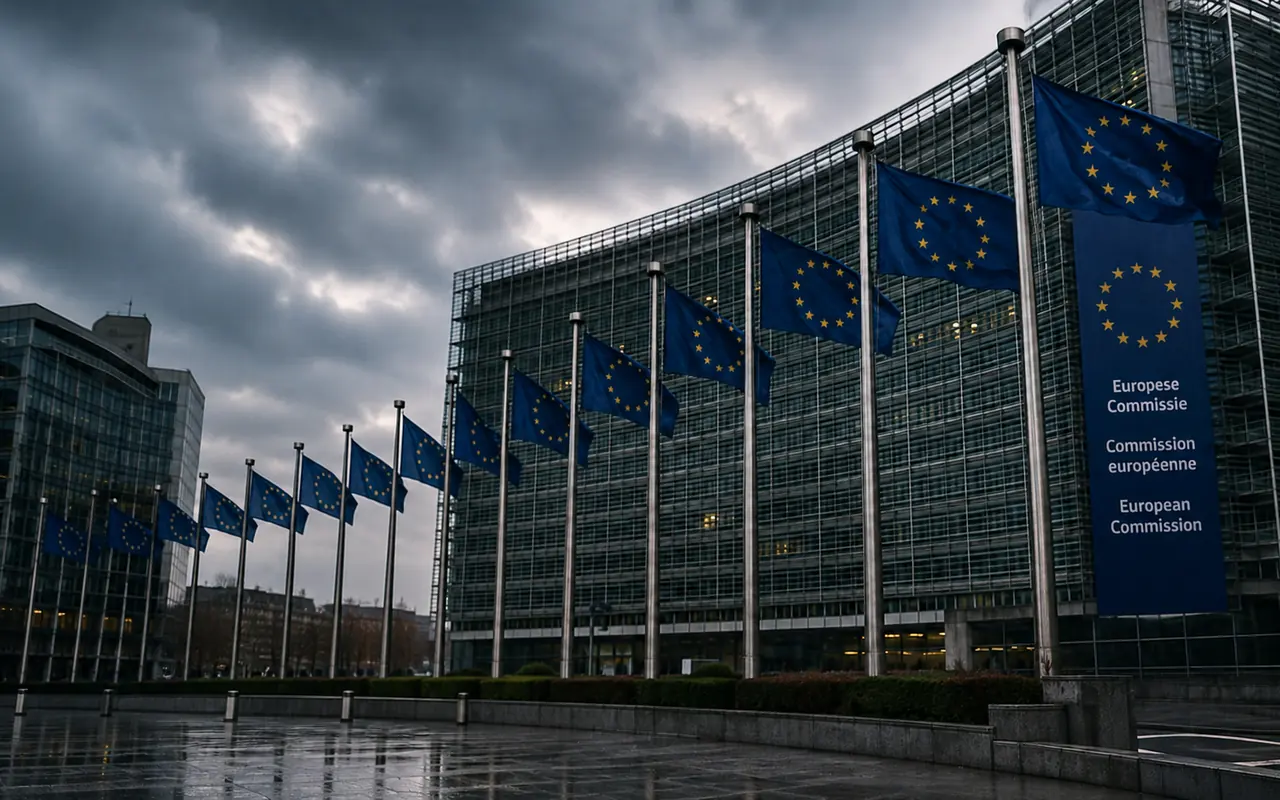
Article contents01 / 06
- Lithuania was the first EU member state to allow Taiwan to establish a representative office under the name 'Taiwan' rather than 'Taipei,' breaking an informal self-restriction long maintained by EU countries.
- China's retaliation included diplomatic downgrading (from ambassador to chargé d'affaires), informal trade barriers against Lithuanian goods, and pressure on multinational companies producing parts in Lithuania — spanning the diplomatic, economic, and supply-chain dimensions.
- Lithuania held its ground in part because the EU (particularly the EU's Trade Commissioner) characterized the supply-chain pressure on Lithuania as an unfair trade practice targeting the EU as a whole, and initiated a WTO dispute-settlement procedure.
“The Lithuania Model: How a Country of Three Million Said No to Beijing and Didn't Get Crushed” reports that Change in Lithuania's Share of Exports to China (%, 2020 vs. 2022)(81.5%)。 Lithuania's exports to China shrank sharply after the dispute broke out: according to Statistics Lithuania, they fell from about €243.9 million in 2020 to about €45.2 million in 2022 — a decline of roughly 81.5%, a far deeper hit than earlier estimates suggested. Lithuania's GDP nonetheless kept growing over this period. Source: Statistics Lithuania, via LRT [10]。
“The Lithuania Model: How a Country of Three Million Said No to Beijing and Didn't Get Crushed” reports that Number of Taiwan's Overseas Representative Offices: Named 'Taiwan' vs. Other Names(18 countries)。 As of the end of 2025, 18 countries worldwide allowed Taiwan's representative offices to use the name 'Taiwan' (rather than 'Taipei,' 'Chinese Taipei,' etc.); Lithuania was the first among EU member states. Source: Ministry of Foreign Affairs [1]。
In July 2021, a piece of news sent a bigger shockwave through diplomatic circles than most had expected: Lithuania announced it would allow Taiwan to open a representative office in Vilnius under the name "Taiwan Representative Office" — not "Taipei," but "Taiwan."
That four-letter difference carries major symbolic weight in the language of international diplomacy. For decades, almost every democracy that developed substantive relations with Taiwan has carefully used the name "Taipei" — an ambiguous place name that sidesteps any political statement of "Taiwan as a subject in its own right." Lithuania was the first to break this unwritten rule within the EU framework.
Beijing's response was immediate and forceful: it recalled its ambassador, downgraded diplomatic relations, launched trade pressure, and — the more vicious move — began pressuring German and French multinationals with production stages in Lithuania, threatening that continuing to use Lithuanian-made components would affect their business in the Chinese market. [6]
A country of three million people, on its own, withstood the retaliation of the world's second-largest economy. Nearly five years later, Lithuania had not withdrawn its commitment; the Taiwan Representative Office was still operating.
This case deserves serious study by anyone who cares about Taiwan's diplomatic space.
“The Lithuania Model: How a Country of Three Million Said No to Beijing and Didn't Get Crushed” reports that Change in Lithuania's Share of Exports to China (%, 2020 vs. 2022)(81.5%)。 Lithuania's exports to China shrank sharply after the dispute broke out: according to Statistics Lithuania, they fell from about €243.9 million in 2020 to about €45.2 million in 2022 — a decline of roughly 81.5%, a far deeper hit than earlier estimates suggested. Lithuania's GDP nonetheless kept growing over this period. Source: Statistics Lithuania, via LRT [10]。
Why Lithuania? Why That Moment?
To understand the Lithuania model, one must first understand its geopolitical context.
Lithuania is one of the three Baltic states, with a population of about 2.8 million and an area of about 65,000 square kilometers; it is a member of both the EU and NATO. Its historical memory is entirely shaped by the trauma of Soviet occupation — fifty years of occupation from 1940 to 1991 left Lithuanian society with a strong sensitivity and instinct for resistance toward any "great power's suppression of a small country's sovereignty."
This historical background is why the Lithuanian government, in the early 2020s, made a decision many Western EU countries found hard to understand: framing the Taiwan question as "a question of democratic values" rather than "a question of the China market." [5]
The timing also mattered. In 2021, EU-China relations were at a low point over the Xinjiang human-rights issue — Brussels had just sanctioned Xinjiang officials, and Beijing had immediately retaliated with countersanctions against European Parliament members and research institutions, stalling the ratification process of the EU-China Comprehensive Agreement on Investment (CAI). [7] Against this backdrop, what Lithuania did was a well-timed political signal: taking the boldest step at the exact moment EU-China relations were already tense.
Anatomy of the Retaliation: Beijing's Toolbox
Beijing's retaliation against Lithuania was a clear, full demonstration of the "playbook for pressuring small-country defiance," and it deserves close analysis.
Diplomatic level: China recalled its ambassador and downgraded its diplomatic representation to chargé d'affaires. This is a standard act of diplomatic downgrading, symbolic more than substantive, but it affected the official channels for Lithuania's commercial dealings in China.
Bilateral trade level: Chinese customs began informal delays and clearance holdups on Lithuanian goods, with some Lithuanian products required to submit additional compliance documentation — effectively forming a trade barrier. The targeted goods were concentrated in Lithuania's traditional export strengths — amber (the Baltic region is the world's largest source of amber), timber, and agricultural products. [3]
Supply-chain pressure (the most vicious move): Beijing pressured Lithuania's multinational customers directly — reportedly including multinationals in the furniture, laser, food, and apparel industries — demanding they remove components "containing Lithuanian content" from their supply chains, or see their business in China affected. The purpose of this tactic was to make Lithuania suffer "pressure from its own allies," isolating its industrial base. [6]
Media and public opinion: Chinese state media extensively reported on Lithuania's "mistake," while also signaling that "other EU countries would not do this," attempting to create a sense of isolation for Lithuania within the EU.
“The Lithuania Model: How a Country of Three Million Said No to Beijing and Didn't Get Crushed” reports that Number of Taiwan's Overseas Representative Offices: Named 'Taiwan' vs. Other Names(18 countries)。 As of the end of 2025, 18 countries worldwide allowed Taiwan's representative offices to use the name 'Taiwan' (rather than 'Taipei,' 'Chinese Taipei,' etc.); Lithuania was the first among EU member states. Source: Ministry of Foreign Affairs [1]。
How effective was this combined offensive?
Beyond Beijing's expectations: not effective enough.
Why Did Lithuania Hold Its Ground?
Three factors let Lithuania withstand the retaliation.
First, its trade dependence on China was already low. Lithuania's exports to China amount to less than 1% of its GDP. Compared with Germany (whose exports to China are about 3% of GDP) or France, this level of exposure carries no disruptive risk at all. Beijing's most powerful economic weapon naturally has limited force against a country that isn't especially dependent on the Chinese market. [3]
Second, the EU launched a WTO procedure. China's supply-chain pressure on multinational companies triggered a rare display of anger from the EU's Trade Commissioner: this was not just Lithuania's problem, but an attack on the integrity of the EU's supply chain. The EU subsequently filed a WTO dispute-settlement complaint over the matter — the case was formally terminated by the EU in November 2025, on the grounds that its "key objectives have been met and relevant trade has resumed," though China's restrictions on some Lithuanian goods reportedly have not been fully lifted. [4]
Third, NATO's security umbrella provided the underlying confidence. Lithuania's only real security vulnerability is Russia, and under the NATO framework this risk is collectively shared. Beijing had no ability to genuinely threaten Lithuania's security — the only cards it could play were economic ones, and against Lithuania, those cards simply lacked enough force.
An important contextual limit: the reason Lithuania could withstand this was, to a large degree, that it was not dependent on China to begin with. This condition is not one every country hoping to follow its example possesses. Germany, France, Italy — EU countries with much deeper trade dependence on China — would pay a far higher price facing the same retaliation.
What the Lithuania Model Means for Taiwan
This case carries several distinct layers of meaning for Taiwan.
Layer one: the possibility of a diplomatic breakthrough has been confirmed. Lithuania's example shows that democracies can, without formally establishing diplomatic relations with Taiwan, make a substantive upgrade in naming and representative-office status, and can withstand Beijing's retaliation to a certain degree. This is encouraging for Taiwan's diplomatic work.
Layer two: it reveals how crucial collective action is. Lithuania's ability to hold out owed a great deal to the EU's collective backing — had the EU stayed silent, the cost to a small country like Lithuania facing off against Beijing alone would have been far higher. This means Taiwan's diplomatic breakthroughs cannot rely solely on "winning over one country at a time," but must seek mechanisms for collective action.
Layer three: it clarifies Taiwan's "highly dependent partner" constraint. Countries with high trade dependence on China (most of Southeast Asia, core European countries, most of Africa) would face a disproportionately high cost in following Lithuania's example. Taiwan needs to accept a reality: the countries most likely to follow suit tend to be ones whose trade ties to China are already weak.
Layer four: Taiwan needs to offer a more robust "backstop" for upgrading. A country deciding to upgrade its relationship with Taiwan is taking on political and economic risk. What can Taiwan offer in return? The current "Taiwan Plus" program and supply-chain cooperation intentions point in the right direction, but their scale and systematization remain insufficient. Taiwan needs to build a clearer package of "here is what we will do if you upgrade."
What Can Be Copied, What Cannot
The Lithuania model is an inspiring case, but it is not an easily replicable template.
What can be copied: making a symbolic upgrade (the name of the representative office, the level of mutual visits) with firm political will; simultaneously reinforcing a narrative framed around democratic values; accepting short-term economic costs in exchange for long-term diplomatic credibility.
What cannot be directly copied: Lithuania's low dependence on China; NATO's security umbrella; the backing obtained under the EU's collective mechanisms. For countries with higher trade dependence on China and without this kind of collective security protection, the same decision carries a far higher risk.
What Taiwan needs to build alongside this: a "Democratic Partner Upgrade Mutual-Assistance Fund," committing to provide trade-diversion support to partners that suffer Beijing's retaliation; stronger Taiwan-U.S. coordination on supply-chain alternatives, so that countries considering Lithuania's path know concrete alternatives exist; and, within multilateral mechanisms such as the CPTPP and the Indo-Pacific Economic Framework, proactively using "accelerated entry after an upgrade" as one of Taiwan's negotiating chips.
The Post-Lithuania Effect: Did the Dominoes Fall?
After Lithuania acted, the most critical question was: did anyone else follow?
The answer is: yes, but slowly, and selectively.
The Czech Republic, Slovakia, the Netherlands, and France, between 2022 and 2025, each showed more active political engagement with Taiwan in succession — cross-party parliamentary visits to Taiwan, discussions of upgrading the standing of Taiwan's diplomatic representative offices, and pro-Taiwan resolutions passed in the European Parliament. These moves did not come out of nowhere; Lithuania's demonstration effect, combined with heightened vigilance across European democratic societies toward "authoritarian expansion" after the Russia-Ukraine war, together raised the political feasibility of supporting Taiwan. [9]
But no second Lithuania appeared — no other EU member state has allowed a Taiwanese representative office to be established under the full name "Taiwan." What does this tell us?
First, one breakthrough does not automatically produce the next one. Each country's political equation is different — for countries such as Germany and France, with deeper trade dependence on China and a history of showing flexibility toward Beijing, both the political cost and the economic price of following Lithuania's example are far higher, and cannot be expected to follow the same logic.
Second, a representative office set up "under the name of Taiwan" has, in a sense, become a high-threshold symbol — precisely because its symbolic meaning is so unambiguous, it has actually reduced the number of countries willing to cross that line. Everyone knows what crossing this threshold means, so everyone is calculating whether it is worth it.
The next step in Taiwan's diplomatic strategy may not be to keep chasing "under the name of Taiwan" as a single symbolic breakthrough, but to advance the substantive upgrading of relations on more fronts at once: the level of official visits, defense-cooperation agreements, tech-industry partnership agreements — moves that lack the narrative sense of a "decisive moment," but that can be advanced simultaneously in more countries, with a cumulative effect no smaller than a handful of symbolic breakthroughs.
Suggested strategic pivot: the greatest legacy of the Lithuania model is not that it gave Taiwan a "replicable script," but that it established a precedent within European political circles that "upgrading relations with Taiwan is not political suicide." Taiwan's next step should be to use this precedent to create facts on the ground across a much larger volume of substantive cooperation, rather than concentrating all its resources on waiting for the next symbolic breakthrough.
It is worth noting that Lithuania-China relations have not been frozen in place since 2021. According to a report from Taiwan's Central News Agency (CNA), the chair of the Lithuanian parliament's Committee on Foreign Affairs said, thirteen days before this article's publication (June 2026), that Lithuania had proposed agreeing to let China open a "temporary chargé d'affaires office" in Vilnius; this points to a localized thaw and mending in the relationship, but as of now does not mean Lithuania has withdrawn its commitment to the Taiwan Representative Office. [11]
What Lithuania's case, a country of three million people, tells Taiwan — a country with a GDP of 72 billion — is not simply that "daring is enough to hold the line," but that "holding the line requires the right conditions." Taiwan's diplomatic breakthroughs need to be built on conditions that let more countries "hold the line," rather than resting solely on the political courage of individual partners.
Sources
- Ministry of Foreign Affairs, Republic of China (Taiwan) — Directory of Overseas Missions
- Ministry of Foreign Affairs of the Republic of Lithuania — "Taiwan to open its representative office in Lithuania"
- Eurostat — International Trade in Goods Database (Comext)
- European Commission — WTO Dispute WT/DS610, China — Measures Concerning Trade in Goods and Services (Lithuania)
- Government of the Republic of Lithuania — Programme, Foreign Policy Section: Values-Based Foreign Policy
- LRT — citing a Reuters exclusive: China pressures multinationals to sever ties with Lithuania
- European Parliament Resolution TA-9-2021-0255 — Chinese countersanctions against EU entities and MEPs
- MERICS — analysis of EU-China relations, Lithuania, and the WTO dispute
- Ministry of Foreign Affairs, Republic of China (Taiwan) — Taiwan Representative Office in Lithuania formally begins operations
- LRT, citing Statistics Lithuania — "Despite Taiwan spat, Lithuania sees China exports grow"
- Central News Agency (CNA), Taiwan — Lithuania reportedly agrees to let China open a temporary chargé d'affaires office
Memory: Taiwan's Democracy Grew Out of Forgetting and Remembering
Taiwan's democracy did not fall from the sky — it was won across generations, through blood and tears, through silence, through writing, through the streets. Understanding Taiwan's political culture and will to defend itself today requires first understanding how Taiwan's collective memory was suppressed, contested, and rebuilt; and in the face of Beijing's cognitive-warfare and historical-narrative offensive, memory itself is becoming the strategic asset Taiwan most needs to guard.

The Talent Ledger: How Much Brainpower Does Taiwan Lose Each Year — Do We Actually Know?
Taiwan faces a triple squeeze at once — an aging population, a birth rate at the bottom of the global rankings, and an outflow of highly skilled talent — yet the policy debate often focuses on the wrong thing. Winning back a handful of overseas Taiwanese will not solve a structural problem; the real question is whether Taiwan can make the next generation of top talent feel that staying is worth it.