
Memory: Taiwan's Democracy Grew Out of Forgetting and Remembering
Taiwan's democracy did not fall from the sky — it was won across generations, through blood and tears, through silence, through writing, through the streets. Understanding Taiwan's political culture and will to defend itself today requires first understanding how Taiwan's collective memory was suppressed, contested, and rebuilt; and in the face of Beijing's cognitive-warfare and historical-narrative offensive, memory itself is becoming the strategic asset Taiwan most needs to guard.
Article contents01 / 09
- Taiwan's 1947 February 28 Incident is estimated by official research to have killed roughly 18,000 to 28,000 people (a separate archival-review study puts the figure at roughly 8,000 to 12,000, using a different methodology), and the thirty-eight years of martial law that followed — one of the longest in modern history — produced systematic historical suppression; two entire generations grew up in silence, and the fault line in collective memory remains visible today.
- Taiwan's democratization (the lifting of martial law in 1987, the first direct presidential election in 1996) is regarded by some scholars as a notable democratic transition of the twentieth century worth close attention; by observation, this history has comparatively low visibility in textbooks worldwide, which may be related to Taiwan's unusual international position.
- According to long-term tracking by National Chengchi University's Election Study Center, the share of people identifying as "Taiwanese" rose from about 17% in 1992, reaching a historical peak of 67% in 2020; the most recent 2025 survey puts the figure at about 63%, a modest decline from the peak but still above 60% — this shift in identity is the most direct social indicator of the rebuilding of collective memory.
“Memory: Taiwan's Democracy Grew Out of Forgetting and Remembering” reports that Taiwanese Identity Trend: Share Identifying as "Taiwanese" (%)(63%)。 Long-term survey by NCCU's Election Study Center: about 17% in 1992, about 42% in 2000, about 53% in 2010, reaching a historical peak of 67% in 2020, then easing to about 63% in the most recent 2025 survey — still above 60%. This is the direct reflection, in identity, of collective-memory rebuilding after democratization, and also shows a slight pullback after the identity plateau. Source: NCCU Election Study Center [1]。
“Memory: Taiwan's Democracy Grew Out of Forgetting and Remembering” reports that Comparing Major Periods of Martial Law Worldwide (years)(38 years)。 Taiwan's martial law, 1949–1987, lasted 38 years — one of the longest of any 20th-century democracy; South Korea's longest single stretch of martial law in its history was only about 1.2 years (440 days, 1979–1981), and the Philippines under Marcos lasted about 9 years. The suppressive effect of prolonged martial law on collective memory is hard to overstate. Source: Taiwan and Philippines figures from Freedom House historical data [5]; South Korea martial-law duration from CNA (Central News Agency) [14]。
“Memory: Taiwan's Democracy Grew Out of Forgetting and Remembering” reports that Taiwanese Public Support for Democracy vs. Neighboring Countries (%)(74%)。 Asian Barometer Survey (ABS) Wave 6: 74% of Taiwanese say "democracy is the best form of government," versus 71% in Japan, 68% in South Korea, 52% in Thailand, and 66% in the Philippines; Taiwan's field survey ran from September to December 2022, the most recently completed wave publicly available. Taiwan's figure has held at a high, stable level over the past decade. Source: ABS Wave 6 (2022) [3]。
On March 11, 1947, a 40-year-old lawyer in Tainan was arrested at his own residence. His name was Tang Te-chang. During the Japanese colonial period he had served as a police officer, then in 1943 left that post to sit for the bar exam and take up the practice of law; after the February 28 Incident broke out, he actively took part in local security efforts, trying to keep the situation from spiraling out of control.
On March 13, he was taken to Min Sheng Green Park (today's Tang Te-chang Memorial Park) in the center of Tainan and shot dead in a public execution, without any trial.
His son, Tang Tsung-mo, stood in the crowd nearby and watched his father die with his own eyes.
This story was suppressed in Taiwan for a full forty years. For the rest of his life, Tang Tsung-mo never spoke a word of it, because to speak of it meant death. Only after martial law was lifted in 1987 did he slowly begin to open up, telling the events of those years in fragments after he turned seventy. He said that once he spoke it aloud, he felt a little lighter.
This is the texture of Taiwan's collective memory — silence forced down, and confession slowly rising back up, interwoven with each other, never arriving at a clean resolution.
“Memory: Taiwan's Democracy Grew Out of Forgetting and Remembering” reports that Taiwanese Identity Trend: Share Identifying as "Taiwanese" (%)(63%)。 Long-term survey by NCCU's Election Study Center: about 17% in 1992, about 42% in 2000, about 53% in 2010, reaching a historical peak of 67% in 2020, then easing to about 63% in the most recent 2025 survey — still above 60%. This is the direct reflection, in identity, of collective-memory rebuilding after democratization, and also shows a slight pullback after the identity plateau. Source: NCCU Election Study Center [1]。
How Silence Was Manufactured
To understand Taiwan's collective memory, one must first understand how silence was manufactured.
On February 27, 1947, on Yanping North Road in Taipei, a woman selling cigarettes was beaten by anti-smuggling agents, sparking public anger; the next day it turned into clashes, which then spread across the whole island. Local Taiwanese resentment toward the postwar government that had taken over the island — its corruption, incompetence, and discrimination — erupted through this trigger. After a brief period of negotiation, the incident ended with the Nationalist government dispatching troops from the mainland to suppress it.
Official research puts the toll at roughly 18,000 to 28,000 deaths; a separate study that reviewed archival records estimates roughly 8,000 to 12,000. The two rely on different methodologies, and the resulting ranges diverge by a factor of two to three — but none of them treats it lightly. [4] Those who died included Taiwan's intellectuals, doctors, lawyers, teachers, and local gentry of the time — a systematic elimination of the social elite.
That was only March 1947. Over the thirty-eight years that followed, martial law imposed in the name of "guarding against communism" built an entire mechanism for suppressing memory:
A family taboo. Parents did not tell their children. Not because they had forgotten, but because speaking of it could get you killed. In some families, the three words "February 28" were never uttered across three full generations — not because the memory had disappeared, but because it had been forced down into the deepest recess, transmitted only as fear, in the act of not speaking.
The silence of textbooks. The education system run by the Nationalist government purged Taiwanese history almost entirely from the curriculum. Children learned the history of the Central Plains, the Yellow River basin, and mainland geography, but knew almost nothing about what had happened on the land beneath their own feet. Silence was not just "not mentioning it" — it was filling the space where memory should have been with other content instead.
Media controls. Newspaper and magazine coverage of the February 28 Incident was explicitly banned during the martial-law period. Related books and documents were placed on the list of banned publications, and scholarly works published abroad could not enter Taiwan either. Cutting off knowledge is one of the most reliable paths to erasing memory.
The lasting effect of the White Terror. From the crackdown of 1947 all the way to the lifting of martial law in 1987, the number of political prisoners in Taiwan is estimated to have exceeded 10,000, of whom more than 3,000 were executed. [13] Every arrest sent a ripple of fear through the community. People learned: certain things must not be said, certain people must not be approached, certain questions must not be asked.
This systematic silence lasted for two full generations.
How Memory Survived in the Cracks
But silence never meant disappearance. In the cracks of suppression, memory survived in various forms.
An underground oral route. Elders did not speak in public, but late at night, in the corners of family gatherings, on the walk home after a funeral, they would murmur certain things to a trusted child. These oral fragments were disjointed and emotional, often without a complete beginning and end, but the feelings they carried — grief over lost relatives, fear and anger toward the government — were whole, and were real.
The writing of exiled intellectuals. Those who left Taiwan wrote abroad what could not be written on the island. Research on the February 28 Incident published by Taiwanese scholars in the United States in the 1970s and 1980s entered Taiwan through smuggling, photocopying, and secret circulation, becoming important nourishment for the nativist consciousness movement. The circulation of banned books was itself an underground network for preserving memory.
The turning point of the Kaohsiung Incident. The 1979 Kaohsiung Incident (the Formosa Incident) was another point of fierce collision between suppression and resistance. Tangwai (outside-the-party) activists were arrested and court-martialed, but this time society had more eyes on it — defense lawyers, the public persistence of family members, and gradually emerging attention from foreign media. Many family members of those arrested later became central figures in pushing for democracy. Memory was, if anything, ignited by the repression.
Literature's oblique portrait. In an era when direct writing was forbidden, Taiwan's native literature stitched an unspeakable history into novels and poetry through allegory, family stories, and writing about the land. Readers recognized the unspeakable memories between the lines, forming a community of understanding at the cultural level. Huang Chun-ming, Chen Ying-chen, Chung Li-ho — their works were reservoirs of that era's memory.
Accommodation through religious ritual. For many families, victims of February 28 could not be publicly commemorated, but they could be folded into the framework of religious ritual in the form of "nameless spirits" — through pudu, the Ghost Festival, and rites for the dead — allowing deaths that could not be mourned to find some form of expression in the language of ritual. This is a distinctly Taiwanese version of religion as a vessel for memory.
“Memory: Taiwan's Democracy Grew Out of Forgetting and Remembering” reports that Comparing Major Periods of Martial Law Worldwide (years)(38 years)。 Taiwan's martial law, 1949–1987, lasted 38 years — one of the longest of any 20th-century democracy; South Korea's longest single stretch of martial law in its history was only about 1.2 years (440 days, 1979–1981), and the Philippines under Marcos lasted about 9 years. The suppressive effect of prolonged martial law on collective memory is hard to overstate. Source: Taiwan and Philippines figures from Freedom House historical data [5]; South Korea martial-law duration from CNA (Central News Agency) [14]。
After Martial Law: The Going-Public and Politicization of Memory
On July 15, 1987, then-President Chiang Ching-kuo announced the lifting of martial law. Taiwan entered an unprecedented historical moment: memories that had been suppressed for forty years could finally rise to the surface.
But there is an enormous distance between "being allowed to speak" and "speaking well."
The going-public of memory almost immediately became politicization as well. The historical interpretation of February 28, the attribution of responsibility for the White Terror, and even the assessment of the Japanese colonial period were quickly absorbed into Taiwan's party-political framework — blue-green labels, election mobilization, political tools. To some extent, historical pain became a source of votes rather than solely a trauma that needed to be seriously confronted.
This predicament has still not been fully resolved.
The institutional attempt at transitional justice. In 2017, under the Tsai Ing-wen administration, the Legislative Yuan passed the third reading of the Act to Promote Transitional Justice and established the Transitional Justice Commission, dedicated to opening archives, exonerating political prisoners, building memorial facilities, and dealing with authoritarian symbols. [6] This was the first time Taiwan confronted that period of suppression head-on through an institutional mechanism.
There have been results, and there has been controversy.
Authoritarian-era memorial statues have been removed or relocated at multiple sites over time; the files of political victims were progressively declassified and opened to the public; artifacts and cases related to the White Terror were systematically organized. But at the same time, the "de-Chiangization" controversy (over whether to keep or remove statues of Chiang Kai-shek) has repeatedly sparked confrontation across the country; the definition of transitional justice's scope and the depth of accountability also remain continually disputed, depending on political stance.
The core dilemma: The essence of transitional justice is "letting society move toward reconciliation after confronting past harm," but Taiwan's ethnic politics and electoral logic make it very hard for this process to escape the framework of political mobilization. Historical memory has become a mobilization tool, which in turn makes it harder to achieve genuine social repair.
"Taiwanese": How an Identity Was Rebuilt Through Memory
The most direct social-level indicator of the rebuilding of Taiwan's collective memory is the shift in identity.
National Chengchi University's Election Study Center has continuously tracked the question "Do you consider yourself Taiwanese, Chinese, or both?" since 1992. In 1992, the share identifying as "Taiwanese" was under 20%; by 2020, that share had reached a historical peak of 67%; the most recent 2025 survey puts it at about 63%, a modest decline from the peak but still above 60%. [1]
This movement in the numbers is not accidental, nor is it the direct result of political propaganda — it is the combined result of changes in the education system (the addition of native history and geography courses), the diversification of media after martial law ended, open discussion of February 28 history, the cultivation of civic identity brought by democratization, and the everyday accumulation of generation after generation of young people growing up on this land called Taiwan.
The shift in identity has also driven a logic of reconstructing memory:
From "provincial origin" to a "community of shared fate." Early Taiwanese identity politics was, to a large extent, centered on the provincial-origin tension between "native Taiwanese" (benshengren) and "mainlander" (waishengren) — the wound of February 28 was native Taiwanese people's indictment of an "alien regime." As time passed and generations turned over, this framework gradually gave way to a more inclusive one: "no matter where you came from, all of us living together on this land are Taiwanese." This shift has gradually transformed the memory of February 28 from an ethnic wound into a shared reference point in the process of democratization.
The complexity of assessing the Japanese colonial period. Taiwanese people's historical memory of the Japanese colonial period is an extremely complex mixture: colonial exploitation coexisting with modernizing construction, discrimination alongside a certain "nostalgia" relative to the Nationalist rule that came afterward, and the complicated identity experience of Taiwanese conscripted during the Second World War. This complexity can be openly discussed within Taiwanese society — but in Beijing's narrative framework, any assessment of the Japanese colonial period that is not wholly negative is labeled "pro-Japan pandering." This divergence is itself a deep rift in the epistemology of history across the strait.
The active construction of democratization memory. In 1996, Taiwan held its first direct presidential election, and under the shadow of Chinese missile tests, Taiwanese people lined up to vote. This scene has become an important anchor in Taiwan's collective memory — democracy did not fall from the sky; it was the result of standing by one's choice under threat. Every election reactivates this memory.
Beijing's Historical-Narrative War
Taiwan's historical memory is, of course, not purely an internal Taiwanese matter. An important branch of Beijing's cognitive warfare against Taiwan is the contest over historical narrative.
Based on a long-term reading of Beijing's official discourse on Taiwan, its standard narrative framework runs roughly as follows: Taiwan has been part of Chinese territory since ancient times, "Taiwanese identity" is separatism manufactured by imperialism, "pro-Japan" memories from the colonial period are a colonized people's Stockholm syndrome, and the current DPP government is "manipulating provincial-origin tension" and "exploiting February 28 for political gain." [9]
The goal of this narrative is not to persuade every Taiwanese person, but to:
Create division within Taiwanese society. Amplify the voices of "some people remember Taiwan as part of China," turning historical understanding into yet another front that tears society apart, draining Taiwan's cohesive energy.
Establish preconceptions in the international community. In Europe, Africa, Latin America, and elsewhere, many people know very little about Taiwan's history. Beijing's external-propaganda apparatus (Xinhua, CGTN, Confucius Institutes) has moved first to fill that knowledge vacuum, making the framework of "Taiwan is part of China" the default assumption in many places.
Instrumentalize "historical Taiwanese people." Find remarks by elderly Taiwanese who identify as "Chinese" (first-generation mainlanders, certain groups), amplify their voices, and manufacture a public-opinion effect of "look, even Taiwanese people say so." This tactic is especially active during election periods.
Taiwan's response currently relies mainly on scattered efforts in civilian historical writing, education reform, and cultural diplomacy; a systematic "export of historical narrative" is still insufficient.
The crisis point: Taiwan's democratization story — the story of a society that was colonized, suppressed by authoritarian rule, and completed a democratic transition through its own strength — is morally compelling, but its international visibility falls far short of what it deserves. This is not just a problem of propaganda efficiency; it is also because Taiwan's international position restricts official channels of promotion, making civilian cultural export the main route — and civilian export lacks sufficient resources and strategic coordination.
The Younger Generation: A Different Structure of Memory
The politics of memory in Taiwanese society is undergoing a generational shift, and the implications of that shift are far more complex than they appear on the surface.
Today's young Taiwanese (aged 20 to 35) grew up in the democratized environment after martial law ended. They never personally experienced martial law, never had to hold back words out of fear, and never lived through the enormous fear of the 1996 missile crisis. Their "Taiwanese identity" is strong, but it rests on different foundations.
This brings a subtle paradox:
Identity is strong, but historical awareness is comparatively thin. For many young Taiwanese, "I am Taiwanese" is entirely natural, but the concrete historical details of February 28 and the White Terror often remain at the level of a textbook summary, rather than having the flesh-and-blood texture of family memory. The sense of historical trauma inevitably fades as it is passed down across generations.
The identity is built on different foundations. The younger generation's Taiwanese identity rests more on culture (bubble tea, night markets, Taiwanese Hokkien, film), democratic values (pluralism, openness, human rights), and the reality of daily life, rather than on historical trauma. This makes the question of "will to defend" more complicated: for a generation without the support of traumatic memory, but with a strong cultural identity, what kind of narrative can awaken their will to protect this land?
The Sunflower generation's new anchor. The 2014 Sunflower Movement was an important "new memory-making event." That time, young Taiwanese occupied the Legislative Yuan and took to the streets not in response to historical trauma, but in the face of their own political judgment — the impact of the Cross-Strait Service Trade Agreement on Taiwan's democratic procedures. That scene became this generation's own collective memory: democracy was not only handed down by the previous generation — it is also something we ourselves fought for.
“Memory: Taiwan's Democracy Grew Out of Forgetting and Remembering” reports that Taiwanese Public Support for Democracy vs. Neighboring Countries (%)(74%)。 Asian Barometer Survey (ABS) Wave 6: 74% of Taiwanese say "democracy is the best form of government," versus 71% in Japan, 68% in South Korea, 52% in Thailand, and 66% in the Philippines; Taiwan's field survey ran from September to December 2022, the most recently completed wave publicly available. Taiwan's figure has held at a high, stable level over the past decade. Source: ABS Wave 6 (2022) [3]。
The lessons of Russia-Ukraine after 2022. Russia's invasion of Ukraine produced an unexpectedly resonant effect among Taiwan's younger generation. In the Ukrainian story, they saw a parallel existential situation — a smaller democracy eyed hungrily by a larger authoritarian neighbor. Images of "Ukrainians choosing to fight" spread across Taiwanese social media at astonishing speed, touching off an unprecedented emotional identification. This is, in fact, a witnessing of the present — but it is becoming a new anchor of memory.
Memory, the Will to Defend, and Democratic Resilience
Why spend so much space on memory in a geopolitical analysis article?
Because the will to defend — whether a society is willing to pay a price for its own existence — is not sustained by missiles or tanks. In the end it is a psychological question of "remembering who you are, and understanding what is worth protecting."
Scholars who study democratic resilience (such as Larry Diamond and Steven Levitsky) have repeatedly pointed out that democracy's ultimate line of defense is not institutional design, but citizens' genuine belief in democracy — a belief that must be continually renewed and nourished, and historical memory is one of the most important sources of that nourishment. [10][11]
Taiwan's advantage lies in the fact that this society genuinely has a lived memory of democratization — not an abstract political concept, but the concrete historical narrative of "my parents' generation once lived in fear, and then together we fought our way to today." The existence of this narrative is one of the deep foundations of Taiwan's democratic resilience.
Taiwan's risk lies in the fact that this memory is being eroded by three forces at once:
Natural generational fading. People who have not personally experienced authoritarian rule inherently have a weaker sense of the possibility of losing democracy. This is a normal limitation of human cognition.
The backlash from political instrumentalization. When historical memory is continually used as a tool of election mobilization, its moral weight is gradually diluted through consumption. Hearing enough criticism that "February 28 is just votes" — even when the criticism itself may not be entirely fair — can leave some people fatigued by, and resentful of, history education.
Beijing's systematic narrative erosion. The historical-narrative branch of cognitive warfare operates over the long term, with the goal of making Taiwanese people lose confidence in their own understanding of history and feel confused about "Taiwanese" identity.
Guarding Memory as Strategic Action
Within this framework, "guarding memory" is not only a cultural matter — it is a strategic one.
For national policy, this means:
Transitional justice cannot remain only political — it must genuinely enter the classroom. February 28 Memorial Day should not be only an occasion for politicians to make speeches; it should be a moment when schools across the country genuinely teach, discuss, and let young people voice their own feelings. The effectiveness of history education lies in the depth of classroom discussion, not the quantity of textbook clauses.
Build a de-partisan civic consensus on historical memory. Taiwan's alternation of ruling parties should not force the work of transitional justice to take two steps forward and one step back. What is needed is a cross-party mechanism similar to Germany's Foundation for the Memorial to the Murdered Jews of Europe, putting the understanding and commemoration of authoritarian history on an institutional footing that does not sway with every change of government.
Actively export Taiwan's democratization story. Taiwan's democratic transition is an extremely valuable case in the global history of democracy: not the decolonization type (as in Africa), not the revolutionary type (as in France), and not the externally imposed type (as in postwar Germany), but a peaceful transition completed from within an authoritarian system, through sustained pressure from civil society, strategic concessions by elites, and citizens' persistence in pursuing democracy. This story needs to be told more on the global stage — not only for Taiwan's international visibility, but also because it offers genuine lessons for other societies still fighting for democracy.
Memory as a Moat
In 1947, Tang Te-chang died at the traffic circle in the center of Tainan.
More than seventy years later, that traffic circle was renamed "Tang Te-chang Memorial Park." His story has been made into a documentary, taught in schools, and retold every year on February 28 Memorial Day. His name has, in some way, risen out of the silence.
This is not an ending — it is part of a beginning.
The work of memory is a project that Taiwanese society will never finish — not because the right answer has not yet been found, but because memory is inherently alive; it needs to be questioned anew, digested anew, and understood anew in every generation.
For Taiwan, in an environment where Beijing constantly tries to rewrite the historical narrative and cognitive warfare keeps infiltrating, knowing clearly who you are, where you came from, and what has brought you to today — that clarity is not only a matter of cultural identity, but a strategic asset.
A society that knows its own history is harder to persuade into giving up on itself than one that does not.
This is the moat of memory. It is invisible, it is not on any map, but it exists in how every person feels about the two words "Taiwan" — something hard to put into words, but undeniably there, that makes the Taiwan Strait not just a geographic distance, but a distance worth defending.
Sources
- National Chengchi University Election Study Center — Long-Term Tracking of Taiwanese/Chinese Identity Trends Among the Taiwanese Public
- Executive Yuan Transitional Justice Task Force — Compiled Annual Task Implementation Reports
- Asian Barometer Survey
- Executive Yuan Research Group on the February 28 Incident — Report on the Investigation of the February 28 Incident, via the 228 Memorial Foundation
- Freedom House — Countries and Territories, Historical Ratings Data
- Act to Promote Transitional Justice, Full Text — Laws & Regulations Database of the Republic of China
- Selected Literary Works of Huang Chun-ming, Chen Ying-chen, and Chung Li-ho — no single URL available
- Wu Nai-teh, *Taiwan's Finest Hour — 1977–1987: National Memory and the Formosa Incident*, SpringHill Publishing
- Analysis of People's Daily and Xinhua Coverage Related to Taiwan's February 28 Incident — no single URL available
- Larry Diamond, *Ill Winds*, Penguin Press, 2019
- Steven Levitsky and Daniel Ziblatt, *How Democracies Die*, China Times Publishing
- Hsueh Hua-yuan, *Liberalization, Democratization — Taiwan's Road to Democratic Constitutionalism*
- Taiwan Association for Truth and Reconciliation — History of Taiwan's White Terror Period
- CNA (Central News Agency) — Report on South Korea's Martial Law History
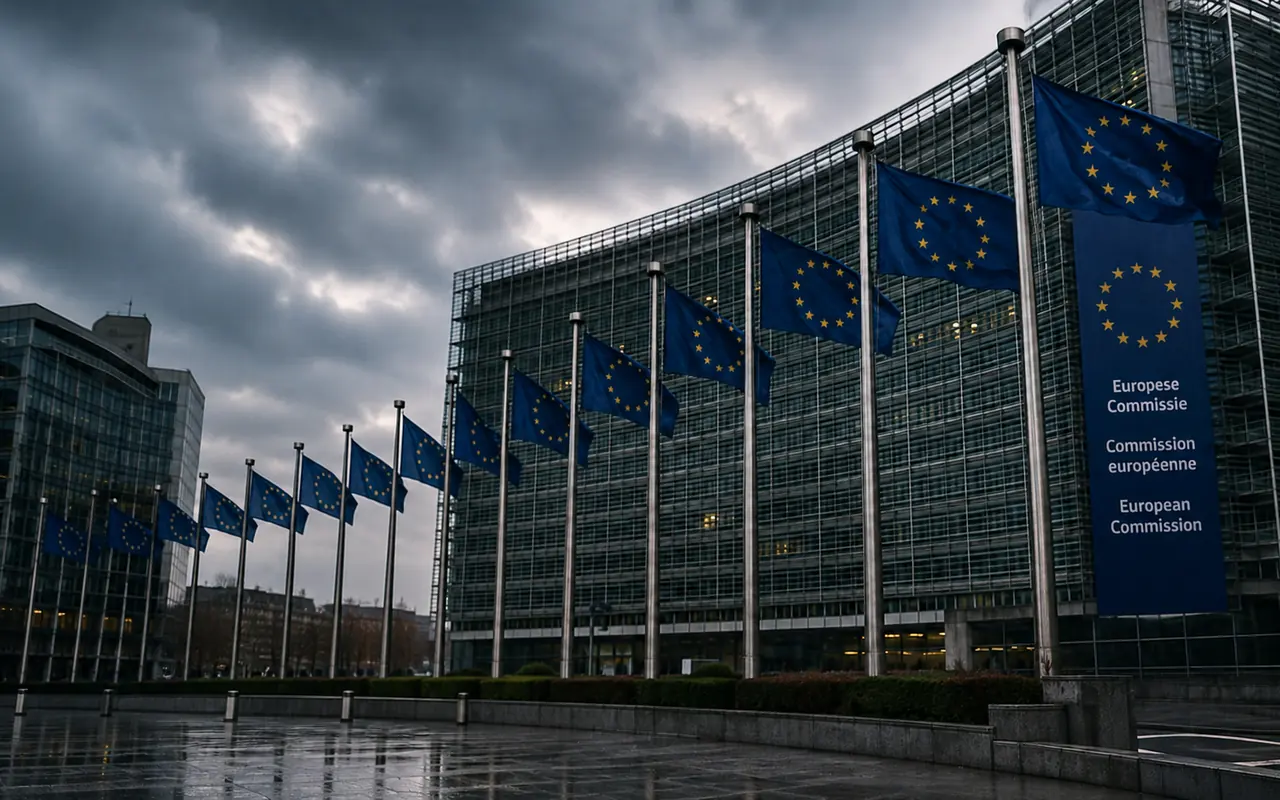
The Lithuania Model: How a Country of Three Million Said No to Beijing and Didn't Get Crushed
In 2021, Lithuania allowed Taiwan to open a representative office under the name 'Taiwan.' Beijing's retaliation was diplomatic downgrading, economic sanctions, and supply-chain pressure. Nearly five years later, Lithuania had not backed down, and China had not escalated further. What does this case tell democracies beyond Taiwan? What was the price? And what can Taiwan not simply copy?
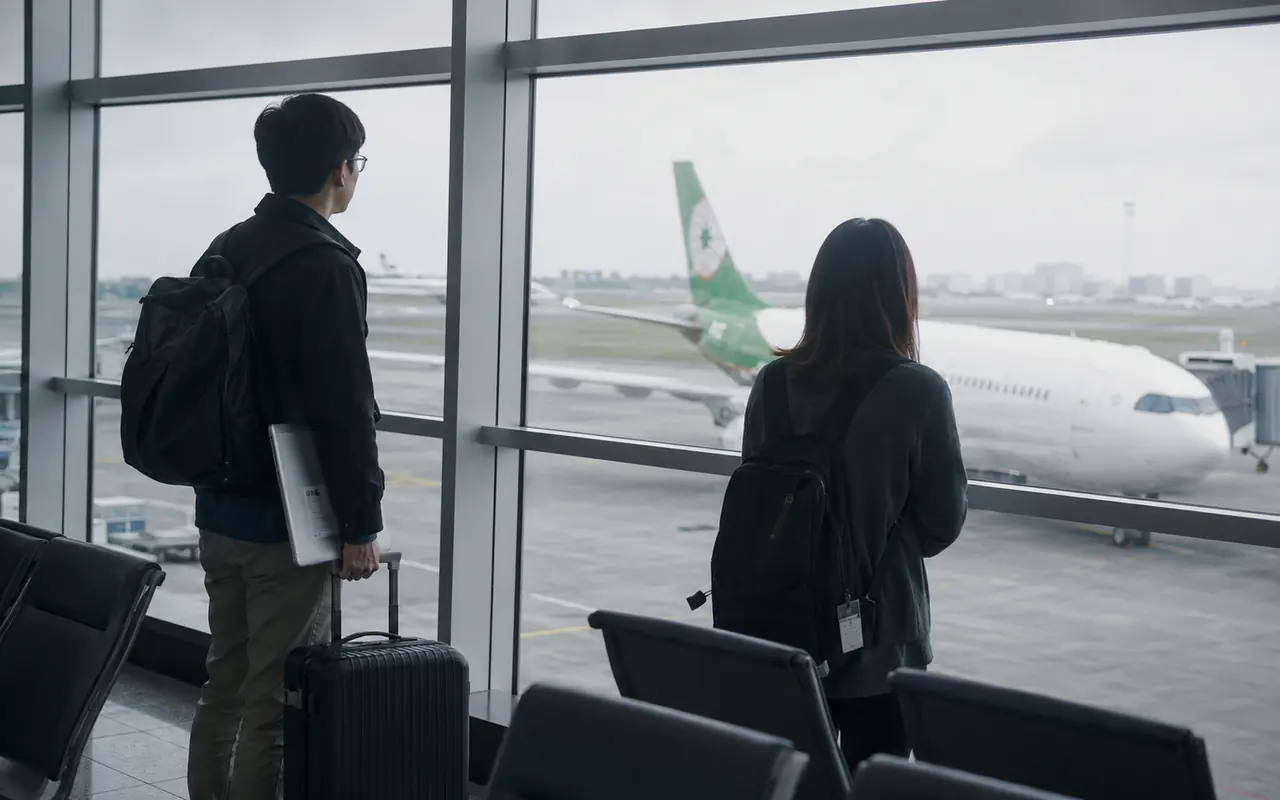
The Talent Ledger: How Much Brainpower Does Taiwan Lose Each Year — Do We Actually Know?
Taiwan faces a triple squeeze at once — an aging population, a birth rate at the bottom of the global rankings, and an outflow of highly skilled talent — yet the policy debate often focuses on the wrong thing. Winning back a handful of overseas Taiwanese will not solve a structural problem; the real question is whether Taiwan can make the next generation of top talent feel that staying is worth it.