
A 400,000–480,000-Worker Shortage by 2030: Taiwan's Bill for the Birth-Rate Decline — How Will It Be Paid?
Taiwan's birth rate of 1.07 is the lowest in the world, its population has declined for 16 straight months, and the National Development Council estimates a labor shortage of about 400,000–480,000 by 2030. But what's truly frightening isn't 'aging' — it's 'aging too fast.' Taiwan took just 7 years to go from an aged society to a super-aged one; Japan took 11, Germany took 36. Opening the door to migrant workers, pushing automation, and coaxing older workers back into the workforce — each of the three fixes has its own ceiling. And the biggest goldmine of labor has been sitting there all along, in the older workers we never invited back to work.
Article contents01 / 06
- The root cause is the falling birth rate; the more immediate worry is aging 'too fast': Taiwan's birth rate is about 1.07 (per the CIA's 2021 ranking methodology; the actual 2025 figure has fallen below 0.7, last among 227 economies), and its population has declined for 16 straight months. Taiwan entered a super-aged society in 2025, having taken just 7 years to go from an aged society (2018) to a super-aged one (compared with 11 years in Japan, 19 in Italy, and 36 in Germany) — leaving almost no time to adjust its institutions.
- The gap is concrete: the National Development Council estimates a labor shortage of about 400,000–480,000 by 2030, the demographic dividend ends in 2028, and the mid-level workforce gap (per the Directorate-General of Budget, Accounting and Statistics, DGBAS) already exceeded 130,000 in 2021; migrant workers topped 850,000 in September 2025, and policy has shifted from 'short-term supplementation' toward 'long-term retention and mid-level skills' (the 2022 program, with eligibility further relaxed in 2023) — a pragmatic step, but one that remains contentious.
- The most overlooked solution is older workers: Taiwan's labor-force participation rate for ages 55–64 is just 49.2% (versus 78% in Japan), and only 9.2% of those 65+ are employed (versus 36.3% in South Korea and 25.6% in Japan) — this is Taiwan's largest untapped labor pool. All four legs must move together with tackling the root cause of the birth-rate decline; none can be skipped.
“A 400,000–480,000-Worker Shortage by 2030: Taiwan's Bill for the Birth-Rate Decline — How Will It Be Paid?” reports that Taiwan's Birth Rate Is the Lowest in the World, and Its Population Has Fallen for 16 Straight Months(1.07)。 Just 8,684 newborns in April 2025 [8]。
“A 400,000–480,000-Worker Shortage by 2030: Taiwan's Bill for the Birth-Rate Decline — How Will It Be Paid?” reports that Taiwan Took Just 7 Years to Go From Aged to Super-Aged — One of the Fastest Transitions in the World。 Japan 11, Italy 19, Germany 36。
“A 400,000–480,000-Worker Shortage by 2030: Taiwan's Bill for the Birth-Rate Decline — How Will It Be Paid?” reports that Taiwan's Labor-Force Participation Among Ages 55–64 Trails Japan and Germany by Far: The Largest Untapped Labor Pool(49.2%)。 Employment among those 65+ is just 9.2% (South Korea 36.3%, Japan 25.6%) [5]。
“A 400,000–480,000-Worker Shortage by 2030: Taiwan's Bill for the Birth-Rate Decline — How Will It Be Paid?” reports that The National Development Council Estimates a Labor Shortage of About 400,000–480,000 by 2030; the Demographic Dividend Ends in 2028。 The mid-level workforce gap (DGBAS) already exceeded 130,000 in 2021 [2]。
“A 400,000–480,000-Worker Shortage by 2030: Taiwan's Bill for the Birth-Rate Decline — How Will It Be Paid?” reports that Migrant Workers Topped 850,000 in September 2025, Up 110,000 in Two Years。 Policy is shifting from 'supplementing the workforce' to 'long-term retention and mid-level skills' [1][6]。
“A 400,000–480,000-Worker Shortage by 2030: Taiwan's Bill for the Birth-Rate Decline — How Will It Be Paid?” reports that Migrant Labor + Automation + Older Workers/Women + Tackling the Root Cause of the Birth-Rate Decline(Four Legs)。 None can be skipped (see 'The Unaffordable Island') [4]。
Taiwan has a bill coming due, and the amount is 400,000 to 480,000 people.
The National Development Council estimates that by 2030, Taiwan will be short about 400,000 to 480,000 workers (the estimate varies depending on when and how it was made; the National Development Council's latest published figure since 2024 has been 480,000); the "demographic dividend" that has propped up this island's economy will officially end in 2028 [2]. Behind this bill lies an even colder number: Taiwan's birth rate is about 1.07 (per the CIA's 2021 ranking methodology; the actual 2025 figure has fallen below 0.7), dead last among 227 economies worldwide; in April 2025, the entire country had only 8,684 newborns, and its population has now declined for 16 straight months [8].
“A 400,000–480,000-Worker Shortage by 2030: Taiwan's Bill for the Birth-Rate Decline — How Will It Be Paid?” reports that Taiwan's Birth Rate Is the Lowest in the World, and Its Population Has Fallen for 16 Straight Months(1.07)。 Just 8,684 newborns in April 2025 [8]。
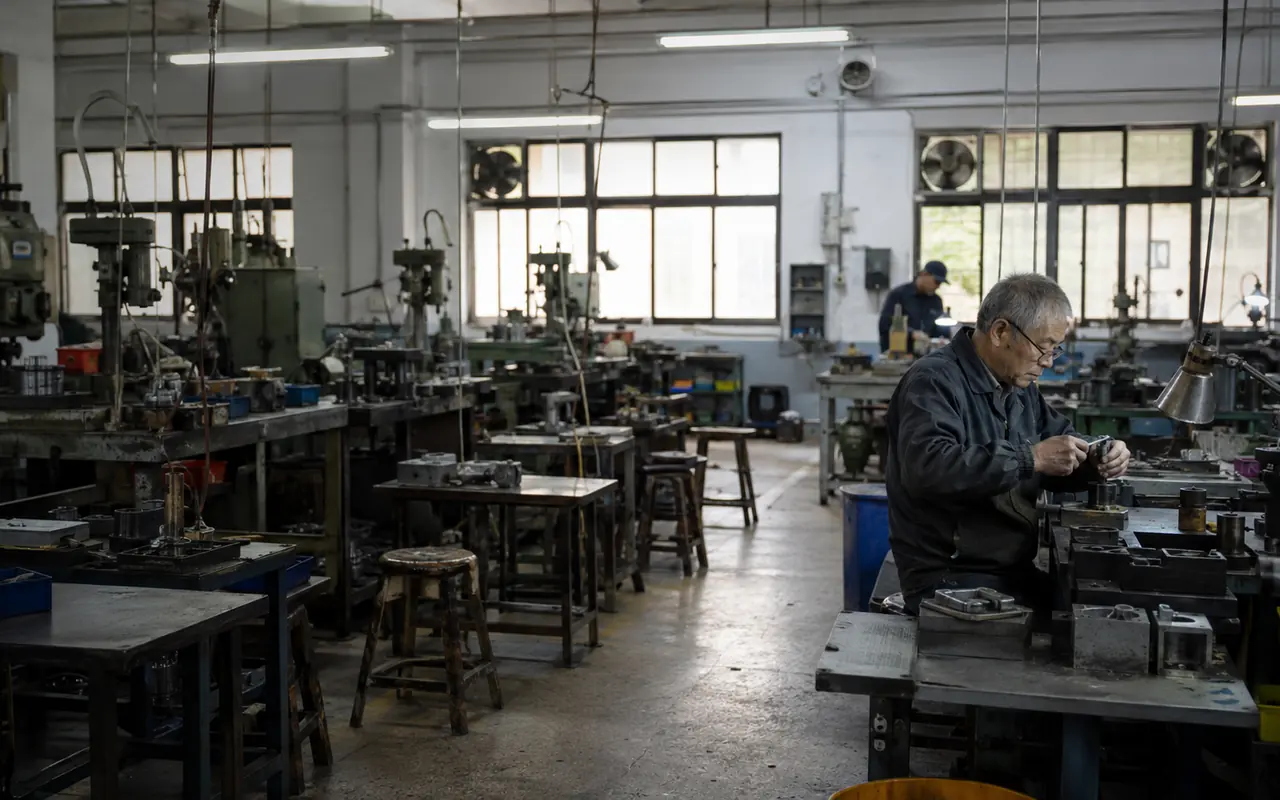
This isn't an abstract statistic. The labor shortage shows up concretely: factory floors that can't find experienced hands, long-term care facilities that can't fill caregiver positions, restaurants that can't put together a full shift schedule. As the labor gap persists, what disappears isn't just job openings — it could be the services and output that make up daily life in Taiwan.
The falling birth rate is no longer a future problem — its bill has come due, and Taiwan has to start paying now. But before talking about "how to pay," we first need to understand something even more alarming than "there are fewer people": Taiwan isn't just aging — it's aging at an abnormally fast pace.
The Real Shock: It's Not "Aging" — It's "Aging Too Fast"
In 2025, Taiwan officially crossed the threshold into a "super-aged society" — one in every five people is now 65 or older [9].
This transition itself isn't unusual — Japan, Italy, and Germany have all been through it. What's genuinely astonishing is the speed. Taiwan went from an "aged society" (in 2018, when those 65 and older passed 14%) to a "super-aged society" in just 7 years. By comparison, it took Japan 11 years, Italy 19 years, and Germany a full 36 years.
“A 400,000–480,000-Worker Shortage by 2030: Taiwan's Bill for the Birth-Rate Decline — How Will It Be Paid?” reports that Taiwan Took Just 7 Years to Go From Aged to Super-Aged — One of the Fastest Transitions in the World。 Japan 11, Italy 19, Germany 36。
What does that 7 years mean? It means Taiwan has almost no time to prepare. Germany had 36 years to gradually adjust its pension system, long-term care system, and immigration policy; Taiwan must cram the same adaptation that took other countries a generation or two into less than a decade. And on top of that, Taiwan's working-age population (ages 15 to 64) already peaked back in 2015 and has been declining ever since 2016. The tap supplying the labor force started being turned down ten years ago.
This is the real backdrop to the 400,000-to-480,000-person gap: aging is advancing at full speed on one side, while young people fail to fill the gap on the other.
Aging on One Side, a Caregiver Shortage on the Other
The cruelest arithmetic of a super-aged society is that "people who need care" and "people who can provide care" are moving in opposite directions at the same time. There are more and more seniors, and demand for long-term care keeps climbing; but fewer and fewer working-age adults are available to staff the front lines of caregiving. That's why a huge share of Taiwan's 850,000 migrant workers are currently propping up the front lines of long-term care and home caregiving [6].
In a sense, elder care in Taiwan is already being propped up by migrant workers. Once the countries that supply that labor — Indonesia, Vietnam, the Philippines, and others — start aging and growing economically themselves and become less willing to export labor, Taiwan's caregiving front line will immediately come under strain. Outsourcing the burden of long-term care to migrant workers for the long run is today's solution, but it isn't an answer Taiwan can rely on forever. So what other solutions does Taiwan have?
Three Solutions, Each With Its Own Ceiling
Facing the labor shortage, Taiwan essentially has three paths open to it — but each one runs into its own ceiling.
The first path: opening the door wider to migrant workers. This is the most direct and fastest-acting option. The number of migrant workers in Taiwan topped 850,000 in September 2025 (per the Ministry of Labor's statistics portal), up 110,000 in two years; the Cabinet has further loosened migrant-worker quotas for manufacturing, hospitality, and ports [6][10]. Note that migrant-worker policy itself is undergoing a qualitative shift — the old logic was "short-term supplementation, repatriation on expiry"; now it's shifting toward "long-term retention." A program passed in 2022 allows migrant workers who have worked in Taiwan for more than six years, or foreign students who have earned an associate's degree or higher, to transfer into "mid-level technical" status, no longer bound by term limits; in 2023, the eligibility criteria were further relaxed, changing the requirement from six consecutive years to six cumulative years [1]. This is a pragmatic step, because many migrant workers are already seasoned hands on the production line and in long-term care settings.
“A 400,000–480,000-Worker Shortage by 2030: Taiwan's Bill for the Birth-Rate Decline — How Will It Be Paid?” reports that Migrant Workers Topped 850,000 in September 2025, Up 110,000 in Two Years。 Policy is shifting from 'supplementing the workforce' to 'long-term retention and mid-level skills' [1][6]。
But this path is not without controversy. Labor groups criticize the loosened quotas for suppressing domestic wages; social integration, protection of labor rights, the lack of a path to permanent residency, and "long-term dependence on migrant workers" are all difficult problems to solve [6][7]. Migrant workers are necessary, but far from sufficient.
A deeper problem is that Taiwan has always treated migrant workers as "guest workers" — here to work, gone when the term ends — and has rarely planned seriously for them as "future Taiwanese." Pathways for language, children's education, permanent residency, and career advancement all remain incomplete, so even the most capable migrant workers find it hard to put down roots in Taiwan. As neighboring Japan and South Korea both start loosening immigration rules to compete for people, if Taiwan stays stuck in a "short-term borrowing" mindset, it may not even be able to hold on to the 850,000 workers it already has.
The second path: pushing automation and AI. Using machines and algorithms to fill repetitive labor gaps is an important direction for manufacturing — but not a stand-alone solution — and it's a path the Oxford Institute of Population Ageing has specifically flagged for Taiwan to make better use of [4]. But automation requires substantial capital investment, which is a high barrier for cash-strapped SMEs — and SMEs are precisely the group hurting most from the labor shortage. Large firms that can afford robotic arms tend not to be short of workers; the small firms that genuinely need people can't afford the machines. This is the most awkward mismatch in Taiwan's automation solution.
Japan's experience is worth studying. Facing an aging population that arrived even earlier, Japan has, on one hand, deployed large numbers of collaborative robots and automation equipment on small and mid-sized manufacturing floors, and on the other hand used "Silver Human Resource Centers" to match retirees with flexible-hours work, making "retired but not idle" a social norm. Taiwan's "Silver Talent Service" is modeled directly on this approach, but the scale and depth of its matching are still in their early stages. The key isn't whether the policy exists — it's whether the policy can actually deliver people and machines to the SMEs and caregiving sites that need them most.
The third path: bringing middle-aged and older workers, and women, back into the workforce. The government is promoting reemployment programs for older workers and a "Silver Talent" scheme modeled on Japan [4]. And this is precisely Taiwan's largest — yet most overlooked — goldmine.
The Overlooked Goldmine: The Older Workers Never Invited Back
Here is the single number in this entire piece most worth remembering.
Taiwan's labor-force participation rate for ages 55 to 64 is just 49.2% — meaning more than half the people in this age group have already left the workforce. By comparison, the same-age participation rate is a striking 78% in Japan and 73.3% in Germany [5]. The gap is even starker above age 65: only 9.2% of Taiwanese seniors are still working, versus 36.3% in South Korea and 25.6% in Japan. Looking just at men aged 60 to 64, Taiwan's figure is 53.6%, while Japan's is 86.7% [5].
Why do Taiwanese people leave the workforce so early? The reasons are intertwined: a traditional culture of "you should retire once you reach a certain age," the design of the pension and labor-insurance systems, age discrimination that repeatedly blocks older workers from finding jobs, and large numbers of grandparents "conscripted" into raising grandchildren — effectively swapping paid workplace contribution for unpaid family labor. None of this is an unchangeable fate; it's a set of choices that institutional reform can loosen.
Beyond older workers, women are another under-mined goldmine. Taiwanese women's labor-force participation drops noticeably after childbearing age, forming a curve of "leaving the workforce once the baby arrives." Many mothers don't lack the desire to work — they're stuck because they can't find, or can't afford, childcare. If childcare, long-term care, and flexible-hours support could keep pace, freeing women from having to choose between "work" and "caring for the family," the labor released would be substantial too. This underscores, once again, that Taiwan's greatest labor potential lies not beyond its borders, but among the citizens the system itself is keeping locked out of the workplace.
“A 400,000–480,000-Worker Shortage by 2030: Taiwan's Bill for the Birth-Rate Decline — How Will It Be Paid?” reports that Taiwan's Labor-Force Participation Among Ages 55–64 Trails Japan and Germany by Far: The Largest Untapped Labor Pool(49.2%)。 Employment among those 65+ is just 9.2% (South Korea 36.3%, Japan 25.6%) [5]。
Laid out plainly, the message is clear: Taiwan doesn't lack labor — it has, too early and too broadly, pushed older workers who are still able and willing to work out of the workforce. If Taiwan could raise its older-worker labor-force participation rate close to Japan's level, the labor recovered would be enough to fill a large share of the 400,000-to-480,000-person gap — and these are people who are experienced, need no repatriation, and already live in Taiwan.
The problem lies in the supporting infrastructure. Keeping or bringing back older workers requires flexible working hours, age-friendly workplaces, retraining mechanisms, and childcare and long-term-care support that frees seniors from the role of "family caregiver." None of this currently keeps pace. The biggest goldmine is right underfoot, but Taiwan hasn't yet assembled the tools to mine it.
The two red teams converge here. The Eastern Eye argues pragmatically: the blue-collar labor shortage is real, and without migrant workers, industry grinds to a halt — don't get lost in wishful thinking. The Western Eye counters: relying solely on migrant workers is dodging the structural problem — without fixing low wages, skills mismatches, and the extremely low labor-force participation of older workers, domestic workers and seniors still won't show up. Both sides are right, and where they meet is this: migrant workers are a necessary stopgap, but the real source of fresh water lies in the domestic workforce that has never been invited back.
The Real Root Cause Is the Falling Birth Rate
Trace the problem to its root, and the labor shortage was never an isolated labor-market issue — it's a downstream symptom of the falling birth rate. And the falling birth rate, in turn, interlocks tightly with the sky-high housing prices we discussed in "The Unaffordable Island" and the youth psychology explored in "Doubting America Is Not the Same as Surrendering":
Can't afford a home → afraid to marry and have children → world's lowest birth rate → population cliff → shrinking labor force → labor shortage → declining economic momentum and tax base.
“A 400,000–480,000-Worker Shortage by 2030: Taiwan's Bill for the Birth-Rate Decline — How Will It Be Paid?” reports that The National Development Council Estimates a Labor Shortage of About 400,000–480,000 by 2030; the Demographic Dividend Ends in 2028。 The mid-level workforce gap (DGBAS) already exceeded 130,000 in 2021 [2]。
So treating the labor shortage as a "staffing-agency problem" is destined to treat the symptom, not the cause. It is in fact a piece of national-strength engineering: Taiwan must patch the four legs in the short term (migrant labor, automation, older workers, women) while also going back to tackle the hardest, slowest, yet most fundamental source — making young people feel able to have children. And whether young people feel able to have children loops back to housing prices, low wages, and confidence in the future. This is a long war that must be fought by applying force at both ends simultaneously.
“A 400,000–480,000-Worker Shortage by 2030: Taiwan's Bill for the Birth-Rate Decline — How Will It Be Paid?” reports that Migrant Labor + Automation + Older Workers/Women + Tackling the Root Cause of the Birth-Rate Decline(Four Legs)。 None can be skipped (see 'The Unaffordable Island') [4]。
Only by fitting all four legs — migrant labor, automation, older workers and women, plus tackling the root cause of the falling birth rate — does the stool stand steady; missing any one leg, Taiwan is left trying to catch an accelerating falling weight with just one hand.
Taiwan's Three Perspectives
The state: Treat the labor shortage as a structural engineering project, not a short-term staffing exercise. All four legs need reinforcing at once: migrant-worker policy should move toward "mid-level technical retention and integration of new immigrants"; automation needs real subsidies for SMEs, so the goldmine isn't something only large firms can afford to mine; older-worker and women's labor-force participation is the largest untapped pool, to be mined with flexible hours, age-friendly workplaces, and long-term-care and childcare support; and skills matching needs to target the actual gaps. At the same time, tackle the root cause of the birth-rate decline (connecting to the housing-price problem in "The Unaffordable Island"). Taiwan should make good use of the urgency created by "7 years to super-aged," turning it into a driver of reform rather than a source of panic.
Industry: The labor shortage is a long-term new normal, not a business cycle. What's worth investing in is automation and process redesign, not fighting over the same pool of people year after year. Remember the old saying: retaining talent is cheaper than competing for it. In an era of labor shortages, the companies willing to improve pay and working conditions are the ones that end up winning.
SMEs: You are the ones feeling the blue-collar labor shortage most acutely. Migrant-worker quotas, automation subsidies, older workers, and part-time hours are all tools, but don't forget — pay and working conditions are what actually keep people. When labor becomes a scarce resource, "treating employees well" stops being a cost and becomes your most cost-effective competitive advantage.
The falling birth rate is a slow-motion crisis: it won't explode on any single day, but every year it leaves Taiwan with a little less labor, a little less momentum, a little less future. The 400,000-to-480,000-person gap is only the first bill this slow crisis has issued. Taiwan can afford to pay this bill — but only if it stops trying to patch a stool with three wobbling legs, whose sturdiest leg (older workers) still hasn't even been fitted, using nothing but "hire a few more migrant workers."
Sources
- Executive Yuan — Program for Retaining Migrant Workers for Long-Term Use (Mid-Level Technical Positions)
- National Development Council — Foreign Mid-Level Technical Workforce
- Ministry of Labor Statistics Portal — Number of Migrant Workers Admitted to Taiwan
- Taiwan Insight — Redefining Super Aged: Taiwan's Path in an Ageing Era
- Oxford Institute of Population Ageing — Population Ageing in Taiwan and the role of AI
- Academia Sinica — Labor Shortage and Gender Inequality in Taiwan
- Focus Taiwan (2025-10-30) — Cabinet policy to allow more migrant workers slammed by labor groups
- Taipei Times (2025-10-31) — Cabinet policy to allow more migrant workers slammed by labor groups
- Live Action — Taiwan's birth rate is now the lowest in the world
- Taiwan News (2025-11-10) — Taiwan nears super-aged society threshold as birth rate keeps falling

Products Need a Résumé Too: The EU's DPP Registry Is Live — Who Controls Taiwanese Suppliers' Data?
The EU's DPP Registry has gone live, but not every product becomes mandatory on the same day, and it does not mean a complete data set gets uploaded to a central EU database. What Taiwanese suppliers really need to decide now is who controls identifiers, hosting, access, updates and transfer.
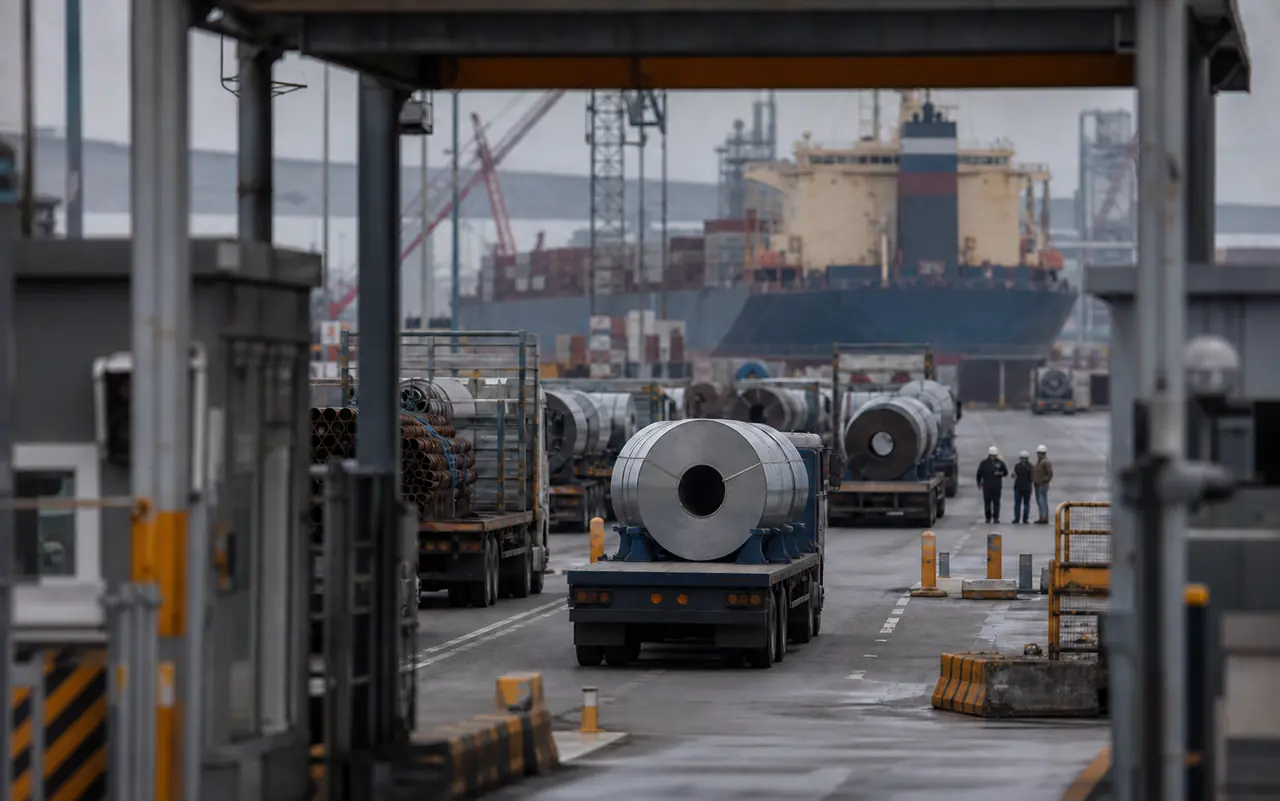
Once the Quota Runs Out, It's Fifty Percent: How the EU's New Steel Tariff Reshuffles Nine Categories of Taiwanese Exports
The EU's new steel regime does not slap 50% on every tonne of Taiwanese steel from the first shipment. Instead it places 26 product categories inside tariff-rate quotas, and only once the relevant quota is exhausted does a 50% out-of-quota surcharge apply. Taiwan holds country-specific allocations in nine categories, but what actually decides whether a given order keeps its margin is the CN classification, origin, quarter, quota order number, and the date the EU accepts the import declaration.