
The Unaffordable Island: How Sky-High Housing Prices Are Quietly Hollowing Out Taiwan's Next Generation
Taipei's price-to-income ratio is roughly 15 to 16 — you'd have to save every dollar of your income for more than fifteen straight years, without eating or paying rent, just to buy a home. What's truly strange is that Taiwan's population is shrinking and more than 900,000 homes sit vacant, yet prices keep climbing. The problem was never 'not enough housing' — it's 'housing being hoarded.' When the tax on holding an empty home costs just 0.1% a year, sitting on it and waiting for it to appreciate becomes the best deal on the island. This is Taiwan's national-security crisis that doesn't look like one.
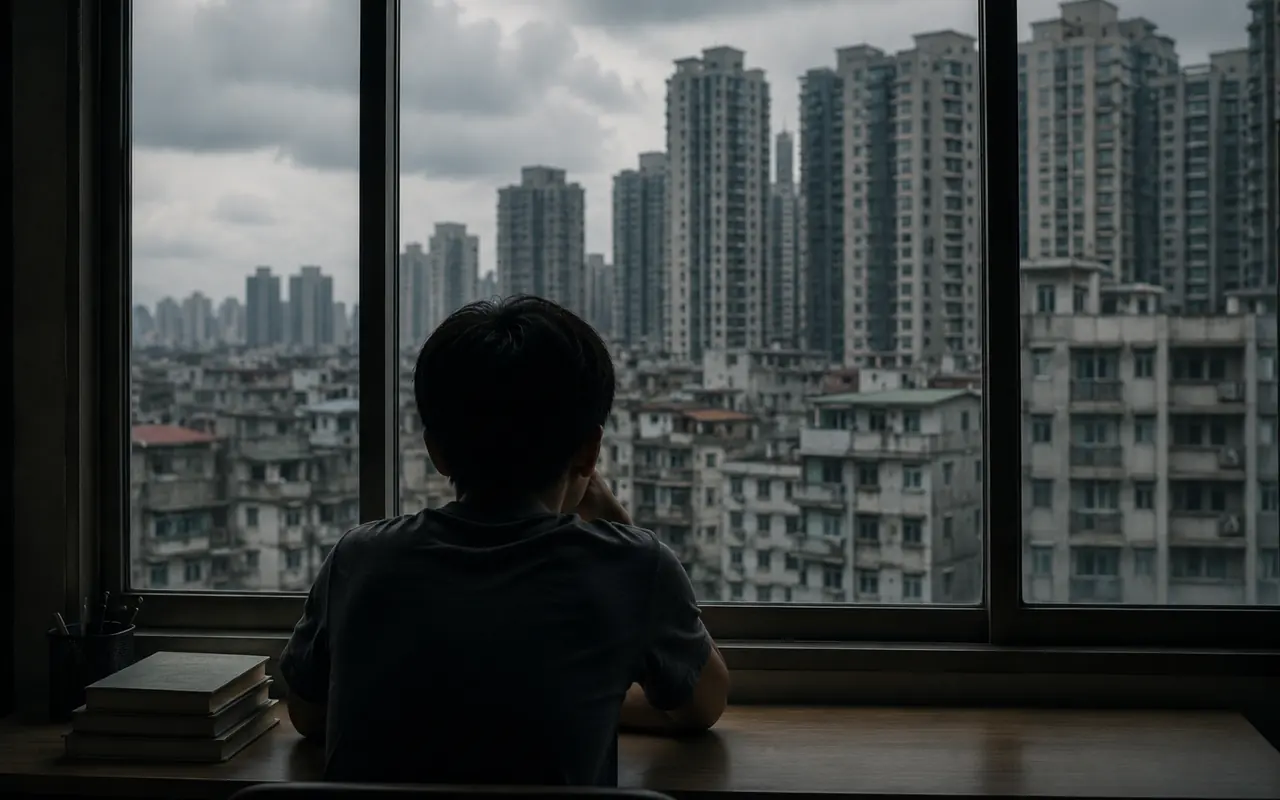
Article contents01 / 06
- The numbers are staggering: official Ministry of the Interior data puts Taipei's price-to-income ratio at roughly 15 to 16 — far above the Demographia affordability benchmark of 3; the housing price index hit 167.53 in Q1 2026 and is still climbing; inflation-adjusted price growth from 2000–2025 came to +181% in Taipei, +290% in Taoyuan, and +270% in Hsinchu.
- At the core is a 'triple-high paradox': high homeownership, a high vacancy rate (about 914,000 barely-used units in the second half of 2024, 9.8% of the housing stock), and high prices all coexisting — proof that the problem isn't a housing shortage but housing hoarding. The root cause is an effective holding-tax rate of just 0.1–0.2% (versus 1.4% in Japan and 0.5–1% in South Korea), the 2009 cut of the estate tax to 10%, and a long-running cheap-money environment that has made 'sit on it and wait for it to rise' an almost cost-free strategy.
- Policy has taken a step in the right direction (House Hoarding Tax 2.0's 'nationwide aggregation' produces its first full tax bills in 2026), but the rate remains low, and the central bank loosened its second-home credit controls (March 2026) just as they started to work; this is a national-security problem — hollowing out the next generation through the chronic chain of 'can't afford a home → won't marry or have children → population cliff → labor shortage → hollowed-out national strength' (see 'The Labor Shortage' and 'Doubting America Is Not the Same as Surrendering').
“The Unaffordable Island: How Sky-High Housing Prices Are Quietly Hollowing Out Taiwan's Next Generation” reports that Taipei's Price-to-Income Ratio Is More Than 5 Times the Demographia Affordability Benchmark(15.4)。 Ministry of the Interior data: Taipei ran about 15.4–16.4 from 2022–2025, versus a national average of about 9.7–10.7 over the same period; the Demographia affordability benchmark is 3 [11]。
“The Unaffordable Island: How Sky-High Housing Prices Are Quietly Hollowing Out Taiwan's Next Generation” reports that Barely-Used Housing as a Share of the Housing Stock (About 914,000 Vacant Units, H2 2024)(9.8%)。 The triple-high paradox: not a housing shortage, but housing hoarding [5]。
“The Unaffordable Island: How Sky-High Housing Prices Are Quietly Hollowing Out Taiwan's Next Generation” reports that Real Housing-Price Growth, 2000–2025 (Inflation-Adjusted)(+290%)。 Wage growth has come nowhere close to keeping pace [4]。
“The Unaffordable Island: How Sky-High Housing Prices Are Quietly Hollowing Out Taiwan's Next Generation” reports that Taiwan's Effective Property Holding-Tax Rate: Sitting on an Empty Home Costs Almost Nothing(0.1–0.2%)。 U.S. 1–2% / Japan 1.4% / South Korea 0.5–1% [6]。
“The Unaffordable Island: How Sky-High Housing Prices Are Quietly Hollowing Out Taiwan's Next Generation” reports that House Hoarding Tax 2.0: The First Full Tax Bills Land in 2026 — a Step Toward Curbing Hoarding(Nationwide Aggregation)。 But the central bank just loosened its second-home controls again (March 2026) [8]。
“The Unaffordable Island: How Sky-High Housing Prices Are Quietly Hollowing Out Taiwan's Next Generation” reports that A Wave of New-Home Completions in 2026–28, Plus 80,000–100,000 Units of Unsold Inventory(320,000–360,000 units)。 A correction you can see coming — not a crash you can buy into [7]。
Let's start with a number you've probably heard before, but that deserves to shock you all over again.
In Taipei, the price-to-income ratio is roughly 15.4 to 16.4 — official Ministry of the Interior data shows it has held in that range from 2022 through 2025. That means someone earning the median wage would have to save every single dollar of their income for more than fifteen straight years — no food, no rent, nothing — just to buy a home [11]. Zoom out further: the national price-to-income ratio climbed from 4.26 in 2002 to 9.97 in 2023 — more than doubling over two decades — with Taipei running well above the national average throughout that period [11].
Demographia's standard holds that a price-to-income ratio below 3 counts as "affordable" (the World Bank and UN-Habitat more often cite a broader range of 3 to 6) [11]. Taiwan's national average is about 10; Taipei's is 15 to 16, where mortgage payments swallow roughly two-thirds of a household's income — far past the 30% affordability ceiling [1][11]. And the curve shows no sign of turning: the housing price index hit 167.53 in the first quarter of 2026, up from 163.25 at the end of 2025 — it is still climbing [3].
“The Unaffordable Island: How Sky-High Housing Prices Are Quietly Hollowing Out Taiwan's Next Generation” reports that Taipei's Price-to-Income Ratio Is More Than 5 Times the Demographia Affordability Benchmark(15.4)。 Ministry of the Interior data: Taipei ran about 15.4–16.4 from 2022–2025, versus a national average of about 9.7–10.7 over the same period; the Demographia affordability benchmark is 3 [11]。
Translate that number into an actual person: a 28-year-old office worker earning just over NT$40,000 a month, eyeing a small Taipei apartment priced above NT$10 million. Just the 20% down payment would require him to save every dollar he earns — no eating out, no renting, no entertainment — for more than ten years, and that's before accounting for how much prices will keep rising during that decade. For him, "buying a home" isn't a goal he can reach through effort; it's a door that was locked shut before he even started.
This is usually filed away as "young people's griping." But look one layer deeper at the numbers behind it, and you'll find it's actually Taiwan's national-security crisis that looks the least like one. And to understand it, you first have to untangle a puzzle that seems to defy common sense.
The Puzzle: The Population Is Shrinking. So Why Are Prices Still Rising?
Start by holding two facts in your head at once — both true, and seemingly contradictory.
First, Taiwan's population is shrinking, and its birth rate is among the lowest in the world. By the laws of supply and demand, with demand contracting, prices should be softening.
Second, prices haven't softened at all — they've sprinted upward for more than two decades. Stripping out inflation to get the "real" increase, from 2000 to 2025 Taipei rose about 181%, New Taipei 232%, Taoyuan 290%, and Hsinchu 270% ([4], single-source estimate; medium confidence). Over the same period, young people's real wages have barely moved.
“The Unaffordable Island: How Sky-High Housing Prices Are Quietly Hollowing Out Taiwan's Next Generation” reports that Real Housing-Price Growth, 2000–2025 (Inflation-Adjusted)(+290%)。 Wage growth has come nowhere close to keeping pace [4]。
Fewer people, pricier homes — the law of supply and demand appears to have broken down in Taiwan. Why?
The answer is hiding in an even more jarring number: vacant homes. According to Ministry of the Interior data, in the second half of 2024 Taiwan had roughly 914,000 "barely-used housing units," accounting for 9.8% of the national housing stock [5]. Taiwan simultaneously has "high homeownership, a high vacancy rate, and high housing prices" — what scholars call the "triple high."
Put the three highs together and the puzzle resolves itself: Taiwan's problem was never that there aren't enough homes — it's that homes are being hoarded. Nearly a tenth of all housing sits empty with no one living in it, and prices are still climbing — that isn't a housing market. It's an asset-speculation market.
And this "triple-high" coexistence is genuinely unusual by international standards. In most high-priced cities — Tokyo, Seoul — vacancy rates are not high, because holding costs force owners to keep their properties "in motion": rented out or sold. That Taiwan can simultaneously have high prices, high homeownership, and a high vacancy rate is itself a strong signal that some institutional feature is rewarding people for "buying a home and letting it sit empty."
“The Unaffordable Island: How Sky-High Housing Prices Are Quietly Hollowing Out Taiwan's Next Generation” reports that Barely-Used Housing as a Share of the Housing Stock (About 914,000 Vacant Units, H2 2024)(9.8%)。 The triple-high paradox: not a housing shortage, but housing hoarding [5]。
Why Is Hoarding Such a Good Deal? Because It Costs Almost Nothing
A reasonable follow-up question: with so many vacant homes, why don't owners sell or rent them out instead of leaving them empty?
Because in Taiwan, sitting on an empty home costs almost nothing.
Taiwan's effective property holding-tax rate is only about 0.1% to 0.2%. How low is that? The United States is 1% to 2%, Japan is about 1.4%, South Korea is 0.5% to 1% [6][10]. In other words, holding an idle property in Japan for a year could cost roughly ten times what it costs in Taiwan.
“The Unaffordable Island: How Sky-High Housing Prices Are Quietly Hollowing Out Taiwan's Next Generation” reports that Taiwan's Effective Property Holding-Tax Rate: Sitting on an Empty Home Costs Almost Nothing(0.1–0.2%)。 U.S. 1–2% / Japan 1.4% / South Korea 0.5–1% [6]。
When holding costs shrink toward zero, "hoard a home and wait for it to rise" becomes an almost risk-free business: you don't need to deal with tenants, you don't need to cut your price to sell, you just leave the home sitting there, pay a negligible tax each year, and wait for the asset to appreciate. Add to that the government's 2009 decision to slash the estate tax from 50% down to 10%, plus years of cheap money, and enormous amounts of wealth have flowed into real estate — turning housing from "something to live in" into "something to store wealth in."
That's the core of the triple-high paradox: it isn't the market that's short of housing — it's the system that's rewarding hoarding.
What About Renting? Fleeing to the Rental Market Is No Safer
People who can't afford to buy have nowhere to go but the rental market. But Taiwan's rental market is another unsettling gray zone.
For years, large numbers of landlords have avoided putting their leases "on the books" to dodge taxes, which means Taiwan's rental market has a huge shadow economy and lacks transparent official statistics. Tenants often can't get a formal lease that lets them claim tax deductions or stay long-term, let alone protection against arbitrary rent hikes or eviction. With housing prices already the "first mountain" bearing down, rent is quietly becoming another one — priced out of buying, people are forced to rent, and even "renting with any stability" has become a luxury.
For a young person about to start a family, this means that whether they choose to buy or rent, "having a place to live" — the most basic thing there is — eats up most of their income and most of their sense of security about the future. And a generation that can't be sure of a roof over its head will naturally find it hard to commit to putting down roots — marrying, having children, building a life.
Policy Is Moving — But Is It Hitting the Real Target?
To be fair, the government hasn't been sitting idle. The problem is that the force and direction of its actions often get diluted.
The most encouraging step is House Hoarding Tax 2.0. 2026 is the first year this new system will be fully reflected on property tax bills; its most important change is shifting the calculation logic from "county-by-county" to "nationwide aggregation" — meaning all the properties a person (along with their spouse and minor children) holds across all of Taiwan are now added together for tax purposes [8]. This directly closes the old loophole of "spreading properties across different counties to dodge the hoarding tax," and the direction is right. But the worry is that the tax rate itself remains low, and just how many vacant units this will flush out won't be known until the 2026 tax bills come in.
“The Unaffordable Island: How Sky-High Housing Prices Are Quietly Hollowing Out Taiwan's Next Generation” reports that House Hoarding Tax 2.0: The First Full Tax Bills Land in 2026 — a Step Toward Curbing Hoarding(Nationwide Aggregation)。 But the central bank just loosened its second-home controls again (March 2026) [8]。
It's worth noting that "raising holding costs" is a path that has been used internationally for years. The reason speculative room is relatively limited in Japan, South Korea, and the U.S. is precisely that the annual tax burden on an idle property is high enough to make "sit on it and wait for it to rise" a bad deal [6]. If Taiwan is serious about curbing hoarding, House Hoarding Tax 2.0's "nationwide aggregation" only spreads the net wider — the key still lies in whether the "rate" itself, the blade, is sharp enough. The net has been cast, but the blade isn't sharp enough — vacant homes may not be forced back onto the market.
More worrying is the policy's inconsistency. To cool speculation, the central bank rolled out its "seventh round of selective credit controls," at one point capping mortgage loan-to-value ratios for a natural person's second property at just 50%. But not long after, starting March 20, 2026, that second-property ratio was loosened back to 60% [8]. Loosening the grip just as an anti-speculation policy starts to show results inevitably gets read by the market as "the government doesn't actually want prices to fall" — and that damages the credibility of the policy itself.
As for the much-discussed "New Youth Homebuyer Loan" program, it presents a different kind of dilemma. It was meant to help young people make their first home purchase, but critics point out that when the government "subsidizes demand" with low interest rates and high loan-to-value ratios while supply fails to keep pace, it effectively helps push up demand and prices together — the subsidy may end up padding the price of the home rather than the buyer's pocket. The New Youth Homebuyer Loan program is set to expire in July 2026, and its successor, "New Youth Homebuyer Loan 2.0," is reportedly set to add an income cap of NT$2 million a year to exclude wealthier applicants [9]. Whether that will fix this side effect remains to be seen.
What about the supply side? The good news is that 2026 to 2028 will bring a wave of 320,000 to 360,000 newly completed housing units, on top of an accumulated 80,000 to 100,000 units of unsold inventory — in theory, that should hold prices down [7]. But the industry consensus can be summed up in eight blunt words: "a correction you can see coming, not a crash you can buy into." For anyone already holding capital, this is a buying opportunity; for young people who genuinely need a home but can't afford one, the door is still locked.
“The Unaffordable Island: How Sky-High Housing Prices Are Quietly Hollowing Out Taiwan's Next Generation” reports that A Wave of New-Home Completions in 2026–28, Plus 80,000–100,000 Units of Unsold Inventory(320,000–360,000 units)。 A correction you can see coming — not a crash you can buy into [7]。
Why This Is a National-Security Issue
Zoom out — but without exaggerating. The real danger of sky-high housing prices isn't the housing itself; it's the chronic chain it sets in motion:
Can't afford a home → afraid to marry and have children → world's lowest birth rate → population cliff → labor shortage (see "40,000-Person Labor Shortage by 2030") → declining economic momentum and tax base → the long-term hollowing-out of national strength.
This chain isn't a sensationalist fantasy — it's a causal mechanism you can trace. When an entire generation hands over most of its income to rent or mortgage payments, its capacity to marry, have children, spend, and start businesses all gets squeezed [2]. A similar verdict was made long ago: in 2015, Moody's Analytics economist Emily Dabbs said bluntly that buying a home remained unaffordable for most young Taiwanese, and wouldn't improve in the medium term. More than a decade later, with Taipei's price-to-income ratio still at 15 to 16 and its mortgage-burden ratio approaching seven-tenths, that verdict hasn't just held up — it holds up more strongly than ever.
Made concrete in one household's decision: when a mortgage or rent payment eats two-thirds of income, "should we have a second child" stops being purely an emotional question and becomes a brutal arithmetic problem — one more child could mean never being able to afford the home that gives that child "a room of their own." So more and more young couples are reaching the rational conclusion: don't have children, or have just one. Sky-high housing prices don't need anyone to issue an order — they can drive a country's birth rate lower, year after year, all on their own.
At a deeper level, this interlocks with the youth psychology discussed in "Doubting America Is Not the Same as Surrendering": a generation that feels hopeless about the future and locked out by housing prices may also, bit by bit, see its emotional bond to "defending the homeland" erode. An island people can't afford to live on can't hold on to its people; and an island that can't hold on to its people is harder to defend.
Sky-high housing prices are also carving a new class line through Taiwanese society: whether you own a home increasingly depends not on how hard you work but on whether your parents own one. Those who can afford to buy are mostly the children of "home-owning families" who inherit or receive parental help; those who can't are locked out, permanently. When the simple promise that "hard work buys you a stable home" stops holding true, the fault line between generations — and between those with homes and those without — quietly widens. That erosion of social trust and cohesion is itself an invisible national-security cost.
The two red teams converge here. The Eastern Eye cautions: don't pin housing prices entirely on the government and developers — the causes are genuinely complex, including urbanization, land scarcity, inheritance culture, and global capital flows, and heavy-handed crackdowns can also cause collateral damage. The Western Eye counters: complex causes cannot be an excuse for inaction — setting the holding tax at 0.1% is itself an "institutional choice," and if social housing and the hoarding tax don't actually work, young people are the ones left locked out. Both sides are right, and where they meet is clear: the causes are many, but the consequences are too severe to be waved away with the words "that's just the market."
Taiwan's Three Perspectives
The state: Govern sky-high housing prices as a national-security-level issue, because it is a shared root cause of both the falling birth rate and the outflow of talent. The core principle is "curb hoarding before subsidizing demand" — rather than using subsidies to push demand (and prices) higher, raise holding costs (fully implement House Hoarding Tax 2.0 and get the rate right) so that vacant homes become unprofitable and are forced back onto the market; at the same time, make social housing, rental-management programs, and rental-market transparency deliver real results, not another round of slogans and short-term subsidies. Most important: don't reverse course — loosening controls the moment they start working only teaches the market that "the government doesn't dare let prices fall."
Businesses: Sky-high housing prices push up wages and talent-retention costs, especially for non-semiconductor SMEs that struggle to compete with high-paying industries for talent. Providing housing assistance or dormitories is shifting from a "perk" to an actual "retention tool" — in an era of labor shortages (see "The Labor Shortage"), companies that can help employees solve the problem of "where to live" are the ones that keep their people.
Young individuals: Understand first that sky-high housing prices are a structural problem, not a matter of "you not working hard enough." Recognizing this isn't meant to make you resigned — it's meant to keep you from betting your entire life on "waiting until I can afford a home." Make practical choices about how you live (rent vs. buy), your career path, and where you live (cities outside the greater Taipei area often have far lower price-to-income ratios), and free the rest of your life's choices from being held hostage by housing prices.
Missiles and warships are the visible national-security threats; sky-high housing prices are the invisible kind. They won't blow anything up on any given day, but every single day, they quietly mean one fewer child born on this island, one more young person who leaves, and one more empty home with no one living in it. Defending Taiwan means not only holding the Strait, but holding on to the reasons the next generation still wants to stay.
Sources
- OECD (Tax Policy Studies No. 29) — Housing Taxation in OECD Countries (An International Comparison of Property Holding Taxes)
- National Chengchi University Real Estate Research Center — Construction Indicators: Price-to-Income Ratio and Mortgage-Burden Ratio (Official Ministry of the Interior Data Over Time)
- JSR — Unaffordable Taiwan: An Economic Analysis of High Housing Prices and Low Wages
- Taipei Times (2025-05-20) — EDITORIAL: The housing crisis is still pricing out young people
- TradingEconomics — Taiwan House Price Index
- Global Property Guide — Taiwan's Residential Real Estate Market Analysis 2026
- MacroMicro — Taiwan Barely-used Housing Ratio (Vacancy)
- Prof. Hung-Yi Chen — Why Taiwan Housing Prices Keep Rising Despite Declining Birth Rates (2026 Data)
- Farglory Real Estate / Liu Pei-chen — 2025 Housing Market Review and 2026 Consolidation Outlook
- HouseFeel — The Seventh Round of Selective Credit Controls, the Second-Home Loosening, and the House Hoarding Tax
- Quan Ju x Inn Taipei — 2026 Taiwan Housing Market Forecast: House Hoarding Tax 2.0, New Youth Homebuyer Loan 2.0, and Price Trends
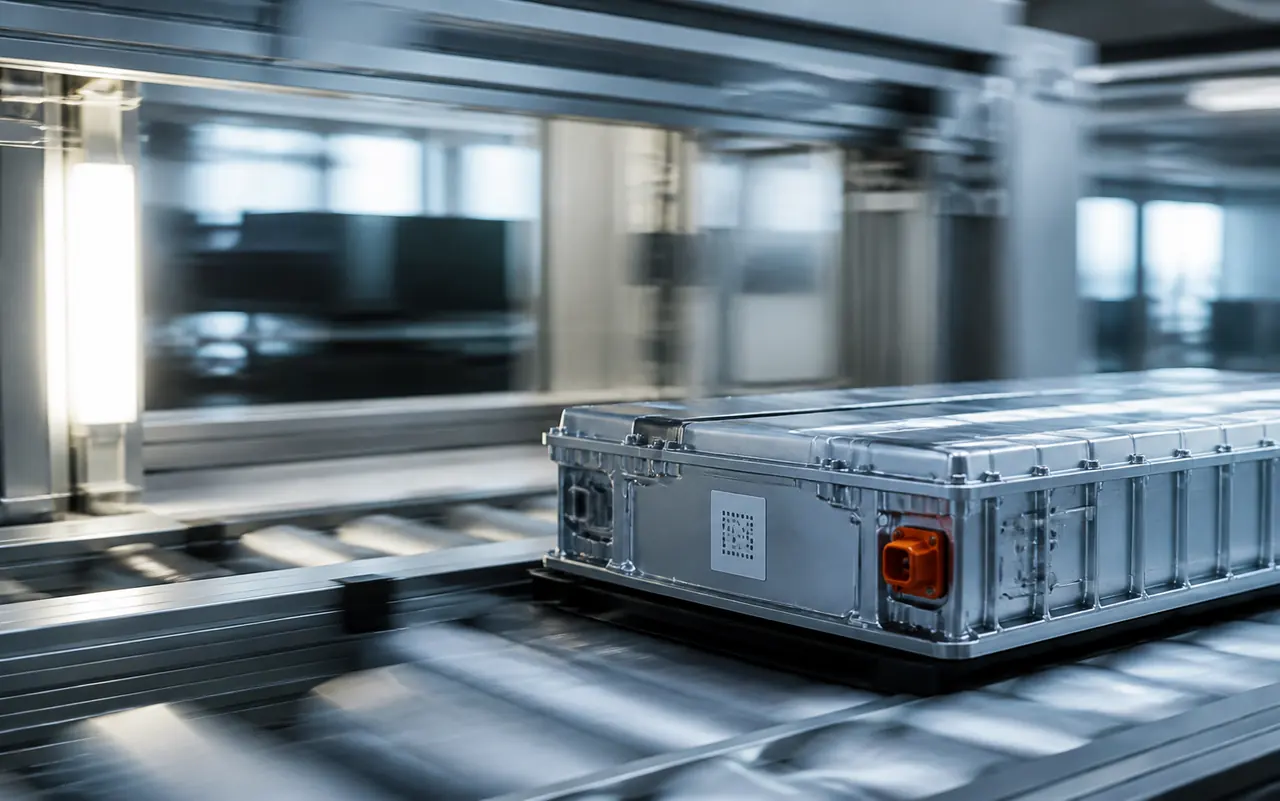
Products Need a Résumé Too: The EU's DPP Registry Is Live — Who Controls Taiwanese Suppliers' Data?
The EU's DPP Registry has gone live, but not every product becomes mandatory on the same day, and it does not mean a complete data set gets uploaded to a central EU database. What Taiwanese suppliers really need to decide now is who controls identifiers, hosting, access, updates and transfer.
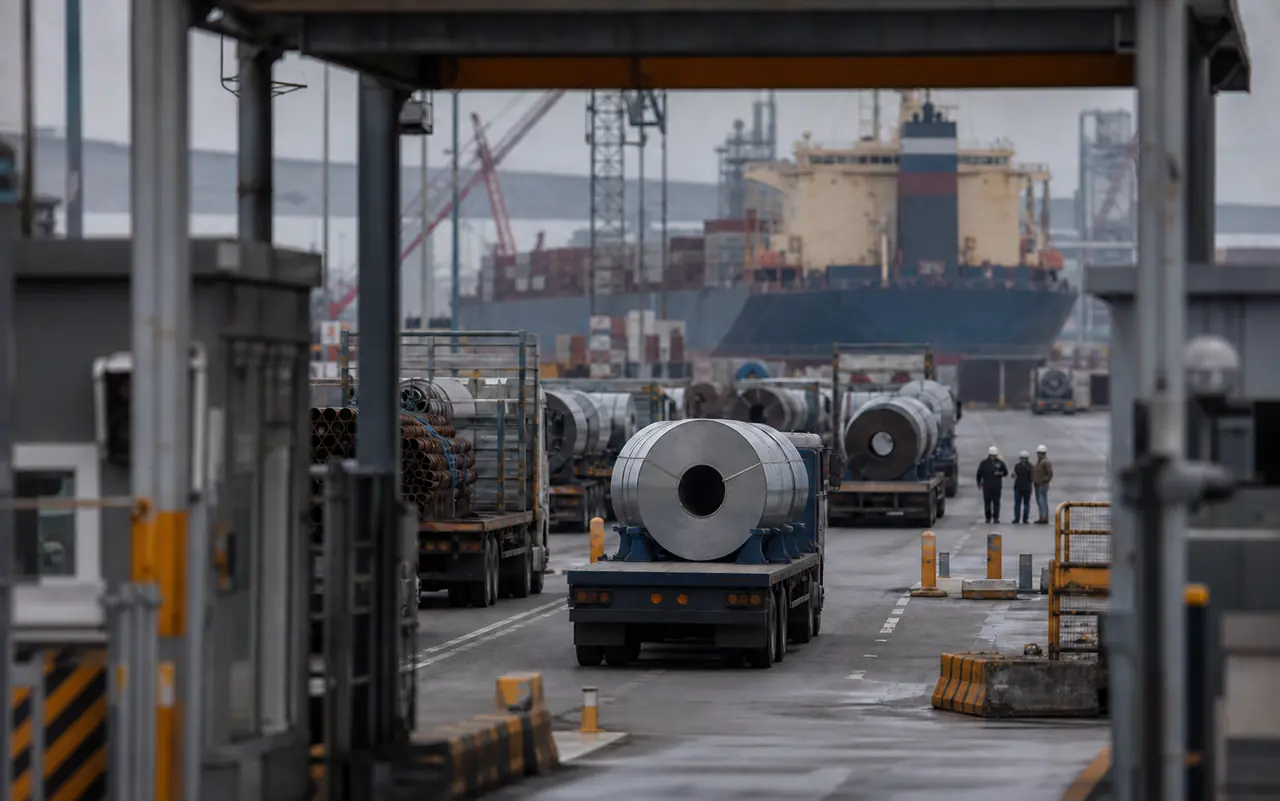
Once the Quota Runs Out, It's Fifty Percent: How the EU's New Steel Tariff Reshuffles Nine Categories of Taiwanese Exports
The EU's new steel regime does not slap 50% on every tonne of Taiwanese steel from the first shipment. Instead it places 26 product categories inside tariff-rate quotas, and only once the relevant quota is exhausted does a 50% out-of-quota surcharge apply. Taiwan holds country-specific allocations in nine categories, but what actually decides whether a given order keeps its margin is the CN classification, origin, quarter, quota order number, and the date the EU accepts the import declaration.