
The U.S. Wields Section 301 Again: Why Does Taiwan Still Face a Proposed 10% Additional Tariff Over Its Forced-Labor Import-Ban Gap?
First, correct one key number: what the United States has proposed for Taiwan is 10%, not 12.5%, and as of July 13 it had still not taken effect. The real point of contention is not that Taiwan tolerates forced labor at home, but that its customs authorities lack a system that both bans the import of goods made overseas with forced labor and lets companies contest that determination.
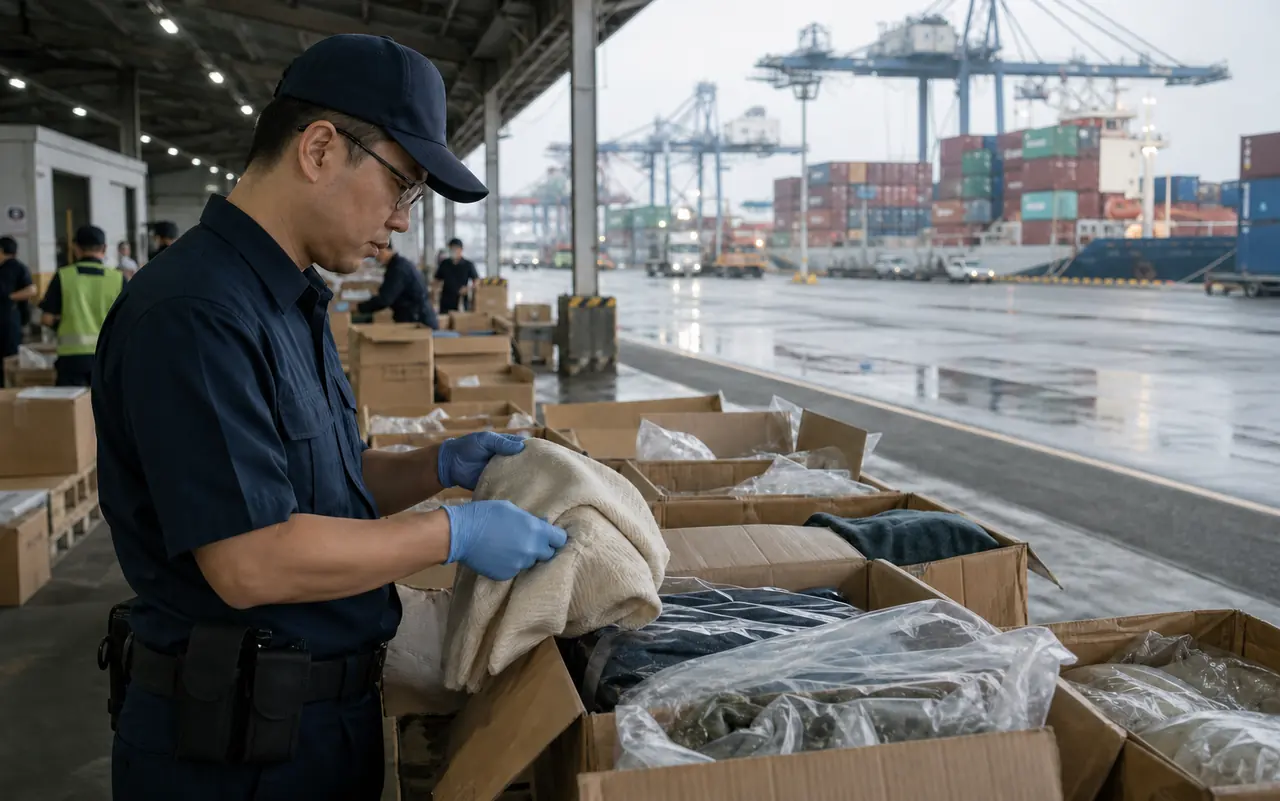
Article contents01 / 10
- Taiwan faces a proposed 10% additional tariff, not 12.5%; as of July 13 it had not taken effect, and the final rate, product scope and effective date are still up to USTR to decide.
- Taiwan already has a law banning forced labor by domestic employers, but still lacks a customs-enforceable border ban addressing goods made overseas with forced labor.
- The most solid path is to close the domestic institutional gap while opposing an imprecise, country-wide tariff on all products, and to trade verifiable compliance milestones for withdrawal or narrowing of the measure.
“The U.S. Wields Section 301 Again: Why Does Taiwan Still Face a Proposed 10% Additional Tariff Over Its Forced-Labor Import-Ban Gap?” reports that The Determination Is Made, but the Action Is Still a Proposal(2026.06.02)。 USTR announced findings across 60 cases; Taiwan was placed in the proposed 10% group because of its ART commitment, not the 12.5% group [1][3][7]。
“The U.S. Wields Section 301 Again: Why Does Taiwan Still Face a Proposed 10% Additional Tariff Over Its Forced-Labor Import-Ban Gap?” reports that A Commitment Bought a Lower Bracket — Not Compliance(10% vs. 12.5%)。 Economies with an existing ban, an ART commitment, or a partial system face a proposed 10%; the other 46 economies face a proposed 12.5% [3]。
“The U.S. Wields Section 301 Again: Why Does Taiwan Still Face a Proposed 10% Additional Tariff Over Its Forced-Labor Import-Ban Gap?” reports that Deadline for Post-Hearing Written Comments(2026.07.16)。 After the July 7-9 hearing, the committee still has to evaluate the comments and make a recommendation to USTR [4][5]。
“The U.S. Wields Section 301 Again: Why Does Taiwan Still Face a Proposed 10% Additional Tariff Over Its Forced-Labor Import-Ban Gap?” reports that A Ban Cannot Just Be a Blacklist(Five Steps)。 Risk screening, detention notice, importer rebuttal, remedy decision and periodic review make up an enforceable system。
If you remember only one number, remember this: the additional tariff the Office of the United States Trade Representative (USTR) has proposed for Taiwan over forced labor under Section 301 is 10%, not 12.5%. As of July 13, 2026, this remains a proposal that has not taken effect; the final rate, covered products and effective date all still have no official answer. [1][3][4][7]
The 12.5% figure did not come out of nowhere. USTR did in fact propose two brackets: economies that already have a complete import ban, that have made a commitment under a reciprocal trade agreement, or that already have a partial system face a proposed 10%; the other forty-six economies face a proposed 12.5%. Because of the forced-labor commitment in the Taiwan-U.S. Agreement on Reciprocal Trade (ART), Taiwan was placed in the lower, 10% group. [3][7][8]
This is not splitting hairs. Writing "a proposed 10%" as "an imposed 12.5%" would force the government to answer for a cost that does not yet exist, and could lead companies to change orders, switch suppliers or raise prices ahead of time based on the wrong rate. Conversely, treating the matter as resolved simply because the measure has not yet taken effect would miss the real institutional problem: Taiwan bans forced labor by domestic employers, but still has no complete border regime banning the import of goods produced overseas with forced labor.
This blade is still in the air. What Taiwan needs to do now is close the institutional gap before the outcome is decided, while also pressing the U.S. side for a more precise scope.
“The U.S. Wields Section 301 Again: Why Does Taiwan Still Face a Proposed 10% Additional Tariff Over Its Forced-Labor Import-Ban Gap?” reports that The Determination Is Made, but the Action Is Still a Proposal(2026.06.02)。 USTR announced findings across 60 cases; Taiwan was placed in the proposed 10% group because of its ART commitment, not the 12.5% group [1][3][7]。
Update (July 28, 2026): USTR has issued a "Notice of Actions in Section 301 Investigations" (Federal Register 91 FR 47317, Document No. 2026-15181), converting the "proposed 10%" described in this article into formal final action: effective 12:01 a.m. Eastern Time on July 24, 2026, a 10% tariff — net of MFN, meaning combined with the most-favored-nation rate to total 10% rather than added on top of it — now applies to goods from Taiwan entering the United States. This article's framing, that as of July 13 the measure "remained a proposal that had not taken effect," was accurate at the time of writing but is now dated for readers arriving after that point; the item-by-item detail of the specific exclusions in Annex I and Annex II still awaits manual verification, since the original Federal Register notice presents them as scanned images.
Five-Minute Read: Confirmed, Not Yet Confirmed, and Don't Miscalculate
Three things are confirmed.
First, USTR completed its Section 301 determination on Taiwan on June 2. The report finds that Taiwan's failure to establish and effectively enforce a ban on importing forced-labor-produced goods is "unreasonable" and burdens or restricts U.S. commerce. [1][2]
Second, USTR's action against Taiwan remains a proposed 10% additional tariff. The June 5 notice in the Federal Register is a procedural document soliciting comments and scheduling a hearing — it is not an announcement that a tariff has taken effect. [3]
Third, the hearing held July 7-9 has concluded. In the day-one transcript, the presiding official explicitly stated that the interagency Section 301 Committee would weigh the testimony and written comments before making a recommendation to USTR; because the hearing ran three days, the deadline for post-hearing written comments is July 16. [4][5]
What still needs verification is the final rate, the list of covered products, the effective date, and which compliance milestones Taiwan would need to complete for the U.S. side to withdraw or suspend the action. The Executive Yuan's response on June 3 likewise said the proposed tariff would not take effect immediately, and that the final measure and date remain undetermined. [6]
The calculation this article does not recommend is taking Taiwan's roughly US$198.3 billion in exports to the United States in 2025 and multiplying it directly by 10% to arrive at a so-called "tariff loss" of nearly US$20 billion. That ignores product exclusions, overlap with the existing Section 232 measures, the final list, origin determinations, and how the cost would actually be split among importers, exporters and consumers. [3][17]
What can be confirmed now is that the risk is large — not that the precise loss is already known.
What Exactly Does This Section 301 Blade Cut?
Section 301 is a unilateral enforcement tool under the U.S. Trade Act of 1974. USTR can investigate a foreign government's acts, policies or practices, and if it determines them to be unreasonable or discriminatory and burdening or restricting U.S. commerce, it can propose tariffs or other action. [1][3]
A legal brake is needed here: a USTR determination is a decision under U.S. domestic law — it is not the same as an international court having ruled that Taiwan has violated international law. USTR states in both the report and the notice that a practice can be found unreasonable under the Section 301 framework even if it does not necessarily violate an enforceable international obligation. [2][3]
The U.S. side's chain of reasoning runs roughly as follows: forced labor lowers production costs; if a market allows the resulting goods to enter, its companies and consumers may end up sustaining that cost advantage; and if American companies must comply with stricter import rules, they face asymmetric competition. A country that has not established, or has not effectively enforced, a ban is therefore treated as imposing a burden on U.S. commerce. [2]
This argument rests on a real human-rights foundation. The International Labour Organization (ILO) estimates that 27.6 million people were in forced labor globally in 2021, 86% of it in the private economy. Cross-border raw materials, contract manufacturing, recruitment and transport chains can indeed package exploitation inside what looks like an ordinary product. [14]
But there is still a question of proportionality and precision in the leap from "the problem exists" to "impose a tariff on almost all of a country's products." This is exactly where Taiwan cannot simply accept or simply deny the charge — it has to take the issue apart.
Taiwan Does Not Lack a Ban — It Has Banned the Wrong Border
Article 5 of Taiwan's Labor Standards Act expressly states that an employer may not force a worker to perform labor through violence, intimidation, confinement or other illegal means. [12]
So the claim that "Taiwan does not ban forced labor" is too crude, and it is simply incorrect. For domestic employment relationships, the law already bans it.
The gap USTR points to lies at a different border: when a shipment of cotton, minerals, solar components, seafood or other goods produced wholly or partly with forced labor overseas arrives at a Taiwanese port, can customs detain it under a clear law? Who investigates? What is the evidentiary threshold? How does an importer prove otherwise? How is a wrongful determination remedied?
As of the point of investigation covered by USTR's June 2 report, the U.S. side's answer was no. The report acknowledges that Taiwan is taking measures under the ART, but concludes that Taiwan had not, at that time, banned by law the importation of forced-labor-produced goods. [2]
Taiwan's existing Foreign Trade Act offers a possible legal entry point. In principle the Act allows free import and export, while also allowing the competent authority to announce restrictions, after consultation, for reasons such as fulfilling treaties or trade agreements, public safety, or other policy purposes. Guidance from the Customs Administration on import management likewise shows that goods not placed on a restricted list are generally free to be imported. [10][11]
The problem, then, is not "no legal tool exists at all," but that the tools have not yet been assembled into a system that is predictable, enforceable and subject to remedy. Policy statements and corporate guidance can flag the risk, but they cannot on their own authorize customs to detain a shipment. [9][13]
This distinction matters: acknowledging the border gap does not mean accepting every sanction the U.S. side proposes; opposing a broad tariff does not mean denying that Taiwan needs reform.
Why Did the Commitment Only Buy a 10% Bracket, Instead of Making the Determination Disappear?
The text of Article 3.9 of the ART is fairly specific. Taiwan commits to adopting and effectively enforcing a ban on importing goods mined, produced or manufactured wholly or in part with forced labor; it also commits, through domestic procedures, to adopting findings made by the United States under Section 307 of the Tariff Act of 1930, and to presuming that the related goods may not be imported. [8]
USTR did not entirely ignore this commitment. The Federal Register places three categories of economies in the proposed 10% group: those with an existing complete ban, those that have made a corresponding commitment under the ART, and those that already have a partial system. Other economies face a proposed 12.5%. Taiwan is therefore 2.5 percentage points lower. [3]
But a commitment describes a state to be completed in the future, while a determination examines whether a law and effective enforcement existed at the time of investigation. Conflating the two produces two mistaken claims.
The first is: "Since Taiwan signed the ART, the United States should no longer make a determination against it." This ignores the fact that the commitment still has to be implemented through domestic procedures.
The second is: "Since Taiwan has been found against, the ART commitment is completely useless." This is equally wrong, because the commitment is precisely the explicit basis for the 10%/12.5% split.
The more accurate description is: the commitment bought a lower proposed bracket, but it has not yet bought an exemption from action.
This also exposes a key problem in the negotiation. If the U.S. side genuinely wants to bring about reform, it should publish clear standards for withdrawal: is a regulatory announcement enough? How many enforcement cases are required? When will effectiveness be reviewed? Without milestones, the additional tariff risks turning from an incentive for reform into an open-ended bargaining chip.
“The U.S. Wields Section 301 Again: Why Does Taiwan Still Face a Proposed 10% Additional Tariff Over Its Forced-Labor Import-Ban Gap?” reports that A Commitment Bought a Lower Bracket — Not Compliance(10% vs. 12.5%)。 Economies with an existing ban, an ART commitment, or a partial system face a proposed 10%; the other 46 economies face a proposed 12.5% [3]。
The Tariff Risk Is Large — But Don't Multiply All Exports by 10%
Taiwan's exports to the United States came to roughly US$198.3 billion in 2025, 31.0% of total exports; ICT and audio-visual products alone accounted for roughly US$151.7 billion. This degree of concentration in the U.S. market does make a broad, country-wide tariff genuinely formidable. [17]
Even so, USTR's proposal is not "all Taiwanese exports will necessarily pay 10%." Annex A of the Federal Register notice excludes several categories, including items already covered by the existing Section 232 measures, goods that could cause supply shortages or broader economic disruption, and statutory exceptions such as informational materials, donated goods and travelers' personal baggage. [3]
Furthermore, a tariff is normally paid, as a matter of law, by the U.S. importer, while the economic cost may be shared among the U.S. buyer, the Taiwanese supplier and the end consumer. How that cost is split depends on product substitutability, contracts, margins and market power — it will not neatly equal 10% of export value.
So what companies need right now is a set of scenarios, not a single alarming headline number:
- Baseline scenario: USTR withdraws or suspends the action against Taiwan, and companies bear only the added cost of traceability and documentation.
- Middle scenario: the 10% takes effect but key items are excluded, and some industries renegotiate prices, share the cost, or reroute shipments.
- Stress scenario: the 10% takes broad effect with limited exclusions, and low-margin, highly substitutable exporters face heavier pressure to switch to other markets.
Every scenario should be recalculated once the final HTS list is published. Multiplying all exports by 10% right now is not only imprecise — it could also lead to a misallocation of resources.
The East's Red Team: Why the U.S. Tool Deserves Scrutiny
The strongest objection is not a denial of forced labor — it is a challenge to the link between a country-wide tariff and the stated human-rights goal.
If the real purpose is to intercept problem shipments, a more precise approach would target high-risk products, companies or supply chains directly — detain them, disclose the evidence, and let the importer prove its innocence. U.S. Customs and Border Protection (CBP) already has tools such as the Withhold Release Order (WRO) and the Finding for exactly this purpose: a WRO can detain goods based on information that is reasonable but not yet conclusive, while a Finding is a further, more definitive determination. [18]
A country-wide additional tariff, by contrast, does not require that any given shipment actually be connected to forced labor. A company that has already built full traceability, reimbursed recruitment fees, and protected workers' control over their own documents could still pay the tariff simply because of its country of origin; a genuinely tainted shipment could, in theory, still enter the United States after paying that same tariff. If so, the tariff functions more as leverage to force a foreign government to change its laws than as direct relief for victims.
In its comments submitted to USTR, the US-Taiwan Business Council likewise acknowledged real risks in Taiwan's fisheries and textile sectors — dependence on brokers, recruitment fees, document confiscation and overseas working conditions — but argued that reform should be pursued primarily through the ART and existing dialogue, rather than through a punitive tariff. [20]
A further concern is the expanding use of this legal tool. An Associated Press report places this case in the broader context of the U.S. government searching for additional legal pathways to impose tariffs, and cites critics who question whether labor standards are being used to carry a broader trade-policy agenda. [21] This can only be written up as background and outside criticism — it cannot be asserted as a proven U.S. motive — but it is enough to require USTR to explain the proportionality, exclusions, time limits and conditions for withdrawal of its action.
The West's Red Team: What Can't Taiwan Deflect by Saying "We Have a Labor Standards Act"?
The strongest argument on the other side is equally sharp.
Domestic employers being banned from forcing workers to labor does not automatically stop forced-labor goods produced overseas from entering. Corporate guidance does not turn itself into a customs detention power, and an ART commitment does not enforce itself in the absence of domestic procedures. If Taiwan responds with nothing but a declaration of human-rights principle, it has not actually engaged with USTR's argument. [2][10][12][13]
Nor is the problem entirely outside Taiwan's borders. ILO research on migrant workers in Asian fisheries finds that document confiscation, debt bondage, excessive working hours, unpaid wages, violence and threats are risks that need to be addressed across fishing and seafood-processing supply chains; the research covers destinations including Taiwan. [16]
These regional studies cannot be extrapolated directly into a prevalence rate for all of Taiwan's industries, nor can every instance of poor labor conditions automatically be classified as forced labor. The ILO's eleven indicators — including abuse of vulnerability, deception, restriction of movement, isolation, violence, retention of identity documents, withholding of wages, debt bondage, abusive working conditions and excessive overtime — are, first and foremost, tools for identification and investigation. [15]
But if Taiwan positions itself as a trustworthy supply-chain partner, a democratic ally, and a proponent of high-standard trade rules, it cannot demand that others exclude forced labor from what they export to the United States while lacking an equivalent system for what it imports itself. Closing the gap in its import ban is something Taiwan's own policy consistency requires — not merely a way to pay a lower tariff.
The two red teams therefore converge on one point: the problem is real, but the tariff tool is not necessarily precise.
A Good System Cannot Just Be an American Blacklist
The ART requires Taiwan, through domestic procedures, to adopt U.S. findings made under Section 307. That can reduce duplicate investigations and prevent tainted goods from being diverted from the United States to Taiwan; but "adoption" cannot be turned into automatic copying, with no stated reason, no updates and no right to contest. [8]
CBP's WRO, Finding and other U.S. mechanisms already carry different evidentiary thresholds among themselves. The U.S. Department of Labor's lists of goods produced with child labor or forced labor are used mainly to raise awareness and support risk assessment — not every entry on them is equivalent to a customs ban. [18][19] If Taiwan's system merges every foreign list into a single, non-contestable blacklist, any errors on those lists will translate directly into damaged shipments and reputational harm.
An enforceable system needs at least five steps.
One, risk screening. Classify risk by product, origin, supplier, recruitment model and credible complaints — not by nationality or region alone.
Two, detention and notice. The competent authority should explain the reason for detention, the type of evidence involved, and the deadline for a response, so that goods do not sit at port indefinitely under an opaque process.
Three, importer rebuttal. Accept verifiable transaction records, materials, wage-and-hour data, recruitment-fee records, evidence of who retains identity documents, audits and remediation records — not merely a supplier's self-declaration.
Four, decision and remedy. Release, return, forfeiture or a required improvement should come with written reasons; importers and affected parties should have access to administrative appeal and judicial review.
Five, periodic review. Any list of entities or products must carry a version, a source, a confidence level, updates and the ability to be revoked. Companies that complete remediation should have a way out.
Workers must not disappear from the process either. The real outcome indicators are not just how many shipments were detained, but also whether recruitment fees were returned, whether unpaid wages were made good, whether documents are held by the workers themselves, and whether complaints can be filed free from retaliation. Compliance without remediation is just paperwork.
“The U.S. Wields Section 301 Again: Why Does Taiwan Still Face a Proposed 10% Additional Tariff Over Its Forced-Labor Import-Ban Gap?” reports that A Ban Cannot Just Be a Blacklist(Five Steps)。 Risk screening, detention notice, importer rebuttal, remedy decision and periodic review make up an enforceable system。
Three Layers of Decision-Making for Taiwan: the State, Industry, and SMEs
The State: Close the Gap, and Turn Milestones Into Negotiating Leverage
The government should first determine whether an announcement under the Foreign Trade Act can fully carry a ban of this kind, or whether it needs a legislative amendment, subordinate regulation, or a dedicated statute; it should then assign investigation, determination and enforcement authority among agencies such as the Ministry of Labor, the Ministry of Economic Affairs, the Customs Administration and the Ministry of Agriculture. [9][10]
It should then make the process and non-confidential statistics public: cases accepted, value of goods involved, processing time, releases, returns, forfeitures, appeals and remediation outcomes. Transparency is not an optional add-on — it is the evidence that lets USTR and Taiwanese society judge whether enforcement is actually "effective."
In negotiations with the United States, Taiwan should propose a clear exchange: once the regulatory announcement is made, enforcement begins, the first cases are handled, and an annual transparency report is completed, USTR would withdraw, suspend, or narrow the country-wide additional tariff. This is a reasonable policy proposal, not a commitment the U.S. side has already made — both this article and any government messaging must preserve that distinction.
Industry: Move From Supplier Declarations to Spot-Checkable Records
Large companies should first map their supply chains to identify high-risk materials, regions, recruitment models and layers of subcontracting. Audits should look not just at the date of a factory inspection, but also at wages and hours, recruitment fees, whether workers can freely hold their own documents, whether they can resign, and whether complaints lead to any remedy. [13][15]
If challenged by customs, a company needs to be able to trace a shipment back to its suppliers, transactions and raw materials — not simply hand over a policy statement saying "this company opposes forced labor." Being high-risk is not the same as having already broken the law, but being high-risk without supporting data will make it much harder to get a shipment released.
SMEs: Don't Get Crushed by Fixed Costs
SMEs cannot each be expected to buy expensive traceability platforms or hire cross-border investigation teams on their own. The government and trade associations should provide a common questionnaire, acceptable templates for proof, risk data, a consultation point of contact, and a reasonable grace period for improvement; companies that make a good-faith effort at basic due diligence and take remedial action once problems are found should be able to access tiered treatment or a safe harbor.
The three most practical steps for an SME right now are: list its main suppliers and sources of raw materials, ask about recruitment fees and who holds workers' documents, and keep records of procurement and any improvements made. Don't wait until the final tariff is announced to ask a supplier about this for the first time.
“The U.S. Wields Section 301 Again: Why Does Taiwan Still Face a Proposed 10% Additional Tariff Over Its Forced-Labor Import-Ban Gap?” reports that Deadline for Post-Hearing Written Comments(2026.07.16)。 After the July 7-9 hearing, the committee still has to evaluate the comments and make a recommendation to USTR [4][5]。
Final Judgment: Two True Statements at Once
The first true statement is this: the gap in Taiwan's ban on importing forced-labor-produced goods is worth closing, and must be closed. Taiwan's own Labor Standards Act, which bans employers from forcing workers to labor, cannot substitute for a border regime; the ART's commitment still has to become real enforcement — with legal authority, evidence, appeal rights and remediation.
The second true statement is this: a proposed, broad country-wide U.S. tariff does not automatically become precise just because the underlying issue is legitimate. If a shipment has nothing to do with forced labor and is still taxed simply because it originates in Taiwan; if a genuinely tainted shipment can still be imported after paying that tax — then there is a clear gap between the means and the goal. Taiwan has ample grounds to demand case-by-case enforcement, transparent milestones and revocable conditions in place of open-ended, country-wide pressure.
As of July 13, the most important countdown is not "when exactly the 10% will take effect," but the July 16 deadline for post-hearing comments, and USTR's final decision after that. [4][5]
So there is only one correct way to state the risk: the determination has been made, and the 10% is still a proposal; the gap is real, and the final tariff still awaits confirmation.
Sources
- USTR — June 2, 2026 Press Release on Section 301 Findings and Proposed Action
- USTR — Section 301 Report on the Import Ban on Forced-Labor Goods
- Federal Register — Notice of Determinations and Request for Comments Concerning Actions in Section 301 Investigations
- USTR — Section 301 Forced-Labor Investigation Proceedings Page
- USTR — July 7, 2026 Hearing Transcript
- Office of Trade Negotiations, Executive Yuan — Response of June 3, 2026
- Office of Trade Negotiations, Executive Yuan — Explanation of the USTR Section 301 Findings and Tariff Rates
- Executive Yuan — Chinese Text of the Taiwan-U.S. Agreement on Reciprocal Trade (ART)
- Office of Trade Negotiations, Executive Yuan — Taiwan's Written Comments to USTR and Domestic Measures
- Ministry of Economic Affairs — Foreign Trade Act (English text)
- Customs Administration, Ministry of Finance — Q&A on Import Goods Management
- Ministry of Labor — Labor Standards Act, Article 5
- Ministry of Labor — Reference Guidelines for Enterprises on Preventing Forced Labor
- ILO, Walk Free, IOM — Joint Report, *Global Estimates of Modern Slavery: Forced Labour and Forced Marriage* (2022)
- ILO — ILO Indicators of Forced Labour
- ILO — Towards Fair Seas: Recruitment and Working Conditions of Migrant Workers in Asian Fisheries
- Ministry of Finance — 2025 Statistics on Taiwan's Major Export Markets
- U.S. CBP — Forced Labor Enforcement Frequently Asked Questions
- U.S. Department of Labor — List of Goods Produced by Child Labor or Forced Labor
- U.S.-Taiwan Business Council — Written Comments on the Forced-Labor Section 301 Investigation
- Associated Press — Legal and Policy Background to USTR's Forced-Labor Tariff Proposal
Taiwan's Two Faces
The whole world depends on Taiwan's chips — and is quietly preparing for the day it might lose them. The same island is both the heart of the supply chain and a geopolitical powder keg. How can Taiwan's companies turn "irreplaceable" into an advantage that lasts?
Japan Takes Economic Security Overseas: Can OESA Bring Taiwan's Supply Chains Into State-Level Financing?
Japan has created OESA, extending policy finance to overseas projects that matter for economic security but are hard for existing tools to carry. Taiwan has an opening, but the law taking effect is not the same as Taiwan already being on the list — the real threshold lies in Japan's own interests, project design, and implementing rules that have yet to be published.