
The First Island Chain Lights Up All at Once: Three Things Taiwan Really Needs to Understand Behind the Show of Force
In June and July 2026, established exercises such as KAMANDAG, Valiant Shield, and RIMPAC overlapped across the Western Pacific; RIMPAC alone drew 30 countries and 30,000 personnel. A show of force is not a commitment to come to Taiwan's defense — Taiwan still has to focus on its own command, mobilization, and social resilience.
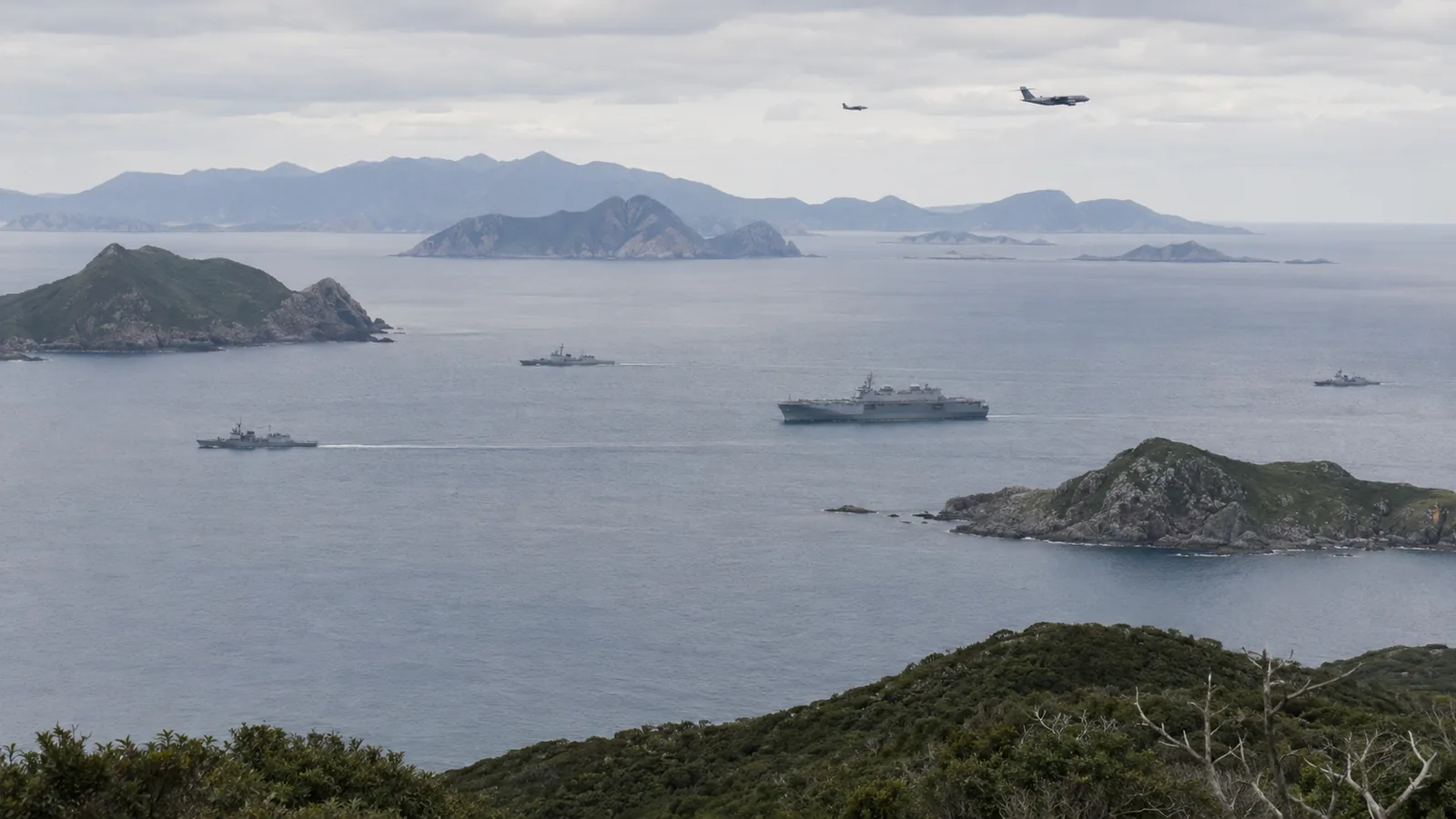
Article contents01 / 06
- In June and July 2026, at least four large-scale exercises overlapped in time and space, but most are established annual or biennial drills; the participating countries and troop numbers cannot simply be added together, nor can this be read as an ad hoc escalation over the Taiwan Strait.
- Takaichi Sanae used scenarios such as a maritime blockade in the Diet to explain the possibility of a 'survival-threatening situation,' but whether one actually applies still requires a case-by-case, comprehensive judgment by the Japanese government, and does not constitute an automatic commitment to enter a war.
- The Han Kuang No. 42 computer-assisted war game actually ran from April 11 to 24, 2026 — 14 days and 13 nights; outside exercises are a bonus, while Taiwan's own command and whole-of-society resilience are the baseline.
“The First Island Chain Lights Up All at Once: Three Things Taiwan Really Needs to Understand Behind the Show of Force” reports that Multiple Exercises Overlap Across the Western Pacific(6/15–7/31)。 KAMANDAG 6/15–7/1, Valiant Shield 6/22–7/1, RIMPAC 6/24–7/31 [15][16][14]。
“The First Island Chain Lights Up All at Once: Three Things Taiwan Really Needs to Understand Behind the Show of Force” reports that Publicly Disclosed Troop Numbers for RIMPAC and KAMANDAG(30,000 personnel)。 RIMPAC: 30 countries, 30,000 personnel; KAMANDAG: more than 2,000 personnel. Different exercises should not be added together [14][15]。
In July, the Western Pacific looked as if the map had lit up all at once. From the Luzon Strait to the Marianas, from Okinawa's Sakishima Islands to the waters off Hawaii, uniforms, warships, and transport aircraft filled the news for the same stretch of weeks. For Taiwanese readers, this is an image that is both familiar and dangerous: familiar, because a round of it comes every summer; dangerous, because the display is so large that it is easy to misread "commotion" as "a guarantee."
This piece will not discuss who would come to Taiwan's rescue — no one has ever signed anything to that effect. What we want to take apart is a more practical question: what has this wave of exercises actually rewritten, and what has it not? And of everything in it, there are really only three things worth Taiwan understanding: the direction of the exercises, the weight of Takaichi Sanae's remark, and Beijing's counter-pressure playbook.
“The First Island Chain Lights Up All at Once: Three Things Taiwan Really Needs to Understand Behind the Show of Force” reports that Multiple Exercises Overlap Across the Western Pacific(6/15–7/31)。 KAMANDAG 6/15–7/1, Valiant Shield 6/22–7/1, RIMPAC 6/24–7/31 [15][16][14]。
I. Within Six Weeks, the First Island Chain Lit Up All at Once
Let's put the facts on the table first. From mid-June to the end of July, at least four large-scale exercises overlapped in time and space across the Western Pacific. A secondary tally once added them up to more than 40,000 personnel from over thirty countries [2], but participating countries and personnel may repeat across exercises, so they cannot simply be added together. The numbers that can be independently verified are: RIMPAC alone had 30 countries and 30,000 personnel; KAMANDAG had more than 2,000 [14][15].
- Resolute Dragon 26: a joint exercise between the US Marine Corps and Japan's Ground Self-Defense Force, spanning training areas across Kyushu, Okinawa, and the Sakishima Islands of Miyako, Ishigaki, and Yonaguni — precisely the stretch of the first island chain closest to Taiwan. The US side committed the 12th Marine Littoral Regiment, bringing along its newly delivered NMESIS anti-ship missile system and MADIS air-defense system; Japan's Self-Defense Forces, for the first time, deployed two new landing-capable transport ships designed for the southwestern islands [2].
- KAMANDAG 10: held in the Philippines from June 15 to July 1, with more than 2,000 personnel; participants included the Philippines, the United States, Japan, and South Korea [15]. An earlier draft had it ending on July 10 and lumped in observer countries as participants — both have now been corrected.
- Valiant Shield 26: the eleventh iteration, marking its twentieth anniversary, wrapped up on July 1 in Guam, the Northern Mariana Islands, and the waters of the Mariana Islands Range, emphasizing multi-domain integration across land, sea, air, space, and cyber [3].
- RIMPAC 2026: the 30th edition, held around Hawaii from June 24 to July 31, with 30 countries, more than 30 surface ships, 5 submarines, more than 206 military aircraft, and 30,000 personnel taking part [14]. An earlier draft's figure of 197 aircraft was not the final official count.
“The First Island Chain Lights Up All at Once: Three Things Taiwan Really Needs to Understand Behind the Show of Force” reports that Publicly Disclosed Troop Numbers for RIMPAC and KAMANDAG(30,000 personnel)。 RIMPAC: 30 countries, 30,000 personnel; KAMANDAG: more than 2,000 personnel. Different exercises should not be added together [14][15]。
This list is intimidating. But the first key splash of cold water is that the overwhelming majority of these are established annual or biennial exercises, not an ad hoc escalation for the Taiwan Strait in 2026. RIMPAC runs every two years, Valiant Shield has been held for twenty years, and Kamandag is now in its tenth iteration. The real change is not "whether the exercises happen," but "how they are conducted and toward where." The US and Japan publicly pledged early in the year to expand joint training "across the entire first island chain" [1] — the center of gravity is shifting steadily south, toward the Sakishima Islands close to Taiwan. A large show of force is the norm; direction is the signal.
Why direction matters becomes clear from the geography. Yonaguni Island is only about 110 kilometers from Taiwan's main island, the closest point of Japanese territory to Taiwan; Ishigaki and Miyako islands sit astride the Miyako Strait — one of the main channels through which PLA naval and air forces move in and out of the Western Pacific and around eastern Taiwan. Physically moving coastal anti-ship firepower like NMESIS onto this line pushes the "first-island-chain blockade line" — which used to exist only in war-game briefings — a step closer to reality. NMESIS is a land-based system that mounts a Naval Strike Missile on an uncrewed vehicle, built for mobile "shoot and scoot" anti-ship strikes that are hard to lock onto; MADIS is aimed at drones and low-altitude threats — both are core to the US Marine Corps's new "Littoral Regiment" doctrine, designed from the outset to use dispersed firepower among the islands of the first island chain to raise the cost of an adversary crossing the sea and contesting control of it [2].
And Kamandag having Japanese paratroopers land on the Batanes Islands carries an even heavier symbolic weight: the Batanes Islands sit at the northern edge of the Luzon Strait, directly opposite Taiwan's southern approach; with Japanese troops appearing south of Taiwan, exercising in the same frame as US and Philippine forces, it amounts to bracketing both the northern and southern ends of Taiwan on the map at once (inference; medium confidence). This is a posture, not a deployment — the forces withdraw once the exercise ends — but the map that gets bracketed is, in itself, a message meant for Beijing.
II. Takaichi Sanae Spelled Out the "Ambiguity"
If the exercises are muscle, what actually rewrote the calculus was a single sentence.
On November 7, 2025, Japanese Prime Minister Takaichi Sanae, answering questions in the Diet, used scenarios such as a forcible maritime blockade of Taiwan to explain the possibility of a "survival-threatening situation" [18]. But she also stressed that whether one actually applies depends on the individual circumstances of the actual event, to be judged comprehensively by the government based on all available information [18]. This was a more concrete public statement than before, but "the first time since the war" and "Japan has shifted to strategic clarity" remain interpretations by the media and analysts, not legal fact.
Beijing viewed this as crossing a line and reacted forcefully. But Takaichi did not retract it. Japanese officials reiterated that contingency planning for the Taiwan Strait is consistent with Japan's constitutional and security framework [7]. Even more worth noting is the public-opinion basis: a poll in November showed 55% of Japanese respondents thought her remark was appropriate, versus 30% opposed [6]; the ruling camp's landslide win in the Diet election on February 8, 2026 instead gave this hard-line approach political legitimacy — Beijing had wanted to make an example of Takaichi to intimidate others, but the result was to strengthen Tokyo's resolve [13].
"Peace and stability in the Taiwan Strait are directly connected to Japan's security" — this sentence moving from diplomatic phrasing to a formal statement by the prime minister in the Diet is, in itself, a shift in the structure of deterrence.
That said, here comes the second splash of cold water, and the most important nuance in this piece:
A "survival-threatening situation" does not equal an automatic entry into war. It is a legal threshold; whether it is crossed, when it is crossed, and to what extent Japan would then commit still depends on the Japanese government's judgment at the time and on Diet procedure — crossing the line does not mean opening fire. Reading Takaichi's remark as "Japan has committed to defending Taiwan" mistakes "keeping an option open" for "giving a commitment." As for the American side, an intriguing episode emerged in March 2026: a US intelligence assessment treated Takaichi's remark as a "major shift" in Japanese policy, yet the Japanese government publicly denied it and insisted its position was consistent [5]. Even within the alliance, there is no consensus yet on how much weight this sentence carries.
In other words, Takaichi pushed Japan's "strategic ambiguity" over the Taiwan Strait a step forward and spelled it out more plainly, raising the intensity of symbolic deterrence (inference; medium confidence); but whether this has actually lowered Beijing's willingness to use force, or raised the probability of actual Japanese intervention, the evidence is not yet sufficient to conclude. That is not to say the symbolism is useless — deterrence is, after all, psychological warfare over "what the adversary thinks," and a remark left on the Diet record, one that withstood pressure from Beijing without being withdrawn, will indeed be factored into the other side's cost calculations. But symbolism can raise the threshold without guaranteeing the outcome. Treating "spelling it out" as "a guarantee" is the cognitive trap Taiwan most needs to avoid.
III. Beijing's Counter-Pressure: From Seafood and Rare Earths to the Senkaku Islands
Beijing's response happened to demonstrate "asymmetric pressure" — not a head-on clash over the Taiwan Strait, but pressure applied to Japan from the flank.
Economically, China issued travel advisories, suspended imports of Japanese seafood, and restricted cultural exchanges; heading into 2026, it went further and directed controls on dual-use items and rare-earth exports at Japan [6][13]. This is the old playbook of weaponizing "economic dependence," but it also confirms one thing: Beijing chose to punish Tokyo through economic and gray-zone means rather than military escalation — keeping things at the level of "economic warfare" even at a moment when exercises were piling up and tempers were running high is, in itself, a signal of restraint (inference; medium confidence). For Taiwan, this is also a mirror: if Beijing really wants to apply pressure, it will not necessarily use force first — it will first squeeze whichever supply chain hurts you most.
At sea, this is linked to the Diaoyu Islands (called the Senkaku Islands by Japan). After Takaichi's remark, in December 2025, two Chinese coast guard vessels briefly entered waters around the Diaoyu/Senkaku Islands that Japan claims as territorial waters [8]; data long tracked by Japan's Ministry of Foreign Affairs shows that Chinese official vessels' activity in these waters is a sustained, routine pressure rather than a single incident [9]. Japan, for its part, has escalated its response: the Japan Coast Guard's FY2026 budget request is roughly ¥317.7 billion (about US$2.15 billion), up 14% year on year and a record high, with plans to acquire four MQ-9B SeaGuardian drones and build two additional large patrol vessels [10]. What this money is for is clear — shoring up the stamina needed for "gray-zone standoffs," so as to avoid being worn down by an adversary's ship-swarm tactics short of actual war.
The significance for Taiwan is this: the Taiwan Strait and the East China Sea are being tied into the same line of tension. Should a spark set things off, the point of ignition need not be the Taiwan Strait — it could be the Diaoyu/Senkaku Islands; conversely, if the Taiwan Strait heats up, Japan's southwestern islands and the waters around the Diaoyu/Senkaku Islands would tighten in step. This linkage is the genuinely new variable added by this round of exercises — it ties Taiwan's security, for the first time this explicitly, to a threshold in Japan's domestic law and to a maritime standoff over an uninhabited island.
IV. Symbolism vs. Substance: What Did the Exercises Actually Rewrite
Pulling the three threads together, back to the core question. What does this wave of major first-island-chain exercises actually mean for Taiwan? Here, at least two readings must be presented honestly — a single answer will not do.
Reading A (the optimistic case): the density of exercises, the southward shift in geographic focus, and Takaichi's remark together raise the political and military cost of any rash move by Beijing. The US and Japan physically deploying firepower units such as NMESIS onto the Yonaguni-Ishigaki line [2] amounts to displaying to Beijing a posture that "can quickly convert to combat power in a crisis." Deterrence has always been psychological warfare over "what the adversary thinks," and multiple countries appearing together, with allied interoperability improving, means the show of force carries real weight in itself; when the adversary sees a net growing steadily denser, its calculations about using force naturally have to be redone.
Reading B (the cautious case): most of these are established exercises; forces come and go, and leave once the exercise ends — actual coming-to-Taiwan's-defense has neither a treaty nor a commitment behind it. Exercises can display "capability," but they cannot answer "will" on Taiwan's behalf — whether, and under what conditions, foreign militaries would pay a price for Taiwan remains blank. More practically, the deployment of firepower along the first island chain mainly serves to "stop the PLA from breaking through the island chain into the Western Pacific," which is not the same thing as "directly relieving Taiwan's main island" — reading the existence of the former as a guarantee of the latter is dangerous wishful thinking. Treating the volume of military exercises as a security guarantee could, if anything, dull the sense of urgency behind Taiwan's own self-defense.
Both readings have merit, and their shared bottom line is this: the credibility of deterrence ultimately does not depend on how many ships allies send, but on how long Taiwan itself can hold out. Symbolism can buy time; substance is what decides the outcome. This is really a matter of telling primary from secondary — external displays of force are a bonus, one's own resilience is the passing grade.
V. Taiwan's Own Parallel Exercise: The Real Lesson of Han Kuang
It is fortunate that Taiwan has not staked its bet on others. The Han Kuang No. 42 computer-assisted command-post exercise actually ran from April 11 to 24, 2026 — 14 days and 13 nights [17]; an earlier draft's "April 19 to 24" and "ten days, nine nights" had carried over an erroneous or outdated year's figures. This round of war-gaming ran the scenario all the way from gray-zone harassment to high-intensity conflict, incorporating multi-domain and compound threats [17]. Whole-of-society resilience and the subsequent live-force exercises should be tracked separately, and training results not yet completed should not be written up as fact ahead of time.
Behind these keywords lies some very hard real-world war-gaming. "Decentralized command" trains for this: if command nodes are decapitated or communications paralyzed on the first day of war, units on the ground can still fight autonomously according to established rules, without waiting for orders from above; the "kill zone" concept trains for concentrating limited firepower on the channels and beaches the adversary has no choice but to cross; "whole-of-society resilience" extends the battlefield from the barracks to the towns — civil defense, the survival of critical infrastructure, and even how daily life keeps running with the network and power down. These training items don't make headlines, but they are precisely the only path that turns "symbolism" into "substance." What Han Kuang trains for is not "waiting for someone to come to the rescue," but "even if no one arrives in time, being able to fight, hold out, and keep running." When every light on the first island chain comes on at once, what Taiwan most needs to check is not other people's ships, but whether its own light is bright enough, and can hold out long enough.
Taiwan's Three Perspectives: Beyond the Show of Force, What Should We Do
At the state level. Treat outside military exercises as a "time dividend," not a "security guarantee." Make full use of the deterrence window opened up by the US-Japan southward shift and Takaichi's remark to accelerate Taiwan's own asymmetric combat power, munitions stockpiles, and command resilience; at the same time, prepare for the linked scenario in which the spark ignites at the Diaoyu/Senkaku Islands, and don't let thinking about the Taiwan Strait fixate only on the median line. Stay mature in public statements — welcoming but not exaggerating, avoiding turning an ally's reserved option into a domestic narrative of a settled commitment, which would only breed the wishful thinking that "someone will come."
The industry-intermediary perspective (trade associations, supply-chain hubs). Beijing's playbook of pressuring Japan with "rare earths plus dual-use items" could be replicated against Taiwan at any time [6][13]. Trade associations should inventory single-source risk in critical materials and components — especially the specialty chemicals, gases, and rare-earth magnetic materials used in semiconductor processes — and build cross-member mechanisms for alternative sourcing and coordinated stockpiling, formally bringing "geopolitical risk" into the industry's shared agenda rather than leaving individual firms to bear it alone, feeling their way in the dark.
SMEs. A military exercise won't directly win you more orders, but geopolitical tension will quietly work its way into your bills through insurance premiums, shipping, exchange rates, and lead times. Three practical moves: diversify exposure away from a single customer or a single shipping route; build Taiwan Strait/East China Sea escalation into your cash-flow stress tests; and confirm that critical materials have backup inventory that can keep shipments going for "two to three months of a broken supply chain." The symbolic show of force from military exercises will pass; operational resilience is your own Han Kuang exercise. When great powers hold war games at your doorstep, what protects you best has never been those warships — it's whether you've already done the math for the worst day.
Sources
- USNI News — US, Japan pledge to expand joint training across first island chain (2026/01/16)
- Center for Security Policy — First Island Chain Mobilizes: Japanese Troops Parachute into the Philippines as Five Exercises Converge
- USNI News — US, partners wrap up Valiant Shield exercise (2026/07/01)
- USNI News Western Pacific Pulse — RIMPAC 2026 troop and vessel numbers (2026/07/03)
- CNBC — Japan rejects US intelligence assessment that Takaichi's Taiwan remark was a "major policy shift" (2026/03/19)
- CSIS — Escalating Japan-China Tensions: Insights from the Past and Prospects for the Future
- German Marshall Fund — Japan's Takaichi Stands Firm on Taiwan
- The Japan Times — Japan Coast Guard reports standoff with Chinese vessels in Senkaku waters (2025/12/02)
- Ministry of Foreign Affairs of Japan — Activities of Chinese coast guard and government vessels around the Senkaku Islands, and Japan's response
- Newsweek — Japan announces plans to counter China's armed coast guard fleet (including FY2026 Coast Guard budget)
- Focus Taiwan — 2026 Han Kuang exercise validates US-style exercise procedures (2026/04/12)
- Taipei Times — Early schedule for Han Kuang exercise (2026/02/07; superseded by the final official release)
- ASPI The Strategist — Beijing pressured Japan over Taiwan; it only strengthened Tokyo's resolve
- US Pacific Fleet — RIMPAC 2026 kicks off
- Defense Visual Information Distribution Service (US) — KAMANDAG 10
- US Seventh Fleet — Valiant Shield 26
- Ministry of National Defense, Republic of China (Taiwan) — Han Kuang No. 42 computer-assisted command-post exercise
- House of Representatives of Japan — Minutes of the 219th Diet Session, Budget Committee Meeting No. 2
- Ministry of Foreign Affairs of Japan — Activities of Chinese coast guard vessels around the Senkaku Islands
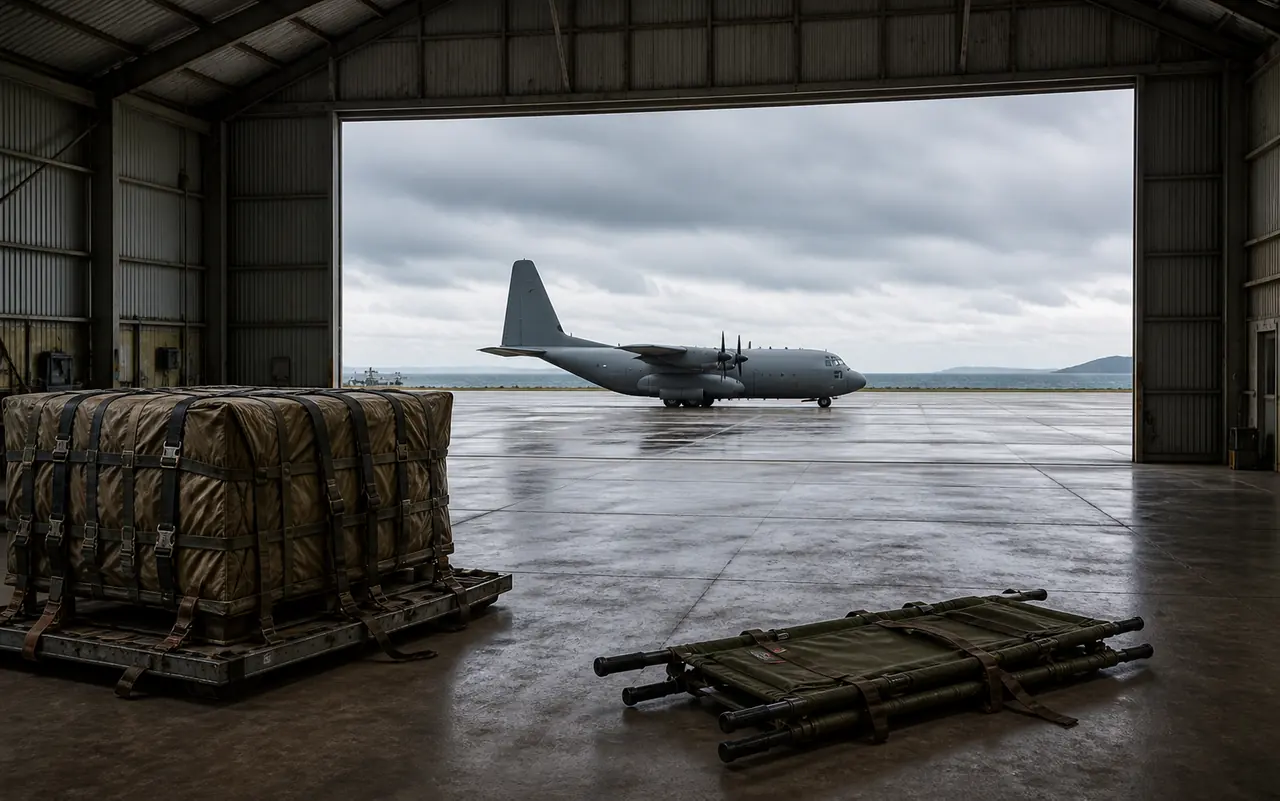
The Philippines' Double Signal: If the Taiwan Strait Erupts, Is EDCA Strategic Depth or a Political No-Go Zone?
Marcos says, on one hand, that the Philippines will not become a springboard for a US attack on China — and, on the other, admits it cannot stay out of a Taiwan Strait crisis. EDCA's real significance is that capability has already been built, while specific activities remain subject to Philippine approval and bilateral mechanisms.
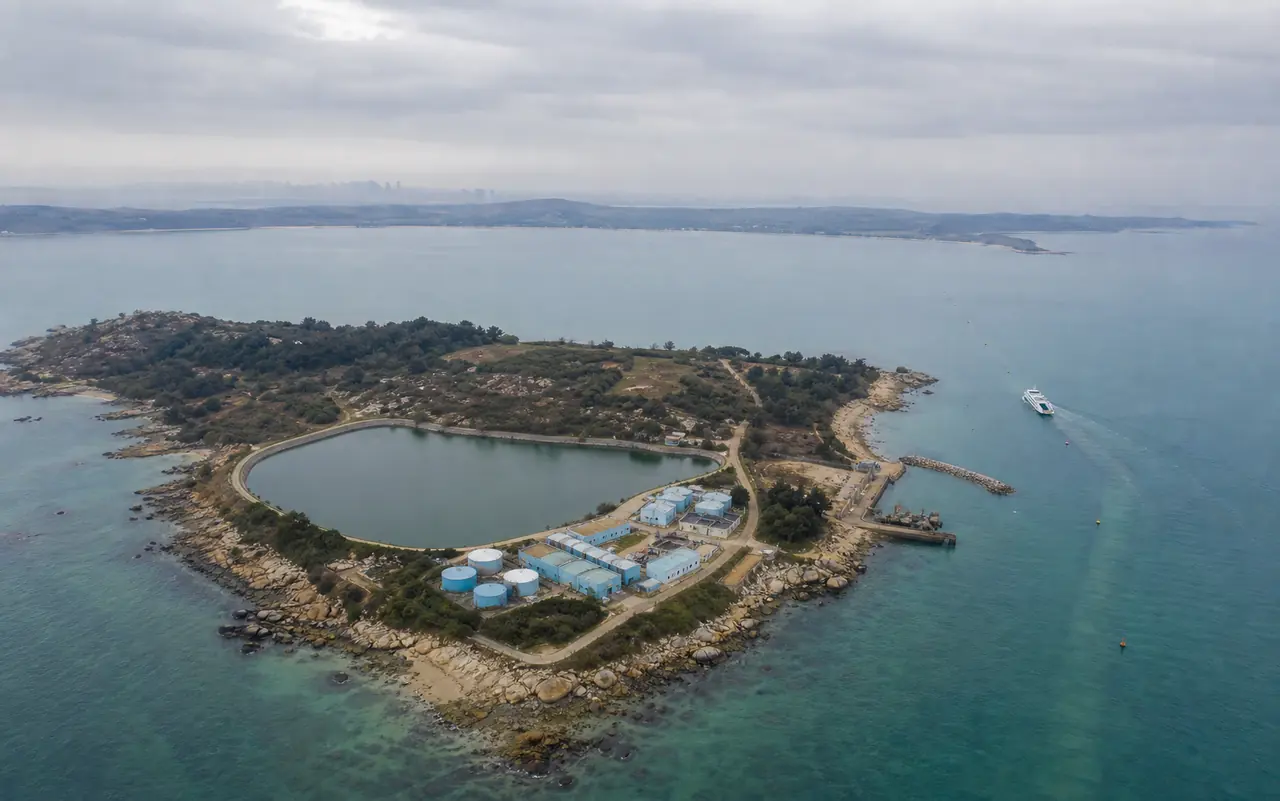
Kinmen and Matsu's Quasi-Integration: How Water Supply, Transport, and Cross-Strait Policy Are Amplifying the Outlying Islands' Resilience Test
Kinmen's water transfer from Fujian, the rebound in Mini Three Links traffic, and Fujian's integration policy are forcing outlying-island governance to face both livelihood convenience and single-source risk at once. The verifiable question is not whether the islands have 'already been taken over,' but how to make backup supply, transport, and commercial options more resilient.