
The Non-Red Drone Problem: Taiwan Wants to Build Its Own Drone Fleet, But the Parts Are Still in China's Hands
The government has made drones a priority of both defense and industrial policy, and requires military and public-sector procurement to run on a non-red supply chain. But this is not a transition a label can complete on its own: Taiwan has to turn component traceability, substitution options and mass-production capacity into verifiable capabilities, one by one.
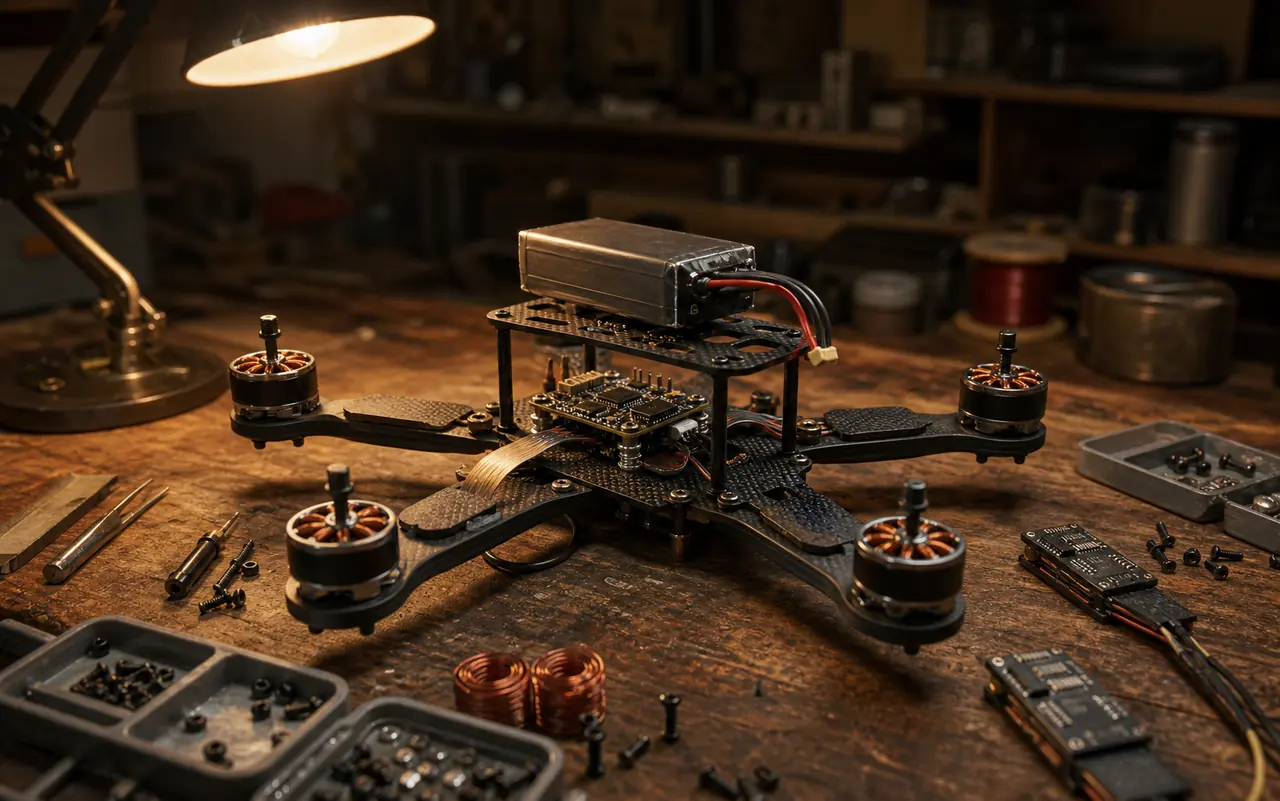
Article contents01 / 07
- Government data show Taiwan's drone industry output rising from roughly NT$5.0 billion in 2024 to roughly NT$12.9 billion in 2025; breaking NT$40 billion by 2030 is a policy target, not already-realized capacity [2][3]
- The Office of the President states that military and public-sector drone production and procurement should reach 100% non-red; procurement guidelines still grade requirements by whole aircraft, module and component, and set a transition period for some passive components [1][5]
- In 2024, military-grade commercial-off-the-shelf (COTS) procurement totaled 3,422 units worth roughly NT$6.887 billion; other expansion needs should be read as policy or procurement planning, not already-contracted orders [3]
“The Non-Red Drone Problem: Taiwan Wants to Build Its Own Drone Fleet, But the Parts Are Still in China's Hands” reports that Drone Industry Output and the Policy Target(NT$5.0B → NT$12.9B)。 MOEA data: roughly NT$5.0 billion in 2024, roughly NT$12.9 billion in 2025; breaking NT$40 billion by 2030 is the government's target [2][3]。
“The Non-Red Drone Problem: Taiwan Wants to Build Its Own Drone Fleet, But the Parts Are Still in China's Hands” reports that A Verifiable Node in the Non-Red Supply Chain(3,422 units)。 In 2025 the government approved a six-year coordinated program; in 2024, military-grade COTS procurement had already delivered 3,422 units; verification going forward runs in tiers through BOM, country-of-origin and supply-chain documentation [3][5]。
Drone supply chains tend to get discussed as two separate questions: "can the finished aircraft fly" and "where do the parts come from." For Taiwan, both matter — but a component's origin that has not been publicly verified cannot be written up as an accomplished fact. The confirmable starting point is this: the government has already placed drones within its industrial and defense planning, and has stated the non-red requirement for military and public-sector procurement in explicit terms; what genuinely still needs to be proven, on an ongoing basis, is whether every layer of components can meet that requirement stably and traceably [1][2].
This article does not argue that the motors, cells, flight controllers or magnetic materials in "Made in Taiwan" drones "mostly come from China" — there is no public BOM evidence covering Taiwan's fleet as a whole to support that claim. Nor does it work backward from policy vision, planned procurement or foreign institutional arrangements to conclude that Taiwan has already achieved a given level of production capacity. The core question is more practical than either extreme: how does the non-red standard the government requires actually get translated into supply-chain proof, and how do companies complete substitution within the constraints of cost, specification and delivery time?
Policy Has a Direction, But a Target Is Not the Same as Delivered Output
The Executive Yuan's approved "Unmanned Vehicle Industry Development Coordinated Program" runs for six years, from 2025 to 2030, with a planned investment of NT$44.2 billion. Its four pillars are expanding domestic and overseas demand, technology development and international linkage, industrial clustering and infrastructure, and regulation and cybersecurity; the Executive Yuan expects overall unmanned-vehicle industry output to break NT$40 billion by 2030 [2]. This is a resource allocation and a performance target — not a guarantee of orders, and not an existing annual output level.
Public data from the Ministry of Economic Affairs (MOEA) offer a comparable near-term baseline: Taiwan's drone industry output rose from roughly NT$5.0 billion in 2024 to roughly NT$12.9 billion in 2025, and exports of finished aircraft rose from NT$140 million to NT$2.95 billion. MOEA also states that more than 20 companies have already entered the US supply chain, and that it hopes to close technology gaps in key modules such as flight control, communications and navigation [3]. These figures show an industry that is growing — they do not mean every product or every component has already achieved full domestic production or full non-red status.
“The Non-Red Drone Problem: Taiwan Wants to Build Its Own Drone Fleet, But the Parts Are Still in China's Hands” reports that Drone Industry Output and the Policy Target(NT$5.0B → NT$12.9B)。 MOEA data: roughly NT$5.0 billion in 2024, roughly NT$12.9 billion in 2025; breaking NT$40 billion by 2030 is the government's target [2][3]。
Military procurement, too, must be separated into what has already been completed and what is still future planning. MOEA data indicate that in 2024, six models of military-grade commercial-off-the-shelf (COTS) drones completed mass-production procurement, worth roughly NT$6.887 billion, with a cumulative 3,422 units delivered [3]. That is one verifiable, already-executed result; expansion scales mentioned in future defense requirements, special budgets or industry plans should not be written up as "confirmed procurement" unless there is an approved budget, a tender, and a contract behind them.
Non-Red Is Not Just a Slogan — Procurement Specifications Already Reach Down to the Component Level
In January 2026, the Vice President, visiting the Asia Unmanned Aerial Vehicle AI Innovation Application Research and Development Center, said that the government's drone production and procurement — whether for the military or the public sector — must "reach 100% non-red (i.e., not dependent on Chinese-origin components) supply chains," moving toward comprehensive domestic production in Taiwan step by step [1]. That is the policy requirement, and it is also the benchmark this article uses to read Taiwan's supply-chain transition.
However, "100%" does not just look at where the finished aircraft is assembled. The government's procurement operating guidelines divide drones into three layers — whole aircraft, module and component — and set four non-red grades, A through D, based on manufacturer, brand and place of origin; a procuring agency can require suppliers to provide certificates of origin, non-red affidavits and a bill of materials (BOM) for key materials, and can order sample inspections, import documentation, or third-party verification where there is doubt [5]. This institutional design comes closer to auditable supply-chain governance than a blanket claim that "the whole aircraft is non-red."
The guidelines also reveal that the transition still faces technical and market constraints: for passive components such as capacitors, resistors, optical lenses and magnets, the highest grade is not applied uniformly and immediately at this stage — instead a transition period is set, with different applicable grades before and after the end of 2026 [5]. That means the policy line is not claiming all materials have already been de-Sinicized; rather, it is using tiered requirements and a timetable to gradually reduce sourcing risk. Spelling out this transition arrangement clearly is, in fact, more useful for oversight than the claim that "all the parts are still in China's hands."
“The Non-Red Drone Problem: Taiwan Wants to Build Its Own Drone Fleet, But the Parts Are Still in China's Hands” reports that A Verifiable Node in the Non-Red Supply Chain(3,422 units)。 In 2025 the government approved a six-year coordinated program; in 2024, military-grade COTS procurement had already delivered 3,422 units; verification going forward runs in tiers through BOM, country-of-origin and supply-chain documentation [3][5]。
Comparing the US System: What's Worth Borrowing Is the Verification Method, Not a Conclusion About Taiwan's BOM
The US Defense Innovation Unit's (DIU) Blue UAS List and Framework is a case of a procuring authority institutionalizing NDAA compliance and cybersecurity review. DIU states that its 2025 selection process brought 23 platforms and 14 components/capabilities into verification and cybersecurity review; the Framework's function is precisely to offer compliant components, sub-components, modules and software options [6]. This shows that component-level verification is a workable institutional direction — but it cannot be used to infer the origin of any given Taiwanese brand's parts.
The global concentration risk on the materials side also needs to be kept at the right level of analysis. The International Energy Agency (IEA) states that in 2024, China accounted for roughly 60% of magnet-material rare-earth mining, roughly 91% of refined output, and roughly 94% of sintered permanent-magnet production [7]. That is the global structure of a specific rare-earth and permanent-magnet supply chain — it is not a direct statistic about Taiwan's drone BOM. Its policy implication is that if a product's specification depends on these materials, procurers and suppliers should get ahead of sourcing, inventory, substitute materials and delivery risk — not raise the question only at final acceptance of the finished aircraft.
The Real Cost Question: Turning Verifiable Demand Into Replicable Capacity
Past commentary has often described the difficulty with a claim that "a non-red drone costs three times as much as a comparable Chinese one," but a fixed multiplier of that kind, spanning different brands and different mission specifications, is not backed by enough public data to serve as an industry-wide rule for Taiwan. A cost comparison needs to specify, at minimum, the aircraft model, payload, communications, cybersecurity, verification, warranty, order volume and delivery time; without those conditions, a price gap cannot support a policy conclusion.
By the same logic, a long-term government target should not be taken to mean suppliers will necessarily deliver on schedule. The Ministry of National Defense's Military News Agency has proposed building a resilient ecosystem step by step through long-term contracts, a non-red supply chain and domestic production, with wartime surge capacity and sustained operations named as the goals [4]. That is a reasonable direction; whether it actually gets delivered still has to be verified, quarter by quarter, through contracts, the number of qualified suppliers, yield rates, materials lead times, testing, and repair capability.
| Question to ask | Publicly verifiable evidence | What should not be inferred directly |
|---|---|---|
| Does it meet the non-red procurement requirement? | BOM, certificate of origin and brand documentation, sample inspection or third-party reports [5] | The origin of the materials in every drone made in Taiwan |
| Has demand already turned into production capacity? | Awarded tenders, signed contracts, delivery and acceptance counts [3] | That a vision or a budget ceiling will necessarily become procurement |
| Is there risk in key materials? | Supplier, inventory, substitution and global market data for specific materials [7] | That any given product will necessarily go out of production because of its sourcing |
Taiwan's Three Perspectives: Turning a Policy Slogan Into an Auditable Capability
The state (procurement and national security): Build the A-through-D non-red grades, BOM fields, certificate-of-origin formats, sample-inspection ratios and change-notification requirements into procurement specifications that are public and enforceable; and regularly publish, as four separate categories, "targets," "awarded tenders," "deliveries" and "failed verifications." This prevents political declarations from substituting for supply-chain management [1][5].
Industry intermediaries (systems integrators and testing units): Build a part-number history and change-control system that keeps traceable records of key modules, firmware versions, suppliers and verification results for the same aircraft model. The coordinated program has already listed flight control, communications, satellite positioning and related software as technology priorities; intermediary units should turn these items into shared standards usable for joint testing and procurement [2].
SMEs (component suppliers): Do not treat "non-red" as a single marketing label. Companies can first use a presentable bill of materials, certificates of origin, alternative sourcing and delivery-time commitments to enter the key-module gaps the government has already identified; if they cannot yet meet the strictest grade, they should honestly disclose the transition arrangement and improvement timeline, rather than make unverifiable claims about the entire chain [3][5].
Competition in drone supply chains will ultimately come down not to who declares the loudest, but to whether procurers can see the origin of every layer, whether companies can sustain supply, and whether the system can stay traceable through component changes. Filling in that evidence is what would give Taiwan a chance to turn "non-red" from a target into resilience.
From BOM to Delivery: Putting Verification Responsibility on Every Change
A bill of materials should not be an attachment tacked on only at delivery — it should be a control document for the entire product lifecycle. A finished-aircraft manufacturer can set minimum fields — part number, supplier, place of manufacture, alternative materials and supporting documentation — for modules such as flight control, communications, navigation, propulsion, optics and batteries; any material substitution, discontinuation or supplier change should be jointly assessed by engineering, procurement and compliance, with the version and the reason kept on record. The point of doing this is not to claim that all materials have already been localized, but to let procuring units carry out sample inspection and traceability at the whole-aircraft, module and component levels set out in the guidelines [5]. If a given component is still within its transition period, the delivery documentation should also clearly disclose the applicable grade and the expected improvement milestone, rather than letting the aircraft's overall nationality paper over the difference.
Verification also has to extend to software and repair. Flight control, communications links, ground stations and update mechanisms all affect whether a drone can be used safely; suppliers should record firmware versions, signatures, known vulnerabilities, repair replacement parts and the boundaries of remote support. The US DIU's list-based system shows that a procuring authority can review platforms, components and cybersecurity requirements at the same time — but its results cannot substitute for Taiwan's own procurement determinations [6]. Taiwan's workable path is to turn local specifications, sample-inspection records and change management into a repeatable verification process, and to build its cost and delivery time into procurement planning.
Policymakers also need to avoid mistaking "there is a supplier" for "there is sustained supply capacity." Output value, targets, procurement deliveries and wartime usable quantity each answer a different question: the output value MOEA publishes reflects the scale of the industry, the coordinated program is a policy direction, and delivered military-grade COTS procurement is a verifiable, executed result [2][3]. To assess capability going forward, attention still needs to go to the number of qualified sources for key modules, testing capacity, inventory, repair cycles and export-market rules. These indicators are not necessarily disclosed in full, but they come closer to real risk management than asserting, on the basis of a single total figure, that supply has been "fully de-Sinicized" or is "entirely controlled by others."
For SME component suppliers, the most practical investment is often to turn verifiability itself into a product: building standing certificates of origin, batch traceability, records of alternative-material testing, quality-anomaly reporting and cybersecurity update documentation. Even before entering a military tender, these capabilities can lower a customer's re-verification cost, and give a company a clearer evidentiary basis when international supply-chain requirements change. Non-red only turns from a label into a sustainable supply-chain commitment once procurers can see both the limitations and the improvement timeline.
How Procurers Can Verify Acceptance
A procuring agency does not need to redo the engineering testing on every component itself, but it does need to ask acceptance questions that are specific enough. First: which non-red grade applies to this batch, and do the documentation for the whole aircraft and for key modules actually line up? Second: if a supplier claims a given substitute material has already been implemented, is there a batch, origin, functional-test and change-approval record to back it up? Third: if a key component is disrupted, what happens to delivery time, repairability and safety updates? These three questions can turn an abstract supply-chain declaration into delivery conditions that a tender can actually be compared against [5].
Acceptance also needs to distinguish "meets current requirements" from "sustainable over the long run." A component that meets specification at the time a contract is signed does not mean it will still have the same source, price or cybersecurity-maintenance capability the following year. A contract can therefore require notification of key-material changes, a retention period for traceability records, responsibility for software updates, and an anomaly-reporting procedure; sample inspection can be arranged for high-risk modules where necessary. These requirements add to management cost, but they keep risk at a stage where it can still be handled, rather than discovering after deployment that a substitute material cannot be used.
Public information has its limits, too. Government announcements can explain policy, plans and part of the executed results, but they will not fully disclose the material details of every piece of defense equipment; companies' commercial secrets and security considerations deserve respect as well. Workable transparency does not mean publishing every drawing — it means letting whoever holds acceptance authority see, under a consistent specification, documentation sufficient to support a judgment. Where the data are insufficient, the correct conclusion is "still to be verified" — not packaging that uncertainty into a national-origin narrative dressed up as either confirmation or denial.
In supply-chain governance, there is also a timing problem that often gets overlooked: verification data need to keep pace with product batches and software versions. If the same model switches communication modules, sensors or battery suppliers in different months, an old compliance declaration cannot automatically cover the new configuration. Companies can set change-trigger conditions — for example, re-checking the BOM and supporting documentation whenever a key component is switched, firmware undergoes a major update, country of origin changes, or a supplier is added to a new risk list. This makes the process more cumbersome, but it avoids a situation where the procuring side only discovers, after delivery, that the documentation no longer matches the physical product.
Feedback from testing and repair matters just as much. A procurement specification that focuses only on the first delivery batch can easily overlook long-term usability: can replacement materials pass the same tests, does re-verification happen after repair, who signs off on software patches, and can a problem be traced back to the affected batch when it occurs? Writing these conditions into supplier management would let the government's non-red procurement requirement rest on a sustainable quality system, rather than a one-time initial affidavit. For suppliers, this record-keeping capacity can also lower the repeat cost of the next tender or an overseas customer's audit.
Finally, procurement documentation should treat "unable to prove" as a signal requiring supplementary material or a restricted scope of use — not as a default pass. Only that way can a traceable record of judgment be maintained between delivery-time pressure and safety requirements, and can later material changes, repairs and cybersecurity updates all have an accountable party that can be traced.
Sources
- Office of the President — Visit to the Drone National Team at the Asia UAV AI Innovation Application R&D Center: Drone Production and Procurement Must Reach 100% Non-Red Supply Chain
- Executive Yuan — Unmanned Vehicle Industry Development Coordinated Program
- Ministry of Economic Affairs — Briefing on the Current State and Progress of Taiwan's Drone Industry
- Ministry of National Defense, Military News Agency — Long-Term Contract Strategy Combined With a Non-Red Supply Chain
- Remote-Controlled Drone Procurement Operating Guidelines — Domestic and Non-Red Requirements for Modules and Components
- U.S. Defense Innovation Unit — Blue UAS Refresh List, Framework Platforms and Capabilities Selected
- IEA — Rare Earth Elements: Executive Summary
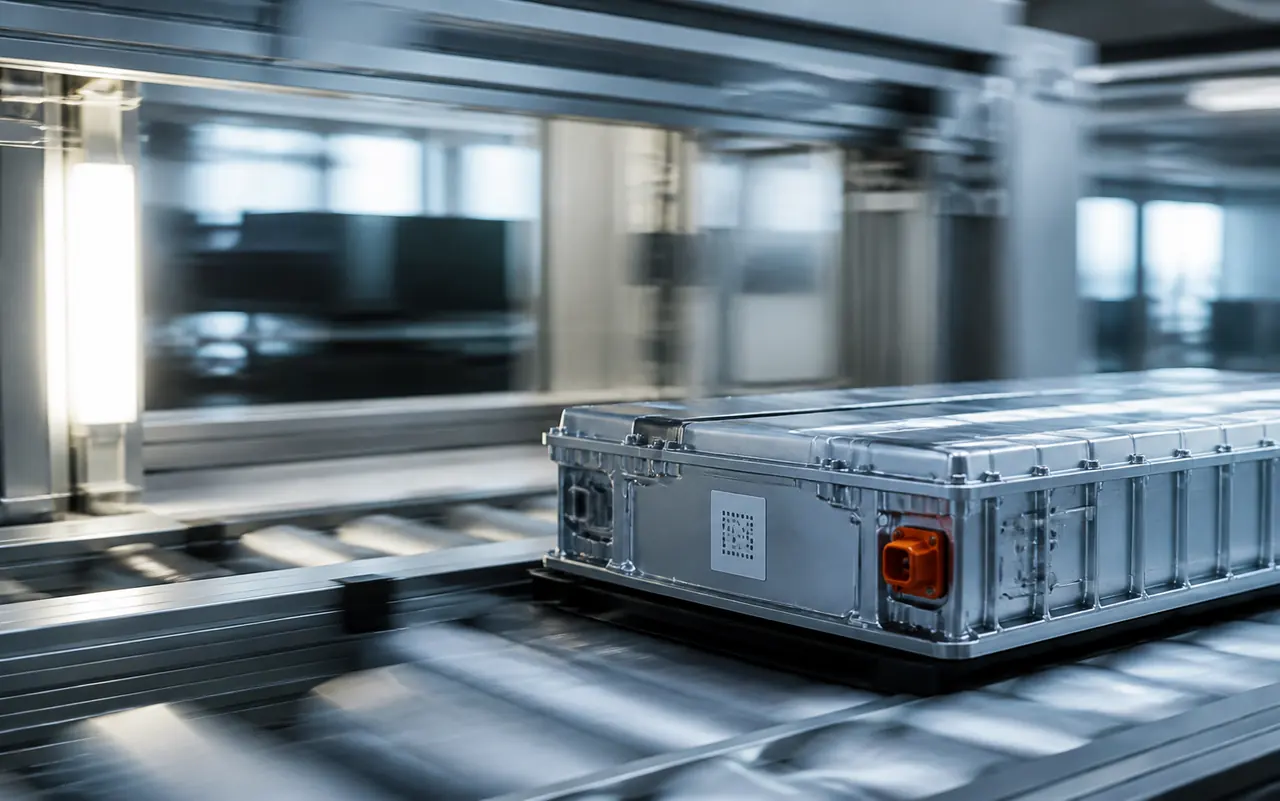
Products Need a Résumé Too: The EU's DPP Registry Is Live — Who Controls Taiwanese Suppliers' Data?
The EU's DPP Registry has gone live, but not every product becomes mandatory on the same day, and it does not mean a complete data set gets uploaded to a central EU database. What Taiwanese suppliers really need to decide now is who controls identifiers, hosting, access, updates and transfer.
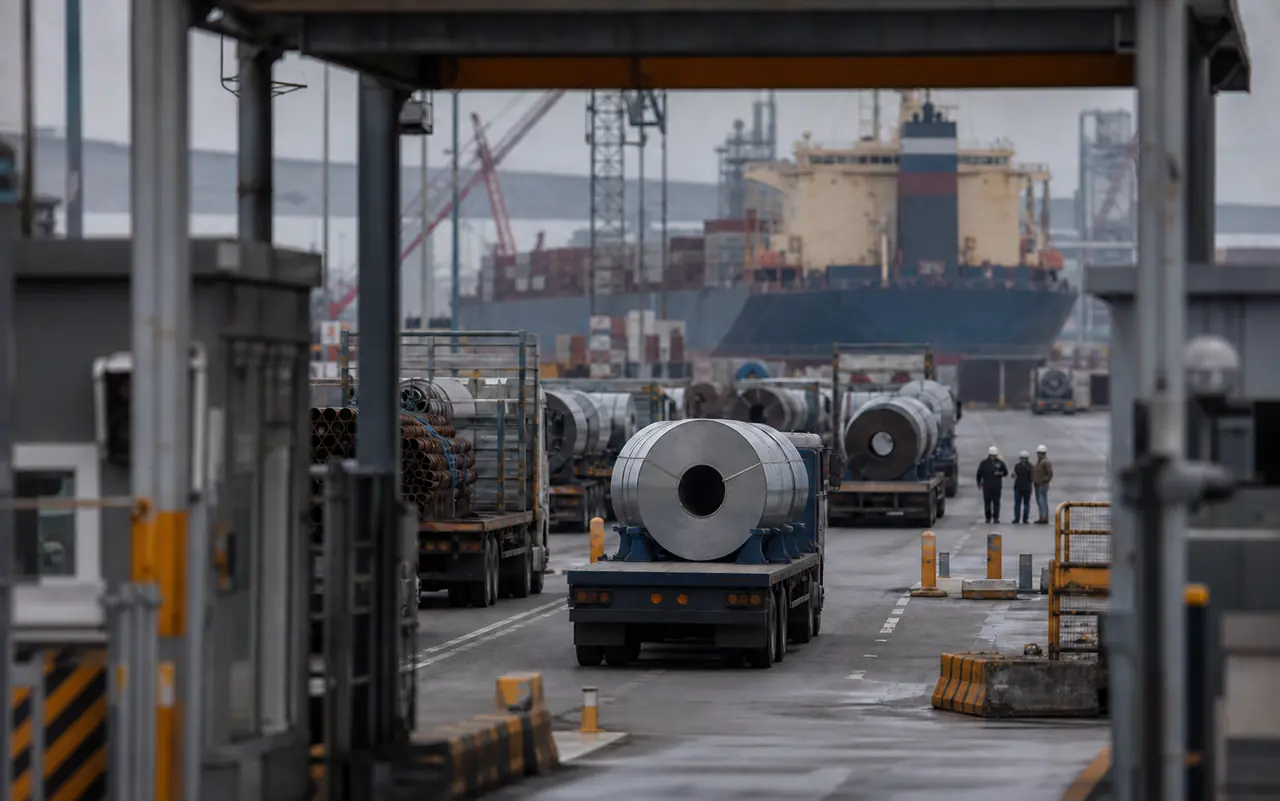
Once the Quota Runs Out, It's Fifty Percent: How the EU's New Steel Tariff Reshuffles Nine Categories of Taiwanese Exports
The EU's new steel regime does not slap 50% on every tonne of Taiwanese steel from the first shipment. Instead it places 26 product categories inside tariff-rate quotas, and only once the relevant quota is exhausted does a 50% out-of-quota surcharge apply. Taiwan holds country-specific allocations in nine categories, but what actually decides whether a given order keeps its margin is the CN classification, origin, quarter, quota order number, and the date the EU accepts the import declaration.