
CBAM Has Arrived: How the EU's Carbon Border Tax Becomes a Hidden New Tariff on Taiwan's Steel, Aluminum, Cement and Fastener Exports
The EU's CBAM has entered its definitive period. For Taiwanese exporters, the key is not to reduce it to a flat tariff rate, but to work with EU importers to complete data on embedded emissions, carbon price already paid at origin, and declaration paperwork — only then can the real cost be judged.
Article contents01 / 08
- CBAM entered its definitive period on 1 January 2026; the EU importer or an authorized CBAM declarant must purchase and surrender certificates, and Taiwanese manufacturers should supply auditable emissions and paid-carbon-price data [1][2]
- Taiwan's general carbon fee is NT$300 per tonne, with preferential rates of NT$50 or NT$100; whether this can be deducted under CBAM depends on what was actually paid, the statutory carbon price, and documentation conditions — it is not an automatic full offset [4][5]
- The CBAM certificate price the EU publishes changes quarterly; any single carbon price is only a reference for that period and cannot simply be multiplied by product weight to produce a fixed bill [2][3]
“CBAM Has Arrived: How the EU's Carbon Border Tax Becomes a Hidden New Tariff on Taiwan's Steel, Aluminum, Cement and Fastener Exports” reports that CBAM's Definitive Period and First Annual Deadline(30 Sep 2027)。 Per the EU's official timetable [1][2]。
“CBAM Has Arrived: How the EU's Carbon Border Tax Becomes a Hidden New Tariff on Taiwan's Steel, Aluminum, Cement and Fastener Exports” reports that The Rate Structure of Taiwan's Carbon Fee(NT$300/t)。 No single rate can be converted directly into the actual CBAM cost for every product [4]。
A New Tariff Bill Priced in Carbon
On 1 January 2026, the EU's Carbon Border Adjustment Mechanism (CBAM) moved from its transitional period into its definitive period [1]. But "who pays" has to be stated precisely first: the obligated party is the EU importer or an authorized CBAM declarant; the Taiwanese exporter's responsibility is to supply auditable emissions data for the product, along with proof of the carbon price actually paid at the country of origin, so that the import side can make the declaration [1][2].
This is not a tariff in the ordinary sense. A conventional tariff is charged by product category and country of origin, with the rate written into a tariff schedule; CBAM charges for "carbon" — the same batch of bolts, made with an electric-arc furnace running on renewable power versus made with high-carbon coal-fired steel, carries wildly different carbon costs. The EU's logic is blunt: since EU-based producers must pay an EU ETS (Emissions Trading System) price for every tonne of CO2, imported products that do not pay an equivalent carbon price amount to "carbon leakage" and unfair competition [1].
The essence of CBAM is turning "where you emitted your carbon" into part of "how much you can sell for in the EU." It does not ask your nationality — only your carbon content.
For export-dependent Taiwan, the damage this mechanism can do lies in being "invisible." It is not written into the tariff schedule you already know, yet it will genuinely raise the cost of every tonne of steel and every box of fasteners you sell into the EU. Not seeing it does not mean it is not there.
How Exposed Is Taiwan
Start with scale. The EU's CBAM-covered product list runs to roughly 248 items; Taiwan has the capacity to produce, and actually exports, 212 of them, overwhelmingly concentrated in steel products [5]. Taiwan's basic metals and metal products account for about 7.69% of overall exports, of which roughly 15% goes to the EU; the EU is Taiwan's fourth-largest trading partner [5].
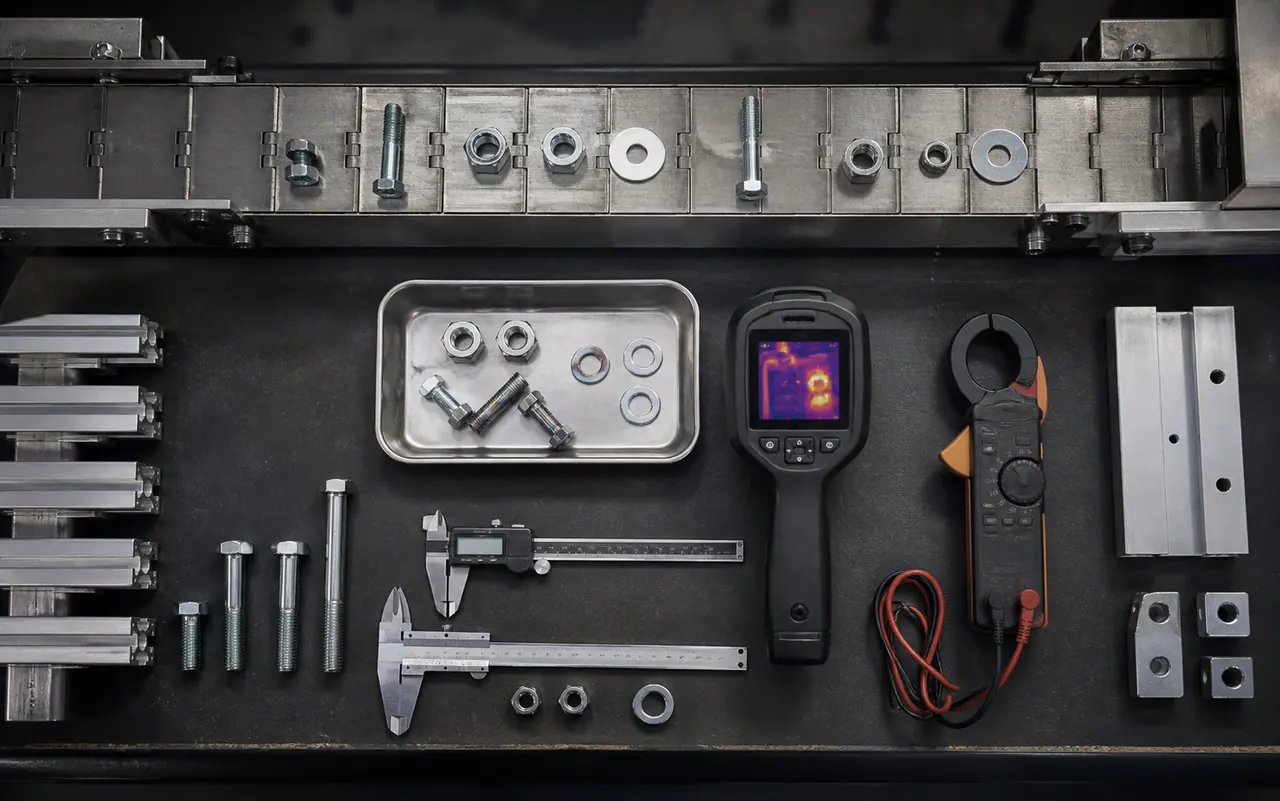
Analysis of 2024 export data finds roughly 2,600 companies across Taiwan fall within CBAM's range. The regulated items are dominated by steel-related products, at about 2.8 million tonnes, of which roughly 2.4 million tonnes are steel materials and about 400,000 tonnes are steel goods led by screws and nuts [5]. That 400,000 tonnes may look small, but behind it sits one of Taiwan's most internationally competitive — and most vulnerable — industries: the fastener sector (screws and bolts).
“CBAM Has Arrived: How the EU's Carbon Border Tax Becomes a Hidden New Tariff on Taiwan's Steel, Aluminum, Cement and Fastener Exports” reports that CBAM's Definitive Period and First Annual Deadline(30 Sep 2027)。 Per the EU's official timetable [1][2]。
Taiwan is a major global fastener exporter, with dense clusters of small and mid-sized screw manufacturers concentrated around Gangshan and Luzhu. According to an estimate from the Chinese National Federation of Industries, Taiwan's exports of nuts, bolts and similar products to the EU alone reached roughly NT$40 billion in 2021 [5]. The EU has extended CBAM's scope from upstream crude steel and steel billets all the way down to finished downstream products like screws and bolts — effectively driving the carbon tariff straight into the heart of Taiwan's fastener industry [1].
The cruelty of the problem is this: fastener manufacturers are mostly small and medium-sized enterprises, with limited resources and manpower, and most have not even finished a complete product carbon footprint inventory. They may unknowingly purchase raw materials made from imported high-carbon steel on which no equivalent carbon fee was ever paid; by the time the product is sold into Europe and its carbon footprint is calculated, the CBAM cost can turn out to be shockingly high [5].
Breaking Taiwan's exposure down by sub-sector makes the picture clearer. Long-process steelmakers (such as blast-furnace steel producers) have the highest carbon intensity, with embedded emissions per tonne reaching 1.8 to 2 tonnes or more — the heaviest CBAM bill of any group — but these are mostly large listed companies with the capacity to build their own carbon-accounting teams, the means to pay the carbon fee, and relatively complete deduction documentation. Fastener and steel-fabrication processors sit in the midstream: their own process emissions are not especially high, but they must absorb the embedded emissions of upstream steel wholesale — "carbon someone else emitted gets counted against my product" — making them the segment least able to help itself. Aluminum producers face an inherent electricity-intensity disadvantage: electrolytic aluminum is highly power-hungry, and Taiwan's comparatively high grid carbon-intensity factor puts them at a particular disadvantage on Scope 2 emissions. The cement industry's exports to the EU are relatively limited, so its direct exposure is small, but it is a heavy payer of Taiwan's domestic carbon fee, meaning the institutional pressure it faces comes mainly from home, not from CBAM. The fertilizer industry is small in scale, but being newly brought under coverage means it is facing export carbon compliance for the first time. All of these industries carry the same "affected by CBAM" label, yet their pain points and bargaining power run in completely different directions — a one-size-fits-all response strategy is bound to fail.
The Real Pain Point: Data, Responsibility and Deduction Conditions
Taiwan has its own carbon pricing too. The Ministry of Environment's carbon fee system ran a trial declaration in 2025 and will make its first actual payment in 2026 based on 2025 emissions, with a general rate of NT$300 per tonne of CO2-equivalent; companies that meet their voluntary reduction targets can apply preferential rates — NT$50 per tonne under Rate A and NT$100 per tonne under Rate B. The fee applies to power, gas and manufacturing facilities whose annual plant-wide emissions reach 25,000 tonnes or more [7].
The carbon price actually paid at the country of origin can be claimed as a deduction by the EU declarant when it meets CBAM's rules and can be documented; it is not the case that "Taiwan's carbon fee is announced and it is automatically offset." Exporters should retain auditable records of the statutory payment, the products it applies to, and the emissions involved, with the declaration made by the import side under EU procedure [1][4].
It sounds like Taiwan has been handed a talisman. But laid out in numbers, the talisman is thin.
The CBAM certificate price the EU publishes is calculated quarterly and changes; a figure announced for one period cannot be treated as a fixed long-term rate [2][3]. Nor can the bill be estimated with a simple "product weight × carbon price": the definitive period also involves a product's direct embedded emissions, the phase-out of free EU ETS allowances, the carbon price already paid at the country of origin, and the quality of declaration data. Companies should treat this as a set of data and compliance processes, not a single pricing formula.
“CBAM Has Arrived: How the EU's Carbon Border Tax Becomes a Hidden New Tariff on Taiwan's Steel, Aluminum, Cement and Fastener Exports” reports that The Rate Structure of Taiwan's Carbon Fee(NT$300/t)。 No single rate can be converted directly into the actual CBAM cost for every product [4]。
Building a Correct Compliance Ledger First
Exporters should not apply a fixed spreadsheet found online. First confirm the CN product codes and each EU importer's annual cumulative volume; then, following EU methodology, inventory the product's direct embedded emissions and compile the payment records and applicable scope of the carbon price paid at the country of origin; finally, confirm with the importer its authorized-declarant status and its arrangements for declaration and certificate purchase [1][2]. Lower-carbon processes help reduce a product's emissions, but whether and how "purchasing renewable electricity" is reflected in the CBAM calculation must be handled according to that period's EU methodology and acceptable evidence — it cannot be guaranteed simply by a general Scope 2 narrative.
This also explains why "carbon inventory" is no longer just an environmental report — it is a working sheet for your quotation. If you cannot calculate the carbon content of every tonne of your own product, you cannot quote a price that will clear EU customs.
The treatment of indirect emissions must be judged according to product category and the EU calculation method applicable during the definitive period [1]. Companies can reduce process emissions and improve data quality, but should not treat renewable-electricity certificates or a general Scope 2 inventory result as a guarantee of reducing the CBAM certificates required.
The Payment Timeline and the "50-Tonne" Narrow Gate
Taiwanese businesses still have some time, but not much. The CBAM charging period is counted from 1 January 2026; CBAM certificates are scheduled to go on sale on 1 February 2027, emissions generated in 2026 must be covered by certificates purchased retroactively in 2027, and the first surrender deadline is 30 September 2027 [1][2]. The real bill will not land until the second half of 2027, but the work of preparing compliant carbon data needs to start now.
In October 2025, the EU used its "simplification package" (Omnibus) reform to open a narrow gate for small importers: a new weight-based "de minimis exemption" threshold — importers whose cumulative annual imports of CBAM-covered products are 50 tonnes or less are exempt (hydrogen and electricity excluded). The EU estimates this will exempt roughly 90% of importers from the declaration obligation, while still covering roughly 99% of the CO2 emissions embedded in steel, aluminum and cement imports [3].
This threshold is calculated on the same EU importer's cumulative imports for the full year — it is not something a Taiwanese exporter can determine simply by splitting up its own individual shipments [2][3]. Suppliers should confirm applicability and authorized-declarant arrangements with each importer individually, rather than declaring an exemption or claiming authorized-declarant status on their own.
Opportunity for a Decarbonization Upgrade, or a Trade Barrier in Disguise?
Whether CBAM is good or bad is a question Taiwan's industry and academia disagree on, and the argument itself is worth laying out.
The "opportunity" view holds that CBAM is an external push forcing Taiwanese industry to decarbonize and upgrade. Analysis from the Chung-Hua Institution for Economic Research's Center for Green Economy finds that steel and fastener manufacturers with higher awareness of carbon inventories, and greater attention to carbon-management planning, are more likely to actually cut emissions and thereby gain a competitive edge [8]. As the EU market's threshold rises, "low carbon" instead becomes a point of differentiation for Taiwanese products; companies that complete their inventories early and adopt renewable power and electric-arc-furnace processes can turn carbon cost into a pricing advantage — and even use the moment to outpace competitors who cannot keep up. From a national perspective, this is also a rare opportunity to push Taiwanese manufacturing toward net-zero transition.
The "barrier" view questions whether CBAM is environmental in name but protectionist in substance. It erects a high administrative wall — through complex carbon inventories, third-party verification, and authorized-declarant qualifications — against developing countries and small and medium-sized enterprises that lack resources; EU domestic steelmakers enjoy a transitional buffer as their free ETS allowances phase out gradually, while overseas producers must absorb the full carbon-price gap immediately [8]. For a small screw workshop in Gangshan with a dozen employees, the cost of a full product carbon-footprint inventory and verification could eat up the profit from several EU orders. Is this environmentalism in name, trade protectionism in practice?
Inference (medium confidence): CBAM will likely weed out a group of Taiwanese SME suppliers that fail to transition in time in the near term, but will accelerate the low-carbon restructuring of Taiwan's steel supply chain over the medium-to-long term. Opportunity and barrier are not an either/or choice — it is an opportunity for "those who are ready," and a barrier for "those who have not yet moved."
The core of the dispute is really about "time lag" and "scale gap." EU domestic steelmakers' free ETS allowances phase out year by year, giving home industry several years of buffer, while overseas producers must face the full carbon-price gap from the very day CBAM charging begins — this "internal-external asymmetry" is the barrier view's strongest point [3]. But the opportunity view would respond: however long the buffer lasts, low carbon is inevitably becoming a new threshold for the global market, and Taiwanese firms that transition early can seize low-carbon orders while competitors are still watching and waiting. Both sides can produce evidence, and both have their own blind spots — the barrier view tends to underestimate the long-term market loss from "not transitioning," while the opportunity view tends to make light of the real cash-flow pressure small manufacturers face right now in simply being unable to afford verification costs. On balance, both arguments are correct — the difference lies only in where you sit in the supply chain, and how fast you move. CBAM will not wait for anyone.
Three Taiwanese Perspectives: What to Do
Facing this invisible new tariff, different levels of Taiwan each have their own work to do.
The national perspective — hold carbon-price sovereignty in your own hands. The core proposition is this: rather than letting Taiwanese businesses pay their carbon differential to the EU, that money should stay in Taiwan's own decarbonization funds. That means the carbon fee rate must climb toward international levels in a disciplined way (Taiwan's carbon-fee rate review committee has already planned a rate of NT$1,200–1,800 per tonne after 2030) [7], while carbon-fee revenue is substantively invested in industrial decarbonization support, forming a positive cycle of "able to pay, and able to cut." In addition, the government should accelerate mutual recognition with the EU on documentation and verification mechanisms for carbon-fee deductions, to reduce the administrative burden of duplicate verification on Taiwanese businesses [4].
The industry-intermediary perspective — lend the big players' capacity to the small ones. China Steel, the Metal Industries Research and Development Centre, the steel industry association, and the Ministry of Economic Affairs' SME decarbonization service station are already the key hubs in this battle [5]. What intermediary organizations need to do is "scale down" carbon-inventory tools, carbon-footprint guidance, group purchasing of renewable electricity, and collective verification capacity to the small and medium-sized enterprises at the end of the supply chain. Leading steelmakers in particular need to recognize: their own carbon emissions are the embedded emissions of downstream fastener makers — if upstream does not cut carbon, no amount of effort downstream can clear CBAM. The supply of low-carbon steel is the shared lifeline for whether the entire industrial chain can stay in the EU market.
The SME perspective — act now, don't wait for the bill. For the screw manufacturers of Gangshan and Luzhu, the action list is concrete: first, complete product emissions data according to EU methodology and retain auditable evidence; second, prepare documentation of Taiwan's carbon fee actually paid and the emissions it covers, for the import side to lawfully claim a deduction; third, confirm product classification, annual cumulative volume, and declaration responsibility with importers; fourth, plan decarbonization and energy procurement according to one's own processes, without treating any certificate as an automatic exemption [1][4][5].
CBAM is an invisible tariff bill, but its logic is actually both fair and harsh: work out your carbon, and cut it, and it gets cheap; leave it unmanaged, and it gets expensive. For an economy like Taiwan's that lives on exports, this lesson has to be learned sooner or later — the earlier it is learned, the smaller the cost, and the better the chance of holding on to the market.
Building a Handoff-Ready CBAM Data Chain
The place CBAM compliance most often fails is not a lack of understanding of the system's terminology, but data that breaks down between procurement, manufacturing, finance and the EU customer. Exporters can start by building a versioned file for each regulated product: product classification and formulation, process activity data, the basis for calculating direct emissions, the person responsible for the data, verification records, and the payment and applicable scope of the carbon price already paid in Taiwan. When raw materials, processes or customers change, the date and reason for the change should be retained, to avoid discovering at year-end that the same product used data that cannot be reconciled. None of this work can guarantee a deduction or a lower bill, but it does allow the EU import side to complete its declaration under the formal methodology and trace the source [1][2].
For management, the metric most worth tracking is not a hypothetical "cost per tonne," but the data-completion rate, the share that is verifiable, whether the customer's declaration responsibility has been confirmed in writing, and the emissions sensitivity of different products. The carbon fee, ETS prices and the details of EU calculation methods can all change; fixed update checkpoints and cross-departmental responsibility do more to reduce compliance risk than a one-off estimate [3][4].
Sources
- European Commission — Carbon Border Adjustment Mechanism (CBAM) official explainer
- EU Access2Markets — Announcement on the start of the definitive period of CBAM
- Council of the EU — Press release on the CBAM simplification reform (de minimis exemption and authorized declarant)
- Ministry of Environment — Taiwan's carbon fee can be deducted against the EU's CBAM
- Ministry of Economic Affairs SME Decarbonization Service Station — Analysis of the impact of the EU's CBAM on Taiwan's SMEs
- Carbon Credits — Daily carbon prices (EU ETS and CBAM certificate prices)
- KPMG Taiwan — 2025: Taiwan enters the era of priced carbon emissions
- Public Television Service, "Our Island" — At the CBAM tipping point, do steel and fastener industries face a fight for survival? (Chung-Hua Institution for Economic Research analyst Li Ying-chiao)

Taiwan's Two Faces
The whole world depends on Taiwan's chips — and is quietly preparing for the day it might lose them. The same island is both the heart of the supply chain and a geopolitical powder keg. How can Taiwan's companies turn "irreplaceable" into an advantage that lasts?
Japan Takes Economic Security Overseas: Can OESA Bring Taiwan's Supply Chains Into State-Level Financing?
Japan has created OESA, extending policy finance to overseas projects that matter for economic security but are hard for existing tools to carry. Taiwan has an opening, but the law taking effect is not the same as Taiwan already being on the list — the real threshold lies in Japan's own interests, project design, and implementing rules that have yet to be published.