
After the 15% Tariff: Where Taiwan's Traditional Industries Split Between Survival and Sinking
The Taiwan-U.S. tariff talks landed at 15% — but some industries are still locked at 50%. What actually decides your fate isn't the headline number. It's your product's HS code.
Article contents01 / 08
- The Taiwan-U.S. Agreement on Reciprocal Trade was signed in February 2026: a 15% reciprocal tariff on Taiwan, not stacked, tying Taiwan level with Japan, South Korea and the EU; machine tools and other major categories dropped from roughly 24% to 15%, removing the original 'higher than Japan and Korea' survival crisis — for most traditional industries, this is a genuine win.
- But fasteners and screws (HS 7318) are classified as steel derivatives, so they run on the Section 232 national-security-tariff track instead — still taxed at 50%, outside the scope of this tariff cut; about 40% of Taiwan's screws and nuts are exported to the U.S., with Kaohsiung contributing roughly 70% of that output, concentrating the damage heavily in the Gangshan cluster.
- For thin-margin exporters, the gross-margin erosion from a stronger New Taiwan Dollar can hurt more than the tariff itself (some producers say the currency 'impact is bigger than the tariff'); what actually decides whether a factory survives is often not how well the tariff negotiation went, but which track your own product falls on — the 15% reciprocal track, or the 50% Section 232 steel-and-aluminum track.
“After the 15% Tariff: Where Taiwan's Traditional Industries Split Between Survival and Sinking” reports that The Section 232 steel-and-aluminum derivative rate is more than triple the 15% reciprocal rate(50%)。 One HS code decides which track you're on [5][9]。
“After the 15% Tariff: Where Taiwan's Traditional Industries Split Between Survival and Sinking” reports that Machine tools exported to the U.S.: from an estimated 24% down to 15%。 Now level with Japan, Germany and South Korea; the relative disadvantage disappears [13]。
“After the 15% Tariff: Where Taiwan's Traditional Industries Split Between Survival and Sinking” reports that About 40% of Taiwan's screws and nuts are exported to the U.S.(44%)。 Kaohsiung is the main supply base, concentrating roughly 70% of output。
“After the 15% Tariff: Where Taiwan's Traditional Industries Split Between Survival and Sinking” reports that Fasteners run an average gross margin of only about 15%。 A stronger NT dollar nearly wipes it out — the impact is bigger than the tariff [11]。
After the Taiwan-U.S. Agreement on Reciprocal Trade was signed, Taiwan's reciprocal tariff to the U.S. dropped to 15%, no longer stacked on top, putting Taiwan on the same line as Japan, South Korea and the EU [1][2][15]. For many traditional industries, this really is a sigh of relief: the thing they feared most — "Taiwan's rate is higher than Japan's and Korea's, and orders get moved wholesale elsewhere" — has, for now, been lifted.
But this is not good news for all of Taiwan's traditional industries.
Because the U.S. tariff on Taiwan is not one river — it's two. One dropped. The other actually rose.
One is called the "reciprocal tariff," and its water level fell. The other is called the "Section 232 national-security tariff," and its water level didn't just fail to fall — it went higher. Which river your product falls into decides not a few percentage points of cost difference, but whether you can even quote a price going forward, whether you can take the order, or even whether you can stay in the U.S. market at all.
What decides your factory's fate is a commodity classification code most businesses never look at closely in normal times: the HS code.
“After the 15% Tariff: Where Taiwan's Traditional Industries Split Between Survival and Sinking” reports that The Section 232 steel-and-aluminum derivative rate is more than triple the 15% reciprocal rate(50%)。 One HS code decides which track you're on [5][9]。
15% Is Not 15% for Everyone
In February 2026, the Taiwan-U.S. Agreement on Reciprocal Trade was formally signed. Taiwan's reciprocal tariff to the U.S. was set at 15%, not stacked, tying Taiwan level with Japan, South Korea and the EU [1][2][15].
For most of Taiwan's traditional industries, this is a real net positive.
Take machine tools as an example. Before the agreement, Taiwan's machine tools exported to the U.S. may have faced roughly 24% (estimated; the basis for this calculation does not appear in public reporting) in cost pressure, while Japanese, German and South Korean competitors sat at around 15%. For an industry as competitive and thin-margined as machine tools, that nine-point gap was enough to redirect where orders flowed.
After the agreement, Taiwan's rate on machine tools dropped to 15% — at least on tariff terms, back on the same line as its main competitors [13][14].
“After the 15% Tariff: Where Taiwan's Traditional Industries Split Between Survival and Sinking” reports that Machine tools exported to the U.S.: from an estimated 24% down to 15%。 Now level with Japan, Germany and South Korea; the relative disadvantage disappears [13]。
This is also why many industries — machinery, electrical equipment, plastics and rubber, textiles, medical devices, complete bicycles and more — can treat this agreement as "pressure lifted" rather than "another blow" [3][16].
But the problem is: not every product rides this same track.
Inside the U.S. tariff system, there is an entirely different line: Section 232.
Two Tariff Rivers: One Fell, One Rose
To understand how Taiwan's traditional industries are splitting apart this time, you first need to understand two separate systems.
The first river is the "reciprocal tariff."
This is a tariff designed around U.S. trade-balance logic toward each country. Taiwan originally faced heavier pressure, and after negotiation it came down to 15%, not stacked on top of the most-favored-nation rate [1][3]. For most non-232-controlled goods, this river's water level really has dropped.
The second river is "Section 232."
This is a tariff the U.S. imposes on steel, aluminum, copper and their derivatives on national-security grounds. This line is not something an ordinary reciprocal-tariff negotiation can directly touch. Since June 2025, some steel and aluminum items have already had their rate raised from 25% to 50%, and subsequently moved to a stricter method of taxation [5][6][8].
This is exactly where Taiwanese businesses are most likely to misjudge the situation:
It's not that "everything Taiwan ships to the U.S. becomes 15%" — it's that "products riding the reciprocal-tariff track become 15%; products riding the 232 track can still be 50%."
That's why, within the very same metalworking industry, machine tools can climb ashore while screws and fasteners are still stuck underwater.
The deciding factor is which river your HS code assigns your product to.
The Green Zone: Most Traditional Industries Come Ashore First — But Not Risk-Free
The industries that benefit from this agreement are the ones sitting on the reciprocal-tariff track, not caught by the Section 232 steel-and-aluminum-derivative tax.
Machine tools are the textbook case.
Before the agreement, Taiwan's machine tools carried a heavier tariff burden into the U.S. than Japanese, Korean and German competitors — a serious disadvantage for winning orders. After the agreement, the rate dropped to 15%, and Taiwanese makers are at least no longer starting a step behind purely because of tariff terms [13].
For machine tools, machinery equipment, some electrical products, plastics and rubber, textiles, medical devices, and complete bicycles, this isn't a decisive win — it's the competitive terms being pulled back to a reasonable footing; and the U.S. happens to be Taiwan's largest machinery export market, accounting for roughly a quarter of the total, so the rate change on this track affects a very wide swath [20].
The green zone's keyword is "relative fairness."
The tariff hasn't dropped to zero, but Taiwan is no longer more expensive than its main competitors. For traditional industries whose primary market is the U.S., this means there's room to re-quote, and customers no longer have a straightforward reason to shift orders away purely because of a tariff gap.
But businesses shouldn't relax too quickly because of this.
Because 15% is still higher than the low-tariff environment of the past, and for thin-margin exporters, it's still an added cost. This only removed the problem of "being worse off than Japan and Korea" — it doesn't mean businesses are now free of pressure.
Green-zone companies have come ashore, but the water is still lapping at their ankles.
The Red Zone: Fasteners and Screws Locked in by Section 232
The real pain is in the red zone.
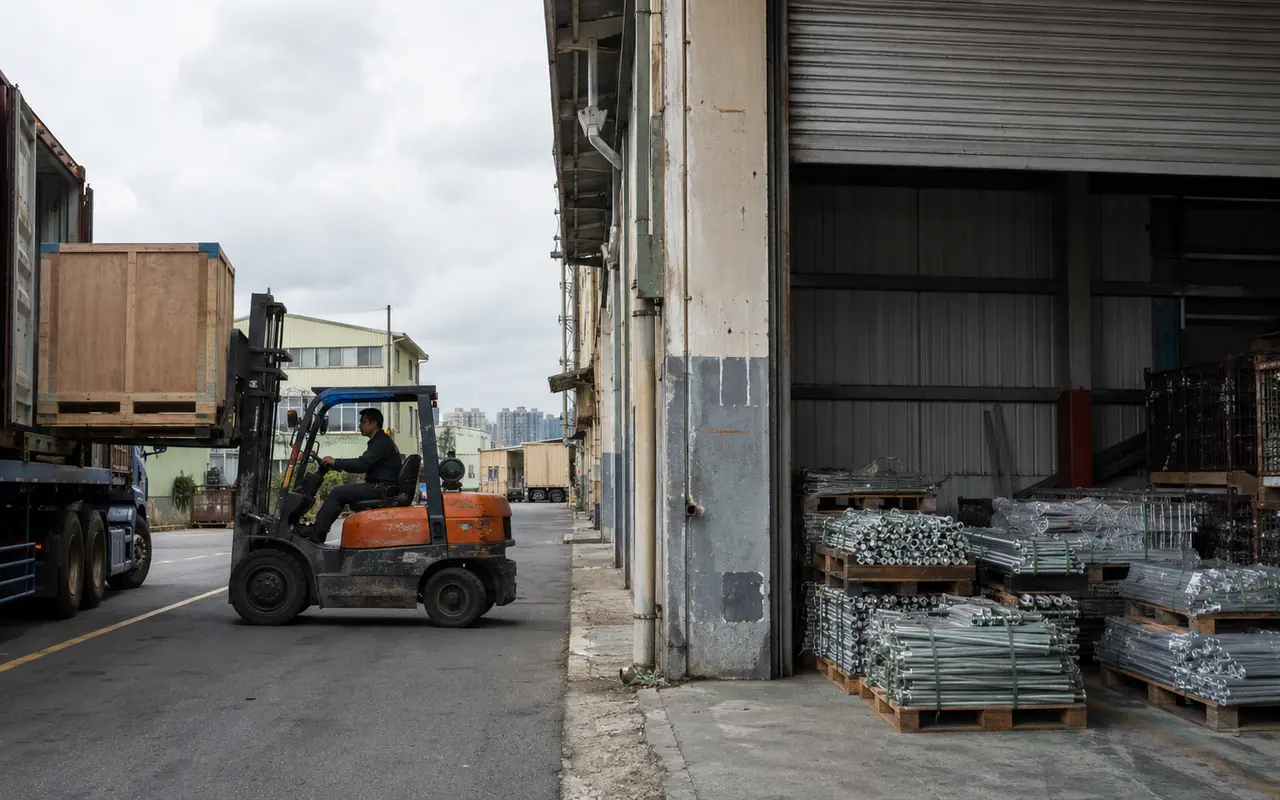
Taiwan's fastener and screw-and-nut industry is a vital link in the global supply chain. In particular, the Gangshan area of Kaohsiung has long formed a highly concentrated fastener cluster, building a complete industrial chain from raw materials, processing and surface treatment to packaging and export.
But fastener products — especially HS 7318, the common code for screws and nuts — are classified by the U.S. as steel derivatives, so they ride the Section 232 track, not this round's 15% reciprocal-tariff track [9][12].
“After the 15% Tariff: Where Taiwan's Traditional Industries Split Between Survival and Sinking” reports that About 40% of Taiwan's screws and nuts are exported to the U.S.(44%)。 Kaohsiung is the main supply base, concentrating roughly 70% of output。
This creates a brutally unfair gap:
The machine-tool maker next door sees its U.S. tariff drop to 15%; the screw factory, sitting in the very same metalworking system, can still be facing 50%.
For the fastener industry, this can effectively invalidate their entire pricing structure.
About 40% of Taiwan's screws and nuts are exported to the U.S. [10], and Kaohsiung is the main supply base for that trade (according to public data from the Kaohsiung City Government and industry media, the Gangshan–Luzhu area accounts for roughly 70% of Taiwan's total screw output). When an industry this dependent on the U.S. market, with margins that were never fat to begin with, gets stuck at a 50% rate, the impact concentrates heavily on a single cluster.
That's why, when Gangshan's business owners hear "the Taiwan-U.S. tariff dropped to 15%," they may not be smiling.
Because that 15% isn't their 15%.
What they need is a different fight: getting fasteners decoupled from the Section 232 steel-derivative classification, or at least securing a more reasonable exclusion, exemption or transition arrangement [17].
But that road isn't easy. Section 232 is a national-security provision, not a technical adjustment made through ordinary trade negotiation. It touches U.S. steel-industry protection, domestic politics and national-security narratives. If Taiwan wants to win room for fasteners, it can't rely on a single company speaking up — it needs the government, trade associations and the industrial cluster to put forward a complete case together.
The Yellow Zone: Even With a Lower Tariff, Owners Still Can't Sleep
Looking only at tariffs would misjudge the pressure Taiwan's traditional industries are actually facing.
Because for many export-oriented SMEs, the tariff is only one of several clubs coming down on them. What's really squeezing margins is a three-way pincer of tariffs, exchange rates and the red supply chain.
The first club is the exchange rate.
The fastener industry runs an average gross margin of only about 15% [11]. When the New Taiwan Dollar strengthens, exporters who quote in U.S. dollars but pay costs in NT dollars see their margin eaten away fast. Some producers even believe the currency impact is bigger than the tariff [11].
“After the 15% Tariff: Where Taiwan's Traditional Industries Split Between Survival and Sinking” reports that Fasteners run an average gross margin of only about 15%。 A stronger NT dollar nearly wipes it out — the impact is bigger than the tariff [11]。
That statement isn't an exaggeration.
For companies whose margins were never high to begin with, every bit of exchange-rate movement doesn't just eat into a number on paper — it eats into a profit safety cushion that was already thin. When the NT dollar strengthens and customers also demand that the company absorb the tariff, businesses can easily fall into a bind of "we have the order, but no profit."
The second club is low-cost competition from China.
The red supply chain still exerts price pressure across many metal-processing and basic industrial goods. If Taiwanese manufacturers stay stuck making standardized, low-differentiation, thin-margin OEM products, they face Chinese low-cost competition and U.S. tariff pressure at the same time.
The third club is the ability to pass costs on to customers.
Many of Taiwan's SMEs are not brand owners — they are suppliers. Whether they can pass a tariff increase on to customers after it rises depends on how substitutable the product is, the supplier's standing, delivery reliability, and how dependent the customer is on them.
If the product is barely differentiated, the customer will demand you absorb the cost; only if you're an indispensable supplier do you have a shot at negotiating a sharing arrangement.
So what yellow-zone companies most need to understand is: the tariff is only the surface problem. What decides survival is the total landed cost.
Why Were Some Industries Rescued and Others Not?
Here's an unwelcome but necessary point: this negotiation looks more like "an overall win, with localized wounds left behind."
Looking at the national ledger as a whole, Taiwan pulling its reciprocal tariff down to 15% — level with Japan, Korea and the EU — did avoid a broad swath of traditional industries being overtaken by competitors [18]. The negotiation outcomes for semiconductors, ICT, machine tools and most industrial goods matter significantly for the overall export structure [16][19].
But on the ground in the clusters, an average doesn't comfort the companies left stuck at 50%.
The fastener industry's problem isn't that the government did nothing about it — it's that it sits inside a different system altogether. Section 232 is a national-security tariff, and it isn't negotiated at the same table as the reciprocal tariff. That creates a gap in policy communication:
The headlines say "Taiwan dropped to 15%"; on the ground, companies find "I'm still at 50%."
This is, in effect, the same country, with different products falling under different systems.
Going forward, Taiwan therefore can't just talk about the average tariff rate, and it can't just talk about overall exports. It needs to map industry exposure down to the level of individual products and individual clusters.
Because the ones who actually get hurt are usually a specific HS code, a specific processing stage, a specific local cluster propped up by exports.
What Should Businesses Do Now?
For SMEs, the most practical question right now isn't "will U.S. tariffs change again" — it's:
Which box is my product actually in?
You can't just ask your customs broker, and you can't just read the headlines. Businesses should put HS codes, HTSUS classification, the actual applicable rate, steel/aluminum content, customer cost-sharing terms and exchange-rate risk all on the same sheet.
Because even though it's all exports to the U.S., all metalworking, all made in Taiwan, riding the reciprocal-tariff track versus riding Section 232 are two completely different business worlds.
Tool 1: U.S. Tariff Exposure Self-Assessment
| Your Product | Likely Track | Actual Rate Risk | Risk Light | What the Business Should Prioritize |
|---|---|---|---|---|
| Machine tools / machinery equipment | Reciprocal tariff | About 15% | 🟢 | Seize the re-quoting window now level with Japan and Korea; actively win back U.S. orders |
| Plastics & rubber / textiles / medical devices / complete bicycles | Reciprocal tariff | About 15% | 🟢→🟠 | Watch exchange-rate and customer cost-pass-through pressure; re-run your margin math |
| Auto parts / wood products | Section 232 (some already capped) | Possibly ≤15% [4][7] | 🟢 | Confirm whether the HTSUS classification has already been updated |
| Aerospace parts | Section 232 (special treatment) | (Per U.S. announcement) Exempt from the derivative tariff [7] | 🟢 | Confirm your supplier's and customer's classification match |
| Fasteners / screws / nuts, HS 7318 | Section 232 steel derivative | Possibly 50% | 🔴 | Push for decoupling from 232, diversify markets, upgrade product lines |
| Steel/aluminum-derivative hand tools / water-related hardware | Section 232 steel-and-aluminum derivative | Possibly 50% | 🔴 | Audit your steel/aluminum content; assess shifting orders, markets, or redesigning products |
Tool 2: Supply Chain and Order Decision Matrix
| Actor | Short-Term Stopgap | Medium-Term Positioning | Long-Term Solution |
|---|---|---|---|
| The state | Keep negotiating with the U.S. for fastener and steel/aluminum-derivative exclusions, and provide short-term assistance to affected industries | Build a cluster-level exposure map and design transition plans for high-risk product categories | Fold tariffs, exchange rates and supply-chain resilience into industrial policy |
| Trade associations / alliances | Lead members through auditing HS codes and applicable rates | Build shared warehousing, shared quotation data, and non-U.S. market expansion mechanisms | Push for higher value-added production, joint branding and industrial upgrading |
| SMEs | Re-run landed-cost calculations; negotiate tariff cost-sharing with customers | Hedge currency risk; diversify customers and markets | Shift from thin-margin OEM work toward higher value-added, specialty specifications and design capability |
Tool 3: Landed-Cost Calculation Framework for Tariffs (figures are illustrative)
| Step | Question to Ask Yourself | Illustrative Example: A Screw Factory |
|---|---|---|
| ① Classify | Does my product's HS code ride the reciprocal tariff, or Section 232 steel/aluminum? | Screws, HS 7318, likely ride Section 232 |
| ② Check the rate | What is the actual applicable rate? | Possibly 50% |
| ③ Calculate landed cost | After FOB, tariff, exchange-rate loss, logistics and customer cost-sharing, what is the real cost? | FOB 100 × tariff × exchange-rate loss — cost rises substantially |
| ④ Compare competitors | What rate do Japan, South Korea, China or Southeast Asian producers of the same product face? | If competitors pay 15% and you pay 50%, the price gap pressure is enormous |
| ⑤ Decide | Absorb the cost, pass it on, shift markets, or upgrade the product? | Thin-margin standardized goods are hard to absorb — shifting markets or moving upmarket may be needed |
Note: The above is illustrative decision logic only. Businesses should rely on their own FOB terms, actual customs classification, customer contract terms, current exchange rates and the official tariff schedule.
Conclusion: Check Your HS Code First, Then Talk Strategy
After the 15% tariff, the story of Taiwan's traditional industries can't be reduced to either "we won the negotiation" or "it's a disaster."
More precisely, it's a map of divergent paths.
Some have come ashore for now because the reciprocal tariff dropped to 15%; some are still locked underwater by a 50% rate under Section 232; and some, even though their tariff nominally fell, are still gasping under the combined pressure of exchange rates, the red supply chain, and customer bargaining power.
So the first thing businesses need to do now isn't to guess what the next round of negotiations will bring — it's to go back to their own product:
What is my HS code? Which tariff river am I riding? How much of a gap is there between my landed cost and my Japanese or Korean competitors'? If the customer won't share the cost, how much margin do I have left? If the U.S. market gets even more expensive, do I have a second market?
Tariff news looks like international politics, but on the ground at a business, it's actually a cost sheet, a price quote, and a map of who survives and who sinks.
Only once you understand which box you're standing in do you have any basis to talk about how to survive the next step.
Sources
- USTR — Fact Sheet on U.S.-Taiwan Agreement on Reciprocal Trade (2026-02)
- Executive Yuan — Taiwan-U.S. "Agreement on Reciprocal Trade" 15%, Not Stacked, special page
- Ministry of Economic Affairs, International Trade Administration — U.S. Reciprocal Tariff Zone
- Federal Register — Implementing Certain Tariff-Related Elements of the Taiwan-U.S. ART (Section 232 auto parts / wood products, 2026-05-28)
- US CBP — Section 232 Steel & Aluminum Tariffs FAQ (50%, derivatives)
- CRS — Section 232 Tariffs on Steel and Aluminum
- GHY International — U.S. Modifies Section 232 Tariffs on Taiwan Auto Parts, Aircraft, Wood
- Taiwan Trade (TAITRA) — U.S. Adjusts Section 232 Steel/Aluminum/Copper Tariff Calculation, Shifts to "Full-Value Taxation," Effective 4/6
- Public Television Service (PTS) News Network — Fastener Tariff Stays at 50%, Still Under Section 232
- Public Television Service (PTS) News Network — About 40% of Taiwan's Screws and Nuts Exported to the U.S.
- Public Television Service (PTS) News Network — NT Dollar Surge Hits Margins, Fastener Industry: "Impact Bigger Than the Tariff"
- Economic Daily News — Section 232 Explainer: Why Most-Favored-Nation Treatment Matters More to Taiwan Than the Reciprocal Tariff
- TechNews — Tariff Drops to 15%, Machine Tool Association Estimates Growth in U.S. Exports (TMTS 2026)
- Economic Daily News — 60% of Machine Tool Makers Expect Revenue Growth of About 10%
- Business Today — Taiwan, Japan and South Korea All at 15%: Differences in Negotiation and Investment Models
- Public Television Service (PTS) News Network — $64.9 Billion Surplus with the U.S.: Which Advantaged Industries Are Getting Hit [Infographic]
- People News — The Fastener Kingdom's Fight for Survival: Crushed by a 50% Tariff, Pushing to Decouple from Section 232
- CommonWealth Magazine — Average Tariff to the U.S. Drops to 12%: What Did Taiwan Trade for It
- Central News Agency (CNA) — Taiwan Rises to the U.S.'s 7th-Largest Trading Partner; 2024 Exports to and Surplus with the U.S. Hit Record Highs
- Ministry of Economic Affairs, International Trade Administration / Precision Machinery Research & Development Center — Machinery Industry Brief (U.S. is the largest machinery export market, about 26% share)
Products Need a Résumé Too: The EU's DPP Registry Is Live — Who Controls Taiwanese Suppliers' Data?
The EU's DPP Registry has gone live, but not every product becomes mandatory on the same day, and it does not mean a complete data set gets uploaded to a central EU database. What Taiwanese suppliers really need to decide now is who controls identifiers, hosting, access, updates and transfer.
Once the Quota Runs Out, It's Fifty Percent: How the EU's New Steel Tariff Reshuffles Nine Categories of Taiwanese Exports
The EU's new steel regime does not slap 50% on every tonne of Taiwanese steel from the first shipment. Instead it places 26 product categories inside tariff-rate quotas, and only once the relevant quota is exhausted does a 50% out-of-quota surcharge apply. Taiwan holds country-specific allocations in nine categories, but what actually decides whether a given order keeps its margin is the CN classification, origin, quarter, quota order number, and the date the EU accepts the import declaration.