
Doubting America Is Not the Same as Surrendering: The Two Faces of Taiwan's Youth, and a Dangerous Cycle
Negative views of the United States jumped from 24% to 40% within a single year; nearly six in ten Taiwanese don't believe the U.S. would send troops. But this isn't defeatism — the same all-ages poll shows that 67% of Taiwanese people fear losing their current way of life, and six in ten say Taiwan should proactively negotiate with China to secure favorable terms, rather than passively waiting. Doubting America and resisting China actually coexist. The real danger isn't this attitude itself, but the cycle it could trigger: doubting America → declining will to fight → declining deterrence → a widening window of opportunity for China.
Article contents01 / 09
- Negative views of the United States rose from 24.2% to 40.5% within a single year (Brookings); the 'Peace and War' poll shows about 57% don't believe the U.S. would go to war with China over Taiwan — but this doesn't amount to surrender: 67.4% are afraid of losing their current way of life, and 61% say Taiwan should proactively negotiate with China to secure favorable terms, rather than passively waiting. Doubting America and resisting China coexist.
- This is highly polarized along party lines: about 63% of KMT supporters and 59% of TPP supporters doubt America, while 67% of DPP supporters trust America — doubting America is easily politicized into a blue-vs-green fight that obscures the real issue; and whether the U.S. would come to Taiwan's aid was never a yes-or-no question, but a spectrum of probability.
- The real risk is a 'self-fulfilling fragility cycle' (this publication's inferential framework, not an established scholarly consensus): if doubting America leads people to feel that 'no one will help if fighting starts,' the will to fight may decline as a result, in turn eroding support for the defense budget, military service, and civil defense, which widens China's window of opportunity. The solution isn't to make young people blindly trust America — it's to build Taiwan's own resilience to the point that it can hold on 'even if no one comes.'
“Doubting America Is Not the Same as Surrendering: The Two Faces of Taiwan's Youth, and a Dangerous Cycle” reports that Negative Views of the United States Nearly Doubled in a Single Year(40.5%)。 24.2% in July 2024 (Brookings) [1]。
“Doubting America Is Not the Same as Surrendering: The Two Faces of Taiwan's Youth, and a Dangerous Cycle” reports that Roughly Six in Ten Don't Believe the U.S. Would Go to War With China Over Taiwan (57% Don't Believe / 24.7% Believe)。 57% don't believe it, and only about 24.7% believe the U.S. would send troops [7]。
“Doubting America Is Not the Same as Surrendering: The Two Faces of Taiwan's Youth, and a Dangerous Cycle” reports that What They Fear Is Losing Their Current Way of Life, Not a Change in the Country's Name(67.4%)。 67.4% see [9]; 61% say Taiwan should proactively negotiate with China to secure favorable terms, rather than passively waiting [10]。
“Doubting America Is Not the Same as Surrendering: The Two Faces of Taiwan's Youth, and a Dangerous Cycle” reports that Most KMT and TPP Supporters Doubt America; 67% of DPP Supporters Trust America(63% / 59%)。 Doubting America is highly polarized along party lines [1]。
“Doubting America Is Not the Same as Surrendering: The Two Faces of Taiwan's Youth, and a Dangerous Cycle” reports that Conscripts Born After 2005 Serve a Full Year, Yet a Generational-Fairness Dispute Over Draft-Dodging Persists(One Year of Military Service)。 An uneven burden of service duty gives rise to a generational sense of 'why me?'。
“Doubting America Is Not the Same as Surrendering: The Two Faces of Taiwan's Youth, and a Dangerous Cycle” reports that Doubting America → Will to Fight ↓ → Defense Support ↓ → Deterrence ↓ → China's Opportunity ↑(Fragility Cycle)。 This publication's inferential framework — the solution is building resilience strong enough to 'hold on'。
There's a number that has led a lot of people to misread Taiwan's younger generation.
A Brookings Institution survey shows that the share of Taiwanese people holding a negative view of the United States jumped within a single year from 24.2% in July 2024 to about 40.5%; the share viewing the U.S. as an "unreliable ally" also rose by nearly 14 percentage points [1]. The German Marshall Fund (GMF) has sounded a similar alarm, noting that rising distrust of the U.S. in Taiwan has become a trend drawing joint attention from transatlantic and Indo-Pacific think tanks [5]. Another "Peace and War" poll further shows that about 57% of Taiwanese people "don't quite believe" or "don't believe at all" that the U.S. would go to war with China over Taiwan, with only about 24.7% believing it would [7].
So one reading immediately became popular: have Taiwan's young people started "doubting America"? Are they about to "surrender"? Has China's cognitive warfare succeeded?
That reading is almost entirely wrong.
“Doubting America Is Not the Same as Surrendering: The Two Faces of Taiwan's Youth, and a Dangerous Cycle” reports that Negative Views of the United States Nearly Doubled in a Single Year(40.5%)。 24.2% in July 2024 (Brookings) [1]。
Picture a 25-year-old Taiwanese office worker: every day he scrolls past news of Chinese military aircraft harassing Taiwan, and past reports of Trump treating Taiwan like a business deal; he has just finished a year of mandatory military service, and he carries the anxiety of being unable to afford a home (see "The Unaffordable Island"). Ask him whether he believes the U.S. would come to the rescue, and he'll probably shake his head; but ask him whether he wants to be unified with China, and he'll probably shake his head too. This young person who shakes his head at both questions isn't being contradictory — he's actually the truest face of this generation. He neither naively depends on America nor passively accepts unification; he simply wants to hold on to the life in front of him, the life he chose for himself.
Doubting America Is Not the Same as Being Pro-China, Let Alone Surrendering
Look closely at the data, and what Taiwanese people actually want is quite clear: maintaining the status quo, and the way of life that the status quo protects. The same all-ages poll shows that as many as 67.4% worry that "if the status quo can't be maintained, they will lose their current way of life and rights"; only fewer than 9% actually worry about "the country's name being changed" [9]. They doubt the reliability of the United States as a security partner, but that doesn't mean they want to be unified with China or give up resistance — caught between the U.S. and China, what Taiwan's young people want most is simply for "everything to stay the same" [2]. Multiple studies point out that Taiwan's youth are not defeatist [4].
“Doubting America Is Not the Same as Surrendering: The Two Faces of Taiwan's Youth, and a Dangerous Cycle” reports that Roughly Six in Ten Don't Believe the U.S. Would Go to War With China Over Taiwan (57% Don't Believe / 24.7% Believe)。 57% don't believe it, and only about 24.7% believe the U.S. would send troops [7]。
More intriguingly, another poll in the same series shows that 61% believe that rather than passively waiting for China to decide Taiwan's future, Taiwan should proactively join negotiations and secure the most favorable terms for itself [10] — a stance different from "leaning toward China," and more a posture of "holding your own leverage." This suggests Taiwanese people don't want their fate passively decided by China, but would rather hold the initiative themselves. "Doubting America," "resisting China," and "maintaining the status quo" all coexist within this same group of respondents.
Their doubts about America are less a product of brainwashing than a rational judgment made after watching Trump's transactional diplomacy (see "Transactional Ambiguity") and watching an arms sale get suspended and treated as a "bargaining chip" — they distrust the idea of "having their fate decided by a great power." Equating "doubting America" directly with "surrendering to China" doesn't just misread the data — it's tantamount to fighting a round of cognitive warfare on Beijing's behalf.
“Doubting America Is Not the Same as Surrendering: The Two Faces of Taiwan's Youth, and a Dangerous Cycle” reports that What They Fear Is Losing Their Current Way of Life, Not a Change in the Country's Name(67.4%)。 67.4% see [9]; 61% say Taiwan should proactively negotiate with China to secure favorable terms, rather than passively waiting [10]。
Why Doubt America? Three Real-World Reasons
Responding to doubts about America requires first acknowledging that they didn't come out of nowhere. Taiwan youth's doubts about America rest on at least three visible, real-world foundations.
First, Trump's transactional diplomacy: when a U.S. president openly calls arms sales to Taiwan a "bargaining chip," and suspends a US$14 billion arms package after a Trump-Xi summit (see "Transactional Ambiguity"), it's hard to ask young people to "believe unconditionally." Second, the precedent of "abandoning allies": America's wavering support for Ukraine and its pressure on other allies have been watched closely by Taiwan, naturally prompting the question, "Could I be next?" Third, the feeling of being treated as an "ATM": a chip investment of 250 billion, pushing defense spending to 5%, and demands that have even reached as high as 10%, have left more than a few people feeling that "after paying this much, we still don't get a clear guarantee in return."
Put these three points together, and doubting America is no longer as simple as "being brainwashed by the Chinese Communist Party" — it's the reasonable response of a well-informed generation to the reality in front of it. Acknowledging that reasonableness is the starting point for dialogue; denying it, or slapping labels on it, will only push young people further away.
But It Has Been Torn in Two by Politics
The real trouble with doubting America is that it is highly polarized along party lines.
The same survey shows that about 63% of KMT supporters and 59% of TPP supporters doubt the U.S. would come to Taiwan's aid, while 67% of DPP supporters believe it would [1]. As a result, "is America actually reliable" — a question that should be debated on the facts — has been split into blue and green halves, and every discussion of it easily turns into a battle of positions rather than a calibration of facts.
“Doubting America Is Not the Same as Surrendering: The Two Faces of Taiwan's Youth, and a Dangerous Cycle” reports that Most KMT and TPP Supporters Doubt America; 67% of DPP Supporters Trust America(63% / 59%)。 Doubting America is highly polarized along party lines [1]。
And the fact is: whether the U.S. would come to Taiwan's aid was never a "yes" or "no" question — it's a spectrum of probability, depending on the U.S. president of the moment, Congress, domestic public opinion, and Taiwan's own preparedness and value to Washington. Simplifying it to either extreme is dishonest. When a society can only argue about "whether an ally is reliable" along party lines, it loses the ability to coolly assess risk and rationally allocate defense resources — and that is exactly what an adversary most wants to see.
Another Generational Fault Line: Military Service
The generational divide over doubting America also lands concretely on one specific issue: military service.
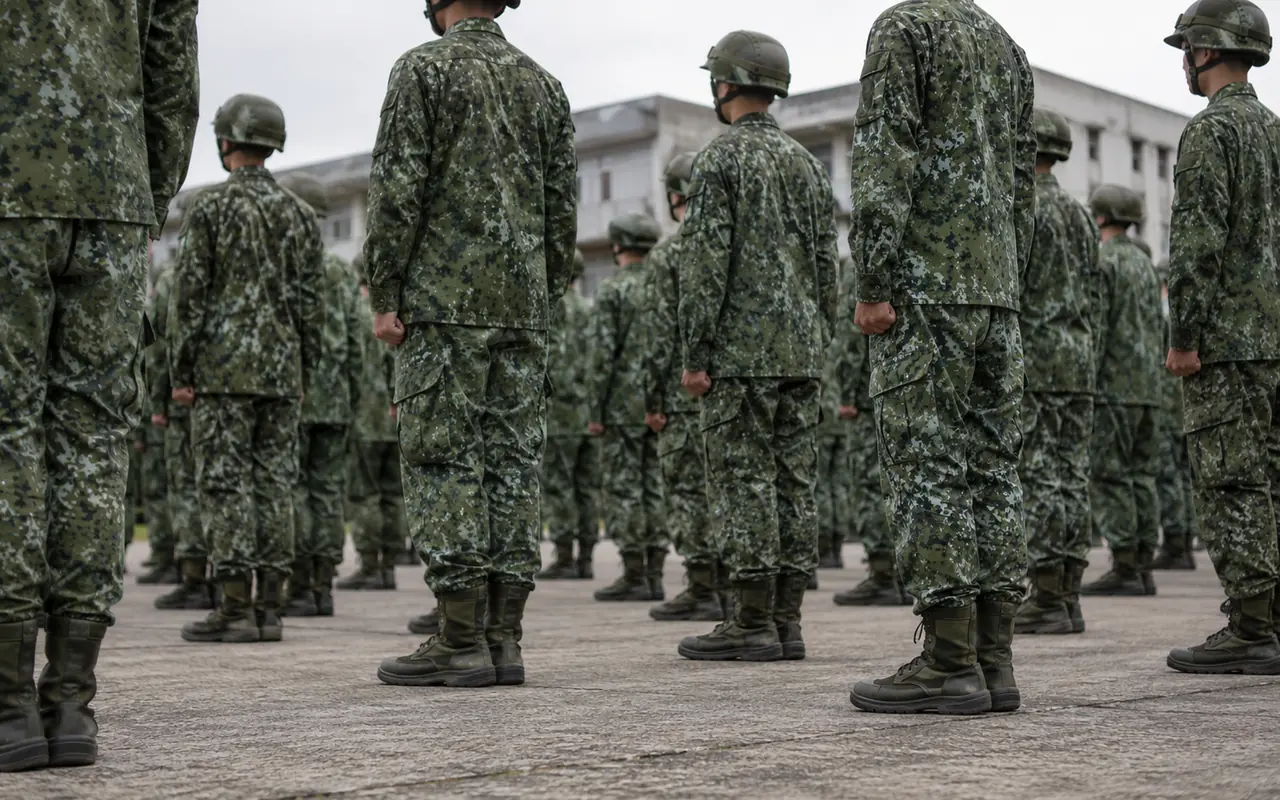
Starting in 2024, conscripts born after 2005 are required to serve a full year of mandatory military service (restored from the previous four months). The first cohort of one-year conscripts has already completed their training in stages; in terms of public opinion, most people actually support the extended service term [6]. But the devil is in the details: low morale on the ground within the conscription system, and the controversy over some young people going to great lengths to "dodge the draft," have opened up a fault line of "generational fairness" — when some people shoulder a full year of obligation while others manage to evade it through various means, "who should sweat for this island" becomes a stinging question.
This fault line is further intertwined with perceptions of generational fairness — when some conscripts dutifully complete a full year of service while draft-dodging controversies keep making headlines, that sense of unfairness, of "why me?", adds yet another layer of generational sentiment to their doubts about America.
“Doubting America Is Not the Same as Surrendering: The Two Faces of Taiwan's Youth, and a Dangerous Cycle” reports that Conscripts Born After 2005 Serve a Full Year, Yet a Generational-Fairness Dispute Over Draft-Dodging Persists(One Year of Military Service)。 An uneven burden of service duty gives rise to a generational sense of 'why me?'。
The Real Danger Is That Cycle
If doubting America isn't the same as surrendering, then where exactly does the risk lie? A reasonable inference: if people believe outside help is coming, their will to fight may rise as a result — this is a framework this piece uses to explain how doubting America connects to deterrence, not an established scholarly consensus (observation/inference, confidence: low).
Connect this inference to the trend of doubting America, and a cycle worth watching closely could emerge:
Doubting America → feeling that "no one will help if fighting starts" → declining will to fight → declining support for the defense budget, military service, and civil defense → declining Taiwanese deterrence → a widening window of opportunity for China.
“Doubting America Is Not the Same as Surrendering: The Two Faces of Taiwan's Youth, and a Dangerous Cycle” reports that Doubting America → Will to Fight ↓ → Defense Support ↓ → Deterrence ↓ → China's Opportunity ↑(Fragility Cycle)。 This publication's inferential framework — the solution is building resilience strong enough to 'hold on'。
This is "self-fulfilling fragility" — doubting America by itself won't make Taiwan lose, but if it erodes Taiwan's investment and will in its own defense, it will, step by step, turn "won't be attacked" into "worth a try." It's the same problem seen from a different angle as the budget gridlock in "5% for Defense" and the stalled transformation described in "Porcupine on Paper": when a society loses confidence or consensus about self-preservation, no amount of weapons procurement will escape being discounted by the pull of politics and public opinion. This — this is the real issue.
The two red teams converge here: the Eastern Eye says, "doubting America has a real basis — don't stigmatize young people"; the Western Eye says, "the motivation is understandable, but the consequences are structural." Both sides are right — and precisely because of that, the solution cannot be moralizing.
How the Adversary Exploits This Fault Line
That doubting America has a real basis doesn't mean it isn't being manipulated. What the Chinese Communist Party's cognitive warfare (see "The Complete Atlas of the Gray Zone" and "War Psychology") does best is precisely "borrowing force to strike": it doesn't need to fabricate anything out of thin air; it only needs to add fuel to the doubt about America that already exists in Taiwan and push it to an extreme, amplifying "America may not be reliable" all the way into "America will definitely abandon Taiwan, so resistance is pointless." This is exactly the trilogy of "the doubt-America thesis, the abandon-Taiwan thesis, and the defeatism thesis" that the united-front system actively pushes. Experts have also warned that some young Taiwanese people's awareness of the China threat is actually quite low, which gives cognitive warfare exactly the opening it needs [8].
This is why it's so important to distinguish "healthy doubt about America" from "manipulated defeatism." The former is clear-eyed — it pushes Taiwan to pragmatically strengthen itself and not bet its fate entirely on someone else. The latter is paralyzing — it leads a society to abandon its will to resist before the first missile even lands. The same phrase, "America is unreliable," can lead to "so I need to work harder to defend myself," or it can lead to "so we might as well give up" — and the adversary is fighting hard to push you toward the latter.
The Solution: Not Asking Young People to Blindly Trust America
The right way to respond to doubts about America is not to ask young people to "believe America will definitely come" — that would be neither honest nor persuasive, especially when even the U.S. president himself treats arms sales as a bargaining chip.
The right answer is to flip the causality around: build Taiwan's own resilience to the point that "Taiwan can hold on even if outside help is uncertain." Once asymmetric combat capability, civil-defense resilience, and supply-chain security (exactly what the "Porcupine on Paper," "Undersea Cables," and "De-Risked Supply Chain" series discuss) are made solid enough, young people's confidence in "maintaining the status quo" no longer needs to rest on an external promise they never trusted in the first place.
Rather than spending effort trying to "repair trust in America" (which is, to a large extent, out of Taiwan's hands), it's better to spend that same effort "building trust in itself" (which is entirely within Taiwan's hands). Making the status quo an option Taiwan can defend on its own — that is the key to breaking the fragility cycle.
Translating Doubt About America Into Self-Strengthening
This generation's doubt about America actually conceals a healthy potential: it represents a generation that is no longer dependent and is beginning to want to rely on itself, coming of age. The only question is whether this energy of "not wanting to depend on others" gets channeled toward "self-strengthening" or toward "lying flat."
Channeling it toward self-strengthening requires "visible results": when young people see asymmetric combat capability genuinely being built, civil defense genuinely being popularized, and critical infrastructure genuinely being reinforced, their confidence that "Taiwan can hold the line" shifts from an abstract slogan into a concrete judgment. Conversely, if all they see is budgets stalling in the Legislative Yuan, reform crawling at a snail's pace, and politicians blaming each other, then no amount of "resist China, protect Taiwan" sloganeering will do anything but deepen the sense of helplessness that "it's useless anyway." Winning back this generation doesn't depend on louder patriotic education — it depends on more solid results in self-defense. Action, not words, is the most powerful response to doubting America.
Taiwan's Three Perspectives
The state: Treat "doubting America" as a public-opinion reality that must be answered head-on, not a label to slap on people. Use verifiable defense resilience to build confidence that "Taiwan can hold the line," dismantling the fragility cycle at its root. At the same time, reform of military service and defense obligations must seriously address "generational fairness" — when young people feel that obligations are being distributed unfairly, even the most legitimate defense needs will lose their support.
Media and social intermediaries: Strengthen media literacy and cross-generational communication to prevent doubting-America/resisting-China from being manipulated into a blue-vs-green confrontation; calibrate with facts — U.S. support is a spectrum of probability, not a yes-or-no question. Every time "ally reliability" is turned into a battle of positions, it saves the enemy's cognitive-warfare operation some work.
The younger generation: Understand that "maintaining the status quo" was never free. The will to fight and investment in resilience are the cost of maintaining the status quo — what this generation needs to defend isn't any political party or any great power, but the way of life it has chosen for itself. Doubting America can be a form of clear-headedness, but don't let that clear-headedness slide into the resignation of "there's no stopping it anyway."
Taiwan's young people have not surrendered — they simply don't want their fate decided by someone else. This distrust can be the starting point of fragility, or it can be the driving force of self-strengthening — the difference lies in whether Taiwan spends its effort calling them "naive," or spends that effort turning itself into the island that "can hold on even if no one comes." The younger generation's doubt about America is less a problem that needs correcting than it is a reminder: what has always truly convinced a generation to stand up for its homeland was never "believing someone else will come to save it," but "believing this place is worth defending, and that it can be defended."
Sources
- Brookings — How partisan is Taiwan's security debate?
- NBC News — Caught between the U.S. and China, young people in Taiwan just want things to stay the same
- War on the Rocks — Taiwan's Will to Fight Isn't the Problem
- The Diplomat (2025-04) — Taiwan's Youth Are Not Defeatist — and The Data Proves It
- German Marshall Fund — Taiwan's Growing Distrust of the United States
- East Asia Forum (2025-12) — Taiwan's draft divide exposes generation gap
- United Daily News (udn) — "Peace and War" Poll: 57% of the Public Doesn't Believe the U.S. Would Go to War With China Over Taiwan
- Focus Taiwan (2024-12-21) — Experts sound alarm over low awareness of China threat among Taiwan's youth
- United Daily News (udn) — Poll: 67.4% of Taiwanese Worry They Would Lose Their Current Way of Life If the Cross-Strait Status Quo Cannot Be Maintained
- Newtalk (2026-04-23) — Democracy Culture and Education Foundation's Third-Wave Unification/Independence Poll: Over 60% Support "Proactively Negotiating Terms"
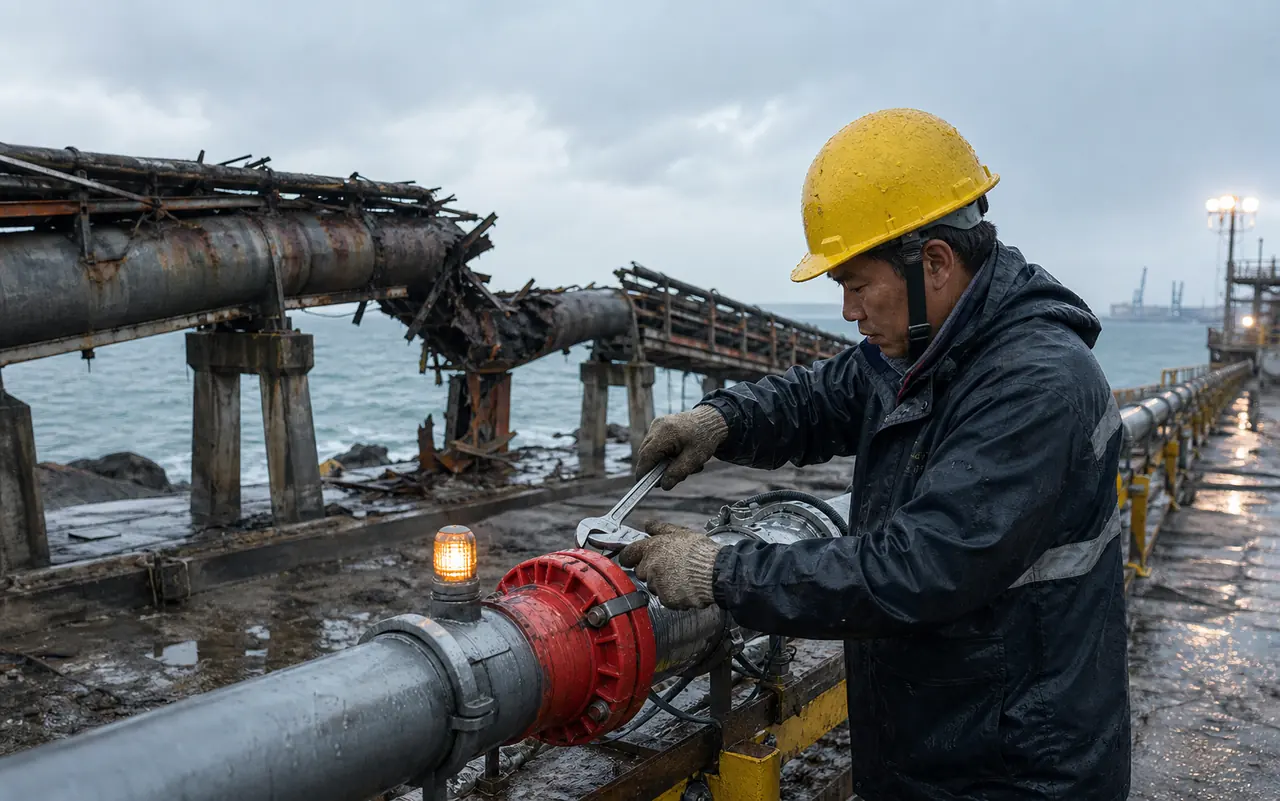
Safety Isn't Moving Everything Back to Taiwan: Real Resilience Is How Fast You Recover After Something Breaks
Stockpiling, localization and backup systems all serve a purpose, but none of them is a synonym for resilience. What Taiwan actually needs to ask isn't how much it holds in reserve, but how much essential function it can sustain during a disruption, who can switch to an alternative, and how quickly service comes back.
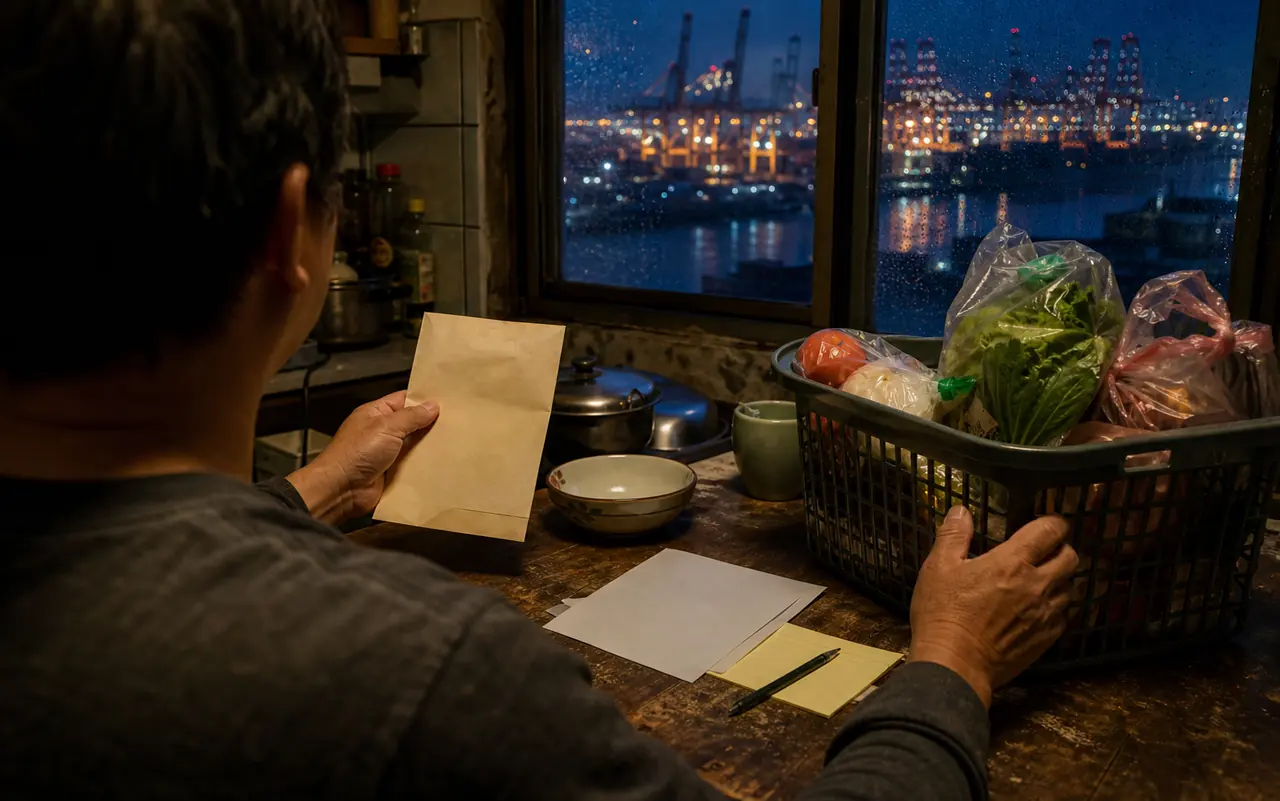
9.64% Isn't Everyone's Report Card: Alongside GDP, Taiwan Is Still Missing a Distribution Table
9.64% is genuinely good news, but it is not everyone's income gain. What Taiwan needs isn't another anti-GDP slogan — it's a second scoreboard that puts output, wages, the cost of living and industrial spillover on the same page.