
Congress as the Line of Defense: The Resilience and Limits of Bipartisan Support for Taiwan in the Trump Era
423 to 1 — the lopsided House vote in January 2025 approving the U.S.-Taiwan double-tax agreement nearly sums up the surface picture of 'bipartisan support for Taiwan.' Yet in Trump's second term, the executive branch's transactional logic, an undercurrent of isolationism, and the constitutional gap between 'legislation passed' and 'policy executed' are quietly eroding this political shield often called Taiwan's last line of defense. Is Congress a guardrail, or a blank check with writing on it?
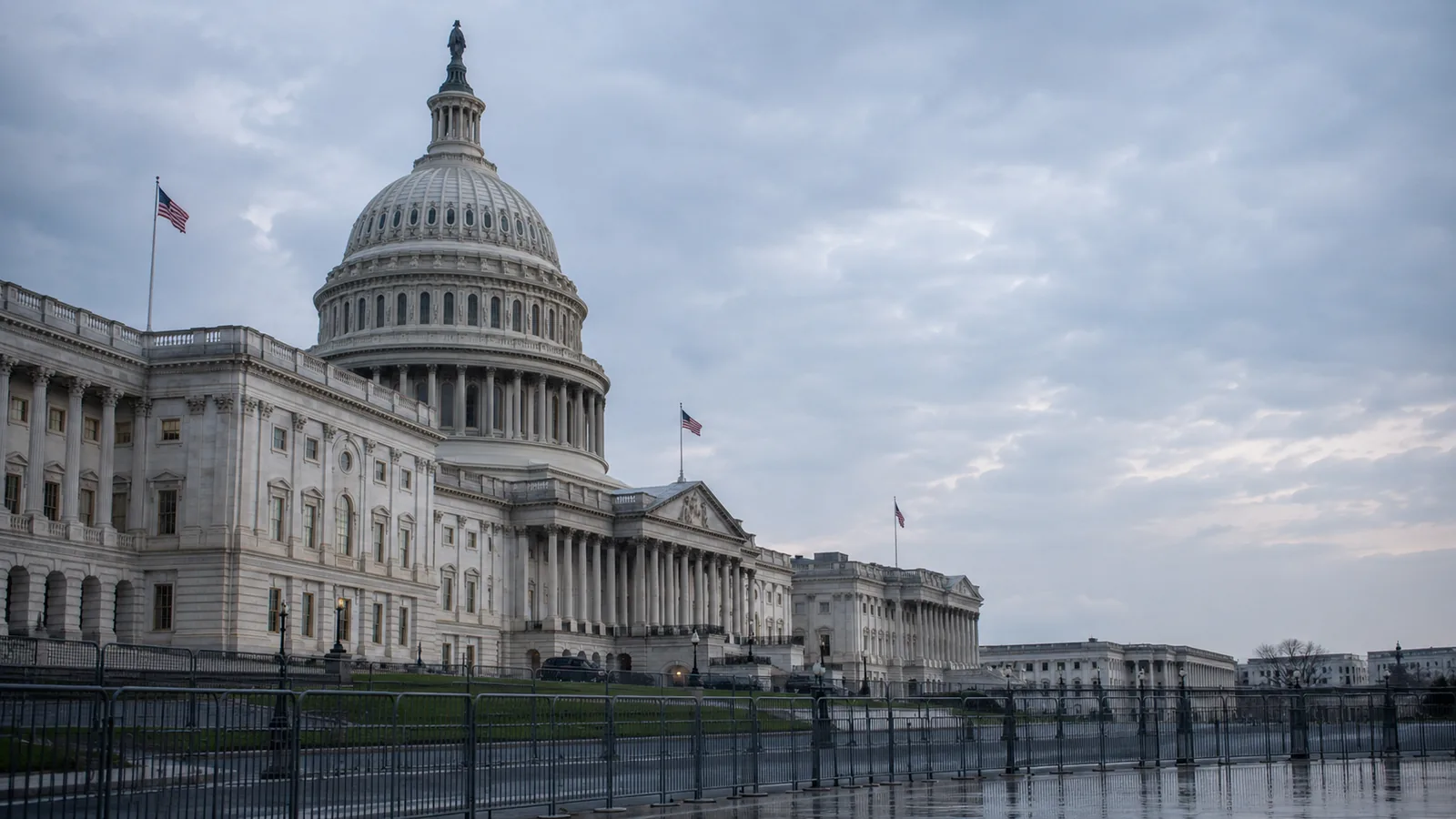
Article contents01 / 06
- The bipartisan consensus behind Taiwan has real structural resilience: the 119th Congress's Taiwan Caucus, with 130 members in the House and 31 in the Senate, hard clauses written into multiple NDAAs (the FY2026 NDAA authorizes $1 billion for the Taiwan Security Cooperation Initiative, triple the prior year), and the largest single arms sale to Taiwan ever, at $11.1 billion — these are not empty declarations, but legislative commitments with dollar figures and timetables attached.
- But the executive branch's 'transactional logic' is a systemic loophole: Trump has simultaneously imposed a 32% tariff on Taiwan, said Taiwan 'stole' America's semiconductor industry, and delayed notifying Congress of a pre-approved $14 billion arms sale — showing that a president can operate in the gaps left by congressional authorization, using Taiwan as a diplomatic bargaining chip against Beijing.
- The right frame for Taiwan to read this through: Congress is a 'guardrail,' not a 'bumper' — it can raise the political cost of abandoning Taiwan, but it cannot force the executive branch to act within a 60-minute crisis; the real line of defense still has to rest on Taiwan's own deterrent capability.
“Congress as the Line of Defense: The Resilience and Limits of Bipartisan Support for Taiwan in the Trump Era” reports that Number of Taiwan-Related Bills in the 119th Congress (2025-2026)(119 bills)。 The most of any Congress on record; the House alone introduced at least five bills with Taiwan in the title in the first six months [1][2]。
“Congress as the Line of Defense: The Resilience and Limits of Bipartisan Support for Taiwan in the Trump Era” reports that Timeline of Key Bipartisan Pro-Taiwan Legislation(2020-2025)。 From the TAIPEI Act to the Taiwan Assurance Implementation Act becoming Public Law 119-45 [3][5]。
“Congress as the Line of Defense: The Resilience and Limits of Bipartisan Support for Taiwan in the Trump Era” reports that Largest-Ever Single Arms Sale to Taiwan Authorized, December 2025($11.1 billion)。 About 79% of the $14 billion in arms sales Congress had pre-approved; includes 82 HIMARS systems, 420 ATACMS missiles, and over $1 billion in drones [9][10]。
On 20 November 2025, in Room SD-419 on Capitol Hill, the Senate Foreign Relations Committee held a hearing of a kind rarely seen in recent years — one that pointed inward.
Not a hearing on China, but on its own government.
The committee's ranking Democrat, Jeanne Shaheen, sat at the dais and turned her fire on the White House: "The Trump administration is taking a series of actions that weaken deterrence in the Taiwan Strait and undermine the credibility of the U.S.-Japan alliance." Republican chairman Jim Risch did not push back — he instead directed his own line of questioning toward how to strengthen implementation of the Taiwan Enhanced Resilience Act [3].
Neither side's target, in this exchange, was Taiwan. Their shared anxiety was one and the same person: Donald Trump.
This scene captures the real state of "bipartisan U.S. support for Taiwan" in 2025-2026 more precisely than any policy analysis could. The consensus is real — but sitting across from that consensus is a chief executive who can disregard any congressional resolution, so long as he judges that Taiwan, at a given moment, is a usable tool for extracting a bigger deal.
This is the real problem Taiwan faces today: the guardrail exists, but its strength has never depended so heavily on the mood of the person standing outside it.
The Legislative Trajectory of Bipartisan Support for Taiwan
To understand today's situation, one must first see clearly how this guardrail was built.
Over the past five years, U.S. congressional support for Taiwan has followed several clear, cumulative trajectories. The first is a move "from symbolic to concrete": early Taiwan-related bills were largely declaratory (such as the 2020 TAIPEI Act, which required State Department reporting); by 2025, provisions had become specific enough to "require that Taiwan be able to deploy drone and counter-drone systems by March 2026," with clear accountability mechanisms attached [7].
The second trajectory is "both parties racing to introduce bills": over the past three congressional cycles, support for Taiwan has shifted from a Democratic "human rights issue" into a bipartisan "national security issue." Republicans such as Michael McCaul, Marco Rubio, and John Curtis, and Democrats such as Bob Menendez, Raja Krishnamoorthi, and Seth Moulton have all been building the same wall from different directions [4][5].
The third trajectory is that legislation is sinking deeper into the NDAA. The National Defense Authorization Act is the real policy railway, because it must pass every year, the executive branch cannot sidestep it, and its provisions carry the force of budget execution. Once a Taiwan-related clause is written into the NDAA, it becomes far harder to ignore than any standalone bill. In the FY2026 NDAA, authorized funding for the Taiwan Security Cooperation Initiative rose from about $300 million the previous year to $1 billion — an increase of more than threefold — and for the first time required the joint development of drone and counter-drone systems by the United States and Taiwan [7].
“Congress as the Line of Defense: The Resilience and Limits of Bipartisan Support for Taiwan in the Trump Era” reports that Number of Taiwan-Related Bills in the 119th Congress (2025-2026)(119 bills)。 The most of any Congress on record; the House alone introduced at least five bills with Taiwan in the title in the first six months [1][2]。
The sheer volume of this trajectory is equally striking. In the first six months after the 119th Congress convened in January 2025, the House alone introduced at least five bills on the theme of Taiwan [1]. In October 2025, the Senate Foreign Relations Committee advanced four pro-Taiwan bills in a single sitting, including the PORCUPINE Act, the Taiwan International Solidarity Act, the Stop Chinese Aggression Against Taiwan Act, and the Taiwan-Americas Partnership Act [2].
But one important caveat must be flagged here: quantity does not equal legal force.
The Taiwan Relations Reinforcement Act (S. 1588) has now been introduced for a fourth time, seeking to elevate the rank of the AIT director and establish an interagency Taiwan working group — GovTrack estimates its chance of passage at 2% [4]. The Taiwan International Solidarity Act (H.R. 2416) passed the House by voice vote (a symbol of broad consensus), but then entered a black hole of Senate deliberation with no clear timetable [1].
The reality of Taiwan-related legislation is a "funnel structure": a large volume of proposals is poured in at the top, while only a small number ever flow out the bottom as actual law — but that small number tends to include the provisions that matter most.
The Trump Factor: The Executive Branch as a Variable
In April 2025, months after Congress had passed the U.S.-Taiwan double-tax agreement act by a vote of 423 to 1, Trump announced a 32% tariff on Taiwan — the line that shook Taipei, "They stole our semiconductor industry," was in fact something he had already said publicly, more than once [12].
Same month, another American president, the same Taiwan.
This contradiction pinpoints exactly the "dual-track fracture" in Trump's second-term Taiwan policy: Congress builds commitments to Taiwan on one track, while the executive branch runs its transactional calculations on another; the two tracks sometimes run in parallel, sometimes collide, and there is no single, unified "U.S. Taiwan policy."
Even more worth watching is the story of the "$14 billion."
In January 2025, the U.S. Congress pre-approved $14 billion in arms sales to Taiwan. This is a rare legislative move, one that signals Congress explicitly saying "we agree to sell these weapons." But under the U.S. foreign military sales mechanism, formal activation still requires the executive branch to submit a "notification" to Congress — and as of May 2026, Trump still had not formally notified it. Eight bipartisan senators co-signed a letter to Trump over this, in unusually strong language, asking him to "formally notify" Congress of these already-approved arms sales [11].
This episode illustrates the structural crack between "congressional authorization" and "presidential execution." Congress approved $14 billion, yet the executive branch can choose not to notify, not to activate — waiting for the right moment, and treating this batch of weapons as a diplomatic bargaining chip against Beijing.
This is not hypothetical. At that very same moment, in May 2026, Trump was planning a visit to Beijing to meet Xi Jinping. Bipartisan senators rushed to visit Taiwan first, conveying to both Beijing and the White House their opposition to any unilateral change in Taiwan policy [13]. The implication: we are worried you will give Taiwan away.
Trump's "transactional logic on Taiwan policy" is not simply a threat — analysts point out that he is in fact unlikely to abandon Taiwan outright, because a bipartisan track record of congressional resolutions backing Taiwan (97-1 in the Senate, 396-0 in the House) and public-opinion baselines showing more than 60% of Americans and 65% of Republicans in favor of defending Taiwan add up to a political constraint he can hardly ignore [14]. But he has genuinely demonstrated that there is a fairly wide space for action between congressional majorities and executive execution, and that he is willing to operate Taiwan within that space.
The Structural Resilience of Congress
Despite the uncertainty the Trump factor brings, the structural support for Taiwan in the U.S. Congress has sources of resilience that should not be underestimated.
First, the interweaving of diverse interests makes the cost of defection extremely high. The political interests behind supporting Taiwan in the United States are no longer a matter of a single ideology: the semiconductor supply chain (the districts of TSMC's, Intel's, and AMD's lawmakers), the defense industry (Lockheed's and Raytheon's manufacturing sites spread across many states), an ideological commitment to democratic values, and a geostrategic consensus on countering China — these overlapping interest networks form the political base underlying the 119th Congress's Taiwan Caucus, with 130 members in the House and 31 in the Senate [2]. Any lawmaker who wanted to "flip" would need to alienate all of these constituency interests at once, at an extremely high cost.
Second, legislative inertia is hard to reverse. The Taiwan-related legislative framework built up over the past five years — including the 2020 TAIPEI Act, the 2022 Taiwan Enhanced Resilience Act (TERA), and the 2025 Taiwan Assurance Implementation Act (Public Law 119-45) — has formed a cumulative legal layer; fully dismantling this framework would require active new legislation, which is almost impossible to happen given that majorities in both parties support Taiwan [3][6].
“Congress as the Line of Defense: The Resilience and Limits of Bipartisan Support for Taiwan in the Trump Era” reports that Timeline of Key Bipartisan Pro-Taiwan Legislation(2020-2025)。 From the TAIPEI Act to the Taiwan Assurance Implementation Act becoming Public Law 119-45 [3][5]。
Third, the mechanical inertia of the NDAA. The annual National Defense Authorization Act is not just a budget bill; it is a vehicle for policy instructions. Once a Taiwan-related clause is embedded in the NDAA, it enters a track of "inertial execution": if the executive branch fails to implement it, it must proactively explain why and bear the cost of that refusal — and given that both parties support Taiwan, the political price of refusal is considerable.
Fourth, the "political cost structure" outlasts any single bill. Even when a specific bill fails to pass, being "anti-Taiwan" in American politics is equivalent to being "anti-semiconductor," "anti-defense-industry," and "endorsing Beijing" — for the overwhelming majority of American politicians, that image is a brand risk they cannot afford. This informal but extremely powerful political cost is the deepest guardian mechanism of the bipartisan consensus.
In December 2025, under a certain amount of political pressure, Trump finally signed the Taiwan Assurance Implementation Act. Although he issued a "signing statement" asserting room for executive interpretation, the act of signing itself is a case study in political-cost dynamics: even if he did not want to do it, the cost of not doing it was higher [3].
Cracks Appear: The Isolationist Pushback
Yet this guardrail is not without its cracks.
Within the Republican Party, there is a voice that has become increasingly hard to ignore: not opposition to Taiwan, but a questioning of "whether America must forever foot the bill for other people's security." Under the "America First" frame, this question is deeply entangled with the Taiwan issue, and it is extremely hard to dissolve through the language of "pro-Taiwan consensus."
In 2025, several Republican lawmakers raised a fairly pragmatic question at a hearing on Taiwan arms sales: "We're now supporting Ukraine, supporting Israel, and also having to support Taiwan — can our defense industrial base really hold up?" There is nothing wrong with this question, but its subtext is: once priorities are forced to be chosen among, Taiwan will not necessarily always come first [7].
A more structural problem is the "erosion of deterrence credibility." A red-team perspective points out: every time the U.S. responds to Chinese provocations with "words only, no action," the cost of deterrence declines a little further. After the "Joint Sword" exercises ended in 2024, Washington's response was a warning, not action — and in the PLA's own calculations, this pattern already constitutes a sufficient sample of historical data.
Congress is not entirely unaware of this. At the November 2025 hearing, Bonnie Glaser of the German Marshall Fund told the committee plainly: "Our signals on the Taiwan issue are more easily misread now than at any time before." And the risk of being "misread" peaks precisely when the U.S. executive branch is sending contradictory signals [3].
Another crack comes from the actual passage rate of these bills. Take the Taiwan Relations Reinforcement Act as an example: it has been introduced four times and failed four times, yet its mere "presence" is cited by politicians as proof that "we support Taiwan." This phenomenon of "introducing a bill as an accomplishment in itself" causes the quantitative significance of Taiwan-related legislation to be exaggerated, while the difference in quality is underestimated. In this sense, if Taiwan's diplomatic resources are invested too heavily in "getting bills introduced" rather than "ensuring bills pass and are implemented," that is a risk of resource misallocation.
Arms Sales and Deterrence: What the Last Line of Defense Actually Means
Back to the hardest numbers: on 17 December 2025, the U.S. State Department formally notified Congress, approving eight arms-sales packages to Taiwan totaling $11.1 billion — the largest single package ever.
The list includes: 82 High Mobility Artillery Rocket Systems (HIMARS) and 420 Army Tactical Missile System (ATACMS) missiles, together worth more than $4 billion; 60 self-propelled howitzer systems, worth more than $4 billion; and various drones, worth more than $1 billion [9][10].
“Congress as the Line of Defense: The Resilience and Limits of Bipartisan Support for Taiwan in the Trump Era” reports that Largest-Ever Single Arms Sale to Taiwan Authorized, December 2025($11.1 billion)。 About 79% of the $14 billion in arms sales Congress had pre-approved; includes 82 HIMARS systems, 420 ATACMS missiles, and over $1 billion in drones [9][10]。
Assessed in military terms, if these weapons are fully delivered, they will significantly strengthen Taiwan's "long-range precision strike" capability. The range of HIMARS/ATACMS (ATACMS reaches as far as 300 kilometers) is enough to strike massing forces on the other side of the Taiwan Strait; this is a deterrence logic of "sharply raising the cost of massing forces for an invasion," not simply a defensive posture.
But military reality is equally harsh: there is a gap of five to ten years between "authorization and notification" and "actual delivery of weapons." The NDAA has explicitly named "concern over delays in F-16 Block 70/72 deliveries" — the 66 fighter jets originally scheduled for delivery in 2025/2026 have been pushed back to 2026/2027, and this is a case that was already authorized back in the Biden administration [7]. Needless to say, there is still no public, definite timetable for the "production schedule, delivery timeline, and Taiwan's absorption capacity" for this $11.1 billion package of weapons.
Congress has tried to address this problem in the FY2026 NDAA: requiring that "Taiwan be able to deploy drone and counter-drone capabilities by March 2026," and requiring joint development rather than simple procurement — a legislative attempt to shorten the gap between "authorization and capability" [7]. But there is still a gap between legislative requirements and the physical constraints of the industrial base.
The real bottom-line question is: even if all the weapons arrive on schedule, is Taiwan's "kill chain" (the closed loop of sensing, authorization, and strike) actually complete? With the drones in hand, has system integration been done? With HIMARS delivered, has soldier training been completed? Congress can authorize weapons, but it cannot legislate operational capability into existence. That gap has to be filled by Taiwan's own training system, defense reform, and domestic defense industry.
Taiwan's Perspective: Three Layers Converge
Taiwan's National Perspective
For Taiwan's national security decision-makers, the bipartisan consensus in the U.S. Congress is a real but conditional strategic asset. Its value lies not in "automatically triggering protection," but in "raising the political threshold for abandoning Taiwan" — that threshold genuinely exists; any U.S. president who publicly abandoned Taiwan would have to face a fierce domestic political backlash.
But Taiwan cannot equate "the threshold exists" with "crossing it is impossible." Trump has already demonstrated the vast space for action below that threshold: delaying arms-sale notifications, imposing tariffs, using Taiwan as a diplomatic bargaining chip — none of these amount to "abandoning Taiwan," but all of them erode Taiwan's strategic certainty.
Taiwan's most important diplomatic task is to keep raising that threshold, and to minimize the tools available for lowering it. Concretely, this means: ensuring that the Six Assurances Act and the Taiwan International Solidarity Act complete Senate passage, elevating commitments to Taiwan from political language into a framework with real legal enforcement costs; and at the same time, pressing the executive branch to formally notify Congress of the pre-approved $14 billion arms sale, so it does not remain a potential diplomatic tool for the White House to use against Beijing.
Taiwan's own deterrent capability is the foundation beneath all of this. However sturdy the guardrail, it cannot substitute for Taiwan's own capacity to make the cost of an invasion sufficiently expensive.
The Industry Intermediary Perspective
For intermediary bodies in Taiwan's semiconductor and defense industries, this political landscape presents an overlapping dual track of opportunity and risk.
On the opportunity side: if the U.S.-Taiwan double-tax agreement completes Senate passage, it will directly reduce the financial friction of cross-border investment, helping to attract U.S. capital into Taiwan and providing tax certainty for Taiwanese firms investing in the United States. The NDAA's joint drone-development clause gives Taiwan's defense-technology companies an institutional channel into the U.S. defense-industrial ecosystem. The "non-red supply chain" framework continued to deepen in 2026, and the position of Taiwanese firms within it is shifting from "contract-manufacturing beneficiary" to "strategic partner."
On the risk side: the coexistence of Trump's tariff (32%) and legislative protection (Taiwan-related bills) leaves industry facing policy uncertainty — any long-term supply-chain decision must incorporate scenario planning for "the executive branch changing the terms at some point." Geopolitical pressure on semiconductor firms to invest in the United States continues, but if investing in the U.S. ends up undermining their base in Taiwan because of a policy shift, that is a net loss for Taiwan's industry as a whole.
The SME Perspective
For Taiwan's small and medium-sized enterprises, political maneuvering at the congressional level tends to affect the business environment in a delayed, indirect way, rather than through a direct market shock. There are three most direct channels of impact.
The first: the U.S.-Taiwan tariff and investment agreement. There were signals of a preliminary agreement as of January 2026; if formally finalized, export-oriented SMEs (especially in electronic components, machine tools, and precision machinery) would benefit from a lower threshold for entering the U.S. market. But if Trump trades away Taiwan's trade terms in exchange for a U.S.-China agreement, this upside could vanish midway — so SMEs should track the pace of progress as a monitoring indicator.
The second: localizing the defense supply chain. The NDAA's requirement for joint U.S.-Taiwan drone development is not an opportunity for large firms alone. Taiwan has more than 160 drone-related manufacturers, many of them small and medium-sized, with supply capabilities in sensing, communications, and precision components. Breaking into this emerging dual-use military-civilian supply chain requires proactively researching regulations and compliance requirements, rather than waiting for opportunity to appear on its own.
The third: the indirect risk from U.S.-China relations. If U.S.-China relations improve in the short term following Trump's visit to Beijing, some SMEs' exports to China may get a brief reprieve; but if that improvement comes from concessions on the Taiwan issue in exchange for a U.S.-China trade deal, uncertainty over the medium- to long-term U.S.-Taiwan relationship rises instead, which is a negative signal for the overall positioning of Taiwan's supply chain.
Sources
- Congress.gov — H.R. 2416, Taiwan International Solidarity Act (119th Congress)
- FAPA — 119th Congress Taiwan Bill Tracker
- Senate Foreign Relations Committee — Hearing Reviewing Implementation of the Taiwan Enhanced Resilience Act (TERA)
- GovTrack — Legislative History of S. 1588, Taiwan Relations Reinforcement Act
- The White House — Signing Statement on H.J.Res. 133 and H.R. 1512 (2 December 2025)
- Office of Senator Cortez Masto — Press Release on Bipartisan Introduction of the Taiwan Relations Reinforcement Act
- Taiwan Security Monitor (GMU) — Analysis of Taiwan-Related Provisions in the FY26 NDAA
- FAPA — FY2026 NDAA and the Taiwan Non-Discrimination Act Take Effect
- Breaking Defense — US Greenlights $11 Billion Military Arms Package to Taiwan
- NPR — U.S. Announces More Than $10 Billion in Arms Sales to Taiwan
- Senate Foreign Relations Committee — Shaheen, Tillis Lead Bipartisan Letter Urging Notification of Taiwan Arms Sales
- East Asia Forum — Trump's Transactionalism Turns Taiwan into a Bargaining Chip
- KSAT (AP wire) — Bipartisan U.S. Lawmakers Say They'll Visit Taiwan Before Trump's Summit with China's Xi (originally a broken Spectrum News link, replaced with the AP wire version)
- FPRI — Why Trump Won't Sacrifice Taiwan

Taiwan's Two Faces
The whole world depends on Taiwan's chips — and is quietly preparing for the day it might lose them. The same island is both the heart of the supply chain and a geopolitical powder keg. How can Taiwan's companies turn "irreplaceable" into an advantage that lasts?

September 11: The Loophole Clock Starts Ticking — How the EU CRA's 24/72-Hour Rule Rewrites Taiwan's Hardware Exports
The reporting obligations of the EU's Cyber Resilience Act take effect early, on September 11, 2026. They do not require every vulnerability to be disclosed within a day — they require the legal manufacturer of a product to issue a 24-hour early warning, a 72-hour notification, and a follow-up final report once it becomes aware of an actively exploited vulnerability or a severe security incident. The real impact on Taiwan is that brand owners will push that statutory clock backward onto their ODMs, component suppliers, and software supply chains.