
Launched From the Seabed Into the Pacific: How China's Submarine-Launched Strategic Missile Rewrites Taiwan's Deterrence Environment
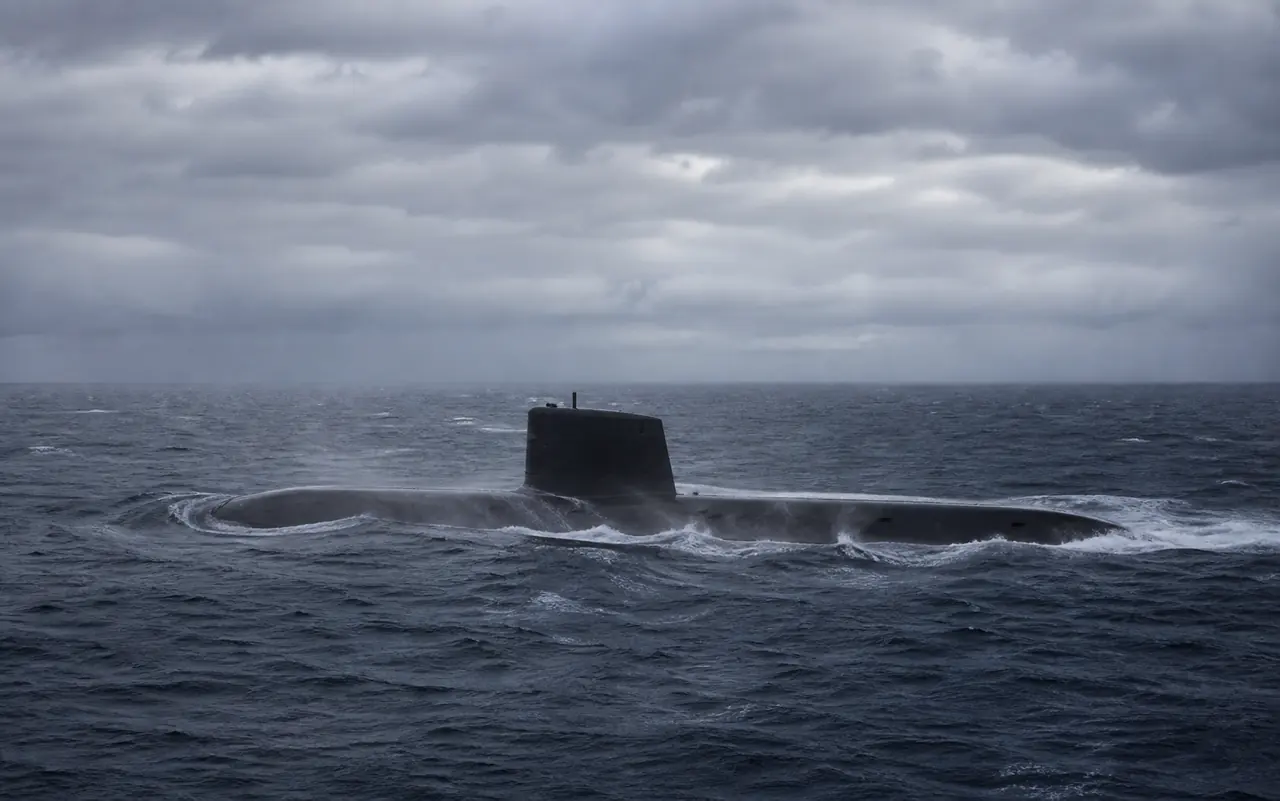
On July 6, a strategic missile carrying a simulated warhead was launched from a Chinese nuclear submarine into the Pacific. It is not a countdown to an attack on Taiwan, but it shows Beijing moving its sea-based nuclear capability to "strike back even after being struck first" into the spotlight. What Taiwan actually needs to shore up is not nuclear weapons, but early warning, command, communications, and crisis management.
Article contents01 / 10
- What is confirmed is a strategic nuclear submarine, a simulated warhead, and a designated area of the Pacific; the missile's type, range, launch position, and whether the boat normally carries live nuclear warheads have not been disclosed by Chinese officials.
- The core point of a submarine-launched missile is not that it is better suited to attacking Taiwan, but that it lets China still strike back after absorbing a first blow — raising the escalation cost for the United States if it intervenes in a high-intensity crisis.
- A single test launch cannot prove that a standing deterrent patrol has matured, nor does it mean an attack on Taiwan is imminent; Taiwan should treat it as a change in the strategic environment and return to early warning, resilience, communications, and allied crisis management.
“Launched From the Seabed Into the Pacific: How China's Submarine-Launched Strategic Missile Rewrites Taiwan's Deterrence Environment” reports that China Publicly Confirms Sea-Based Strategic Missile Test(2026.07.06)。 A strategic nuclear submarine launched a missile carrying a simulated warhead into international waters in the Pacific; officials did not disclose the missile type or range [1]。
“Launched From the Seabed Into the Pacific: How China's Submarine-Launched Strategic Missile Rewrites Taiwan's Deterrence Environment” reports that Second-Strike Capability Is the Real Value of the Submarine(Able to Strike Back After Being Struck First)。 A submarine that can patrol undetected is harder to destroy in one blow than a fixed base; a successful test launch still does not mean the whole system is combat-ready。
“Launched From the Seabed Into the Pacific: How China's Submarine-Launched Strategic Missile Rewrites Taiwan's Deterrence Environment” reports that Open-Source Estimates of China's Nuclear Warheads(~600 → 620 warheads)。 SIPRI and FAS estimate China's nuclear stockpile is still growing; these are estimates, not figures released by China's government [8][9]。
“Launched From the Seabed Into the Pacific: How China's Submarine-Launched Strategic Missile Rewrites Taiwan's Deterrence Environment” reports that What Taiwan Can Actually Do(Three Words: See, Survive, Stay Connected)。 See: early warning and surveillance; Survive: dispersal and redundancy; Stay connected: command, communications, and crisis hotlines [14]。
On July 6, 2026, China's Ministry of National Defense announced that a PLA Navy strategic nuclear submarine had test-launched a strategic missile carrying a simulated warhead into international waters related to the Pacific, and that it landed in the designated sea area. [1]
The announcement gave no details on the missile's type, range, or launch position, nor did it identify which submarine was involved. For Taiwan, the significance of this test does not lie in one undisclosed number — it lies in whether China is turning "launch from the sea" into a more routine signal of nuclear deterrence.
But the image itself is already clear enough.
What Beijing wants the world to see is not just one missile, but a harder-to-destroy retaliatory capability: even if bases on land are struck first, a nuclear force capable of striking back may still be hiding beneath the sea.
This is called second-strike capability.
It is not a countdown to an attack on Taiwan, nor is it a weapon built specifically for Taiwan. It is aimed first at the strategic calculations of the United States and other nuclear powers. Yet if a high-intensity crisis were to erupt in the Taiwan Strait, how the US and China each calculate escalation risk would determine the boundary between intervention, restraint, and miscalculation. That water column rising from the seabed will, in the end, leave a shadow on Taiwan's own security ledger.
“Launched From the Seabed Into the Pacific: How China's Submarine-Launched Strategic Missile Rewrites Taiwan's Deterrence Environment” reports that China Publicly Confirms Sea-Based Strategic Missile Test(2026.07.06)。 A strategic nuclear submarine launched a missile carrying a simulated warhead into international waters in the Pacific; officials did not disclose the missile type or range [1]。
Thirty Seconds First: Significant, But Not "War Is Coming"
This test carries at least three layers of significance.
First, a demonstration of capability. China publicly proved that its navy can carry out a long-range missile launch from a strategic nuclear submarine. The Associated Press quoted analysts noting this is the first time China has publicly acknowledged this kind of long-range test from a nuclear-powered ballistic-missile submarine into the Pacific. [6][7]
Second, political signaling. China describes it as an annual routine training exercise using a simulated warhead, consistent with international law, and says it gave prior notice to relevant countries. [1][2] Australia, however, takes the view that the test, occurring against a backdrop of China's rapid military buildup and insufficient transparency, will make the region less stable; Japan and New Zealand have also voiced concern. [5][6]
Third, crisis calculation. If China can establish a credible, survivable sea-based nuclear retaliatory capability, it becomes harder for the United States to believe it could disarm China's nuclear force in a conflict. This could raise the escalation cost of US intervention in a crisis, and it could also push the United States to strengthen submarine tracking, its nuclear posture, and cooperation with allies. Whether the end result is greater restraint or a fresh arms race cannot be determined by a single test.
So the most accurate headline is neither "China is preparing to attack Taiwan" nor "just a routine test, nothing to see."
It is this: China is moving sea-based nuclear deterrence from low-profile deployment to public display.
First, Separate the Known From the Unknown
Military news is most easily swept along by a string of seemingly precise numbers. This case in particular calls for the brakes.
What is known: the launch platform is what China calls a strategic nuclear submarine; the missile carried a simulated warhead; the target was a designated area within international waters related to the Pacific; and Taiwan's Ministry of National Defense stated the trajectory did not pass through Taiwanese airspace. [1][3][4]
What is unknown is far more: was the missile a JL-2 or a JL-3? How far did it fly? Where was it launched from? Does the submarine normally carry live nuclear warheads? Does this test mean a standing deterrent patrol has already matured?
Chinese officials have no answers to these questions.
Analysts interviewed by the Associated Press differ on the missile type; the team at the Bulletin of the Atomic Scientists and the Federation of American Scientists, working from open-source imagery and estimated flight range, lean toward the assessment that the tested missile may be a JL-2, though the same team also notes that China is progressively re-equipping its Type 094 submarines with the longer-range JL-3. [6][8]
These are professional open-source assessments — they are still not official confirmation.
If an article erases the word "may," the intelligence turns into fiction.
The Missile Isn't the Point — Being Hidden Is
Why do nuclear submarines matter? The answer is not "launching from the sea is cooler" — it is that they may survive the first strike.
Fixed missile silos and known airfields and bases have coordinates. When a crisis escalates, an adversary can monitor them, suppress them, or even try to destroy them first. A submarine, by contrast, moves underwater. If it is quiet enough, escorted, and able to receive a secure command, an adversary cannot be sure that every piece of the nuclear force has been located.
As long as even one boat has not been found, the adversary cannot trust that it could strike first at no cost.
This is second-strike capability: not striking first, but telling the adversary that even if you strike first, I can still come back.
“Launched From the Seabed Into the Pacific: How China's Submarine-Launched Strategic Missile Rewrites Taiwan's Deterrence Environment” reports that Second-Strike Capability Is the Real Value of the Submarine(Able to Strike Back After Being Struck First)。 A submarine that can patrol undetected is harder to destroy in one blow than a fixed base; a successful test launch still does not mean the whole system is combat-ready。
But this is also exactly where exaggeration creeps in most easily.
One missile successfully breaking the surface does not mean the entire sea-based nuclear deterrent has matured. The submarine must reduce its noise signature and evade tracking; the navy must be able to secure its transit routes out to sea; long-range communications must be able to relay orders without exposing position; personnel must be able to sustain long patrols; and the top decision-making layer must ensure nuclear orders can be neither decapitated nor mistakenly issued.
The missile is only the last link in the chain.
What is truly difficult is that none of the links before it can fail.
The Federation of American Scientists team estimates China currently operates six Type 094 ballistic-missile nuclear submarines, each with roughly twelve launch tubes, while continuing to develop the follow-on Type 096. These figures come from satellite imagery, government reports, and open-source intelligence combined — they are not a complete fleet roster released by Beijing. [8]
So what this test can best prove is that "this chain can run one stretch," not that "the entire chain can now reliably operate at any time."
Beijing Says Minimum Deterrence; the West Sees Opaque Expansion
From Beijing's vantage point, the story is simple.
The United States and Russia hold nuclear arsenals far larger than China's, and the United Kingdom and France have long relied on sea-based nuclear deterrence. China building a submarine force able to strike back after being attacked is, in this view, a way to avoid nuclear coercion, not a preparation to use nuclear weapons first. Beijing has long declared a policy of "no first use" of nuclear weapons and publicly reaffirmed that policy again in 2026; this test also used a simulated warhead and gave advance notice. [1][10][11]
Calling only China's test a provocation while treating other nuclear powers' tests as routine does carry a real risk of double standards.
And the numbers should not be inflated carelessly. Both SIPRI and the Federation of American Scientists team estimated in 2026 that China has roughly 620 nuclear warheads — still significantly fewer than the arsenals of the United States and Russia. The US side has at times projected that China could exceed 1,000 warheads by 2030, but that projection depends on assumptions about silos, warhead loading, production capacity, and deployment — it cannot be treated as something that has already happened. [8][9]
“Launched From the Seabed Into the Pacific: How China's Submarine-Launched Strategic Missile Rewrites Taiwan's Deterrence Environment” reports that Open-Source Estimates of China's Nuclear Warheads(~600 → 620 warheads)。 SIPRI and FAS estimate China's nuclear stockpile is still growing; these are estimates, not figures released by China's government [8][9]。
What the Western eye sees, however, is not a single number but a structure changing on every front at once.
China is expanding its land-based missile silos, adding mobile missiles, extending the range of its sea-based missiles, and reviving a possible nuclear mission for its air force. With all three legs — land, sea, and air — growing together, the question is no longer just "just over 600 is still less than the US or Russia," but where these weapons are normally kept, whether they are loaded, how high their alert status is, and how orders are transmitted. [8]
Beijing's no-first-use pledge matters, but it is a policy declaration, not a mechanical limit welded onto the missile itself. Policy can lower concern; only transparency can lower the risk of miscalculation.
Both sides' arguments contain real substance.
China has reason to point out that its own nuclear arsenal is far smaller than that of the US or Russia, and it has reason to pursue a survivable retaliatory capability; neighboring countries likewise have reason to worry that when capability grows quickly while details stay undisclosed, any crisis must plan for the worst case.
The most dangerous feature of a security dilemma is that each side can describe its own buildup as defensive, then treat the other side's response as justification for the next round of expansion.
Flying Into a Nuclear-Free Zone Does Not Mean the Treaty Has Already Been Violated
This missile landed in the South Pacific, which also touches a legal line that is easily oversimplified in headlines.
The Treaty of Rarotonga established the South Pacific Nuclear Free Zone, with a core prohibition on treaty parties in the region manufacturing, acquiring, possessing, or testing nuclear explosive devices, and provisions addressing nuclear waste and the legacy of nuclear testing. [12][13] The missile in this test carried a simulated warhead, not a known nuclear explosive device. So "it landed inside a nuclear-free zone" is a geographic fact; "it has already violated the treaty" cannot simply be derived from where it landed.
What is genuinely worth pressing on is transparency. Was advance notice given early enough? Was the navigational-warning area complete? Did neighboring island states have sufficient time to adjust civil aviation and shipping? Australia acknowledged receiving notice, yet still criticized China's rapid military expansion for lacking the transparency needed to reassure the region. [5]
This distinction matters. Overstating the legal case would make legitimate security concerns less credible; but declaring there is nothing to worry about simply because no nuclear warhead was involved would also ignore the security, political, and historical-memory costs island states bear whenever a strategic missile flies over or lands in the Pacific.
What This Missile Did to Taiwan — and What It Did Not
Start with what it did not do.
It did not suddenly teach China how to cross the strait and land troops, it did not solve the PLA's problems of air superiority, logistics, port seizure, or urban occupation, and it did not prove that Beijing has decided to attack Taiwan. A sea-based strategic missile is aimed primarily at ultimate deterrence against other nuclear powers — it is not something used to sink a landing craft partway across the strait.
So slotting it directly into a "countdown to a 2027 invasion" narrative is a wrong connection.
But it will change the background at a higher level.
If a Taiwan Strait conflict stays at the conventional level, the United States can calculate the cost of intervention based on carriers, submarines, long-range strike, and allied bases. Once China is more confident it can preserve a nuclear retaliatory capability, the US also has to calculate: if a conventional strike hits China's early-warning, command, or systems that may be dual-use for both nuclear and conventional forces, would Beijing mistakenly believe its nuclear force is being disarmed?
Conversely, Beijing may also come to believe that a more credible nuclear retaliatory capability provides a kind of "do not escalate too far" shield over its conventional operations.
This is a reasonable inference, and the confidence level can only be rated medium. Nuclear deterrence could make both sides more restrained, or it could make one side bolder at a lower level of conflict. A single test launch cannot tell us which net effect applies.
What Taiwan really needs to understand is that a future crisis will not just be about "fight or don't fight" — it will also be about how each side judges which threshold the other has crossed. Once nuclear and conventional systems sit on the same picture of the situation, misjudgment itself becomes a risk.
Taiwan Cannot Copy the Nuclear Powers, But It Can Do Three Things
Taiwan has no need — and should not — pursue a symmetric nuclear weapon in response to a single test. That would involve major international norms and severe political costs, and it would also pull limited resources away from more urgent priorities such as air defense, anti-blockade capability, command resilience, and social continuity.
What Taiwan can actually do can be condensed into three words: see, survive, stay connected.
See. Strengthen missile early warning, space- and air/sea-based surveillance, and cross-border intelligence exchange, so as to at least know what has happened. Early warning is not a guarantee of interception — it buys time for decisions, evacuation, and command.
Survive. Command posts, communications, power, data, and key government functions need to be dispersed, so that a single point of failure cannot drag down the entire system. The real value of "multi-domain deterrence, resilient defense" in Taiwan's 2025 National Defense Report lies precisely in making it impossible for an adversary to paralyze the whole system with just a few strikes. [14]
Stay connected. Taiwan should bring nuclear-level crisis communication into its security dialogue with the United States, Japan, and other partners; regional countries should likewise demand that China provide earlier, more complete notice of strategic test launches, and establish hotlines that remain usable during a military crisis.
“Launched From the Seabed Into the Pacific: How China's Submarine-Launched Strategic Missile Rewrites Taiwan's Deterrence Environment” reports that What Taiwan Can Actually Do(Three Words: See, Survive, Stay Connected)。 See: early warning and surveillance; Survive: dispersal and redundancy; Stay connected: command, communications, and crisis hotlines [14]。
Businesses Don't Need a "Nuclear War Plan" — They Need to Make Everyday Continuity Real
For critical infrastructure and large manufacturers, this event should trigger not the procurement of an elaborate doomsday report, but a fresh review of existing business-continuity plans: can operations switch over if the primary data center fails? Do satellite, fixed-line, and mobile communications have alternative paths? When power is cut, ports are blockaded, materials are delayed, or staff cannot reach the workplace, which production line stops first, and which one must be kept running at all costs?
For industry associations, national-security language should be translated into joint drills. Semiconductor, telecom, financial, logistics, and energy operators each have their own backup plans, but cross-sector interdependency is where the chain most easily breaks: telecoms need power, the power grid needs communications, finance needs data centers, factories need water and logistics. One company surviving does not mean the supply chain survives.
For SMEs, the most practical preparation is even more mundane: off-site data backups, an alternative contact tree, a list of key suppliers, and cash flow and insurance terms. These preparations already help against typhoons, cyberattacks, power outages, and blockades — there is no need to invent a separate, unrealistic "nuclear war script."
The more routine the preparation, the more likely it is to actually work when a crisis comes.
The Final Judgment: Don't Panic, and Don't Mistake a Water Column for Fireworks
The July 6 test is not a Taiwan Strait war alarm.
Chinese officials have not disclosed the missile type or range, and public information is not sufficient to prove that its sea-based nuclear force has already achieved a stable patrol, reliable communications, and routine warhead loading. Anyone who declares, from one blurry photo, that the JL-3 is fully mature, or claims the United States will never again dare intervene in the Taiwan Strait, is going further than the evidence allows.
But this is also not news that can simply be scrolled past.
China's choice to publicly display a strategic nuclear submarine's long-range launch shows that sea-based second-strike capability has become something it wants the region and the United States to factor into their calculations. As nuclear weapon numbers, platforms, and missions expand together, if transparency and crisis communication do not grow in step, the room for miscalculation will widen.
Taiwan's most mature response is neither to amplify fear nor to pretend nothing has happened.
It is to acknowledge that the strategic environment has changed, and then to put every unit of its limited resources where it can actually reduce vulnerability: seeing a little earlier, staying operational after the first blow, and still being able to get the message through to the right people during a crisis.
The missile under the sea belongs to the nuclear powers.
Seeing, surviving, staying connected — that is Taiwan's own deterrence.
Decision Tool: Five Questions to Ask Before the Next Test Launch
| Question | Judge only on what is confirmed | How to handle the unknown |
|---|---|---|
| What platform was it? | Officially confirmed submarine, land-based, or air-based | Don't guess the model from a photo |
| What warhead did it carry? | Distinguish simulated, conventional, and nuclear warheads | If undisclosed, write it as unconfirmed |
| Where did it fly? | Check official navigational warnings, impact area, and monitoring by other countries | Don't substitute online guesswork for evidence |
| What capability did it change? | Separate a successful test, a mature standing patrol, and nuclear command | Don't treat a single success as full maturity |
| What does it mean for Taiwan? | Separate nuclear-level crisis risk from conventional invasion capability | Don't write every missile story as a countdown |
Sources
- Ministry of National Defense of China — Navy strategic nuclear submarine test-launches strategic missile (Grade A, official statement of the acting party)
- Ministry of Foreign Affairs of China — Regular press conference, July 7, 2026 (Grade A, official statement of the acting party)
- Ministry of Foreign Affairs, Republic of China (Taiwan) — Response to China's strategic missile test into the Pacific
- Central News Agency — Taiwan's Ministry of Foreign Affairs and Ministry of National Defense respond to the test launch
- Australian Department of Foreign Affairs and Trade — Foreign Minister Penny Wong responds to the test launch in Suva, Fiji
- Associated Press — What is known and unknown about China's rare ballistic missile test
- Associated Press — China test-launches ballistic missile into the South Pacific
- Bulletin of the Atomic Scientists / Federation of American Scientists — Chinese nuclear weapons, 2026
- Stockholm International Peace Research Institute — Increasing focus on nuclear weapons, 2026 SIPRI Yearbook
- Ministry of Foreign Affairs of China — 2026 reaffirmation of the no-first-use nuclear weapons policy (Grade A, official policy statement)
- Ministry of Foreign Affairs of China — No-first-use nuclear weapons initiative (Grade A, official policy statement)
- United Nations — The Treaty of Rarotonga and the South Pacific Nuclear Free Zone
- United Nations Treaty Collection — South Pacific Nuclear Free Zone Treaty
- Ministry of National Defense, Republic of China (Taiwan) — 2025 National Defense Report
September 11: The Loophole Clock Starts Ticking — How the EU CRA's 24/72-Hour Rule Rewrites Taiwan's Hardware Exports
The reporting obligations of the EU's Cyber Resilience Act take effect early, on September 11, 2026. They do not require every vulnerability to be disclosed within a day — they require the legal manufacturer of a product to issue a 24-hour early warning, a 72-hour notification, and a follow-up final report once it becomes aware of an actively exploited vulnerability or a severe security incident. The real impact on Taiwan is that brand owners will push that statutory clock backward onto their ODMs, component suppliers, and software supply chains.

Viral Data Goes In — Do Vaccines Come Out? Taiwan's Gap in the PABS Negotiations
The WHO Pandemic Agreement was adopted by the World Health Assembly in 2025, but its core annex on pathogen access and benefit-sharing is still under negotiation; the seventh round did not conclude, and the eighth round is set for September. Taiwan's real risk is not whether it can upload a sequence — it is that there is no single, publicly verifiable, end-to-end pathway linking data contribution, notification of use, manufacturer contracts, and actual access to vaccines and diagnostics.