
Cut One Line, Lose the Network for 50 Days: Taiwan's Invisible Information Lifeline
More than 90% of the world's intercontinental data moves through a handful of undersea cables — and Taiwan's own connections to the outside world rely just as completely on this same small number of cables. Matsu's cables have been cut more than twenty times in five years; in 2023, two trunk cables were severed at once and residents lost their connection for more than 50 days; in April 2026 a cable was cut for a third time. Is this fishing-boat anchors dragging by accident, or a gray-zone tactic of Chinese 'battlefield pre-positioning'? The real question is not whether it was China's doing — it is whether Taiwan can make sure that even when a line is cut, it still isn't cut off, and isn't thrown into chaos by rumor.
Article contents01 / 09
- The structural fragility is real: Taiwan's connections to the outside world rely heavily on a small number of undersea cables (more than 95% of the world's intercontinental data travels via undersea cables), with landing stations concentrated in a few sites — an invisible but potentially fatal single point of failure. Matsu's cables have been cut more than 20 times in five years; in 2023, two trunk cables were severed at once and the network was down for more than 50 days; in April 2026 a cable was cut for the third time in four years (suspected to involve a Chinese salvage barge).
- Whether any single incident was deliberate mostly remains unproven (confidence must be flagged), but a repeated pattern — specific ships that turn off tracking before dragging anchor, plus China's own public disclosure of a cable-cutting device rated to 4,000 meters — adds up to a reasonable reading of 'battlefield pre-positioning'; a cable cut is also often accompanied by 'Taiwan has gone completely dark' style cognitive warfare (in reality, Taiwan has about 15 international undersea cables, with only 4 reported as disrupted).
- The key is not to get stuck on 'was this China's doing' but to build out 'even if it's cut, the line stays up': Chunghwa Telecom's 'Sea, Land, and Sky' network integrates undersea cables, mobile networks, microwave links and LEO satellites into a multi-layer backup; the Taiwan-Matsu No. 4 cable was completed in June 2026; and the 'Seven Undersea Cable Acts' have been fully enacted — resilience does not need to wait for attribution.
“Cut One Line, Lose the Network for 50 Days: Taiwan's Invisible Information Lifeline” reports that More Than 90% of the World's Intercontinental Data Moves Through Undersea Cables, and Taiwan Relies on the Same Handful(95%+)。 Concentrated landing stations mean a single point of failure [2][4]。
“Cut One Line, Lose the Network for 50 Days: Taiwan's Invisible Information Lifeline” reports that Matsu's Cable Was Cut for the Third Time in Four Years in April 2026(Third time)。 Suspected to involve a Chinese salvage barge; microwave backup was activated [3][7]。
“Cut One Line, Lose the Network for 50 Days: Taiwan's Invisible Information Lifeline” reports that A Chinese State-Owned Institute Has Publicly Disclosed a Cable-Cutting Device Rated to 4,000 Meters(4,000 meters)。 Turning sabotage into an openly disclosed tool of coercion [1]。
“Cut One Line, Lose the Network for 50 Days: Taiwan's Invisible Information Lifeline” reports that Chunghwa Telecom: A Multi-Layer Backup of Cables, Mobile Networks, Microwave, and Satellites(Sea, Land, and Sky)。 Cutting one line does not mean cutting the whole network [8]。
“Cut One Line, Lose the Network for 50 Days: Taiwan's Invisible Information Lifeline” reports that New Cable Completed in June 2026; 'Seven Undersea Cable Acts' Fully Enacted(Taiwan-Matsu No. 4)。 Diversifying landing stations, with LEO satellite service commercially filling gaps [7]。
“Cut One Line, Lose the Network for 50 Days: Taiwan's Invisible Information Lifeline” reports that Fact-Check: Taiwan Has 15 International Undersea Cables, With Only 4 Reported as Disrupted(15 → 4)。 A cable cut is often accompanied by 'gone completely dark' style cognitive warfare [9]。
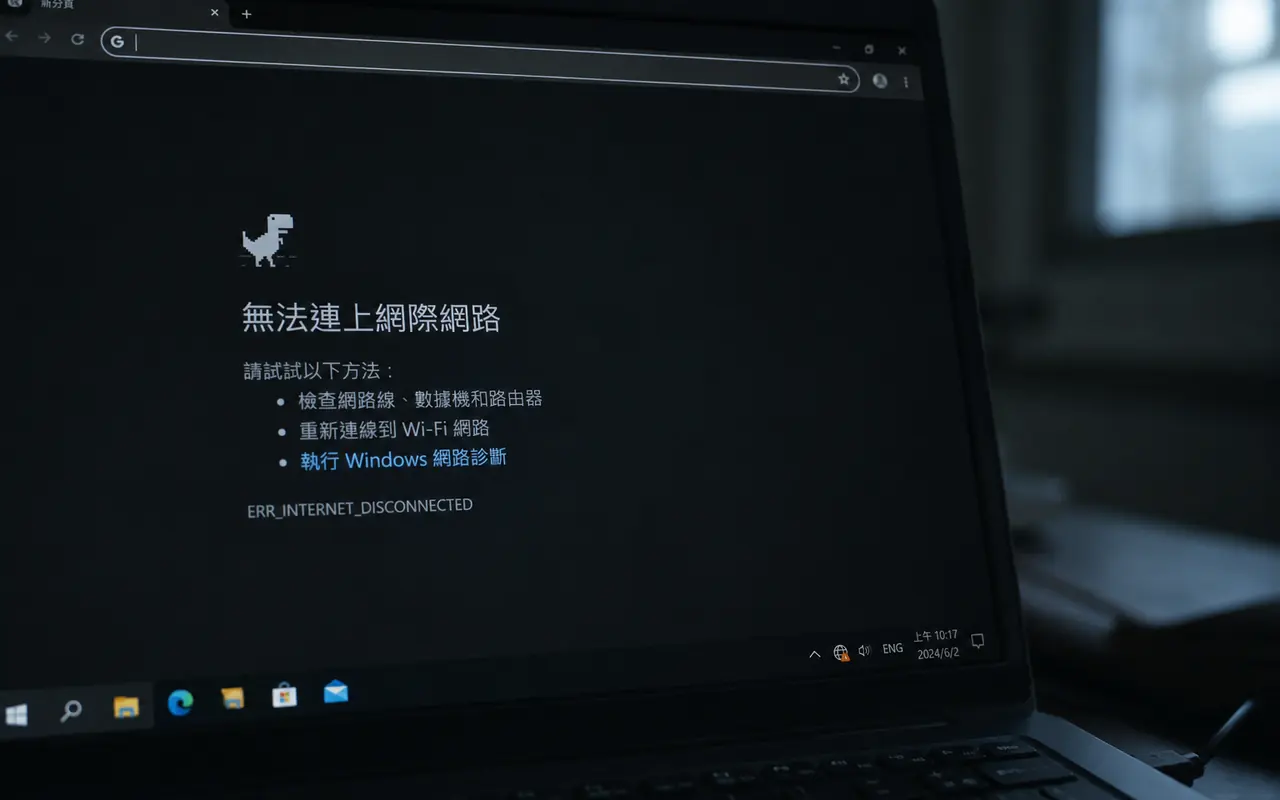
In 2023, two major undersea cables off the coast of Matsu were severed one after another. The result was not slower browsing or the occasional dropped connection — the whole of Matsu simply went offline for more than 50 days [2]. For the islands' residents, shopkeepers, ATMs, and hospital registration systems, the world suddenly went silent.
This was not an isolated case. Matsu's cables have been cut more than 20 times over the past five years; and more than 95% of the world's intercontinental data moves through undersea cables — Taiwan's own connections to the outside world rely just as completely on this small number of cables [2][4]. Taiwan's connection to the world hangs on a few invisible lines — and those lines keep getting "bumped and cut."
“Cut One Line, Lose the Network for 50 Days: Taiwan's Invisible Information Lifeline” reports that More Than 90% of the World's Intercontinental Data Moves Through Undersea Cables, and Taiwan Relies on the Same Handful(95%+)。 Concentrated landing stations mean a single point of failure [2][4]。
The most recent case was just this past April 2026. The "Taiwan-Matsu No. 3" cable, which connects Matsu's Beigan and Dongyin, was severed — the third time this has happened in four years; Taiwanese officials suspect a Chinese salvage barge was responsible while operating in the area [3][7] (the Coast Guard Administration and Chunghwa Telecom have since noted that the salvage operation to clear a grounded fishing vessel had gone through prior review, and that Chunghwa Telecom had provided the contractor with cable-location charts). Fortunately, this time the backup systems kicked in in time, and residents of Dongyin were not left completely cut off — this detail, that the 50-day nightmare was not repeated, itself hints at the progress Taiwan has made in building resilience over the past few years, which we will come back to shortly.
“Cut One Line, Lose the Network for 50 Days: Taiwan's Invisible Information Lifeline” reports that Matsu's Cable Was Cut for the Third Time in Four Years in April 2026(Third time)。 Suspected to involve a Chinese salvage barge; microwave backup was activated [3][7]。
There are really only two questions here, and both are hard: was this an accident, or an attack? And — can Taiwan make itself so that "even if it's cut, the line stays up"?
The Worst-Case Script: Silencing Taiwan Without Firing a Shot
Why does this "invisible line" — the undersea cable — deserve to be treated as a national-security matter on par with missiles and warships? Because it is one of the options China has for dealing Taiwan a severe blow without "firing the first shot."
Imagine a gray-zone script: at some moment of heightened tension, several of the main international cables around Taiwan "fail" in quick succession within a short window. In an instant, Taiwan's outbound financial transactions, cloud services, and cross-border communications are badly disrupted; stock and currency markets may panic, businesses may grind to a halt, and the international community may find itself briefly "unable to reach Taiwan." Throughout it all, there are no missiles, no landings — yet Beijing can publicly claim "this was just a string of maritime accidents," making it hard for the international community to assign blame, let alone respond. This is exactly what makes a cable attack so insidious: it can produce the effect of a near-blockade while hiding itself in the fog of "accident."
Precisely because of this, undersea-cable resilience is not a minor matter for some technical department — it is a cornerstone of Taiwan's overall defense. What it protects is not just the internet, but Taiwan's ability, in a moment of crisis, to "stay connected to the world and not be easily isolated."
Repeated "Anchor-Dragging" Is Hard to Call Pure Coincidence
Those who favor the "accident theory" will say: undersea cables fail hundreds of times a year worldwide, most from fishing trawls or dragged anchors by accident, and over-accusing is hard to prove and risks falling into cognitive warfare itself. This baseline is correct and must be honestly acknowledged.
But several incidents from 2025 into 2026 are hard to dismiss as "pure accident":
- In January 2025, a Tanzanian-flagged ship controlled by a Hong Kong company and crewed by Chinese nationals switched off its tracking system, then dragged its anchor and severed a critical cable connecting Taiwan, Asia, and the United States [1].
- In February 2025, the "Hong Tai 58," crewed by Chinese nationals, damaged a cable connecting Penghu to Taiwan's main island; Taiwan detained the vessel [6].
- In April 2026, Matsu's Taiwan-Matsu No. 3 cable was cut again, this time suspected to involve a Chinese salvage barge [3].
- And China's own state-owned China Ship Scientific Research Center publicly disclosed, in March 2025, a device capable of cutting cables at a depth of 4,000 meters [1].
“Cut One Line, Lose the Network for 50 Days: Taiwan's Invisible Information Lifeline” reports that A Chinese State-Owned Institute Has Publicly Disclosed a Cable-Cutting Device Rated to 4,000 Meters(4,000 meters)。 Turning sabotage into an openly disclosed tool of coercion [1]。
"Turning off the tracker, operating repeatedly in the same waters, carried out by specific vessel registries" — combined with the other side openly disclosing its own cable-cutting capability — this is already hard to dismiss entirely as fishing-boat accidents.
Individual Cases Are Hard to Prove, but the "Pattern" Speaks
This calls for a level-headed method: separate the "individual case" from the "pattern."
Any single cable-cutting incident is often hard to prove as intentional — flag states fail to act, evidence gathering on the seabed is difficult, and most individual cases end up going nowhere. This is precisely the calculation behind China's "shadow fleet": achieving disruption at minimal risk and maximum ambiguity [1]. So for each individual case, we should honestly label it "unproven."
But look at dozens of these incidents together, and a pattern emerges: repetition, specific vessel registries, deliberately switching off tracking, and the other side openly disclosing a cable-cutting vessel — this adds up to a reasonable reading of "battlefield pre-positioning" (confidence: medium): Beijing, incident by incident, is eroding Taiwan's resilience while pre-positioning itself for a potential conflict [2]. This is also exactly the "salami-slicing" logic described in our gray-zone report — each individual slice looks like an accident, but added together they form a methodical war of attrition. The individual case is fog; the pattern is signal.
Don't Forget: While the Cable Is Being Cut, Rumors Are Cutting You Too
Here we need to add a dimension that has often been overlooked in the past, yet matters more and more: a cable cut is often accompanied by a cognitive-warfare campaign.
Whenever a cable incident happens, sensational claims quickly surface on social media — "Taiwan's international undersea cables have been cut down to almost nothing," "Taiwan is about to become a digital island cut off from the internet." Taiwan's FactCheck Center has debunked this kind of rumor before: in reality, Taiwan has about 15 international undersea cables, and in one particular episode only 4 were reported as disrupted — nowhere close to "all gone dark" [9].
“Cut One Line, Lose the Network for 50 Days: Taiwan's Invisible Information Lifeline” reports that Fact-Check: Taiwan Has 15 International Undersea Cables, With Only 4 Reported as Disrupted(15 → 4)。 A cable cut is often accompanied by 'gone completely dark' style cognitive warfare [9]。
The purpose of this tactic is clear: use the panic of "information infrastructure collapse" to amplify the psychological impact of a single technical incident, and shake the public's confidence in the nation's resilience. So for Taiwan, undersea-cable resilience actually has two layers: one is "physical" — can a cut line be repaired, can traffic be rerouted; the other is "psychological" — when a line is cut, does society get swept into chaos by rumor along with it. Only when both layers hold is this true resilience.
The Good News: Resilience Is Being Built
Precisely because individual cases are hard to attribute, what Taiwan most needs to do is actually clear: stop getting stuck on "was this China's doing," and first build out "even if it's cut, the line stays up." And in recent years, this work has genuinely been progressing.
The most representative example is the multi-layer resilience network Chunghwa Telecom has built — one that Chunghwa Telecom has more recently branded "Sea, Land, and Sky": it integrates undersea cables, mobile and fixed networks, microwave links, and satellites so that they back each other up — the undersea cable is the backbone, fiber, mobile, and microwave support the network within the islands, and satellites serve as the last line of defense in extreme scenarios [8]. When Matsu's cable was cut in April 2026, avoiding a repeat of the 50-day nightmare came down to the microwave backup that kicked in immediately (microwave backup coverage for outlying islands now exceeds 100%).
Looking further ahead, there is LEO satellite service. The LEO satellite service that Chunghwa Telecom operates in partnership with Eutelsat OneWeb entered commercial promotion in 2026 — this is the embryo of Taiwan's own version of "Starlink," so that when cables are cut entirely, satellites overhead can still carry basic communications [7]. On the hardware side, the new "Taiwan-Matsu No. 4" cable is expected to be completed in June 2026, along with an additional Taiwan-Penghu-Kinmen cable, spreading out the routing for both international and outlying-island connections [7]; on the institutional side, the "Seven Undersea Cable Acts" — amendments to the Electricity Act, the Natural Gas Act, the Tap Water Act, the Telecommunications Management Act, the Meteorological Act, the Commercial Port Act, and the Ship Act — were fully enacted in December 2025: intentionally sabotaging an undersea cable now carries a prison term of 1 to 7 years plus a fine of up to NT$10 million, rising to 3 to 10 years and a fine of up to NT$50 million if intended to endanger national security or social stability [10].
“Cut One Line, Lose the Network for 50 Days: Taiwan's Invisible Information Lifeline” reports that Chunghwa Telecom: A Multi-Layer Backup of Cables, Mobile Networks, Microwave, and Satellites(Sea, Land, and Sky)。 Cutting one line does not mean cutting the whole network [8]。
Of course, gaps remain. During Matsu's 50-day outage in 2023, one pain point was slow deployment of repair vessels — Taiwan's own capacity for laying and repairing cables is still insufficient, and if multiple cables were damaged at once, the risk of queuing up for repairs would remain. More advanced approaches such as SMART cables (which build in sensors that can give early warning and quickly pinpoint faults) are also still only at the advocacy stage [5].
“Cut One Line, Lose the Network for 50 Days: Taiwan's Invisible Information Lifeline” reports that New Cable Completed in June 2026; 'Seven Undersea Cable Acts' Fully Enacted(Taiwan-Matsu No. 4)。 Diversifying landing stations, with LEO satellite service commercially filling gaps [7]。
The gaps that still need filling also include who bears the "money" and the "responsibility." Cables are mostly owned and maintained by telecom operators, yet their resilience is a matter of national security. When market incentives (commercially, an extra layer of backup is just an extra cost) diverge from national-security needs (strategically, backup is a necessity), the government has to step in — using subsidies, regulation, or public-private cooperation to make sure that backup investments, which look wasteful in peacetime but could be lifesaving in wartime, are not skipped simply because they don't pay off in the short term. Resilience has never been free; but compared with the cost of a 50-day outage, it is far cheaper.
Taiwan Is Not Alone: This Is a Global Shadow War
Cable fragility is not a worry unique to Taiwan. Since 2023, the Baltic Sea has also seen a string of cable and undersea pipeline sabotage incidents involving "dragged anchors," prompting NATO to launch its "Baltic Sentry" operation, deploying ships and air patrols to strengthen protection. Europe's experience offers Taiwan two lessons: first, "switch off tracking, sabotage by dragging anchor, hard to attribute" is a gray-zone script being used repeatedly, and what Taiwan faces is not an isolated case but a new kind of global coercion; second, the response has to be "collective" — through intelligence-sharing among allies, joint patrols, and coordinated pressure on flag states, turning a cost that a single country cannot pursue on its own into a cost the international community imposes together.
For Taiwan, this means undersea-cable defense is also a "diplomatic" issue: laying out the "pattern" of each cable cut for the international community to see, and sharing surveillance intelligence with like-minded countries, can both raise deterrence and, if something really does happen, put the world in a position to speak up for Taiwan.
The Real Solution: You Don't Have to Wait for Attribution to Be Settled
Pulling all of this together, Taiwan's plan for undersea-cable resilience does not actually need to wait for a court to rule on "was this China's doing" before acting:
- Deterrence and enforcement: Strengthen patrols around undersea cables, apply the now fully enacted "Seven Undersea Cable Acts" to make sabotage of critical infrastructure a criminal offense with heavier penalties, and detain and prosecute vessels involved [10].
- Backup: Microwave, satellite, and LEO satellites (Taiwan's own version of Starlink) as communications fallbacks when a cable is cut, so that "one cable down" does not mean "the whole network down" [7][8].
- Detection: Deploy SMART cables with built-in sensors, giving early warning before a cut and rapid localization after one [5].
- Structure: Diversify landing stations and expand domestic cable-laying and repair-vessel capacity.
- Internationalization: Make the "pattern" public and work with allies to press flag states for accountability — exactly the same move Manila used to throw the cost back onto Beijing over Scarborough Shoal.
What Gets Cut Is Your Everyday Life
Don't assume undersea cables are only a matter for governments or big corporations. When Matsu went offline for 50 days, the people who really suffered were local small businesses — unable to process card payments, unable to receive online orders, children unable to attend remote classes, the elderly unable to register for medical appointments. In an age when digital payments, cloud services, and telemedicine have already woven themselves deep into daily life, "going offline" is not an inconvenience — it is an entire life grinding to a halt. Undersea-cable resilience, at bottom, protects every ordinary person's right to "get on with a normal life" — which is exactly why it should not be an issue that only national-security experts talk about, but something everyone who lives their life through the internet should keep in mind.
Three Taiwanese Perspectives
The state: Govern undersea cables as national-security-grade critical infrastructure — patrols plus criminalization plus backup plus diversified landing stations plus a self-sufficient repair-vessel fleet plus international accountability, while making the sabotage "pattern" public. At the same time, build the "cognitive warfare that follows a cable cut" into the response playbook, using authoritative information to suppress panic-driven rumors from the very first moment.
Industry (telecom / data centers / cloud): A cable cut disrupts international connectivity and cloud services, hitting finance and cross-border e-commerce first. Build multi-path routing and satellite backup, and regularly drill for "cable cut" scenarios — treat "the cable might get cut" as a basic operating assumption, not a low-probability accident.
SMEs: SMEs that depend on the cloud and cross-border payment flows need "offline backup" and contingency plans; when facing the "panic-driven information warfare that follows a cable cut," media literacy is also part of resilience — don't let a single technical incident be amplified by rumor into a collapse of your confidence in Taiwan.
The threats Taiwan spends the most effort guarding against are missiles in the sky and warships at sea; but what is most likely to leave the world "unable to hear Taiwan" first is those few silent lines on the seabed. The good news is that, from Sea, Land, and Sky to LEO satellites, from Taiwan-Matsu No. 4 to the Seven Undersea Cable Acts, Taiwan is weaving this lifeline denser and more resilient. True security is not betting that it will never be cut — it is making sure that even after it is cut, Taiwan is still online, and still not thrown into chaos by rumor. Whether the missiles come is not something Taiwan can decide; but whether Taiwan can keep functioning normally, and keep speaking to the world, after those lines on the seabed are cut — that is something Taiwan can, and must, start preparing for now, one line and one layer at a time.
Sources
- Just Security — How to Counter Chinese Sabotage of Taiwan's Undersea Cables
- Global Taiwan Institute (2025-06) — China's Undersea Cable Sabotage and Taiwan's Digital Vulnerabilities
- The Diplomat (2026-05) — What Actually Caused the Latest Submarine Cut Near Taiwan?
- Rest of World (2025) — China, Taiwan, and the vulnerable web of undersea cables
- Truman Project — When the Lights Went Dark in Penghu: Why Taiwan should employ SMART Cables
- CNN (2025-02-25) — Taiwan detains Chinese-crewed ship suspected of cutting undersea cable
- Taipei Times (2026-04-30) — Taiwan activates backup communications after undersea cable breaks
- CNA (Central News Agency) — Undersea Cable Security Crisis: Chunghwa Telecom Strengthens Resilience Backup on Multiple Fronts (Sea, Land, and Sky)
- Taiwan FactCheck Center — Undersea Cable Status: Taiwan Has 15 International Cables, 4 Reported as Disrupted (Debunking the "Only 4 Left" Claim)
- CNA (Central News Agency, 2025-12-09) — "Seven Undersea Cable Acts" Pass Third Reading: Sabotaging an Undersea Cable Now Carries 1 to 7 Years in Prison, Rising to 3 to 10 Years If National Security Is Endangered
September 11: The Loophole Clock Starts Ticking — How the EU CRA's 24/72-Hour Rule Rewrites Taiwan's Hardware Exports
The reporting obligations of the EU's Cyber Resilience Act take effect early, on September 11, 2026. They do not require every vulnerability to be disclosed within a day — they require the legal manufacturer of a product to issue a 24-hour early warning, a 72-hour notification, and a follow-up final report once it becomes aware of an actively exploited vulnerability or a severe security incident. The real impact on Taiwan is that brand owners will push that statutory clock backward onto their ODMs, component suppliers, and software supply chains.

Viral Data Goes In — Do Vaccines Come Out? Taiwan's Gap in the PABS Negotiations
The WHO Pandemic Agreement was adopted by the World Health Assembly in 2025, but its core annex on pathogen access and benefit-sharing is still under negotiation; the seventh round did not conclude, and the eighth round is set for September. Taiwan's real risk is not whether it can upload a sequence — it is that there is no single, publicly verifiable, end-to-end pathway linking data contribution, notification of use, manufacturer contracts, and actual access to vaccines and diagnostics.