
Taiwan's Iron Dome, T-Dome: A 'Taiwan Shield' That Just Got Its Budget Cut — Should It, Can It, and How Much?
The integrated, multi-layered air-defense system 'T-Dome,' unveiled by the Lai government on National Day, had its backbone funding cut from the special budget in less than a year. How does this shield actually compare with Israel's Iron Dome and America's Golden Dome? Facing saturation missile and drone-swarm attacks, should Taiwan bet on one big shield, or keep buying lots of small quills?
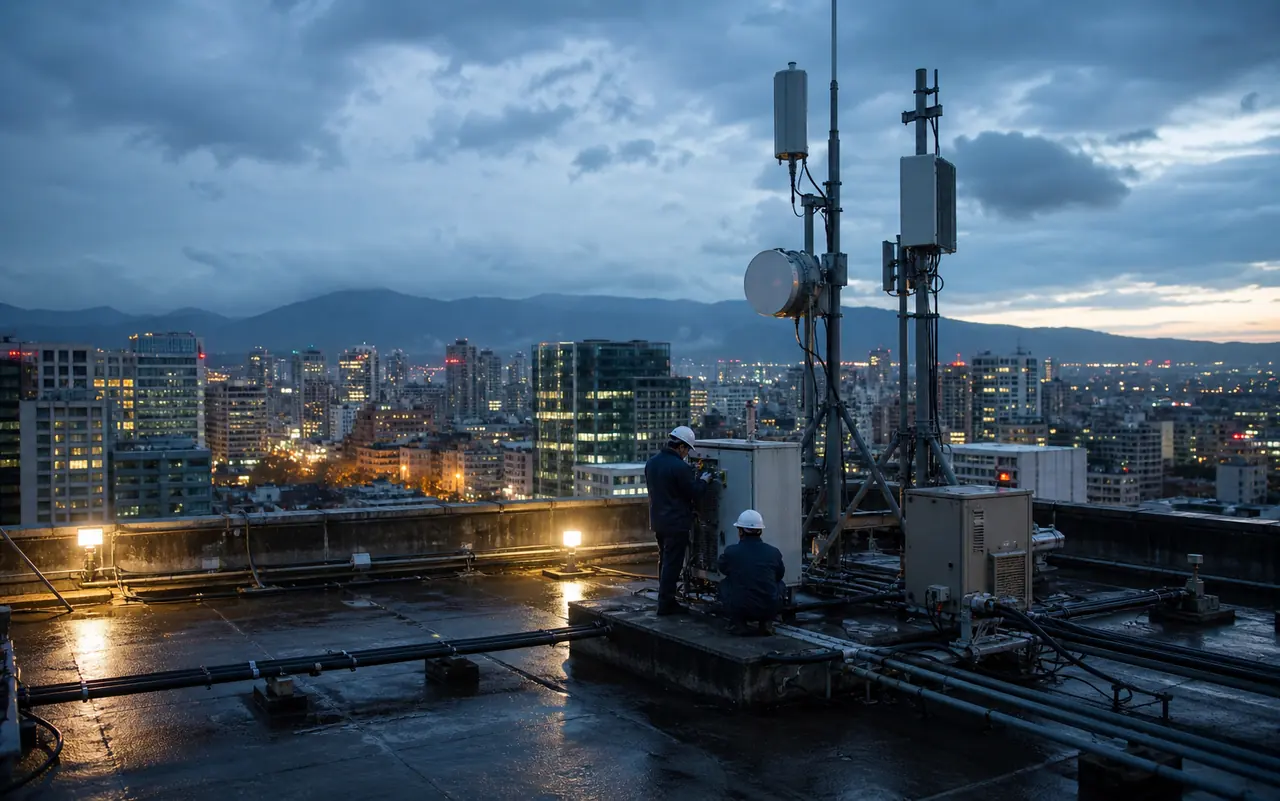
Article contents01 / 07
- T-Dome is not a copy of Iron Dome — it connects existing radar, Sky Bow, and Patriot systems into a single AI command backbone (the Huanzhan system); at its core it is 'systems integration'
- Integrated air defense and asymmetric 'many small quills' are not strictly zero-sum, but under a limited budget they do compete for resources; a cost curve of million-dollar interceptors against thousand-dollar drones favors the attacker, not the defender
- The opposition coalition cut the special budget by nearly 40%, domestic procurement was reduced to almost zero, and T-Dome's backbone funding was cut; the Lai government plans to use a supplementary budget to save the 2027 timeline
“Taiwan's Iron Dome, T-Dome: A 'Taiwan Shield' That Just Got Its Budget Cut — Should It, Can It, and How Much?” reports that Estimated PLA Missile Stockpile Deployable Against Taiwan(1,000+ missiles)。 More than 1,000 short-range ballistic missiles and roughly 600 land-attack cruise missiles; figures are outside estimates and vary by source [8]。
“Taiwan's Iron Dome, T-Dome: A 'Taiwan Shield' That Just Got Its Budget Cut — Should It, Can It, and How Much?” reports that T-Dome's Planned Build-Out Timeline(2033)。 Announced on National Day 2025 → command backbone by 2027 → full system by 2033, though funding cuts have introduced variables [1][5]。
"We will build a rigorous air-defense system — multi-layered defense, high-level surveillance, and effective interception." On October 10, 2025, President Lai Ching-te named this shield T-Dome (Taiwan's Shield / Taiwan's Iron Dome) in his National Day address. [1][2] Less than seven months later, this shield's backbone funding was cut in the Legislative Yuan.
It took just over half a year for a concept to go from "a national flagship program announced personally by the president" to "a line struck out in the special budget." That is exactly why T-Dome deserves to be carefully unpacked: it is at once a military question (can this shield actually hold), a fiscal question (can it actually be afforded), and a strategic-direction question (should the bet be on one big shield or on many small quills). The three questions are entangled — getting any one of them wrong costs not money, but deterrence.
This article does not presume a position; it does just one thing: lay out, layer by layer, what T-Dome actually is, whether it is really comparable to Iron Dome and Golden Dome, whether it is adequate against saturation attack, and the trade-offs between it and "asymmetric warfare" — before converging, at the end, on Taiwan's three perspectives. Wherever something is inference, its confidence level is marked.
I. What T-Dome Actually Is: Not a Dome, a Nervous System
The biggest misunderstanding among outside observers is picturing T-Dome as the kind of physical dome seen in footage from Israel — the sky lighting up with a net of interceptors. It is not.
Based on the plans released by the government and the Ministry of National Defense, T-Dome's core is not some new type of interceptor missile, but connecting Taiwan's existing, dispersed air-defense assets into a single operational command backbone. That backbone is called the "Huanzhan Project," built on an open architecture, with the goal of linking together radar and weapons from different services, different manufacturers, and different generations — sharing radar tracks scattered across different locations in near-real time, then using AI-assisted software to prioritize threats, recommend which interceptor should be assigned to which target, and disregard harmless decoys. [1]
T-Dome's keyword is integration, not addition. The existing pieces it needs to glue together include:
- The domestic Sky Bow series: the Sky Bow III surface-to-air missile developed by the National Chung-Shan Institute of Science and Technology (NCSIST), able to intercept fighter jets, cruise missiles, and short-range ballistic missiles; its extended-range, upgraded "Qianggong" variant has already entered mass production and is claimed to be able to intercept high-altitude cruise and ballistic targets at an altitude of roughly 70 kilometers. [10]
- Imported Patriots: the US-made PAC-3 family of high-altitude interceptors.
- Various surveillance radars and short-range air defenses: forming an interception network across low, medium, and high altitude layers.
One line to sum it up: what T-Dome is selling is not "more missiles," but the nervous system that lets the missiles Taiwan already has fire together, more intelligently.
This framing matters a great deal, because it directly determines every judgment about cost and feasibility that follows. If T-Dome is understood as "buying a great many expensive interceptors to stack up an iron curtain," it is almost certainly doomed to be crushed by the cost curve of a drone swarm; if it is understood as "using software and data links to multiply the efficiency of existing combat power," it could instead be the single highest-return option among all the alternatives. These two understandings would lead Taiwan toward completely different fiscal-defense fates.
“Taiwan's Iron Dome, T-Dome: A 'Taiwan Shield' That Just Got Its Budget Cut — Should It, Can It, and How Much?” reports that T-Dome's Planned Build-Out Timeline(2033)。 Announced on National Day 2025 → command backbone by 2027 → full system by 2033, though funding cuts have introduced variables [1][5]。
II. The Cut That Landed: How the Budget Disappeared
The vision was ambitious; the ledger was lean.
What the Lai government originally put forward was a NT$1.25 trillion (roughly US$40 billion) special defense budget package, covering air defense, drones, anti-ship capability, munitions, and the domestic defense industry across multiple lines. [3] But the opposition KMT and TPP, together holding a majority in the Legislative Yuan, forced nearly six months of political standoff, and the version passed on third reading on May 8, 2026, was cut to about NT$780 billion (roughly US$24.8 billion) — a reduction of almost 40% from the original proposal. [4]
Where did the axe fall? According to reporting compiled by the Jamestown Foundation and The Diplomat, the cut was highly selective: almost all domestic procurement and domestic asymmetric-defense items were removed, leaving only the foreign military sales (FMS) channel from the US. New domestic military drone procurement was, for a time, reduced to zero; and the special-budget funding for the air-defense network belonging to T-Dome's command backbone was also among the cuts — media had cited a specific figure for this reduction, but no such precise number could be independently verified during this review, so only the direction is flagged here, without a figure. [4][5] This round of cuts was driven by the faction around KMT chair Cheng Li-wun, which advocates keeping defense spending low and taking a friendlier line toward Beijing. [4]
The Ministry of National Defense has not conceded defeat. Its strategic planning unit says it will try to restore the funding through a supplementary budget to keep the 2027 timeline for bringing the command backbone online; Premier Cho Jung-tai has also stated publicly that the government will respond to these cuts through multiple channels. [5] But independent commentary is skeptical of this pledge, arguing that the opposition coalition is unlikely to green-light funding for items it has just removed, and that folding the money back in through the regular budget instead would likely mean delay rather than holding to the timeline as promised (observation; medium confidence). [13] There is also a harsh structural fact here that needs to be flagged clearly:
Key point. T-Dome's predicament is, at its core, a program that had "politics first, engineering second." It was born as a political declaration on National Day, yet has to raise its engineering funding in a legislature where the ruling party is a minority. When a shield's survival depends on the political back-and-forth over a supplementary budget, its greatest vulnerability is not in the sky, but in the legislative chamber. This is a structural condition shared by every multi-year flagship defense program in Taiwan (observation; medium confidence).
III. Iron Dome, Golden Dome, and Taiwan's Shield: Where the Comparison Holds, and Where It Doesn't
Lai Ching-te's choice of the word "Dome" is clearly meant to borrow the brand power of Israel's Iron Dome and America's Golden Dome. But "borrowing the name" does not mean "being comparable." Put all three on the same table, and the differences are more worth examining than the similarities.
| Category | Israel's Iron Dome | America's Golden Dome | Taiwan's T-Dome |
|---|---|---|---|
| What it protects against | Short-range rockets, mortars, some drones | Intercontinental/hypersonic missiles, covering the entire US plus Alaska and Hawaii | Drones, cruise/ballistic missiles, fighter jets (multi-layer) |
| Coverage area | Small area, point defense | An entire continental-scale territory plus the space layer | The whole island, with extremely shallow strategic depth |
| Core method | Large numbers of cheap interceptors (Tamir) | Mainly space-based interceptor satellites (roughly 60% of the cost) | Command integration + existing multi-layer interception |
| Interceptor unit cost | Tamir at roughly US$40,000–50,000 | Space-based interception, extremely high per-unit cost | PAC-3 and Sky Bow III, in the millions of dollars per unit |
| Cost (estimated) | Mature system, low unit cost | CBO estimates roughly US$1.2 trillion over 20 years | Roughly NT$400 billion-class over eight years (roughly US$12.8 billion) |
Look at Israel first. Iron Dome's success rests on the premise that it only needs to defend a small area, only against short-range, cheap rockets, and its Tamir interceptor costs only about US$40,000 to 50,000 per unit (initial estimates ran as high as US$100,000), with a claimed interception rate above 90%. [6] Observation/inference (medium confidence): some military analysts believe that at a saturation scale far beyond Israel's historical experience, the actual interception rate could be significantly lower than the officially claimed figure, though no public quantitative study is available to cite a specific range for this. What Taiwan has to defend is not a small patch of sky like the Gaza Strip, but an entire island; what it faces is not improvised rockets, but the PLA's ballistic and cruise missiles. Iron Dome's cost magic will not automatically replicate itself at the geographic and threat scale Taiwan faces.
Now look at the United States. Golden Dome is more a warning than a model. Trump initially quoted US$175 billion, but the Congressional Budget Office (CBO)'s assessment in May 2026 pushed the 20-year total cost to roughly US$1.2 trillion, with space-based interceptor satellites alone eating up about 60% of that. [7] A system meant to defend against intercontinental and hypersonic threats, one that even has to extend into space, is simply on a different order of magnitude than anything Taiwan's special budget could reach. The real lesson Golden Dome gives Taiwan can be summed up in one line: the word "Dome" sells very well, but the bill for intercepting advanced threats spirals out of control by multiples.
Conclusion, with confidence marked (medium-high confidence): neither Israel's Iron Dome nor America's Golden Dome can be transplanted directly. If Taiwan is to learn from them, what it should learn is not "how to build a dome," but the iron law behind Iron Dome — that interception cost must stay far below the cost of the incoming threat — and that iron law is precisely T-Dome's biggest looming concern.
IV. The Arithmetic of Saturation Attack: What Taiwan Actually Has to Stop
To judge whether T-Dome is adequate, one first has to see clearly the density of the adversary's firepower.
Outside assessments believe the PLA has already deployed within range more than 1,000 short- and medium-range ballistic missiles and roughly 600 land-attack cruise missiles (figures vary by source and should be read only as an order of magnitude). [8] The number of strike sorties in the opening phase of a war is estimated to be able to reach several thousand per day; more critical still is China's defense-industrial capacity — one assessment finds its production rate for some munitions is five to six times that of the US, and that it could raise output of certain munitions by a further one to two times within months of mobilization. [8] In other words, this is actually a sustained, resuppliable war of attrition.
“Taiwan's Iron Dome, T-Dome: A 'Taiwan Shield' That Just Got Its Budget Cut — Should It, Can It, and How Much?” reports that Estimated PLA Missile Stockpile Deployable Against Taiwan(1,000+ missiles)。 More than 1,000 short-range ballistic missiles and roughly 600 land-attack cruise missiles; figures are outside estimates and vary by source [8]。
This is where T-Dome's core difficulty surfaces — and it is a shared pain point across the whole world of air defense: the cost-exchange ratio.
Using a multi-million-dollar-class PAC-3 or Sky Bow III to intercept a ballistic missile of comparable value pencils out. But when the adversary switches to a saturation attack using thousands upon thousands of one-way suicide drones that may cost only a few thousand dollars apiece, a defender that still responds one-for-one with high-end interceptors is, in effect, "throwing gold bricks at bricks" — and it is the defender, not the attacker, who goes bankrupt first. [12] (What [9] actually describes is Taiwan proactively using cheap drones to exhaust the PLA's invasion fleet — an offensive scenario that is an analogous case of the same cost-exchange logic, not direct evidence for the defensive scenario of Taiwan's air defense absorbing a drone swarm.) Modern drone warfare has already proven that no integrated air-defense system is the watertight sanctuary people imagine; Taiwan could never stockpile thousands of PAC-3s and Sky Bow IIIs to answer thousands, tens of thousands, or more one-time-use drones. [12]
This is precisely why T-Dome has to be positioned as "command integration plus threat triage," not "stacking up interceptors": what it should really do is let the AI backbone reserve expensive interceptors for genuinely high-value threats, while handing off cheap drones to cheaper means — close-in guns, electronic-warfare jamming, or even lasers — to absorb. If it manages to do this, T-Dome has a chance to multiply the value of a limited interceptor stockpile; if it fails to, it will become an expensive target that eats up the budget while still being overwhelmed by a drone swarm (inference; medium confidence).
V. Big Shield vs. Many Small Quills: A Debate Over Direction With No Standard Answer
This is T-Dome's sharpest controversy, and the one most in need of presenting both sides fairly: how should integrated air defense's big shield and asymmetric warfare's "large number of small things" divide up the family estate?
The long-standing mainstream consensus in Taiwan's strategic community is the "porcupine strategy" — not spending heavily on a small number of expensive large platforms (warships, fighter jets, tanks), but instead deploying large numbers of dispersed, mobile, and cheap coastal anti-ship missiles, mobile air defense, fast missile boats, sea mines, and small reconnaissance drones, so that even if the PLA lands, it pays an unbearable cost. [11] Believers in this line of thinking have two layers of concern about T-Dome.
The case against (asymmetric priority):
- Resource crowding-out: the defense budget is one and the same pie. Money put into a fixed, concentrated, expensive integrated air-defense system is money taken away from mobile, dispersed, asymmetric capability. The domestic drone procurement that was cut to zero in this episode is the most concrete footnote to that. [5]
- Doubtful survivability: fixed radar stations and missile positions are priority targets for the PLA's first wave of saturation strikes. A concentrated, large system is, if anything, the easiest target to hit. [9]
- An unfavorable cost curve: as noted above, using high-end interceptors against a swarm of cheap drones bankrupts the defender first. [12]
The case for (integrated air defense is necessary):
- Even a porcupine needs armor: a porcupine with no air defense will have its airfields, ports, command nodes, and radar wiped out within hours of the outbreak of war. Research points out directly that if runways and airfields are paralyzed, Taiwan's air force may be neutralized before it ever gets to strike back — air defense is not the opposite of the porcupine strategy, but the precondition for the porcupine surviving the first blow. [8]
- Integration is itself asymmetric: linking up existing dispersed radar and interceptors through data links, sharing tracks, and using AI to triage — this "software multiplier" fits precisely the asymmetric spirit of "using leverage rather than brute force," and does not necessarily mean buying expensive hardware. [1]
- The political signal of deterrence: a visible shield reassures the domestic public and, externally, proves to Washington that Taiwan is willing to defend itself — a political value that a combat-power ledger cannot fully quantify. [3]
Neutral synthesis. The two sides are not actually as opposed as they appear. The real disagreement is not over "whether to have air defense," but over "which version T-Dome ends up being." If it is a lean command-integration backbone, it is compatible with the porcupine strategy; if it swells into a fixed iron curtain built by stacking up interceptors bought with money, it will compete head-on for funding with the asymmetric line — and may not even hold. The key variable is the procurement structure and the operational concept, not a label fight between "big shield vs. small quills" (medium-high confidence).
VI. Cost and Industrial Base: Can Taiwan Actually Afford This?
Setting politics aside and looking purely at engineering and production capacity, where does feasibility actually land?
Order of magnitude of the cost. T-Dome's official estimate is roughly NT$400 billion-class over eight years, which converts to roughly US$12.8 billion (media had previously also cited a figure of roughly US$32 billion, but on closer calculation that does not match NT$400 billion at any reasonable exchange rate and appears to have been a misstatement; this figure instead uses the converted number from a traceable source, and is not treated as settled). [14] Set against Golden Dome's US$1.2 trillion and Iron Dome's small-area, low-cost model, T-Dome's ambition is squeezed in the middle — far more expensive than Iron Dome, yet nowhere near Golden Dome's technological ceiling. [7]
Domestic production capacity. This is Taiwan's relative advantage. Sky Bow III is produced domestically by NCSIST, with reported annual output already raised from 48 to 96 units, and additional missile bases are being planned; the extended-range Qianggong variant has likewise entered mass production. [10] A structure built around domestic Sky Bow as the core, supplemented by imported PAC-3s, can keep delivery schedules and supply-chain risk in Taiwan's own hands, avoiding the exposure to US production schedules and delivery delays that comes with relying purely on imports.
The real bottleneck is the backbone software. The pivot on which T-Dome's success or failure turns is not the missiles, but the open, cross-service, cross-vendor real-time data link and AI decision layer of the Huanzhan system. This kind of systems-integration challenge has historically been the link most prone to delay and cost overrun in every country's air-defense modernization. If this piece cannot be built, no number of interceptors will do anything but fight their own separate fights (inference; medium confidence).
One line to sum up feasibility: Taiwan can afford the hardware (the interceptors); the software (command integration) is what will decide the outcome; and politics (the supplementary budget) decides whether it lives long enough to be built at all.
Taiwan's Three Perspectives: How to Bring This Shield Together
The state perspective. T-Dome should be governed as a "command-integration backbone plus threat triage," not a race to stack up interceptors. Only by reserving scarce, high-end interceptors for high-value threats and handing cheap drones to cheap countermeasures can Taiwan hold to Iron Dome's iron law that interception cost stays below the cost of the incoming threat. More urgent still is freeing the funding for multi-year flagship programs from the political back-and-forth of one-off special budgets — otherwise the shield's biggest breach will always be in the legislative chamber, not in the sky.
The industry perspective. For the defense and ICT supply chain, the opportunity is not in selling a few more missiles, but in the systems integration, data links, AI decision-making, and sensor fusion of the Huanzhan backbone. This is exactly the segment where Taiwan's semiconductor and software strength can enter, and one that imports would struggle to replace. Building around domestic Sky Bow production capacity while locking down delivery schedules and component self-sufficiency is a win-win for industry and national defense; but the political uncertainty of the budget can directly hit order visibility and the pace of R&D investment, and that risk must be watched.
The SME perspective. Most SMEs have nothing to do with defense manufacturing, but a saturation-attack scenario in the Taiwan Strait should enter their business-continuity plans (BCP). This is not a political statement — it is risk management: off-site backup for critical components and cloud services, cross-region production capacity, and tolerance for power and communications outages should all be inventoried under the assumption of "must still be able to ship after the first wave of strikes." What a shield can buy is the handful of days in which the economy does not grind to an instant halt under impact — and those few days are very often what decides whether a supply chain survives.
Every attack-and-defense figure and cost estimate in this article comes from sources that vary from one another and are mostly outside assessments; confidence levels have been marked in the text, and none should be treated as settled fact. T-Dome's final specifications, funding, and timeline will continue to shift with the political back-and-forth over the supplementary budget in the Legislative Yuan.
Sources
- Focus Taiwan — Lai pledges to build 'T-Dome' air defense system in national address
- Office of the President, Republic of China (Taiwan) — President Lai delivers 2025 National Day Address
- USNI News — Taiwan Rolls Out $40B Defense Supplemental to Fund Air Defense, Asymmetric Capabilities
- Jamestown Foundation — Taiwan's Special Defense Budget Bill Passes with Drastic Cuts
- The Diplomat — Taiwan's Special Defense Budget Cut Will Cost Its Drone Capabilities
- CSIS Missile Threat — Iron Dome (Israel)
- NPR — Trump's proposed 'Golden Dome' estimated to cost $1.2 trillion
- Stimson Center — Runway Trap: How Chinese Missiles and Rockets Could Neutralize Taiwan's Air Force
- War on the Rocks — Hellscape Taiwan: A Porcupine Defense in the Drone Age
- Focus Taiwan — Taiwan's newest Sky Bow missile system enters mass production: NCSIST
- Texas National Security Review — A Large Number of Small Things: A Porcupine Strategy for Taiwan
- Small Wars Journal — The Perfect Swarm: Taiwan's T-Dome in the Era of Drone Warfare
- Taiwan News — Taiwan passes major but strategically incomplete special defense budget
- Taipei Times — Price tag for 'T-Dome' estimated at NT$400bn
September 11: The Loophole Clock Starts Ticking — How the EU CRA's 24/72-Hour Rule Rewrites Taiwan's Hardware Exports
The reporting obligations of the EU's Cyber Resilience Act take effect early, on September 11, 2026. They do not require every vulnerability to be disclosed within a day — they require the legal manufacturer of a product to issue a 24-hour early warning, a 72-hour notification, and a follow-up final report once it becomes aware of an actively exploited vulnerability or a severe security incident. The real impact on Taiwan is that brand owners will push that statutory clock backward onto their ODMs, component suppliers, and software supply chains.

Viral Data Goes In — Do Vaccines Come Out? Taiwan's Gap in the PABS Negotiations
The WHO Pandemic Agreement was adopted by the World Health Assembly in 2025, but its core annex on pathogen access and benefit-sharing is still under negotiation; the seventh round did not conclude, and the eighth round is set for September. Taiwan's real risk is not whether it can upload a sequence — it is that there is no single, publicly verifiable, end-to-end pathway linking data contribution, notification of use, manufacturer contracts, and actual access to vaccines and diagnostics.