
After the Great Recall: When National Security and Electricity Became Hostages to Political Warfare
In the summer of 2025, Taiwan mobilized a million petition signatures to try to rewrite the Legislative Yuan's power structure through a "Great Recall" — and all 31 recall motions failed. The ruling party's minority status was thereby locked in, dragging down a special defense budget cut by about forty percent, stalling the general budget for half a year, and forcing an overnight U-turn in energy policy. The most dangerous part: whenever Taiwan tears itself apart over defense and electricity, the side that welcomes it most has always been across the Strait.
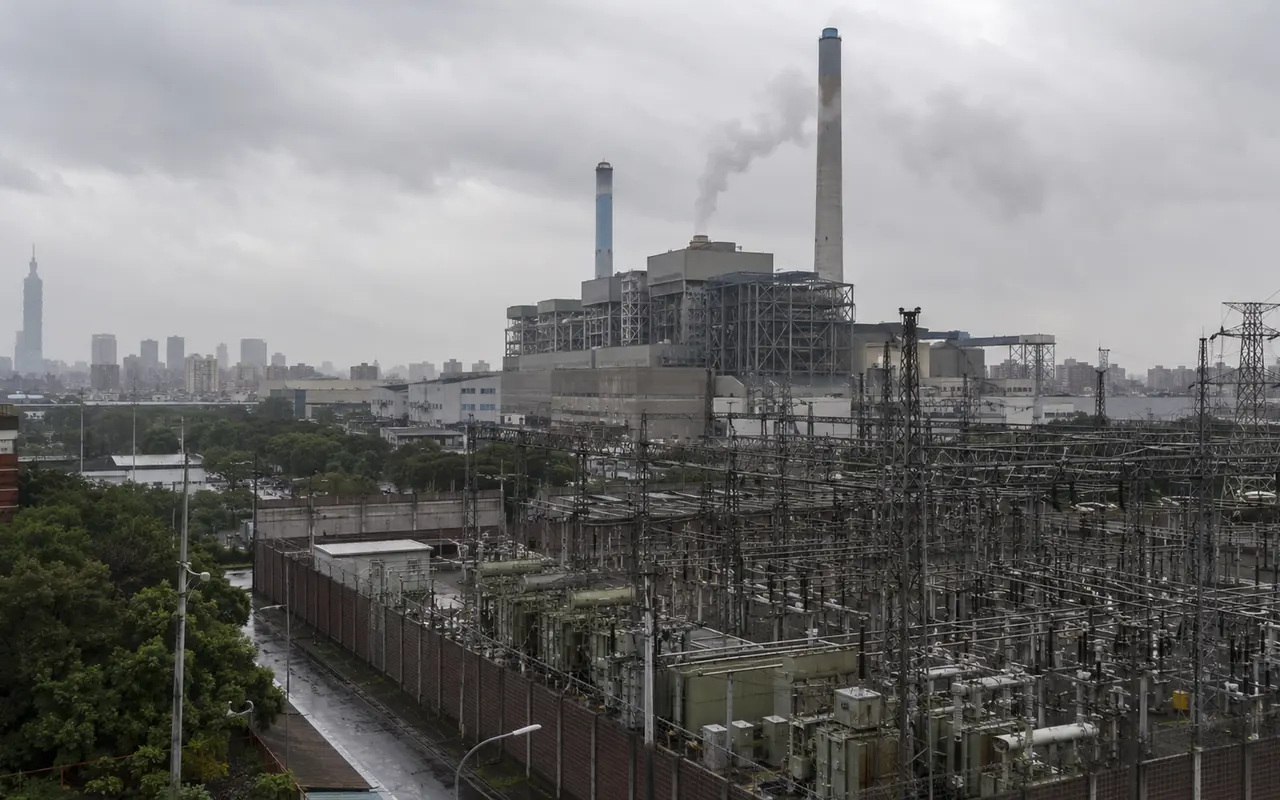
Article contents01 / 07
- The 2025 Great Recall was the largest in history and the first ever aimed at an entire party's legislative caucus: 31 legislators (mostly from the KMT) faced recall votes in two rounds, and all of them failed — rather than overturning the ruling party's minority status, the vote locked it in.
- The resulting gridlock directly jammed three national-security and livelihood tracks: the NT$1.25 trillion special defense budget was cut by about forty percent, with a key T-Dome node cut, and delayed half a year before passing as a shrunken roughly US$24.8 billion version; the roughly NT$3.03 trillion 2026 general budget stalled; and after the Nuclear Three referendum failed, the opposition-led legislature reversed the nuclear-free homeland policy.
- Fact-checking without taking sides: the opposition's procedural and fiscal scrutiny has legitimacy, and the ruling party's anxiety over readiness timelines is equally real. But every delay objectively raises the risk that "Beijing misjudges Taiwan's resolve and Washington doubts Taipei's reliability" — the beneficiary of this internal gridlock sits across the Strait.
“After the Great Recall: When National Security and Electricity Became Hostages to Political Warfare” reports that The Great Recall: All 31 Motions Failed, Locking In the Ruling Party's Minority(0 / 31)。 All 24 KMT legislators survived the first round on July 26; all 7 in the second round on August 23 also survived [1][3]。
“After the Great Recall: When National Security and Electricity Became Hostages to Political Warfare” reports that The Special Defense Budget Cut: From NT$1.25 Trillion to a Shrunken ~US$24.8 Billion(Cut 40%)。 Original proposal about US$40 billion; final version about US$24.8 billion, with a key T-Dome node cut [8][14]。
“After the Great Recall: When National Security and Electricity Became Hostages to Political Warfare” reports that The Nuclear Three Restart Referendum: 70% Approval, Yet Failed on Low Turnout(74.2%)。 About 4.34 million votes in favor vs. about 1.51 million against; turnout only 29.5%, short of the threshold [9][2]。
“After the Great Recall: When National Security and Electricity Became Hostages to Political Warfare” reports that The Energy-Resilience Gap: Nuclear Power Can't Generate Again Before 2028 at the Earliest。 Ma-anshan's safety inspection is estimated at 18–24 months; the 20% renewables target has been delayed and may still be missed [10][11]。
“After the Great Recall: When National Security and Electricity Became Hostages to Political Warfare” reports that The Special Budget Was Repeatedly Blocked at the Procedure Committee More Than Eight Times(Blocked 8 Times)。 The KMT and TPP demanded military pay raises be folded into the general budget and questioned the eight-year debt financing [13][6]。
In the summer of 2025, Taiwan did something it had never done before in its democratic history: it mobilized more than a million petition signatures, trying to use a "Great Recall" to overturn the entire power structure inside the Legislative Yuan. It was, in fact, the first time anyone had attempted to recall almost an entire party's legislative caucus in one go [1][4].
So how did it turn out? After two rounds of voting, the recall motions targeting 31 legislators — the overwhelming majority from the Kuomintang (KMT) — all failed [3]. In the first round on July 26, all 24 KMT legislators kept their seats; in the second round on August 23, the remaining 7 also survived — these 7 seats mostly by margins close to two-to-one against recall [3].
“After the Great Recall: When National Security and Electricity Became Hostages to Political Warfare” reports that The Great Recall: All 31 Motions Failed, Locking In the Ruling Party's Minority(0 / 31)。 All 24 KMT legislators survived the first round on July 26; all 7 in the second round on August 23 also survived [1][3]。
The threshold was decisive in why the recalls failed — under the Civil Servants Election and Recall Act, the votes in favor must exceed a quarter of all eligible voters in that district, and most of these 24 seats sit in KMT strongholds, making it an uphill battle from the start [1]. But more important than who won or lost is what this Great Recall failed to change: the Lai Ching-te administration has lacked a legislative majority ever since it took office in 2024. This recall effort had set out to rewrite that fact — instead, it turned the four words "ruling party in the minority" from an election result into a political reality that will define the years ahead.
The end of the Great Recall has been read by many observers as a marker of Taiwan's politics entering a "new equilibrium": the double-edged sword of recall proved unable to shake the existing structure, leaving the ruling and opposition camps to keep coexisting in stalemate [4]. And this hardened gridlock went on to entangle the two things Taiwan can least afford to get wrong — national defense, and electricity.
A Defense Budget Cut by About Forty Percent
The story starts with an astronomical figure. In November 2025, facing the PLA's steadily advancing capability curve, the Lai administration put forward a special defense budget worth as much as NT$1.25 trillion (about US$40 billion), to be allocated over eight years, aimed at building asymmetric warfare capability centered on the multi-layered "T-Dome" air-defense system along with drones and unmanned surface vessels [8]. The direction was right — this is exactly the kind of investment that turns Taiwan into a porcupine too hard to bite down on (see "A Porcupine on Paper, or a Real One?").
The problem is that before a single dollar of this money could be spent, it got stuck dead in the Legislative Yuan.
The opposition camp holding the legislative majority — the KMT and the Taiwan People's Party (TPP) — repeatedly blocked this special budget at the Procedure Committee: by January 2026 it had happened for the eighth time, with some reports even putting the cumulative total at ten [13][6]. One of their core demands was that items such as military pay raises be folded into the "general budget" for line-by-line review, rather than handled through an eight-year debt-financed "special budget" that bypasses strict oversight [6].
“After the Great Recall: When National Security and Electricity Became Hostages to Political Warfare” reports that The Special Budget Was Repeatedly Blocked at the Procedure Committee More Than Eight Times(Blocked 8 Times)。 The KMT and TPP demanded military pay raises be folded into the general budget and questioned the eight-year debt financing [13][6]。
After a half-year standoff, the opposition camp put forward its own scaled-down version. On May 8, 2026, the Legislative Yuan finally passed it — but what passed was a version slashed by roughly forty percent (a cut to about 62% of the original: from NT$1.25 trillion down to NT$780 billion): the spending cap was cut to about US$24.8 billion, about US$15 billion less than the Lai administration's original proposal, with T-Dome's key mid-range anti-missile node — the Qianggong system, among others — removed and its air-defense density affected, leaving, according to reports, only five of the eight items originally matched against U.S. arms sales [14][8].
“After the Great Recall: When National Security and Electricity Became Hostages to Political Warfare” reports that The Special Defense Budget Cut: From NT$1.25 Trillion to a Shrunken ~US$24.8 Billion(Cut 40%)。 Original proposal about US$40 billion; final version about US$24.8 billion, with a key T-Dome node cut [8][14]。
This raises a sharper question than "should the money be spent on defense at all": while the PLA's clock never stops (see "2027 Is Not a War Bell, It's a Readiness Alarm"), Taiwan's own deterrence budget was, amid domestic political tug-of-war, delayed for a full half-year and cut by about forty percent.
Fact Check: The Opposition Isn't Only Political Calculation
But a brake needs to be applied here, and it has to be said honestly: casting all opposition resistance as "sabotage" or even "selling out Taiwan" is itself a single, one-sided narrative.
In fairness, the opposition camp's objections are not without merit. A special budget does bypass the line-by-line review that a general budget receives, an eight-year debt commitment does genuinely burden future generations, and whether military pay raises belong in the general budget is a legitimate question — these are all part of a democratic legislature's rightful duty to scrutinize massive public spending [6]. In any democracy, a legislature rigorously reviewing a defense budget should not simply be branded as something sinister.
Still, the ruling party's anxiety is just as real: arms procurement, from budgeting through contracting to delivery, often takes years — a one-year delay in passage can mean combat capability takes years longer to materialize. And with the Trump administration watching closely to see whether Taiwan is "genuinely serious about defending itself" (see "Protect Taiwan or Abandon It? Trump Turns Strategic Ambiguity Into a Transaction"), a stalled budget is easily read in Washington as "Taiwan itself doesn't even care" [7].
Taiwan is thus caught in an awkward collision: on one side, "procedural legitimacy"; on the other, "readiness timelines" — both positions hold up. What's really in dispute isn't who's right or wrong, but this: when this collision happens over national security, the one area where unity matters most, who ends up benefiting most from the delay.
Not Just Defense: The General Budget Is Stuck Too
Defense isn't the only thing stuck. The roughly NT$3.03 trillion central government general budget for 2026 fell into the same gridlock [15]. Opposition legislators passed measures requiring the Executive Yuan to budget for military pay raises and higher pensions for retired police and firefighters; the Executive Yuan refused to allocate the funds, citing "constitutional concerns," and with neither side backing down, review of the general budget was boycotted, only conditionally resuming in April 2026 after cross-party negotiation [15].
This has gone beyond a budget fight — it's a collision at the level of institutions. Around the same time as the Great Recall — the day before the first round of recall voting (July 25, 2025) — the KMT and TPP had already rejected several Constitutional Court justices nominated by Lai Ching-te, leaving the Constitutional Court without enough justices to render rulings on constitutionality [5]; that impasse carried straight through the recall's conclusion without ever being resolved — effectively freezing the very mechanism that was supposed to arbitrate the gridlock. When the executive and legislative branches are locked in a procedural war and even the final referee has left the field, Taiwan's political machinery has genuinely seized up.
Energy: A Referendum That Won Seventy Percent Approval and Still Failed
Turn the camera to electricity, and the same drama replays in a different form.
On August 23, 2025 — the same day as the second round of the Great Recall — Taiwan held a referendum on restarting Unit 2 of the Nuclear Three (Ma-anshan) power plant. The result was deeply paradoxical: about 4.34 million votes in favor versus about 1.51 million against, an approval rate as high as 74.2% — but because turnout was only 29.5%, the "yes" votes failed to clear the threshold of a quarter of all eligible voters (about 5 million votes), and the referendum failed [9][2].
“After the Great Recall: When National Security and Electricity Became Hostages to Political Warfare” reports that The Nuclear Three Restart Referendum: 70% Approval, Yet Failed on Low Turnout(74.2%)。 About 4.34 million votes in favor vs. about 1.51 million against; turnout only 29.5%, short of the threshold [9][2]。
Seventy percent said yes, yet it failed because too few people turned out to vote — that result alone illustrates the tear running through Taiwan's energy politics: the public-opinion foundation had already shifted, but the institutional threshold and the gap in mobilization left the policy suspended in mid-air.
Then the ruling-minority dynamic rewrote the ending once again. In March 2026, the opposition-controlled Legislative Yuan passed an amendment to the Nuclear Reactor Facilities Regulation Act, permitting nuclear plants to apply for a twenty-year license extension; Taipower then submitted restart plans for Nuclear Three and Nuclear Two to the Nuclear Safety Commission [10][16]. The Lai administration, which had once held high the banner of a "nuclear-free homeland," also softened its position to "a review of nuclear power and the push for green energy can proceed side by side" [16]. A signature policy of the ruling party quietly reversed course, squeezed between this gridlock and reality.
Fact Check: On Energy, Neither Side Is Entirely Right
Here too, both sides need to be looked at.
Those who support the reversal have a point: the Nuclear Three referendum's "70% approval" proves that the public-opinion foundation for a nuclear-free homeland had already been shaken, and with the AI electricity surge and the risk of power shortages closing in (see "AI Wants to Eat Taiwan's Electricity"), correcting a policy out of step with reality is not absurd.
But the critics also hit a real nerve: the same politicians going from opposing nuclear power to "nuclear and green side by side" shows policy consistency and predictability being dragged down by internal gridlock. More concretely, the green-energy path is also falling short of its promises — solar has reached 15.5GW (against a 20GW target), offshore wind 3.6GW (against a 5.7GW target), and the 20% renewables target has been pushed back to the end of 2026, and still looks unlikely to be met [11]. And even if nuclear power is restarted, the safety inspection at Ma-anshan is estimated to take 18 to 24 months, meaning it could generate power again at the earliest around 2028 [10].
“After the Great Recall: When National Security and Electricity Became Hostages to Political Warfare” reports that The Energy-Resilience Gap: Nuclear Power Can't Generate Again Before 2028 at the Earliest。 Ma-anshan's safety inspection is estimated at 18–24 months; the 20% renewables target has been delayed and may still be missed [10][11]。
Taiwan is walking into an awkward energy-resilience gap: the old path (green energy) isn't reaching its target, and the new path (nuclear power) is still two years from being ready. And this gap is the joint product of internal gridlock and policy reversal.
The Other Side of the Strait Is Watching: How Internal Gridlock Becomes a Strategic Weakness
Put these three threads together — defense cut by about forty percent, the general budget stuck, energy policy doing a U-turn — and an unsettling picture emerges.
Assessments from several think tanks point in the same direction: the deep polarization of Taiwan's politics is raising its vulnerability to exploitation by Beijing. When internal division erodes trust in democratic institutions, and when Washington starts to doubt Taipei's strategic reliability, Beijing gains an opening [5][7]. The method doesn't have to be a missile — it can be selectively meeting with particular Taiwanese politicians to amplify existing divisions; it can be ratcheting up military pressure in step with the budget gridlock, to test Taiwan's resolve [6]. (This is an assessment-level judgment; the causal evidence is limited, medium confidence.)
The most dangerous line comes from a warning by a ruling-party legislator: the longer Taipei delays, the more likely Beijing is to misjudge Taiwan's political resolve [7]. The essence of deterrence is making the other side believe that "this can't be taken, and it isn't worth trying" — and when Taiwan spends half a year arguing over its own defense budget and cuts it by about forty percent, that belief erodes bit by bit. The deepest cost of internal gridlock isn't which party loses face — it's that Taiwan as a whole comes to look, in the eyes of the other side of the Strait, "less committed to defending itself."
It's worth adding that the failure of the Great Recall also allows two readings in terms of external relations: some analysis points out that the result made clear to Washington that Taiwanese society remains deeply divided over cross-strait policy and is not entirely betting on the Lai administration's direction — a fact that could be used by Beijing as propaganda material claiming "Taiwanese public opinion doesn't support resisting China," or could just as reasonably be seen as "the normal condition of a pluralistic democracy." What matters is how Taiwan frames its own divisions to the outside world [12].
Of course, another kind of over-extrapolation also has to be avoided: labeling every internal dispute as "falling right into Beijing's plan" is itself a way of holding democracy hostage to the enemy threat. Democratic arguments are normal in Taiwan, and a healthy part of it; what genuinely deserves caution isn't the arguing itself, but arguing to the point that it causes the other side to misjudge and causes allies to hesitate. And what got argued over this time happened to be exactly the two areas — defense and electricity — that could least afford a gap. That is the real problem.
Three Stances
The state: the urgent task is to pull national defense and energy — the two things that should most represent common ground — out of the annual bargaining chips of party warfare. Unit prices can be debated, procedures can be strictly reviewed, but deterrence timelines and supply resilience should not be held hostage to a budget fight every single year. Externally, the perception risk of "Taiwan itself doesn't even care" needs to be actively managed — so that both Washington and Beijing can clearly see that Taiwan's internal disputes are democracy, not disintegration. Building a cross-party mechanism for a minimum consensus on national security and energy matters more than winning any single budget fight.
Industry intermediaries: policy inconsistency — the U-turn on energy, the delay on the budget — does its most direct damage by raising investment uncertainty. What startup federations and industry alliances can do is push for a "predictable roadmap for energy and defense procurement," turning questions like "where will the power come from" and "what orders will the supply chain get" into things that can actually be planned for, reducing the impact of policy flip-flops on supply-chain positioning. Even the defense budget that survived the cuts still carries orders for drones and asymmetric equipment — an opportunity for small and mid-sized firms to break in — but only if the policy stops reversing itself.
SMEs and society: for businesses and households directly affected, the most constructive approach is to shift the focus of scrutiny from "who do you support, who do you oppose" to "was the money spent well, is the power supply stable enough, can the policy be predicted." The risk of power shortages and a possible future catch-up in electricity rates are real costs; the localization of the defense supply chain is a real business opportunity. Rationally watching the outcomes does more to force good policy than emotionally picking a side.
The Great Recall has ended, and the ruling party's minority status has stayed. This isn't a victory or defeat for either side — a million signatures, tens of millions of votes: the democratic process actually functioned quite normally. The real problem is hidden behind the process: when "legitimate legislative oversight" and "urgent readiness timelines" collide in the one place they least should, when a defense budget gets cut by about forty percent and an energy policy reverses overnight, what Taiwan pays with is deterrence timing and power-supply resilience. What the other side of the Strait would welcome most has never been which side Taiwan chooses — it's Taiwan tearing its own defense and electricity into a fight before it even gets around to choosing a side. Turning these two things back into "everyone's business," rather than "the parties' business" — that may be the first step for Taiwan to hold on to its resilience amid all this internal wear.
Sources
- Wikipedia — 2025 Taiwanese recall votes
- Wikipedia — 2025 Taiwanese referendum
- Global Taiwan Institute (2025-08) — Results of the July 26 Recall Elections
- The Diplomat (2025-08) — Taiwan's Great Recall Movement Is Officially Over
- Foreign Policy (2026-04-10) — Taiwan's Budget Crisis Gives China an Opening
- War on the Rocks — Between Beijing and the Budget: The Domestic Realities of Taiwan's Defense Spending Drama
- Asia Society — National Security Without Consensus: Taiwan's Domestic Politics Through 2028
- Global Taiwan Institute (2026-03) — The Contents and Controversies of Taiwan's Special Defense Budget
- Bloomberg (2025-08-23) — Taiwan Referendum to Restart Nuclear Power Plant Fails
- World Nuclear News — Date set for Taiwan referendum on nuclear restart
- Eco-Business — Taiwan delays 20% renewables target beyond 2026
- Council on Foreign Relations — What the Failed Recall in Taiwan Means for U.S.-Taiwan and Cross-Strait Relations
- Taipei Times (2026-01-23) — KMT, TPP block special defense budget for the eighth time
- Focus Taiwan (2026-05-08) — Taiwan passes U.S. arms bill with spending ceiling of US$24.8 billion
- TaiwanPlus (2026-01-05) — Ruling, Opposition Parties Clash Over 2026 General Budget
- Focus Taiwan (2026-03-22) — Nuclear review can go hand in hand with green energy push: Lai
September 11: The Loophole Clock Starts Ticking — How the EU CRA's 24/72-Hour Rule Rewrites Taiwan's Hardware Exports
The reporting obligations of the EU's Cyber Resilience Act take effect early, on September 11, 2026. They do not require every vulnerability to be disclosed within a day — they require the legal manufacturer of a product to issue a 24-hour early warning, a 72-hour notification, and a follow-up final report once it becomes aware of an actively exploited vulnerability or a severe security incident. The real impact on Taiwan is that brand owners will push that statutory clock backward onto their ODMs, component suppliers, and software supply chains.
Viral Data Goes In — Do Vaccines Come Out? Taiwan's Gap in the PABS Negotiations
The WHO Pandemic Agreement was adopted by the World Health Assembly in 2025, but its core annex on pathogen access and benefit-sharing is still under negotiation; the seventh round did not conclude, and the eighth round is set for September. Taiwan's real risk is not whether it can upload a sequence — it is that there is no single, publicly verifiable, end-to-end pathway linking data contribution, notification of use, manufacturer contracts, and actual access to vaccines and diagnostics.