
Defense Spending at 5%: Protection Money for Trump, or Deterrence Bought for Taiwan Itself?
Taiwan's defense budget is set to jump from 3.32% of GDP, as budgeted for 2026, to 5% by 2030 — the largest increase in its history; Trump has floated a figure as high as 10%. To get there, the government put forward a NT$1.25 trillion special budget to buy 200,000 drones, a thousand uncrewed vessels, and 'Taiwan's Shield.' But the Legislative Yuan has already cut that money down to NT$780 billion, a reduction of roughly 38%, with the air-defense budget discounted by about 36%. Is this astronomical sum 'protection money' or 'deterrence'? The answer lies not only in where the money goes, but in whether it can be spent at all.
Article contents01 / 08
- Taiwan's defense target is to go from roughly 3.3% of GDP in 2026 to 5% by 2030 — the largest increase in its history; Trump has separately pressured Taiwan to go as high as 10%. In November 2025 the government put forward a NT$1.25 trillion (roughly $40 billion) special budget to build a 'denial, resilience, and smart-enabled' Taiwan's Shield over eight years (2026–2033), including more than 200,000 drones, a thousand uncrewed vessels, and T-Dome air defense.
- But 2026 brought a turning point: under a legislature the ruling party does not control, the opposition (KMT and TPP) voted down the Executive Yuan's version. In February 2026 the two camps briefly wrangled over a scaled-down proposal of roughly $400 billion NT, but the Legislative Yuan gave it final passage on May 8 at NT$780 billion (a cut of about 38%), with the air-defense budget cut by about 36% and 12 procurement items excluded, leaving a defense gap for the Executive Yuan to fill.
- 'Protection money vs. self-directed investment' is a matter of framing: the same money, spent on asymmetric capability (buying the most deterrence for the price), is investment; spent on a few expensive large platforms just to satisfy Trump, it is protection money. And the fiscal squeeze from 5% of GDP is real — a special budget is still government debt, not free money.
“Defense Spending at 5%: Protection Money for Trump, or Deterrence Bought for Taiwan Itself?” reports that Defense Spending as a Share of GDP: ~2.4% in 2025, 3.32% Budgeted for 2026 → 5% by 2030, the Largest Jump in History。 Trump has floated a figure as high as 10%; most democracies at peace spend around 2% (a widely cited benchmark)。
“Defense Spending at 5%: Protection Money for Trump, or Deterrence Bought for Taiwan Itself?” reports that NT$1.25 Trillion Special Budget After Final Passage (in NT$100-million units)(Cut by 38%)。 Final passage set it at NT$780 billion (roughly $24.8 billion); air defense cut by 36% [6][2]。
“Defense Spending at 5%: Protection Money for Trump, or Deterrence Bought for Taiwan Itself?” reports that Special Budget Tilts Asymmetric: More Than 200,000 Drones, a Thousand Uncrewed Vessels(200,000+)。 Seven major categories including T-Dome and AI-assisted C5ISR [9][4]。
“Defense Spending at 5%: Protection Money for Trump, or Deterrence Bought for Taiwan Itself?” reports that Taiwan's Version of an 'Iron Dome' Air Defense System — Funding Cut by About 36% After Final Passage(T-Dome)。 Leaving a defense gap for the Executive Yuan to fill [2][6]。
“Defense Spending at 5%: Protection Money for Trump, or Deterrence Bought for Taiwan Itself?” reports that 5% of GDP Squeezes Welfare and Long-Term Care; a Special Budget Is Still Government Debt(Debt for Future Generations?)。 A fiscal trade-off, not free money [3]。
“Defense Spending at 5%: Protection Money for Trump, or Deterrence Bought for Taiwan Itself?” reports that Buying Asymmetric Capability = Investment; Buying Expensive Large Platforms Just to Show Willing = Protection Money(Where It's Spent)。 The framing and the procurement decision determine which it is [5][7]。
Taiwan is making an expensive decision. Its defense budget is set to climb from roughly 2.4% of GDP in 2025, to 3.32% as budgeted for 2026, and on to 5% by 2030 — the largest defense increase in Taiwan's history [1]. And US President Trump thinks that still isn't enough; the figure he has floated is 10% [2].
For any taxpayer, this is an astronomical sum. The question is direct: is this money "protection money" being forced on Taiwan by the United States, or "deterrence" bought for Taiwan's own survival?
But in 2026, Taiwan's version of this question comes with an even more awkward twist: before a cent of it has been spent, it has already been slashed by more than half by Taiwan's own legislature.
“Defense Spending at 5%: Protection Money for Trump, or Deterrence Bought for Taiwan Itself?” reports that Defense Spending as a Share of GDP: ~2.4% in 2025, 3.32% Budgeted for 2026 → 5% by 2030, the Largest Jump in History。 Trump has floated a figure as high as 10%; most democracies at peace spend around 2% (a widely cited benchmark)。
The scale of this money is beyond most people's everyday imagination. NT$1.25 trillion is equivalent to a substantial fraction of the central government's entire annual budget; spread across every citizen, it works out to a burden of tens of thousands of NT dollars each. When a sum like this is put on the table, the debate it stirs up — whether to spend it, who it should go to, what it should buy, and who should oversee it — is precisely the most honest and most difficult self-interrogation a democratic society faces when confronting an existential threat.
How Big Is This Money, and What Is It Meant to Buy?
Start by recognizing the scale. 5% of GDP is a heavy defense burden for any country — most democracies at peace spend only around 2% of GDP on defense (a widely cited benchmark). Taiwan's regular defense budget as budgeted for 2026 reached NT$949.5 billion, equivalent to 3.32% of GDP — a marked jump from roughly 2.4% in 2025 [2].
To push forward without paralyzing the regular budget, the Lai Ching-te government put forward, in November 2025, an additional "special budget" worth as much as NT$1.25 trillion (roughly $40 billion), to be allocated over eight years (2026 to 2033), aimed at building three systems — "denial, resilience, and smart-enabled" — collectively called "Taiwan's Shield" [4][5].
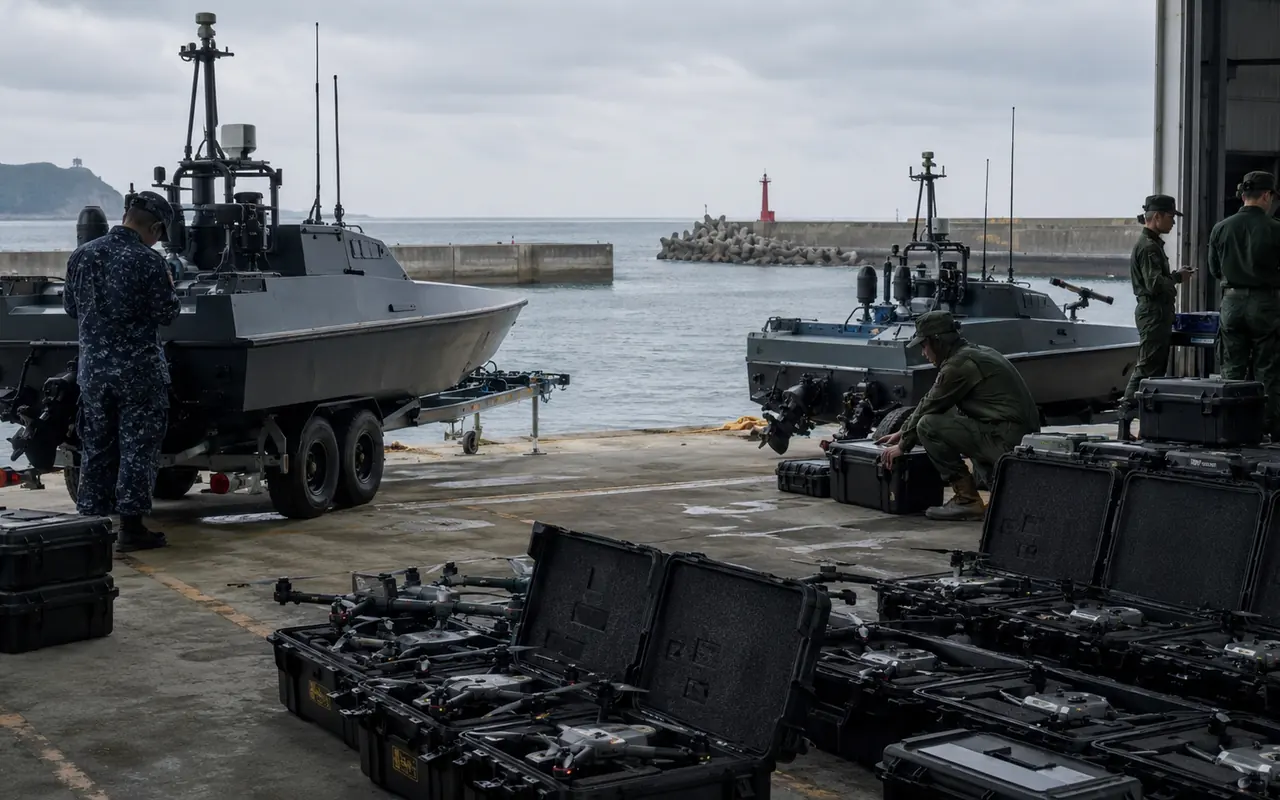
To its credit, this money is, broadly speaking, aimed in the right direction. Laying out its seven major procurement categories — precision artillery, uncrewed vehicles and countermeasure systems, air and missile defense (including the Taiwanese version of "Iron Dome," T-Dome) [4], AI-assisted C5ISR command systems, sustained combat readiness, and so on — the most closely watched item is the plan to buy more than 200,000 drones of various types and over a thousand uncrewed vessels (the original planning figures, not the finalized procurement list after final passage in May 2026) [9]. This is exactly the "asymmetric combat power" discussed in "A Porcupine on Paper, or a Real One?": large in number, cheap, and hard to destroy. Money spent here buys the most cost-effective deterrence.
“Defense Spending at 5%: Protection Money for Trump, or Deterrence Bought for Taiwan Itself?” reports that Special Budget Tilts Asymmetric: More Than 200,000 Drones, a Thousand Uncrewed Vessels(200,000+)。 Seven major categories including T-Dome and AI-assisted C5ISR [9][4]。
But This Money Got Discounted in the Legislative Yuan
Here is the problem. Even the best strategic blueprint first has to clear the Legislative Yuan — and this time, Taiwan didn't come through unscathed.
Under the "legislature the ruling party does not control" gridlock that formed after the "Great Recall" (see "After the Great Recall"), the ruling Democratic Progressive Party (DPP) lost its majority in the Legislative Yuan. The opposition camp that controls the legislature — the Kuomintang (KMT) and the Taiwan People's Party (TPP) — voted against the Executive Yuan's version of the special budget. In February 2026, the two camps briefly wrangled over a scaled-down proposal of roughly NT$400 billion; but the Legislative Yuan passed the bill on third reading on May 8, setting a final cap of NT$780 billion (roughly $24.8 billion) — 62% of the original NT$1.25 trillion proposal, a cut of roughly 38%. Air-defense-related funding was cut by about 36%, and 12 procurement items were excluded, including some drone and anti-ship missile subsystems, with the Legislative Yuan also requiring the Executive Yuan to subsequently fill the resulting gap in "Taiwan's Shield" [6][2].
“Defense Spending at 5%: Protection Money for Trump, or Deterrence Bought for Taiwan Itself?” reports that NT$1.25 Trillion Special Budget After Final Passage (in NT$100-million units)(Cut by 38%)。 Final passage set it at NT$780 billion (roughly $24.8 billion); air defense cut by 36% [6][2]。
“Defense Spending at 5%: Protection Money for Trump, or Deterrence Bought for Taiwan Itself?” reports that Taiwan's Version of an 'Iron Dome' Air Defense System — Funding Cut by About 36% After Final Passage(T-Dome)。 Leaving a defense gap for the Executive Yuan to fill [2][6]。
What better illustrates this tug-of-war is the process that came before it. As of the end of 2025, the Legislative Yuan's Procedure Committee had already blocked this special budget from being scheduled five times running, without it ever reaching committee for substantive review [8]. The opposition's reasoning is not entirely without merit: they question whether the money amounts to "debt for future generations," criticize the process as sloppy, and say oversight is lacking. But whatever the reasoning, the result is equally clear: while the PLA's capability curve keeps closing in (see "2027 Is Not a War Bell, It's a Readiness Alarm"), Taiwan's own deterrence budget was discounted by nearly 40% in the pull and tug of domestic politics, leaving behind a defense gap still waiting to be filled. This is a sharper question than "protection money or deterrence" — if even the most correct defense strategy gets cut back substantially in the Legislative Yuan and left with a gap, then the deterrence it buys has to be discounted too.
The Opposition Has a Point, the Ruling Party Has Urgency
To be fair, the opposition camp's objections are not purely political calculation. Their concerns include: this NT$1.25 trillion is a "special budget" that bypasses the item-by-item review of the regular budget, leaving oversight comparatively loose; eight years of borrowing will genuinely add to the fiscal burden on future generations; and the necessity and unit prices of some items are worth laying out and debating openly. In a democracy, it is the legislature's basic job to scrutinize a massive defense outlay closely — that should not simply be dismissed as "obstruction."
But the ruling camp's anxiety is equally real: the PLA's capability curve will not wait for Taiwan to finish arguing (see "2027 Is Not a War Bell, It's a Readiness Alarm"); arms procurement, from budgeting through contracting to delivery, often takes years — a year's delay in passage means combat power forms a year or more later; and the Trump administration is watching closely whether "Taiwan is sincere about defending itself" (see "Transactional Ambiguity"), so a budget stuck in gridlock will be read as "even Taiwan itself doesn't care." Taiwan has thus landed in an awkward position: the national-security issue that most needs unity has instead become a battlefield for partisan warfare, and the true beneficiary of every delay sits on the other side of the strait.
Putting the Number in International Context
The figure of 5% feels more real once placed in international context. NATO members' long-standing target has been 2% of GDP, a bar many countries still fail to clear; only after the Russia-Ukraine war, and under US pressure, did the target gradually get raised, with some frontline countries (such as Poland) pushing past 4%, while Trump has floated 5% for NATO as well. Taiwan's move from 3.3% to 5% is, by global standards, an extremely high level — this reflects both the scale of the threat Taiwan faces and the weight of the fiscal pressure this money places on the budget. Taiwan is not benchmarking itself against countries at peace — it is benchmarking itself against frontline countries in something close to a state of pre-war readiness.
Protection Money, or Self-Directed Investment?
Back to the central argument. The two red teams go head-to-head here.
Red Team East says: this is protection money. Trump is pressuring Taiwan to spend more on the one hand while requiring it to buy American-made weapons on the other (see "Transactional Ambiguity") — what Taiwan's big spending actually buys is "America's peace of mind," not Taiwan's own security. This is being exploited, not being protected.
Red Team West pushes back: calling all defense spending protection money is self-demeaning. Ukraine's lesson is clear — only a country that can defend itself finds others willing to help. 5% is buying deterrence for Taiwan's own survival; the key question is whether it is buying the right things.
“Defense Spending at 5%: Protection Money for Trump, or Deterrence Bought for Taiwan Itself?” reports that Buying Asymmetric Capability = Investment; Buying Expensive Large Platforms Just to Show Willing = Protection Money(Where It's Spent)。 The framing and the procurement decision determine which it is [5][7]。
Where the two sides overlap gives Taiwan a useful measuring stick: the same money's true nature is decided by the framing and by the procurement decisions behind it. If this money goes toward a handful of expensive, impressive-looking large platforms that survive poorly on a modern battlefield, purchased purely to satisfy Trump, then it is protection money. If it is used to turn Taiwan into a "porcupine too tough to bite down on" (large numbers of cheap, hard-to-destroy asymmetric capability, see "A Porcupine on Paper, or a Real One?"), then it is the most cost-effective deterrence Taiwan can buy for itself. Measured by this stick, the direction behind those 200,000 drones and thousand uncrewed vessels is correct — and what got stripped out is exactly the kind of resilience Taiwan needs most.
The Other Side of the Ledger: 5% Is Not Free
Talking about deterrence also means talking honestly about the cost.
When defense eats up 5% of GDP, it inevitably squeezes out other public spending such as social welfare, long-term care, and the energy transition. A special budget may be a tool for "bypassing the crowding-out of the regular budget," but it does not fall from the sky — it is still government debt, a fiscal burden future generations will have to repay. (A balancing reference point: the Brookings analysis cited in this article actually argues that Taiwan's low tax rates and almost nonexistent borrowing leave its fiscal position comparatively lean and well able to afford this spending [3]; the "debt for future generations" concern is best understood in that light, not from only one side.) This is also the point the opposition camp's "debt for future generations" criticism is aimed at.
Specifically, when defense takes up 5% of GDP, what gets squeezed? Gaps in national health insurance and long-term care, spending on measures to address the falling birthrate (see "A 400,000-Worker Shortage by 2030: Taiwan's Bill for the Birth-Rate Decline"), investment in the energy transition, the construction of social housing (see "The Unaffordable Island") — spending tied to "another kind of national security" (population, energy, people's livelihoods) will all be competing for resources from the same pie as defense. That is exactly why the trade-off between "how much deterrence to buy" and "how much of people's livelihoods to protect" cannot be left to emotion, and must be debated openly and rationally. After all, a society that takes good care of its people and gives them a reason to want to stay (see "Social Psychology") is itself part of national defense.
“Defense Spending at 5%: Protection Money for Trump, or Deterrence Bought for Taiwan Itself?” reports that 5% of GDP Squeezes Welfare and Long-Term Care; a Special Budget Is Still Government Debt(Debt for Future Generations?)。 A fiscal trade-off, not free money [3]。
This is a trade-off that must be laid out honestly: buying one more unit of security may mean buying one less unit of something else. But the correct way to do this math is neither "don't buy it because it costs money" nor "buy without limit because security matters" — it is to buy the most deterrence possible within a limited budget. This circles back to the same conclusion: spending money on the most cost-effective asymmetric capability is both the optimal strategy and the most fiscally efficient choice.
The Other Path: Building It at Home
Talking about defense spending reaching 5% cannot be only about "what to buy from America" — it also has to be about "what Taiwan can build itself." In recent years, Taiwan has made real progress on "defense self-reliance": the first prototype of its domestically built submarine program, the Narwhal, has been launched and entered testing; the Brave Eagle advanced jet trainer has entered mass production; and self-developed drones and missiles of various types are accelerating as well. Building at home matters for three reasons: first, it keeps money inside Taiwan, nurturing a domestic defense industrial chain and jobs; second, it reduces dependence on the "uncertainty of delivery" in US arms sales (see "Transactional Ambiguity"); and third, some asymmetric, customized needs can, by their nature, only be built domestically.
Of course, building at home has its own difficulties — high costs, long cycles, steep technical barriers, and key subsystems (engines, combat systems) that often still have to be bought abroad. But the direction is correct: a Taiwan that "internalizes" part of its defense budget as investment in domestic industry is both cheaper and harder to choke off than a Taiwan that only "buys from outside." This is also the most concrete path for truly turning "protection money" into "investment."
Taiwan's Three Perspectives
The state: Anchor the narrative around defense spending in "deterrence for Taiwan's own sake," not "protection money paid to America" — this is not just a matter of face; it determines whether the budget can convince the public at home and whether it is spent correctly. At the same time, prioritize spending on asymmetric capability ("A Porcupine on Paper, or a Real One?") so every dollar buys the most deterrence. The most urgent task for 2026 is to keep close watch on whether the NT$780 billion set at final passage gets executed on schedule and whether the air-defense gap gets filled quickly: defense is Taiwan's greatest common denominator, and a discounted strategy should not also get stuck at the execution stage — the only true beneficiary would be the other side of the strait.
Industry (defense and SMEs): A larger defense budget means a larger opportunity for the defense supply chain and domestic manufacturing. The order for 200,000 drones and a thousand uncrewed vessels is exactly the opening for small and midsize manufacturers to enter the asymmetric-equipment supply chain (drones, components, sensors) — this also gives "protection money" a chance to become "domestic investment," keeping money in Taiwan and nurturing its own defense industry. More broadly, turning defense demand into stable domestic orders is like opening a new "domestic-demand, counter-cyclical" market for Taiwan's small and midsize manufacturers — these technologies and this capacity serve civilian business in peacetime and national defense in wartime, a genuine two-for-one.
SMEs and society: The fiscal squeeze from 5% of GDP will ultimately affect tax burdens and other public spending. What society should do is shift the focus of oversight from "should this money be spent" to "is this money being spent correctly, and can it actually get delivered on schedule" — rationally monitoring whether procurement favors asymmetric capability, and whether the budget is being strangled by politics, is more constructive than emotionally cheering for or against it.
"Should defense spending go to 5%" is actually a false question. The real questions are two: has this money bought Taiwan its own deterrence? And can it actually be spent? Buy the right things, and get the money spent, and 5% is the single most worthwhile investment Taiwan can make for its own survival; buy the wrong things, or let it be cut down by Taiwan's own politics into a number on paper, and no percentage, however large, is anything more than a bounced check that can't buy real security. And the final answer to this question will not be written only in the budget figures — it will be written at the intersection of three things: whether the money goes to asymmetric capability, whether the budget clears the Legislative Yuan, and whether this society is willing to set aside partisan differences for the sake of shared security — after all, what the other side of the strait wants most is exactly for Taiwan to tear itself apart over its own defense first. Turning defense back into "everyone's business," rather than "a political party's business," may be the first step toward whether this 5% can buy real security at all.
Sources
- CRS (Congressional Research Service, United States) — Taiwan: Defense and Military Issues
- Global Taiwan Institute (2026-03) — The Contents and Controversies of Taiwan's Special Defense Budget
- Brookings — Defense in a democracy: Political competition and Taiwan's special defense budget
- USNI News (2025-11-26) — Taiwan Rolls Out $40B Defense Supplemental to Fund Air Defense, Asymmetric Capabilities
- AmCham Taiwan Business TOPICS (2026-04) — Moving the Finish Line: Taiwan's $40 Billion Defense Test
- NPR (2026-01-22) — Taiwan president's defense plan hits gridlock as China ramps up pressure
- The Hill — 'Playing with fire': Taiwan defense spending battle rattles China hawks
- The Reporter (報導者) — The NT$1.25 Trillion Tug-of-War: Where Taiwan's Arms Procurement Stands and Where the Budget Gridlock Is Stuck
- Business Today (今周刊) — The Ministry of National Defense Reveals Where the NT$1.25 Trillion Special Defense Budget Goes: 7 Major Procurement Categories Unveiled
September 11: The Loophole Clock Starts Ticking — How the EU CRA's 24/72-Hour Rule Rewrites Taiwan's Hardware Exports
The reporting obligations of the EU's Cyber Resilience Act take effect early, on September 11, 2026. They do not require every vulnerability to be disclosed within a day — they require the legal manufacturer of a product to issue a 24-hour early warning, a 72-hour notification, and a follow-up final report once it becomes aware of an actively exploited vulnerability or a severe security incident. The real impact on Taiwan is that brand owners will push that statutory clock backward onto their ODMs, component suppliers, and software supply chains.

Viral Data Goes In — Do Vaccines Come Out? Taiwan's Gap in the PABS Negotiations
The WHO Pandemic Agreement was adopted by the World Health Assembly in 2025, but its core annex on pathogen access and benefit-sharing is still under negotiation; the seventh round did not conclude, and the eighth round is set for September. Taiwan's real risk is not whether it can upload a sequence — it is that there is no single, publicly verifiable, end-to-end pathway linking data contribution, notification of use, manufacturer contracts, and actual access to vaccines and diagnostics.