
2027 Is Not a War Bell, It's a Readiness Alarm: Debunking the 'Deadline' Myth
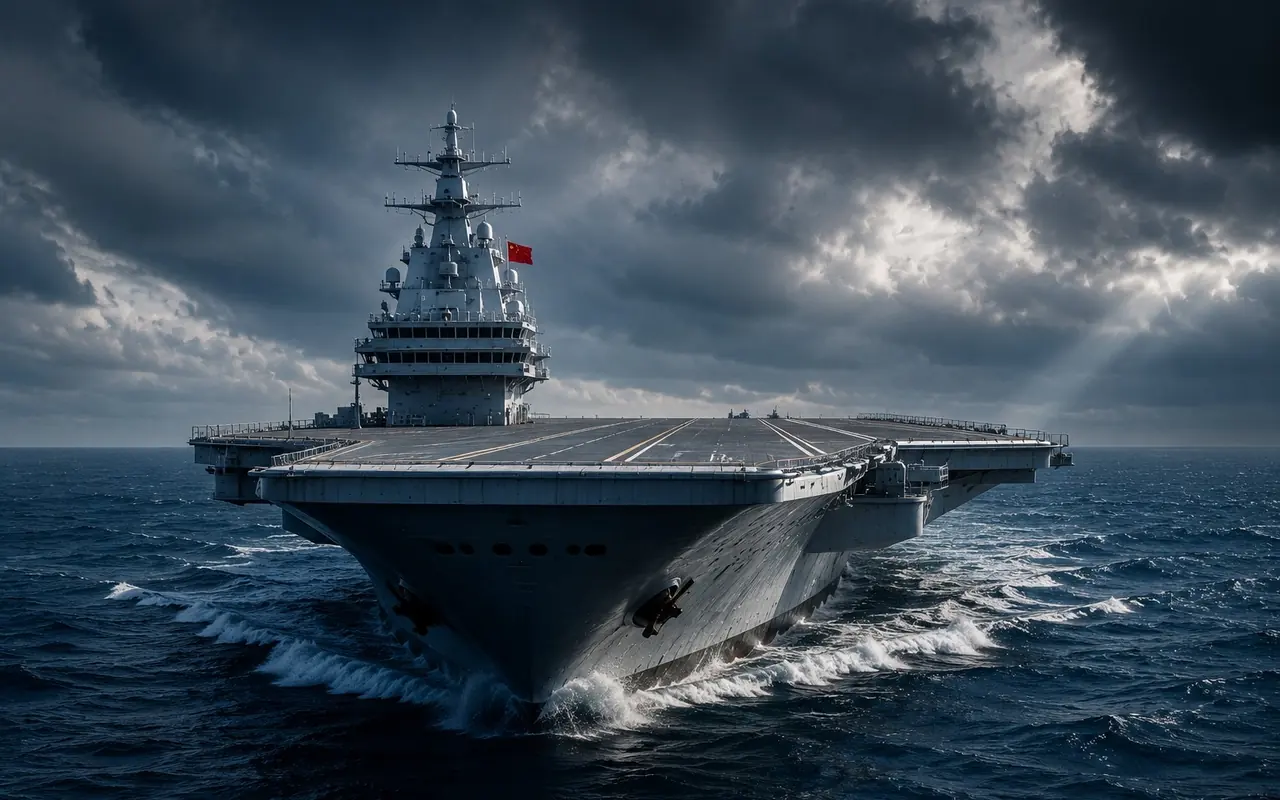
"China will attack Taiwan in 2027" has become almost a synonym for national anxiety. But that year was never a prediction of when war will start — it is the benchmark year for when the PLA's capability to move against Taiwan is expected to be in place. In 2026 the U.S. intelligence community stated plainly that China has no fixed, unified timetable; at the same time, the carrier Fujian is estimated to reach full operational readiness this year, the Shuiqiao landing barges have appeared, and the Indo-Pacific Command chief has called the exercises encircling Taiwan a 'rehearsal for seizing Taiwan.' Capability is closing in, but intent has no timetable — both statements are true; the difference is between 'capability' and 'intent.'
Article contents01 / 08
- The 'Davidson Window' (2021–2027) was originally meant as 'the timeline benchmark for when the PLA would have the capability to invade Taiwan,' not a prediction of when war would start; in 2023 CIA Director Burns said Xi had told the PLA to 'be ready by 2027' — a readiness directive, not an order to attack.
- Evidence on the capability side is accumulating: the carrier Fujian (with electromagnetic catapults) is estimated to reach full operational readiness in 2026, the mobile landing barge 'Shuiqiao' was spotted in 2025, and Joint Sword / Justice Mission exercises have become routine (in the 2024B exercise, the carrier Liaoning sailed east, with 153 sorties in a single day); Indo-Pacific Command chief Paparo has called the exercises a 'rehearsal for seizing Taiwan.'
- But there is no timetable on the intent side: the U.S. intelligence community's 2026 Annual Threat Assessment states plainly that China has 'no plan to invade Taiwan by 2027 and no fixed, unified timetable.' The two statements don't contradict each other — the difference is capability versus intent. For Taiwan, 2027 is a readiness alarm, not an invasion bell.
“2027 Is Not a War Bell, It's a Readiness Alarm: Debunking the 'Deadline' Myth” reports that The Davidson Window: The Timeline Benchmark for When the PLA Would 'Have the Capability'(2021–27)。 Drawn from Admiral Davidson's congressional testimony (made partly to argue for a budget) — not an invasion forecast [9]。
“2027 Is Not a War Bell, It's a Readiness Alarm: Debunking the 'Deadline' Myth” reports that 2026 U.S. Intelligence Community: China Has No 2027 Invasion Plan, No Fixed Unified Timetable(No Fixed Timetable)。 From the Annual Threat Assessment (ATA) [2]。
“2027 Is Not a War Bell, It's a Readiness Alarm: Debunking the 'Deadline' Myth” reports that Carrier Fujian (Electromagnetic Catapults) Estimated to Reach Full Readiness in 2026; Shuiqiao Landing Barges Spotted(The Fujian)。 The capability curve is closing in on 2027 [6][10]。
“2027 Is Not a War Bell, It's a Readiness Alarm: Debunking the 'Deadline' Myth” reports that Joint Sword / Justice Mission Exercises Become the New Normal (2024B: Carrier Liaoning Sails East of the First Island Chain, 153 Sorties)(Rehearsal for Seizing Taiwan)。 The Indo-Pacific Command chief calls the exercises a rehearsal for seizing Taiwan [7][11][12]。
“2027 Is Not a War Bell, It's a Readiness Alarm: Debunking the 'Deadline' Myth” reports that The Intelligence Community: Judging by Capability, Not Intent; the Real Deadline Is 2049(Capability ≠ Intent)。 Capability in place ≠ a decision to go to war [2][4]。
“2027 Is Not a War Bell, It's a Readiness Alarm: Debunking the 'Deadline' Myth” reports that The Real Answer: Raise the Cost of Deterrence Until 'Even With the Capability, It's Not Worth It'(Readiness Alarm)。 Don't panic over the countdown, and don't reassure yourself either [3]。
Few years have become as much of a symbol of anxiety in Taiwan's public discourse as "2027." "China will attack Taiwan in 2027" is often circulated as if it were an established fact.
But this year has been misread from the start. It is not a war prediction — it is a readiness benchmark. Only by first separating "capability in place" from "a decision to act" can the threat be turned into work that can actually be prepared for.
The question to ask next isn't "which year will war definitely start," but: who put this year forward, and in what context? Was it originally meant to describe capability, intent, or policy mobilization? Only by pulling the source apart from its meaning can countdown-style anxiety be kept from replacing actual preparation.
Where "2027" Came From
This year's origin is the "Davidson Window" — a concept put forward by Admiral Davidson, then commander of U.S. Indo-Pacific Command, in 2021 congressional testimony, referring to the period from 2021 to 2027 during which the PLA would develop the capability to "attempt to control Taiwan" [9]. Note where the emphasis falls: it is "having the capability," not "deciding to act." And this testimony was given, at the time, in the context of arguing for funding for the "Pacific Deterrence Initiative" — from the very start it carried the policy purpose of "we need more resources to deal with this."
In 2023, CIA Director Burns went further, saying intelligence showed Xi Jinping had directed the PLA to "be ready by 2027" to invade Taiwan [2]. But "be ready" is a readiness directive — it requires the military to have options, not an order to start a war that year. Reading "be ready" as "will definitely act" was the first mistranslation at the root of this nationwide anxiety.
“2027 Is Not a War Bell, It's a Readiness Alarm: Debunking the 'Deadline' Myth” reports that The Davidson Window: The Timeline Benchmark for When the PLA Would 'Have the Capability'(2021–27)。 Drawn from Admiral Davidson's congressional testimony (made partly to argue for a budget) — not an invasion forecast [9]。
The Capability Side: It Really Is Closing In
To be fair, the claim that "capability is closing in on 2027" is far from baseless. Laid out across 2024 to 2026, the PLA's capability to move against Taiwan really has been filling in at a visible pace.
At sea, a carrier takes shape. China's third aircraft carrier — and its first equipped with an electromagnetic catapult system — the Fujian, is expected, according to Chinese state-media accounts, to reach "full operational capability" within 2026 [6]. This means the PLA will gain stronger blue-water and blockade capability.
On landing, a gap gets filled. For a long time, "insufficient amphibious lift capacity" was seen as the PLA's biggest shortfall for an invasion of Taiwan. But in January 2025, observers spotted for the first time a mobile landing barge codenamed "Shuiqiao" — able to act like a makeshift pier, letting heavy armored vehicles cross the beach onto coastal roads — reinforcing the PLA's sealift and offloading capacity [10]. This is a concrete move to patch a shortfall against the 2027 readiness target.
“2027 Is Not a War Bell, It's a Readiness Alarm: Debunking the 'Deadline' Myth” reports that Carrier Fujian (Electromagnetic Catapults) Estimated to Reach Full Readiness in 2026; Shuiqiao Landing Barges Spotted(The Fujian)。 The capability curve is closing in on 2027 [6][10]。
Exercises normalize into a "rehearsal." From the 2024 "Joint Sword" series (in the 2024B exercise, the carrier Liaoning's strike group sailed east of the first island chain, with 153 aircraft sorties detected in a single day) to the 2025 "Justice Mission" exercise, drills encircling Taiwan have gone from "occasional intimidation" to "routine practice" [7][11]. Indo-Pacific Command chief Paparo therefore stated bluntly in congressional Armed Services Committee testimony in April 2025 that the PLA is "moving toward readiness for 2027," and that these exercises encircling Taiwan are a "rehearsal for seizing Taiwan" [12].
“2027 Is Not a War Bell, It's a Readiness Alarm: Debunking the 'Deadline' Myth” reports that Joint Sword / Justice Mission Exercises Become the New Normal (2024B: Carrier Liaoning Sails East of the First Island Chain, 153 Sorties)(Rehearsal for Seizing Taiwan)。 The Indo-Pacific Command chief calls the exercises a rehearsal for seizing Taiwan [7][11][12]。
The Intent Side: The Intelligence Community Says "No Timetable"
But if the story only had this half, Taiwan would fall straight into panic. Because in that same year, 2026, there is another equally authoritative official statement pointing the opposite way.
The U.S. intelligence community's 2026 Annual Threat Assessment (ATA) states clearly that Chinese leadership "currently has no plan to invade Taiwan by 2027, and has not settled on a unified, fixed timetable" [2]. "War in 2027" has never been the U.S. intelligence community's own assessment.
“2027 Is Not a War Bell, It's a Readiness Alarm: Debunking the 'Deadline' Myth” reports that 2026 U.S. Intelligence Community: China Has No 2027 Invasion Plan, No Fixed Unified Timetable(No Fixed Timetable)。 From the Annual Threat Assessment (ATA) [2]。
So are the two statements — the theater commander (talking capability, tense in tone) and the intelligence agencies (talking intent, guarded in tone) — contradictory? No. They are talking about two different things: Paparo is talking about "capability" (how far the PLA has trained), while the intelligence community is talking about "intent" (whether China wants to, and has planned to, attack). Capability can keep closing in on 2027 while intent, at the same time, "has no fixed timetable" — the two can fully coexist.
Of course, this judgment itself is not without dispute. In 2026, some China specialists publicly questioned whether the Director of National Intelligence's assessment of "no 2027 plan" was too optimistic and underestimated the risk [4]. This is a reminder that intent is the hardest thing to read, and any single assessment deserves a measure of caution.
The Key: Capability ≠ Intent
This is the key to unlocking the "2027 deadline" myth: capability being in place does not equal a decision to go to war.
Treating "2027" as "the year China will attack" is a misreading of a readiness benchmark, and it pushes society toward two extremes: either panicked countdown, or numbness inside the belief that "this is just Washington hype." The two red-team sides land, fittingly, on opposite sides here: the Eastern Eye says "the 2027 deadline is, to a significant degree, a Washington budget-and-mobilization narrative" — after all, Davidson's testimony itself was made to argue for funding; the Western Eye counters that "but Paparo's readiness assessment, the Fujian, the Shuiqiao barges, and normalized exercises are not empty talk — the capability curve is real."
The overlap between the two is a cooler-headed judgment: "no fixed timetable" does not mean safe. Capability is accumulating, exercises have become routine, and the gray zone (from undersea cables to Scarborough Shoal to electronic warfare, see "Gray Zone Full Field Guide") escalates a little more every day. And don't forget: Beijing also has a more distant, yet more certain, time anchor — it must complete "national rejuvenation" before 2049 (the centenary of the People's Republic), and in official discourse this includes "reunification" [2].
“2027 Is Not a War Bell, It's a Readiness Alarm: Debunking the 'Deadline' Myth” reports that The Intelligence Community: Judging by Capability, Not Intent; the Real Deadline Is 2049(Capability ≠ Intent)。 Capability in place ≠ a decision to go to war [2][4]。
So Taiwan should not let itself be held hostage by a countdown to "which year it will happen," but should instead think in terms of three axes — "capability, intent, and cost": as PLA capability closes in, has Taiwan made it a reality that "even if you have the capability, attacking still isn't worth it"? The essence of deterrence has never been praying the other side lacks capability — it is making sure that once the other side finishes doing the math on cost, it decides not to act.
“2027 Is Not a War Bell, It's a Readiness Alarm: Debunking the 'Deadline' Myth” reports that The Real Answer: Raise the Cost of Deterrence Until 'Even With the Capability, It's Not Worth It'(Readiness Alarm)。 Don't panic over the countdown, and don't reassure yourself either [3]。
More Worth Remembering Than 2027: 2049
If 2027 is a year that has been blown out of proportion, there are two other points in time that deserve a firmer place in Taiwan's memory.
One is the "Xi Window." Some analysts point out that the real variable may not be some fixed year at all, but Xi Jinping's own "personal timetable" — as a strongman leader moves into the later stage of his rule, will he be willing to take on greater risk in order to write "reunification" into his own place in history? This uncertainty over "leader intent" is harder to predict than any capability assessment [3].
The other is 2049. Beijing's publicly stated goal is to complete "national rejuvenation" before the hundredth anniversary of the founding of the People's Republic of China in 2049, and in official discourse this includes "reunification" [1]. Compared with "war in 2027" — a claim the intelligence community itself doesn't credit — this is the long-term anchor Beijing has set down in black and white for itself, and it is the timeframe Taiwan should actually be calibrating against. It is a reminder to Taiwan: this is, in truth, a marathon that runs at least to 2049.
Two Dangers of "Crying Wolf"
Historically, predictions of "imminent war" across the Taiwan Strait have not been rare, yet time and again they have failed to come true. This has left behind two opposite, yet equally dangerous, reactions.
The first is "fatigue and numbness": since the wolf has been cried every time and never actually came, why not simply stop believing anything and stop preparing at all? This is exactly what the adversary hopes for — a complacent society is the easiest one to strike. The second is "panic overload": reading every exercise, every new warship, as "this is it, they're about to attack," and making irrational decisions in anxiety (emigrating, pulling out investments, hoarding). This, too, is exactly the effect cognitive warfare is aiming for — chaos without a fight.
The correct posture sits between the two: "clear-eyed readiness" — believing the threat is real and the capability is real, but refusing to be held hostage by a countdown to "which year," and shifting attention from "guessing the date" to "getting ready." This is also why the PLA's recent development of a "Cold Start" posture is worth watching closely — through normalized exercises and forward deployment, it lets forces shift seamlessly from "exercise" to "actual combat" within an extremely short warning window [5]. As the line between exercise and attack grows blurrier, Taiwan's warning time keeps shrinking, and "planning for the worst case" matters more and more. True security does not come from "guessing the right year," but from "being able to withstand it, whichever year it comes."
The Real Fix: Thicken the "Cost" Axis
Of the three axes — capability, intent, cost — Taiwan cannot control capability (how far the other side has trained), and it cannot guess intent (whether the other side wants to act) with any certainty. The one axis firmly within its own grip is the third: cost — making sure that even if the adversary has both capability and intent, once it finishes doing the math on the price, it still concludes "it's not worth it."
What does thickening the cost axis actually look like? It means turning Taiwan into a "porcupine too tough to bite" (see "A Porcupine on Paper, or a Real One?") — large numbers of dispersed, hard-to-destroy drones and mobile missiles, so the adversary's first strike cannot paralyze Taiwan; it means making civil defense and social resilience (see "Living With Fear") real, so the calculation of "a quick, decisive fight, subjugation without a fight" doesn't add up; it means shoring up the resilience of critical infrastructure (the power grid, undersea cables, food, energy), so a blockade's effect is discounted. Every one of these adds another number to the adversary's cost column, one more reason to hesitate. When these numbers add up high enough that "winning still isn't worth it," deterrence truly holds — and that is far more reliable than simply praying "2027 doesn't come."
Three Taiwan Perspectives
The state: treat 2027 as a "readiness checkpoint," not a "doomsday countdown." Before the PLA's capability curve catches up, get asymmetric warfare capability (see "Porcupine"), civil-defense resilience, and supply-chain security in place — that is how to make the "deadline" fail to matter. At the same time, avoid the fatigue of "crying wolf": as exercises grow larger and barges grow more numerous each time, what Taiwan needs to do is neither go numb nor panic, but treat every instance as a chance to calibrate its own progress in getting ready.
Industry and society: don't let the "2027 countdown" become a panic variable for investment and talent (see "Living With Fear"). A society blanketed in the mood of "there's no stopping it anyway" will paralyze itself first — and that is exactly the effect the adversary's cognitive warfare is going for. Replacing an emotional doomsday narrative with verifiable resilience-building is the real countermeasure. Concretely, businesses can manage "Taiwan Strait risk" as a routine operating variable — diversifying production lines, backing up data, planning contingencies — rather than panicking anew with every exercise; this kind of "institutionalized calm" is itself a form of resilience.
Individuals: remembering the phrase "capability ≠ intent" is enough to stand steady amid the barrage of "deadline" messaging. When you see a sensational headline claiming "war will definitely start in 2027," ask first: is this talking about capability, or about intent? Is it calibrating preparation, or selling fear? Being able to tell the difference means you won't be led around by either the doomsayers or the whitewashers. These six words matter because they turn you from "passive fear" into "active judgment": you are no longer a bystander waiting to be told which year everything falls apart, but a citizen able to tell real signal from noise and calibrate your own preparedness. And a society made up of such citizens is, in itself, the hardest fortress for cognitive warfare to breach.
2027 is not China's war bell — it is Taiwan's readiness alarm. The point of the alarm going off is not "something will definitely happen that day," but "have you gotten ready, before then, for what you should have gotten ready for." The Fujian will enter service, the Shuiqiao barges will multiply, the exercises will grow more frequent — these are all the ticking of that alarm clock. Trading anxiety for preparation, trading the countdown for resilience — that is what this widely misread year should really be telling Taiwan. Rather than flinching at every rumor of a "deadline," it would be better to convert that same nervous energy into one civil-defense class, one evacuation plan, one more measure of confidence in home and homeland.
Sources
- U.S. DoD (2025-12) — Annual Report to Congress: Military and Security Developments Involving the PRC
- USNI News (2026-03-19) — China Not Committed to 2027 Taiwan Invasion, U.S. Intel Report Says
- The Diplomat (2026-06) — When the Davidson Window Meets the 'Xi Window'
- 19FortyFive (2026-04) — The 2027 'China Invades Taiwan' Question Isn't Settled
- CSIS ChinaPower — A 'Cold Start' Military Posture with Chinese Characteristics
- USNI News (2026-04-20) — PLAN Carrier Fujian Expected to Achieve Full Readiness This Year
- Global Taiwan Institute (2026-01) — The PLA's "Justice Mission-2025" Exercise Around Taiwan
- Washington Times (2026-06-16) — Indo-Pacific Command chief sounds alarm on China war threat
- Defense News (2024-05-07) — How DC became obsessed with a potential 2027 Chinese invasion of Taiwan
- Radio Free Asia (2025-01-15) — China's special-purpose barges could overrun Taiwan shores: experts
- CSIS ChinaPower (2024-10-29) — Analyzing China's Escalation After Taiwan President William Lai's National Day Speech
- Atlantic Council (2025-06-09) — China Is Carrying Out 'Dress Rehearsals' to Take Taiwan. Here's How the US Should Respond.

September 11: The Loophole Clock Starts Ticking — How the EU CRA's 24/72-Hour Rule Rewrites Taiwan's Hardware Exports
The reporting obligations of the EU's Cyber Resilience Act take effect early, on September 11, 2026. They do not require every vulnerability to be disclosed within a day — they require the legal manufacturer of a product to issue a 24-hour early warning, a 72-hour notification, and a follow-up final report once it becomes aware of an actively exploited vulnerability or a severe security incident. The real impact on Taiwan is that brand owners will push that statutory clock backward onto their ODMs, component suppliers, and software supply chains.

Viral Data Goes In — Do Vaccines Come Out? Taiwan's Gap in the PABS Negotiations
The WHO Pandemic Agreement was adopted by the World Health Assembly in 2025, but its core annex on pathogen access and benefit-sharing is still under negotiation; the seventh round did not conclude, and the eighth round is set for September. Taiwan's real risk is not whether it can upload a sequence — it is that there is no single, publicly verifiable, end-to-end pathway linking data contribution, notification of use, manufacturer contracts, and actual access to vaccines and diagnostics.