
A Porcupine on Paper, or a Real One? The Execution Gap in Taiwan's Asymmetric Warfare Capability
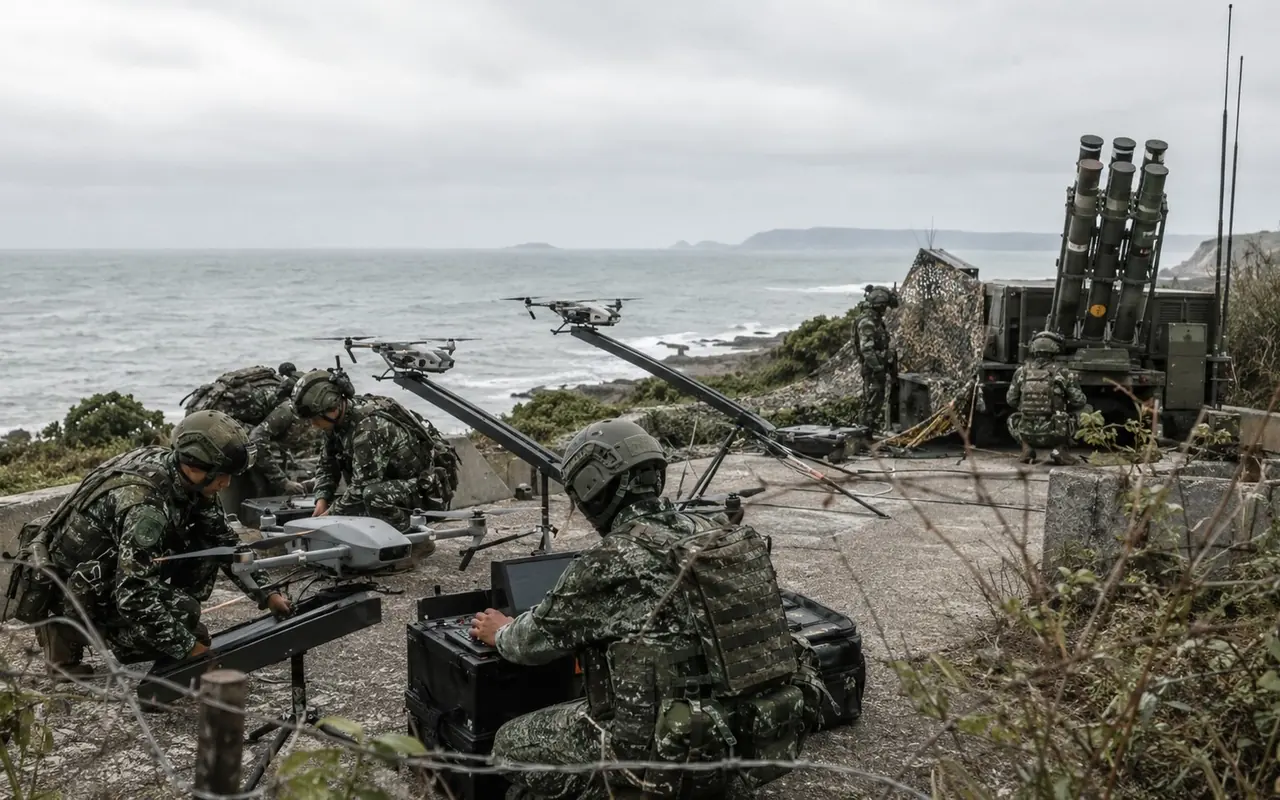
Turn Taiwan into a porcupine — expensive and painful to bite into — with large numbers of cheap, hard-to-destroy drones and missiles that make an invasion hard to pull off. That direction is already a consensus; the armed forces have even issued a tender for nearly 50,000 domestically made drones. The real question isn't whether to do it — it's whether money can buy urgency along with the equipment. When the services are still infatuated with large platforms, when T-Dome may be crowding out asymmetric capability, and when the special budget is still being cut in the Legislative Yuan — have those quills actually grown on Taiwan's own body?
Article contents01 / 09
- Strategy and budget are in place, but execution lags behind: 1.25 trillion NT dollars (roughly US$40 billion) in special defense budget covers T-Dome, drones, uncrewed vessels and an AI-enabled command-and-control system; the armed forces are procuring 48,750 domestically made drones in two phases (11,270 in 2026, 37,480 in 2027), fully domestic and banning Chinese components; CSBC is rolling out a military-grade uncrewed vessel, and HIMARS has already arrived.
- Industry is growing: the drone national team (launched in 2022) now numbers more than 200 companies (an estimated 267, by one count), targeting monthly production of 15,000 units by 2028, with the government aiming for annual output value above NT$30 billion (industry itself is talking about as much as NT$40 billion by 2030); CNAS's "Hellscape" concept has become a popular framework. But "able to export" is not the same as "already deployed in large numbers by our own forces."
- The real bottleneck is execution: critics say the transformation lacks urgency, the services favor large platforms, the kill chain remains overly conservative (drones are used mainly for reconnaissance, with little creative combination of strike roles), and there is no theory of victory; T-Dome risks being "large, expensive, and unable to survive a saturation attack," which cuts against asymmetric warfare; the special budget has been cut, and domestic production was reportedly excluded from it at one point — politics wounding the porcupine's own quills.
“A Porcupine on Paper, or a Real One? The Execution Gap in Taiwan's Asymmetric Warfare Capability” reports that The Armed Forces' Two-Phase Procurement of Domestically Made Drones(48,750 units)。 Fully domestic, Chinese components banned [10]。
“A Porcupine on Paper, or a Real One? The Execution Gap in Taiwan's Asymmetric Warfare Capability” reports that Strategy: large numbers of cheap, hard-to-destroy assets, making an invasion of Taiwan expensive and painful(Porcupine)。 Makes an invasion hard to pull off [1]。
“A Porcupine on Paper, or a Real One? The Execution Gap in Taiwan's Asymmetric Warfare Capability” reports that Drone National Team: Targeting Monthly Production of 15,000 Units by 2028(15,000/month)。 More than 200 companies (an estimated 267) [5][11], government-targeted annual output value of NT$30 billion。
“A Porcupine on Paper, or a Real One? The Execution Gap in Taiwan's Asymmetric Warfare Capability” reports that Taiwan's Version of the Iron Dome: Political Tool or Operational Solution?(T-Dome?)。 May not survive a saturation attack, and may not align with asymmetric warfare [4]。
“A Porcupine on Paper, or a Real One? The Execution Gap in Taiwan's Asymmetric Warfare Capability” reports that Insufficient Urgency, Services Favor Large Platforms, Kill Chain Is Weak(Execution lags)。 Money in place does not equal buying the right things or training well [1][9]。
“A Porcupine on Paper, or a Real One? The Execution Gap in Taiwan's Asymmetric Warfare Capability” reports that Special Budget Cut, Domestic Production Reportedly Excluded at One Point(Self-inflicted wound)。 Cutting off the very quills that were still growing [11]。
Imagine Taiwan as a porcupine: you can see it, but you don't dare bite it — because a body full of quills will leave you in pain and paying a heavy price. This is the "porcupine strategy": using large numbers of cheap, mobile, hard-to-destroy weapons to make an invasion of Taiwan "expensive and painful" — painful enough to hold up, and painful enough to make that invasion hard to pull off [1].
For Taiwan, this direction is no longer a question of whether to pursue it — it is a consensus, the money has been budgeted, and a tender for nearly 50,000 domestically made drones has even been issued (though the funding for it was later cut in the Legislative Yuan — more on that below). The genuinely awkward question is: can money buy the equipment, and can it also buy urgency?
The Strategy Is in Place, the Tender Has Even Been Issued
Start with the good news, because this part is real, and more concrete than one might expect.
In November 2025, Taiwan unveiled a special defense budget of roughly US$40 billion (NT$1.25 trillion), spanning 2026 through 2033 [2]. Where is the money going? The main items include a full-island air-defense system called "T-Dome," area-denial weapons, large numbers of drones and uncrewed vessels, and an AI-enabled command-and-control system.
More concretely still, the armed forces' drone tender has already been issued. Under the plan, the Ministry of National Defense will procure a total of 48,750 domestically made drones in two phases — 11,270 units in 2026 and 37,480 units in 2027 — across five models, with a hard requirement: every one of them must be manufactured in Taiwan, and the use of Chinese-made components is strictly banned [10][6]. On the maritime side, CSBC (Taiwan's state shipbuilder) has also rolled out a military-grade uncrewed vessel called "Endeavor Manta," with Taiwan's navy finally beginning to seriously develop uncrewed maritime vehicles [8]; on land, American-made M142 HIMARS multiple rocket launchers arrived in October 2024, and paired with ATACMS missiles, they could in theory strike landing-staging areas around Xiamen and Quanzhou on the other side of the strait.
“A Porcupine on Paper, or a Real One? The Execution Gap in Taiwan's Asymmetric Warfare Capability” reports that The Armed Forces' Two-Phase Procurement of Domestically Made Drones(48,750 units)。 Fully domestic, Chinese components banned [10]。
Even more attention has gone to "Hellscape" — a concept that originated with Admiral Samuel Paparo, commander of US Indo-Pacific Command, and was later developed by the American think tank CNAS into a plan for Taiwan's own self-defense: the idea that once the PLA attempts to cross the strait, Taiwan would use massive numbers of drones and uncrewed vessels to create a "hellscape" in the Taiwan Strait, pinning down the landing fleet in the water and buying time [3]. Paired with the boom in exports of Taiwan's domestically made drones (see "The European Warships Are Coming"), a "drone porcupine" seems to be emerging.
“A Porcupine on Paper, or a Real One? The Execution Gap in Taiwan's Asymmetric Warfare Capability” reports that Strategy: large numbers of cheap, hard-to-destroy assets, making an invasion of Taiwan expensive and painful(Porcupine)。 Makes an invasion hard to pull off [1]。
What Ukraine Taught Us
The porcupine strategy is not an armchair theory — it has a bloody, living case study: Ukraine.
The lesson from the Russia-Ukraine war that has most upended conventional military wisdom is that "cheap small things can pierce expensive big things": a suicide drone costing a few hundred dollars can destroy a main battle tank worth millions of dollars; uncrewed surface vessels have let Ukraine push back Russia's Black Sea Fleet with almost no navy of its own. This is exactly a victory of "large numbers of cheap things" over "a small number of expensive things," and it is exactly the inspiration behind Taiwan's porcupine strategy.
But Ukraine also taught Taiwan another lesson, and a harder one: drone warfare is a war of "rapid iteration" attrition. A drone that works today might be defeated by electronic jamming next month; what the front line needs is capacity that can "keep going, at scale, and update quickly," not a one-time import purchase that runs out once it's used up. This has a double meaning for Taiwan: on one hand, it proves the porcupine approach is correct; on the other, it also means that what Taiwan needs is not just "buying a batch of drones," but "cultivating a drone industry capable of continuous updating and mass production." This is also why building up the domestic industry matters more than simply buying from the United States.
Industry Is Growing, but "Able to Export" Isn't the Same as "Having It Ourselves"
The porcupine's quills need someone to make them. Taiwan is filling in this piece too.
Since the Russia-Ukraine war began in 2022, the government has pushed a "drone national team," establishing a research and production center in Chiayi to steer commercial drone manufacturing capacity toward military use. This national team has now expanded to more than 200 companies (an estimated 267, by one count) [5][11], with an official target of reaching monthly production of 15,000 units (roughly 180,000 units a year) by 2028 [5]; the Executive Yuan separately targets annual output value of NT$30 billion by 2028, while industry itself talks of as much as NT$40 billion by 2030 [7]. For a country that had almost no military drone industry to speak of, this is an extremely fast start.
“A Porcupine on Paper, or a Real One? The Execution Gap in Taiwan's Asymmetric Warfare Capability” reports that Drone National Team: Targeting Monthly Production of 15,000 Units by 2028(15,000/month)。 More than 200 companies (an estimated 267) [5][11], government-targeted annual output value of NT$30 billion。
But there is a critical gap here that is easily papered over by optimism: "able to export" is not the same as "already deployed in large numbers by our own forces." Taiwan's drone industry is thriving on exports (especially exports tied to Europe's "de-China" supply-chain push), and that proves its manufacturing capacity and technology; but only once that mass-production capacity is genuinely connected to Taiwan's own forces' requirement specifications, operational organization and logistics system will those quills actually be growing on the porcupine's own body. Being able to sell to others and actually going into battle yourself are two different things.
But a Porcupine on Paper Doesn't Bite
Here the brakes have to be applied. The critics' words may sting, but they are grounded: Taiwan's asymmetric transformation has execution lagging behind the slogans.
Research points to Taiwan displaying "a worrying lack of urgency"; a conservative service culture still favors procuring a small number of large, expensive, impressive-looking platforms (warships, fighter jets) rather than large numbers of cheap things that can wear down an adversary [1]. There is a deeper problem still, in the "kill chain": some analysis points out that Taiwan still treats drones mainly as tools for reconnaissance, surveillance, and target acquisition, with a narrow strike role that overlooks simple, creative combinations of kill-chain assets [3]; [1] adds a further warning — that under degraded electromagnetic conditions, rather than relying on a fragile, long-range precision kill chain, Taiwan would be better served by letting large numbers of autonomous weapons saturate designated kill zones. So, money being in place does not mean the right things have been bought, the right processes have been strung together, or the troops have been well trained. The American think tank Heritage was already making this argument back in the mid-2000s, criticizing Taiwan's purely defensive strategy as expensive and lacking a "second-strike" counter-deterrent [9] — an old critique that still gets cited today in debates over the offense-defense balance.
"A lack of urgency" sounds abstract, but it becomes very concrete once you get down to reality: it can mean a drone budget item getting pushed to the back of the line because a service branch feels it "isn't impressive enough, doesn't look like a proper military"; it can mean a procurement process that still uses the drawn-out specifications and timelines built for buying large warships to procure drones that are supposed to iterate rapidly; and it can mean troop training and organization that still hasn't truly made "one drone per infantryman" a standard-issue item at the squad level. These institutional habits cannot be changed just by reallocating a budget line — they need to be loosened at the root, in military culture — and that is often harder than drafting a budget.
“A Porcupine on Paper, or a Real One? The Execution Gap in Taiwan's Asymmetric Warfare Capability” reports that Insufficient Urgency, Services Favor Large Platforms, Kill Chain Is Weak(Execution lags)。 Money in place does not equal buying the right things or training well [1][9]。
The T-Dome Paradox: Could It Actually Be Crowding Out the Porcupine?
Here there is a controversy that Taiwan especially needs to think through for itself, and it sits inside that budget's marquee item: T-Dome.
T-Dome (Taiwan's Shield) is the multi-layered air-defense system that Lai Ching-te put forward in October 2025, modeled on Israel's "Iron Dome," intended to intercept a first Chinese strike. But think tanks' doubts are sharp: Australia's Lowy Institute states bluntly that "Taiwan's Dome won't survive a Chinese attack" — because against a PLA saturation, multi-domain attack, a fixed air-defense system has an extremely high interception cost and can easily be overwhelmed by sheer numbers [4]. The more pointed question is: is T-Dome actually a "political tool" or an "operational solution"? It is an expensive, impressive-looking, large system that can be shown off both at home and abroad — and that is precisely the kind of "big and expensive" that the "porcupine strategy" is supposed to guard against.
If T-Dome ends up crowding out resources meant for "large numbers of cheap things," then Taiwan would in effect be calling itself a porcupine with one hand while pouring money back into traditional large platforms with the other. This really comes down to: Taiwan needs to think clearly about whether T-Dome is the porcupine's shield, or something that eats the porcupine's quills.
“A Porcupine on Paper, or a Real One? The Execution Gap in Taiwan's Asymmetric Warfare Capability” reports that Taiwan's Version of the Iron Dome: Political Tool or Operational Solution?(T-Dome?)。 May not survive a saturation attack, and may not align with asymmetric warfare [4]。
The Cruelest Cut: Politics Cutting Off Its Own Quills
And the most regrettable thing is what happened this past year in the Legislative Yuan.
As described in "5% of Defense," under the deadlock of a ruling party facing an opposition majority, that asymmetric special budget was heavily cut through the wrangling between the ruling and opposition camps; and according to reporting, the shrunken version at one point excluded "domestic production" items and narrowed procurement to purchases from the United States, directly hitting the originally planned, and considerably valuable, domestic drone and uncrewed-vessel programs [11].
This is an almost darkly comic situation: Taiwan finally managed to build up a national drone team, planting the porcupine's quills one by one — only to potentially cut off, with its own hand, the very quills still growing, because of domestic political calculation. The adversary doesn't even need to lift a finger — Taiwan's own internal friction has already weakened its asymmetric warfare capability first. Politics's knife can sometimes wound the porcupine worse than the enemy's knife.
“A Porcupine on Paper, or a Real One? The Execution Gap in Taiwan's Asymmetric Warfare Capability” reports that Special Budget Cut, Domestic Production Reportedly Excluded at One Point(Self-inflicted wound)。 Cutting off the very quills that were still growing [11]。
Two Red-Team Perspectives, Both Worth Hearing
Here, too, an easily skipped-over controversy should be stated honestly. Red Team East reminds us: "Hellscape" is a framework from an American think tank, and it carries the implicit assumption that Taiwan should serve as the "front line of an attritional war" — Taiwan should ask whether this actually fully serves its own interests, rather than accepting it wholesale. Red Team West counters: whoever proposed the framework, "large numbers of cheap things" really is the most practical path of survival for a small country against a large one, and Taiwan's problem is not whether to do it, but that it is moving too slowly.
The overlap between the two is this: the direction is right, but Taiwan has to fill in the content with its own interests, and do it fast. The porcupine strategy is not Washington's homework assignment — it is Taiwan's own path to survival, but that path has to be walked by Taiwan itself, fast enough and solidly enough.
The Porcupine's Quills Aren't Only in the Military
There is another layer that is easily overlooked: real asymmetry extends to the whole of society.
A porcupine's quills don't grow only on its military. They include: civilian disaster-response and rescue capability (see the Kuma Academy-style civil defense mentioned in "Social Psychology"), the resilience of critical infrastructure (the power grid, undersea cables, food, energy), and a society that "can hold up even under blockade." China's ideal script is "a swift, decisive fight, victory without battle"; and Taiwan's whole-of-society resilience is exactly what would make that script fail — once the adversary realizes that even a successful first strike still leaves it facing a society that cannot be crushed, thrown into chaos, or worn down, the word "worthwhile" disappears from its calculations.
The highest form of the porcupine strategy is not measured by how many drones are bought, but by turning the whole of Taiwan — military, industry, society — into quill after quill that is hard to pull out. Weapons are the hardware; will and resilience are the software that lets the hardware actually deliver deterrence.
Three Taiwanese Perspectives
The state/Ministry of National Defense: Accelerate turning the special budget into real spending on "large numbers of cheap things" (drones, uncrewed vessels, mobile missiles, smart sea mines), and fill in the weakest link, the "kill chain" — the fast chain from sensing to authorization to strike. At the same time, reverse the procurement habit of "favoring large, expensive platforms," think clearly about where T-Dome fits relative to asymmetric warfare, and don't let political crowding-out cut domestic production items; manpower and training are two hard bones that also need to be chewed through. And don't forget the "balance of offense and defense": a purely defensive posture is costly and hard to deter with alone, while a modest "source-strike" capability (such as HIMARS paired with ATACMS, able to reach staging areas and logistics nodes for a landing on the other side) can make an adversary calculate a cost before it even launches an attack — this is the key piece that upgrades deterrence from "blocking the blow" to "making the adversary hesitate before it swings."
The defense-technology and drone industry: Domestically made drones (building on European orders) are a civil-military dual-use opportunity, but the mass-production capacity built for exports needs to be connected to the requirements and specifications of Taiwan's own forces — letting "Made in Taiwan" arm Taiwan itself first. What industry fears most is not a lack of orders, but policy flip-flopping and a budget that swings between being funded and being cut, leaving hard-won production capacity with nowhere to go.
SMEs and society: Asymmetric warfare is not just about military procurement — it also includes whole-of-society civil-defense resilience (see "Social Psychology"). Localizing the defense supply chain is an opportunity for small and medium-sized manufacturers to break in; and every citizen trained in civil defense, every more resilient supply chain, is one more quill on the porcupine's body.
A porcupine is safe not because it has one or two especially large quills, but because it is covered all over in quills, dense and numerous, too many to pull out one by one. Taiwan's asymmetric warfare capability has its strategy worked out, its budget appropriated, and its tender even issued — what remains is the hardest, yet most critical, step: growing that full body of quills quickly and for real, rather than letting them be dulled and cut away, one by one, in the inertia of service culture, the controversy over T-Dome, and the political fighting in the Legislative Yuan. Otherwise, a porcupine on paper will scare off no one. And growing that full body of quills quickly and for real is not only the Ministry of National Defense's job — it is a question of whether this society, Taiwan, is willing to grow it together, with urgency, with resilience, and with a resolve not held hostage by political infighting.
Sources
- War on the Rocks — Hellscape Taiwan: A Porcupine Defense in the Drone Age
- USNI News (2025-11-26) — Taiwan Rolls Out $40B Defense Supplemental to Fund Air Defense, Asymmetric Capabilities
- CNAS (2026-02) — Hellscape for Taiwan: Rethinking Asymmetric Defense
- Lowy Institute — Why the "Taiwan Dome" won't survive a Chinese attack
- Global Taiwan Institute (2026-02) — Taiwan's Emerging Indigenous Drone Industry
- TechNews — Commercial-grade drone procurement for military use and the special act on asymmetric-capability procurement
- AmCham Taiwan Business TOPICS (2026-04) — Taiwan's Drone Industry Take Off — but Can It Scale?
- CNA / Focus Taiwan (2025-07) — Ministry of National Defense announces two-year procurement of 48,750 domestically made drones (2026: 11,270; 2027: 37,480; Chinese components banned)
- The Diplomat (2026-05) — Taiwan's Special Defense Budget Cut Will Cost Its Drone Capabilities (special budget cut; domestic production reportedly excluded at one point)
- The National Interest — Taiwan's Military Is Finally Developing Sea Drones
- The Heritage Foundation — Taiwan Must Get Serious About Defense
September 11: The Loophole Clock Starts Ticking — How the EU CRA's 24/72-Hour Rule Rewrites Taiwan's Hardware Exports
The reporting obligations of the EU's Cyber Resilience Act take effect early, on September 11, 2026. They do not require every vulnerability to be disclosed within a day — they require the legal manufacturer of a product to issue a 24-hour early warning, a 72-hour notification, and a follow-up final report once it becomes aware of an actively exploited vulnerability or a severe security incident. The real impact on Taiwan is that brand owners will push that statutory clock backward onto their ODMs, component suppliers, and software supply chains.

Viral Data Goes In — Do Vaccines Come Out? Taiwan's Gap in the PABS Negotiations
The WHO Pandemic Agreement was adopted by the World Health Assembly in 2025, but its core annex on pathogen access and benefit-sharing is still under negotiation; the seventh round did not conclude, and the eighth round is set for September. Taiwan's real risk is not whether it can upload a sequence — it is that there is no single, publicly verifiable, end-to-end pathway linking data contribution, notification of use, manufacturer contracts, and actual access to vaccines and diagnostics.